


Reliable temperature-controlled transportation is essential for businesses handling fresh produce, frozen food, meat, seafood, dairy products and other temperature-sensitive cargo.
Our Reefer Semi Trailer is designed for commercial cold chain transportation, combining an insulated cargo body, a refrigeration system and a heavy-duty trailer chassis in one transport solution. Configurations can be discussed according to cargo requirements, operating conditions, local regulations and fleet specifications.
For importers, distributors, food suppliers and logistics companies in Africa, choosing the right refrigerated semi trailer means looking beyond the exterior appearance. Insulation performance, refrigeration capacity, airflow, axle configuration, maintenance requirements and spare parts availability all influence long-term operating efficiency.
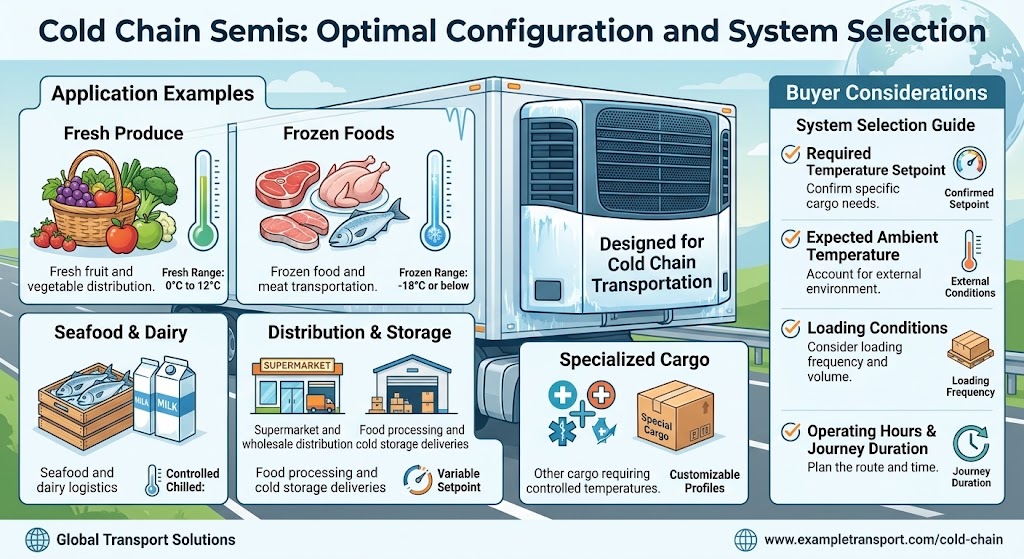
A refrigerated semi trailer is used to maintain a specified cargo temperature during transportation. The appropriate configuration depends on the product being transported, the required temperature range, ambient conditions, loading frequency and journey duration.
Typical applications include:
Fresh fruit and vegetable distribution
Frozen food and meat transportation
Seafood and dairy logistics
Supermarket and wholesale distribution
Food processing and cold storage deliveries
Other cargo requiring controlled temperatures
The refrigeration system must be selected to match the cargo and operating conditions. Before placing an order, buyers should confirm the required temperature setpoint, expected ambient temperature, loading conditions and operating hours.
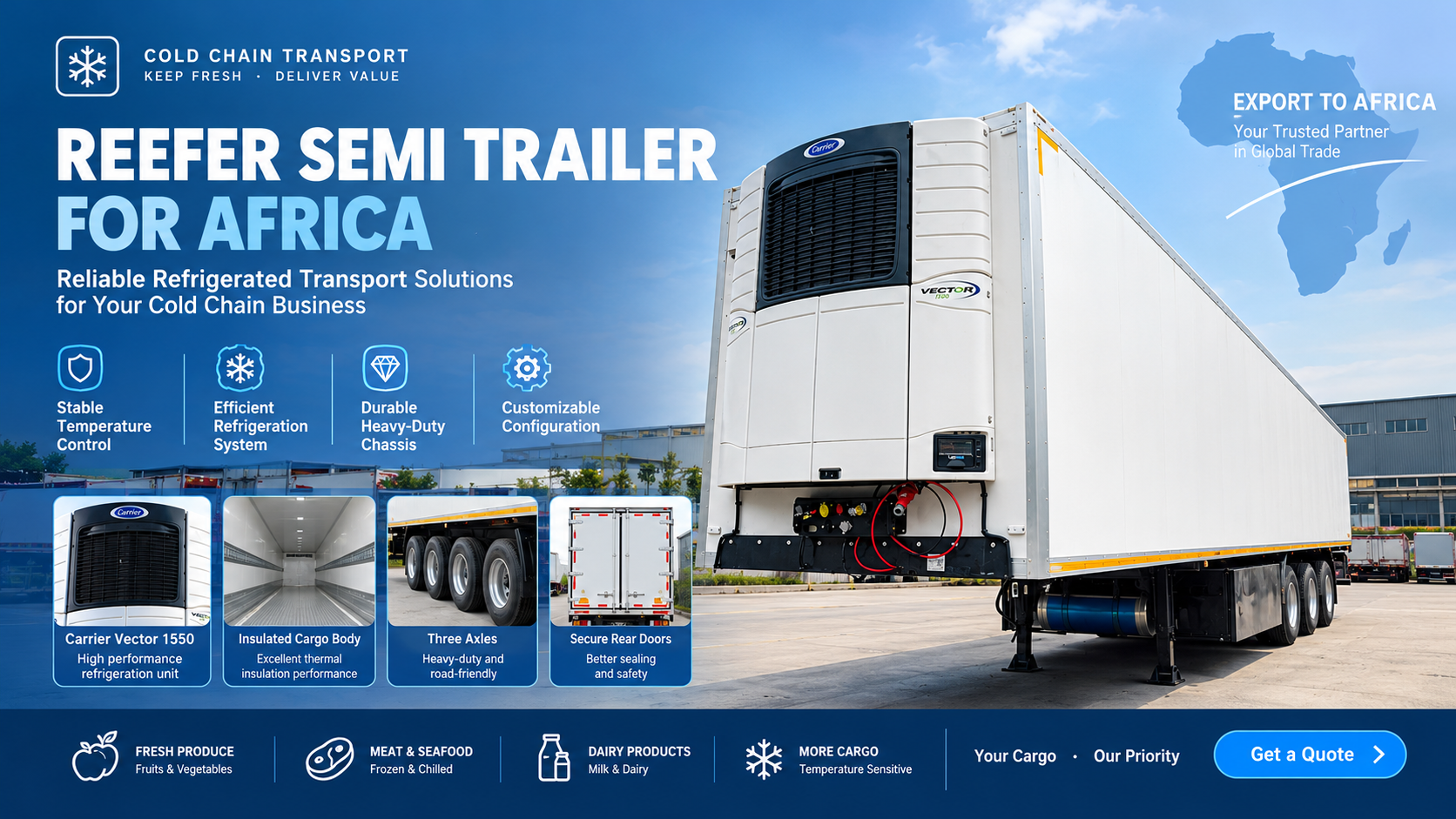
The insulated body helps reduce heat transfer between the cargo compartment and the external environment. Panel construction, insulation thickness, door seals and floor design should be considered together when evaluating thermal performance.
For operations in hot climates, insulation quality and airtight door seals are especially important because excessive heat infiltration increases the refrigeration system's workload.
The featured trailer is equipped with a Carrier Vector 1550 refrigeration unit, as shown in the product photograph.
The refrigeration unit should be selected according to the required operating temperature, cargo characteristics, trailer volume and ambient conditions. Buyers should confirm the exact unit configuration, service requirements, fuel consumption information and available local technical support before ordering.
The trailer chassis, axles, suspension, braking system, tires and landing gear must work together to support the intended load and route conditions.
For long-distance distribution and demanding road environments, buyers should evaluate axle ratings, suspension options, ground clearance, tire availability and the applicable gross vehicle and axle-load limits.
Refrigerated semi trailers can be configured to suit different cargo requirements and operating markets. Options may include body dimensions, insulation specifications, refrigeration equipment, axle brands, mechanical or air suspension, braking equipment, tires and monitoring systems.
Final specifications should be confirmed against the destination country's regulations and the customer's operating requirements.
African markets include a wide range of climates, road conditions, cargo types and service networks. A suitable refrigerated trailer should be selected for the actual transport operation rather than by price alone.
For hot-weather operations: Confirm that the refrigeration system has sufficient capacity for the expected ambient temperature, cargo temperature and loading conditions.
For long-distance routes: Consider insulation performance, refrigeration reliability, fuel consumption, maintenance intervals and the availability of qualified service technicians.
For mixed road conditions: Review chassis strength, suspension configuration, ground clearance, tire specifications and the permitted axle loads.
For fleet operators: Check whether refrigeration filters, belts, sensors, electrical components and other service parts can be sourced conveniently in the destination market.
For international procurement: Confirm trailer dimensions, payload requirements, shipping arrangements, documentation and destination-specific compliance before production or shipment.
A refrigerated semi trailer is a working asset that affects cargo quality, delivery schedules and fleet operating costs. The best configuration is the one that matches your cargo, route, temperature requirements and maintenance capabilities.
We welcome inquiries from importers, distributors, fleet operators and commercial vehicle dealers looking for refrigerated semi trailers for African markets.
Contact us with your destination country, cargo type, required temperature, preferred trailer dimensions and estimated order quantity. We can then discuss the appropriate configuration and prepare a quotation based on your requirements.
Request a Reefer Semi Trailer Quote Today
Tell us what you need to transport and where the trailer will operate. We will help you identify the specifications that should be confirmed before placing an export order.
Our refrigerated semi trailer is designed for temperature-controlled cargo transportation, including fresh produce, frozen food, meat, seafood and other perishable goods.
Key considerations include the insulated body, refrigeration unit, cargo airflow, rear-door sealing and chassis configuration. The featured unit is identified as Carrier Vector 1550 from the supplied photograph.
Suitable for:
Cold chain logistics companies
Food importers and distributors
Supermarket supply chains
Commercial refrigerated transport fleets
Configure the trailer according to cargo requirements, route conditions and destination-market regulations.
Refrigeration unit: Carrier or another confirmed compatible option
Insulated body: panel materials and insulation thickness to be specified
Axles: brand and rated capacity to be confirmed
Suspension: mechanical or air suspension, subject to configuration
Braking: ABS/EBS or other destination-appropriate system
Tires and wheels: size and load rating to be confirmed
Optional equipment: temperature monitoring, spare tire carrier and additional accessories
For international orders, confirm the complete technical configuration before production and shipment.
Destination country and applicable vehicle regulations
Cargo type and required temperature range
Trailer dimensions and payload requirements
Prime mover compatibility and axle-load limits
Shipping method, delivery terms and export documents
Spare parts and maintenance arrangements
Request a quotation
Send your destination, cargo requirements, preferred configuration and order quantity to receive a quotation based on your actual operating needs.
Request a Reefer Semi Trailer Quote
Tell us about your transport requirements to receive a more relevant configuration proposal.
Destination Country
Tell us about your transport requirements to receive a more relevant configuration proposal.
