


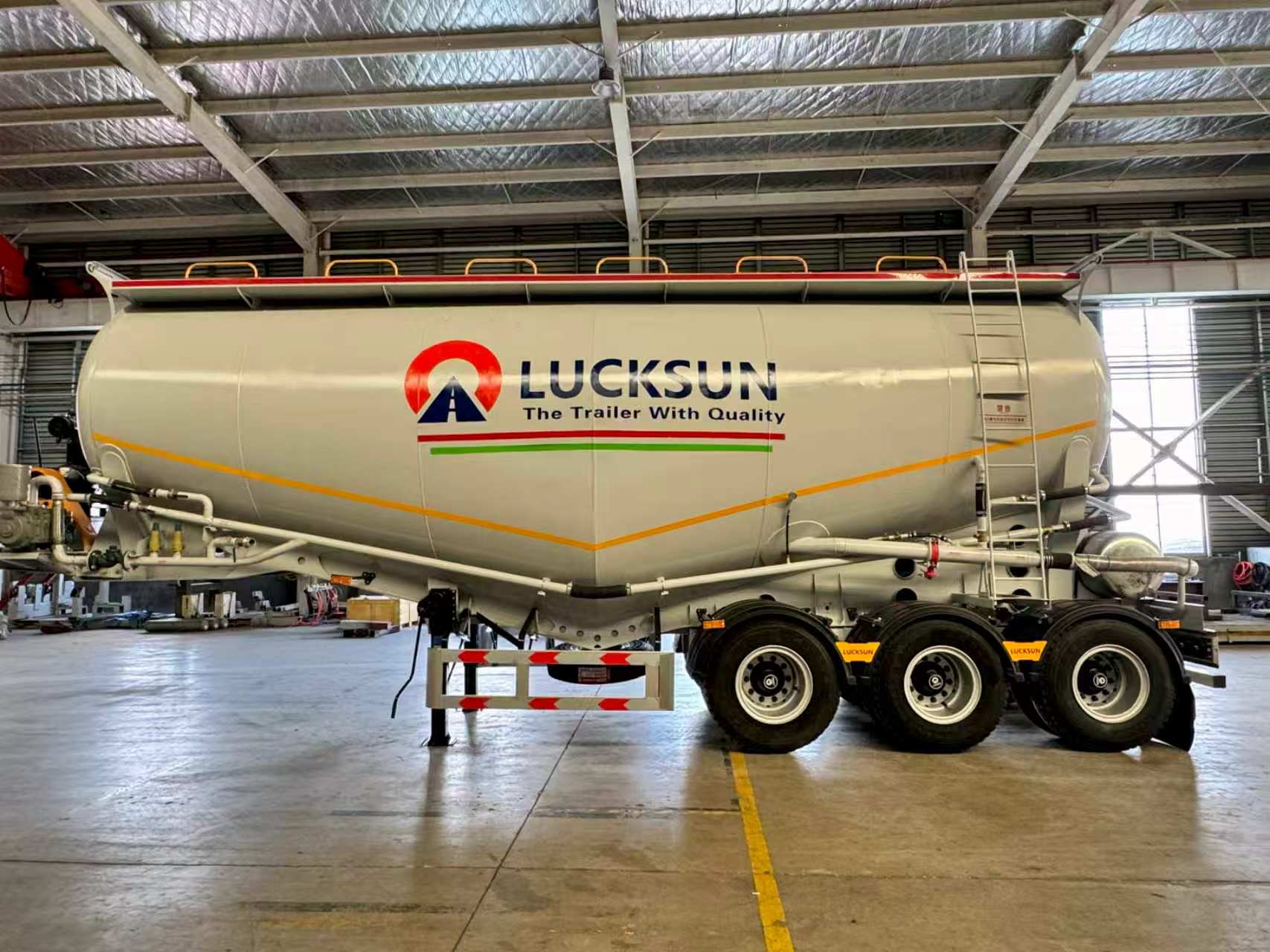
A bulk powdertank semi-trailer is designed for the efficient transportation and pneumatic unloading of compatible dry bulk materials, including cement, fly ash, lime powder and other industrial powders.
For construction material suppliers, cement distributors, bulk transport companies and industrial logistics operators, choosing the right dry bulk tanker is about more than tank capacity. Tank structure, material compatibility, unloading performance, axle configuration, operating conditions and maintenance requirements all affect long-term transport efficiency.
We offer customizable bulk powder tank semi-trailers to meet different cargo requirements, road conditions and destination-market specifications. From tank capacity and chassis configuration to pneumatic unloading components, each solution can be discussed according to your actual transportation needs.
Looking for a dry bulk tanker for your fleet or distribution business? Share your cargo type, required capacity, destination country and preferred configuration to receive a suitable specification proposal and quotation.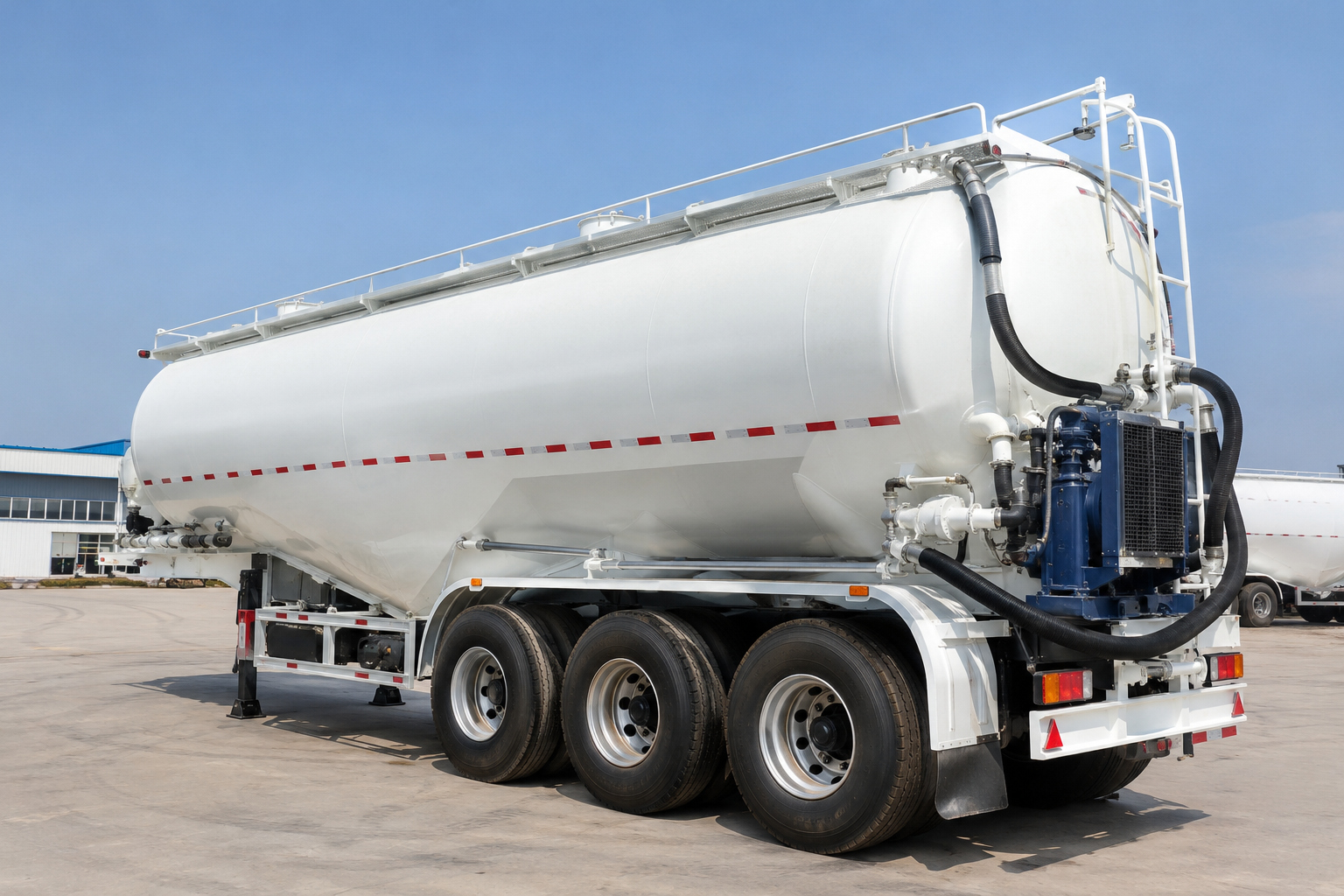
A bulk powder tank semi-trailer, also known as a dry bulk tanker trailer or bulk cement tanker, is designed to transport compatible powdered materials in an enclosed tank and discharge them through a dedicated unloading system.
Unlike liquid tanker trailers, dry bulk tankers are designed around the flow characteristics of granular or powdered cargo. Their performance depends on the interaction between tank geometry, material properties, air supply, discharge pipelines and receiving equipment.
These trailers are widely used in bulk material logistics, cement distribution, construction supply chains and selected industrial applications.
For buyers comparing bulk powder tanker trailers for sale, the most important step is to match the trailer configuration to the actual cargo and unloading process rather than selecting equipment based on capacity alone.
Cement transportation requires an enclosed system that helps protect the material from moisture and external contamination. Pneumatic unloading can transfer compatible cement products into suitable storage silos at construction sites, batching plants and distribution facilities.
Fly ash is used in various construction and industrial applications. Its bulk density and flow characteristics can vary, so the tank and pneumatic conveying configuration should be selected for the specific material.
Selected lime powders and mineral powders can also be transported in dedicated dry bulk tankers. Material compatibility, particle characteristics, moisture sensitivity and discharge requirements should be evaluated before the trailer is specified.
Not every powder is suitable for the same tanker design. Abrasiveness, hygroscopic behavior, contamination sensitivity and other material characteristics may affect equipment selection.
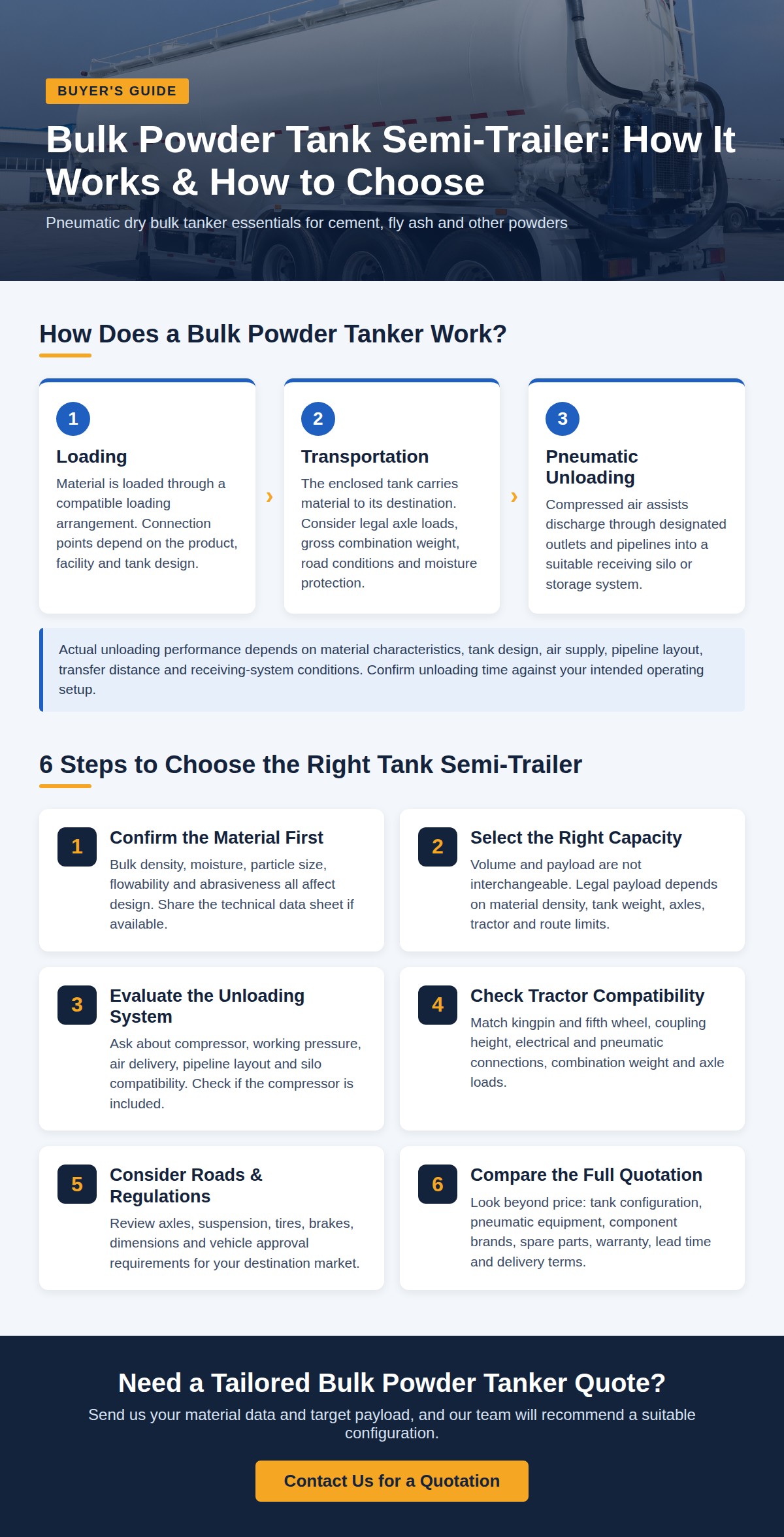
A typical dry bulk tanker operates through three main stages
1. Loading
The material is loaded using a compatible loading arrangement. The loading method and connection points depend on the product, loading facility and tank design.
2. Transportation
The enclosed tank carries the material to its destination. Buyers should consider the trailer's legal axle loads, gross combination weight, road conditions and moisture protection requirements.
3. Pneumatic Unloading
At the destination, the unloading system uses compressed air to assist material discharge through designated outlets and pipelines into a suitable receiving silo or storage system.
Actual unloading performance depends on material characteristics, tank design, air supply, pipeline layout, transfer distance and receiving-system conditions. A specific unloading time should therefore be confirmed against the intended operating setup.
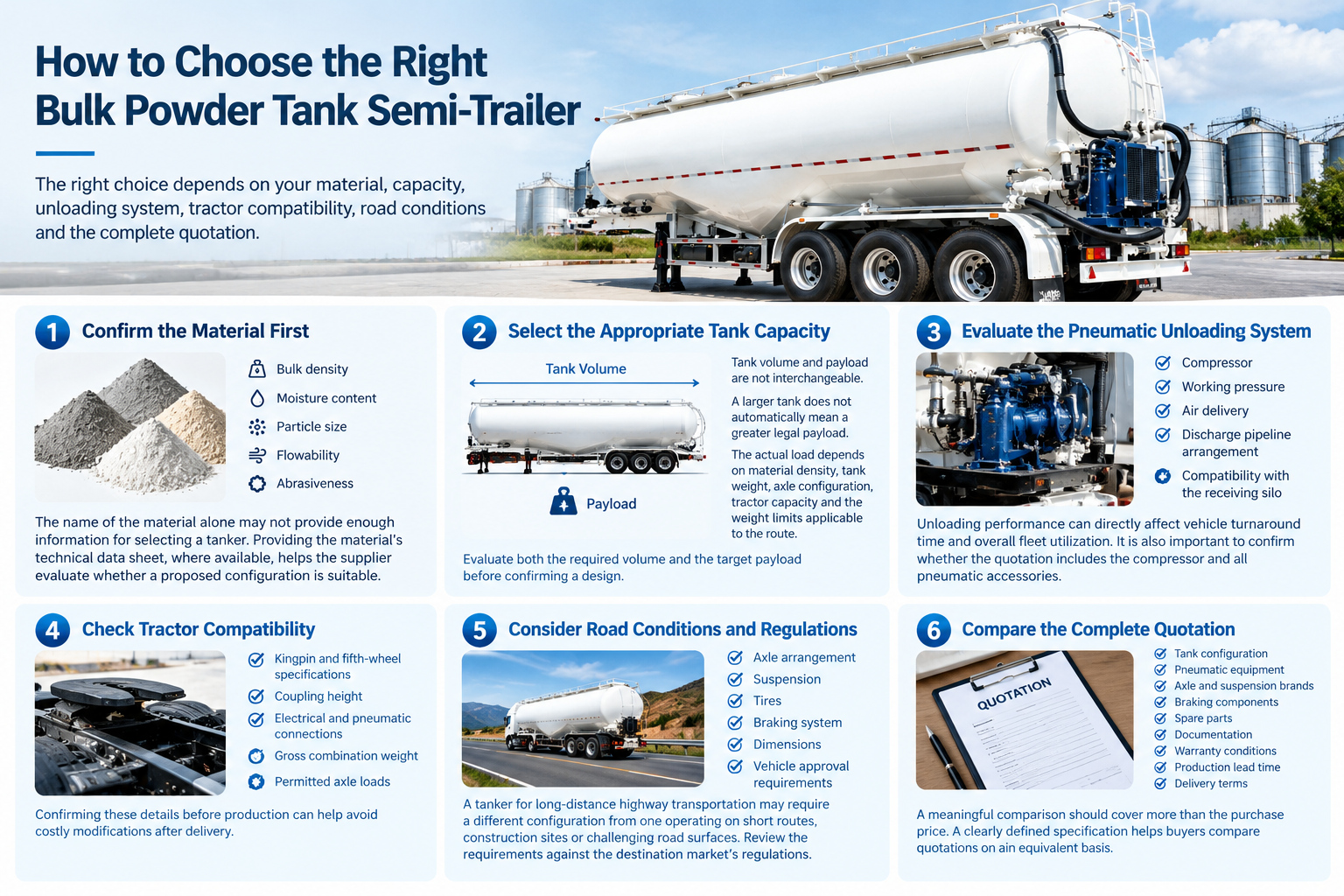
The name of the material alone may not provide enough information for selecting a tanker. Bulk density, moisture content, particle size, flowability and abrasiveness can all influence the design.
Providing the material's technical data sheet, where available, helps the supplier evaluate whether a proposed configuration is suitable.
Tank volume and payload are not interchangeable.
A larger tank does not automatically mean a greater legal payload. The actual load depends on material density, tank weight, axle configuration, tractor capacity and the weight limits applicable to the route.
Buyers should evaluate both the required volume and the target payload before confirming a design.
Unloading performance can directly affect vehicle turnaround time and overall fleet utilization.
When comparing suppliers, ask about the proposed compressor, working pressure, air delivery, discharge pipeline arrangement and compatibility with the receiving silo.
It is also important to establish whether the quotation includes the compressor and all required pneumatic accessories.
The semi-trailer must be compatible with the intended tractor in terms of kingpin and fifth-wheel specifications, coupling height, electrical and pneumatic connections, gross combination weight and permitted axle loads.
Confirming these details before production can help avoid costly modifications after delivery.
A tanker intended for long-distance highway transportation may require a different configuration from one operating on short routes, construction sites or challenging road surfaces.
The axle arrangement, suspension, tires, braking system, dimensions and vehicle approval requirements should be reviewed against the destination market's regulations.
A meaningful comparison should cover more than the purchase price.
Review the tank configuration, included pneumatic equipment, axle and suspension brands, braking components, spare parts, documentation, warranty conditions, production lead time and delivery terms.
A clearly defined specification helps buyers compare quotations on an equivalent basis.
Before placing an order, buyers should request a detailed technical specification covering:
Tank capacity and design configuration.
Tank material and applicable design standard.
Maximum allowable working pressure, where applicable.
Pneumatic system and compressor specifications.
Discharge outlets, valves and pipeline connections.
Axle quantity, suspension and tire specifications.
Braking system and required approvals.
Overall dimensions, tare weight and rated payload.
Tractor coupling compatibility.
Inspection, documentation and warranty requirements.
Pressure-related design parameters must be verified against the applicable engineering standard and local safety regulations. Buyers should not assume that all dry bulk tankers use the same working pressure or equipment arrangement.
Bulk material transport operations differ in cargo type, route conditions, loading facilities and unloading infrastructure. A standardized configuration may not be the most suitable option for every fleet.
A supplier that can discuss technical requirements with the buyer can help define an appropriate combination of tank capacity, unloading equipment, running gear and optional components.
For international buyers, the process should also include destination-market compliance, spare parts planning, shipping arrangements and clear technical documentation.
The objective is not simply to purchase a tanker, but to select equipment that fits the actual transport operation.
Q1: What is the difference between a bulk powder tanker and a liquid tanker?
A bulk powder tanker is designed to transport compatible dry materials and commonly uses a pneumatic unloading arrangement. A liquid tanker is designed around liquid containment, liquid flow and the relevant liquid-cargo requirements. Their tank structures and discharge systems are not interchangeable by default.
Q2: Can a bulk powder tank semi-trailer transport cement and fly ash?
Some configurations may be suitable for both materials, but compatibility must be confirmed. Material characteristics, cleaning requirements, tank design and unloading performance should be evaluated before switching cargo types.
Q3: What determines the unloading time?
Unloading time depends on material properties, cargo quantity, compressor performance, working pressure, pipeline length and diameter, and receiving-system conditions. Ask the supplier to specify the assumptions behind any quoted unloading time.
Q4: Can the tank capacity and axle configuration be customized?
Capacity, axle arrangement and related components may be customized subject to engineering feasibility, vehicle regulations and the intended payload. The final configuration should be confirmed in the technical drawing and quotation.
Q5: What information is needed for a quotation?
Please provide the destination country, cargo type, required capacity or payload, tractor specifications, unloading requirements and any mandatory local standards. Reference photos, technical drawings and existing fleet specifications are also helpful.
Choosing the right dry bulk tanker starts with understanding your material, transport route and unloading conditions.
We welcome inquiries from cement distributors, construction material suppliers, fleet operators, equipment importers and bulk logistics companies looking for a suitable bulk powder tank semi-trailer.
Send us your destination market, cargo information, target capacity and technical requirements. We can review your needs and discuss a suitable configuration, component options and quotation for your project.
Contact us to discuss your bulk powder tanker requirements and request a tailored proposal.
Discover our complete semi-trailer collection on our homepage. Our team is ready to assist you with detailed quotations and seamless ordering, so reach out whenever you’re ready.
The bulk powder tank semi-trailer is a specialized transport solution for compatible dry bulk materials that require enclosed storage and controlled discharge during transportation.
Its tank body, pneumatic conveying system and supporting chassis work together to support material loading, road transportation and unloading at the destination. The appropriate configuration depends on material density, flow characteristics, moisture sensitivity, required payload and available unloading equipment.
Compared with general-purpose cargo trailers, a dedicated dry bulk tanker helps reduce exposure to the external environment and supports a more organized bulk-material handling process.
Available configurations can be discussed according to required tank volume, axle arrangement, suspension type, braking system, compressor requirements and local road regulations.
Customization options: tank capacity, tank material, chamber arrangement, discharge outlets, pneumatic system, running gear and accessories, subject to engineering feasibility.
1. Tank Structure
The tank structure should be selected according to the transported material, operating pressure, applicable design requirements and cleaning needs. Tank geometry and internal arrangements should support material flow and practical maintenance.
2. Pneumatic Unloading System
The pneumatic system uses compressed air to assist the movement of compatible powder materials from the tank to the receiving facility. Compressor capacity, working pressure, pipeline dimensions and discharge layout should be matched to the cargo and required unloading performance.
3. Chassis and Running Gear
Axle quantity, suspension, tires, landing gear and braking equipment can be configured according to the intended payload, tractor compatibility and destination-market requirements.
4. Reliable Component Selection
Valves, pipelines, pressure gauges, air connections and other components should be selected for the intended operating conditions. Components must meet the applicable pressure, material-compatibility and safety requirements.
5. Maintenance and Serviceability
Accessible inspection points, practical discharge connections and a clear maintenance plan can help simplify routine inspections and reduce avoidable downtime.
Final specifications should be confirmed through engineering review and agreed before production.
Typical Applications
Cement transportation for construction projects and cement distribution networks.
Fly ash transportation for compatible industrial and construction applications.
Lime powder and selected mineral powder transportation.
Other compatible dry bulk materials, subject to material and equipment suitability.
Customized Solutions for Different Markets
Different markets may have different requirements for overall dimensions, axle loads, braking systems, vehicle approval, road conditions and unloading connections.
Before ordering, buyers should confirm the exact cargo, bulk density, moisture sensitivity, loading and unloading arrangements, transport distance and local regulations.
To help us recommend a suitable configuration, please provide:
Destination country and operating region.
Material type and bulk density.
Required tank volume or payload.
Preferred tractor model and coupling specifications.
Expected unloading method and required unloading performance.
Any mandatory certifications or technical standards.
Based on this information, we can discuss a suitable bulk powder tank semi-trailer configuration and prepare a quotation for your project.
