


In construction, mining and bulk material transportation, unloading efficiency is just as important as loading capacity.
A reliable rear dump trailer allows operators to transport large quantities of loose materials and unload them through a hydraulic tipping mechanism. Instead of manually removing cargo or relying on additional unloading equipment, the trailer raises its cargo body and discharges materials through the rear opening.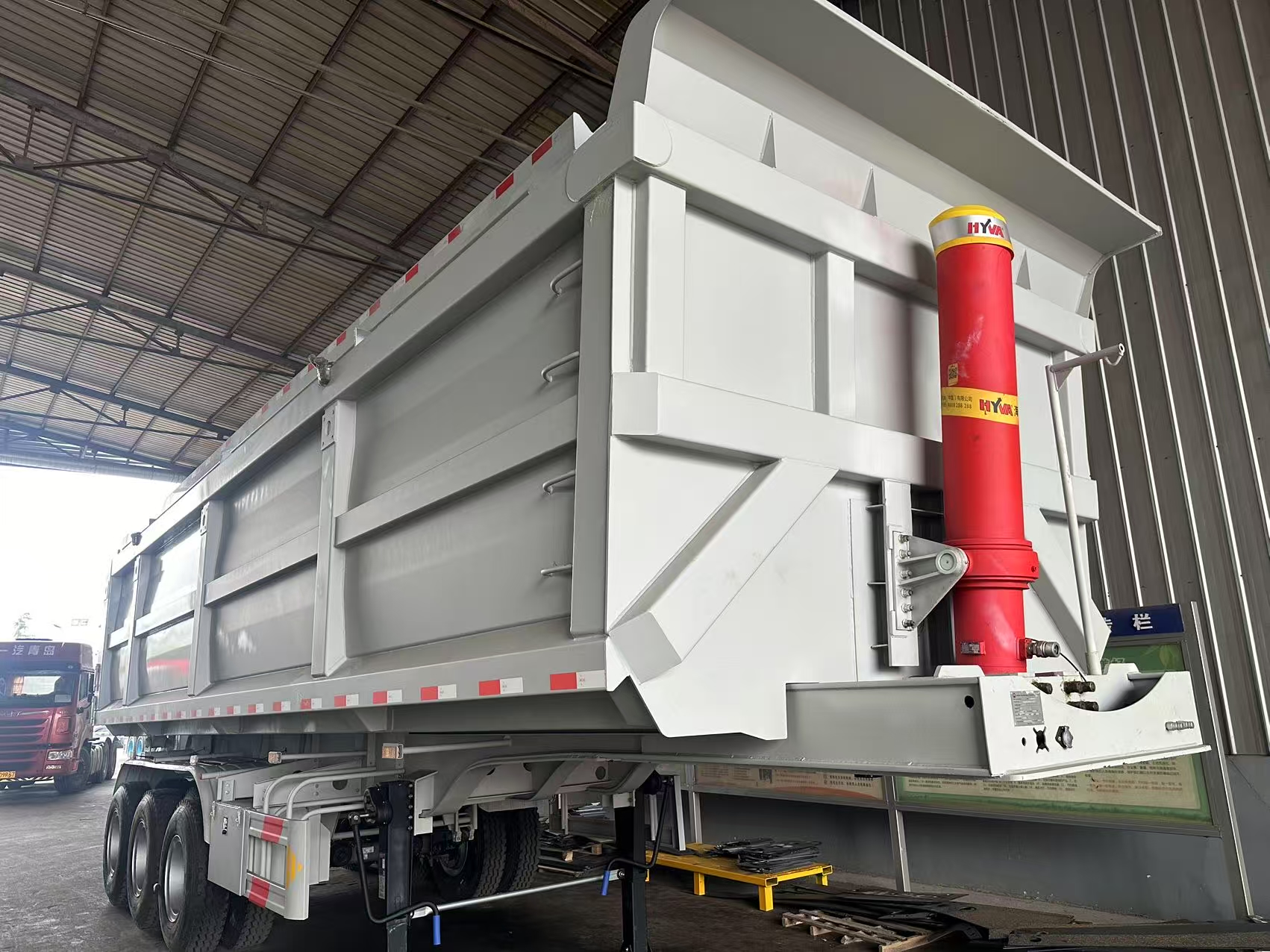
LUCKSUN Rear Dump Semi Trailer
For transportation companies, contractors and commercial vehicle importers, choosing the right rear dump semi trailer involves more than comparing body volume or purchase prices. The hydraulic lifting system, chassis strength, cargo body design, axle configuration and operating environment all influence long-term performance.
Watch the actual factory footage to explore the cargo body, hydraulic lifting cylinder, three-axle configuration and chassis details of the LUCKSUN rear dump semi-trailer.
Inside Our Factory: 3 Axle Rear Dump Semi Trailer | LUCKSUN
LUCKSUN supplies customized semi-trailer solutions for different transportation requirements. This rear tipping model features a reinforced steel cargo body, a front-mounted hydraulic lifting arrangement and a heavy-duty multi-axle chassis.
Whether you are purchasing equipment for construction projects, mining operations or bulk material distribution, understanding these structural details can help you select a more suitable trailer for your business.
For more transportation solutions, explore our semi-trailer product range. LUCKSUN 3 Axle Rear Dump Semi Trailer – Factory Walkaround
A rear dump trailer, also known as a rear tipping semi trailer or rear tipper trailer, is designed to transport and discharge loose bulk materials through the rear of its cargo body.
Its main operating principle is straightforward.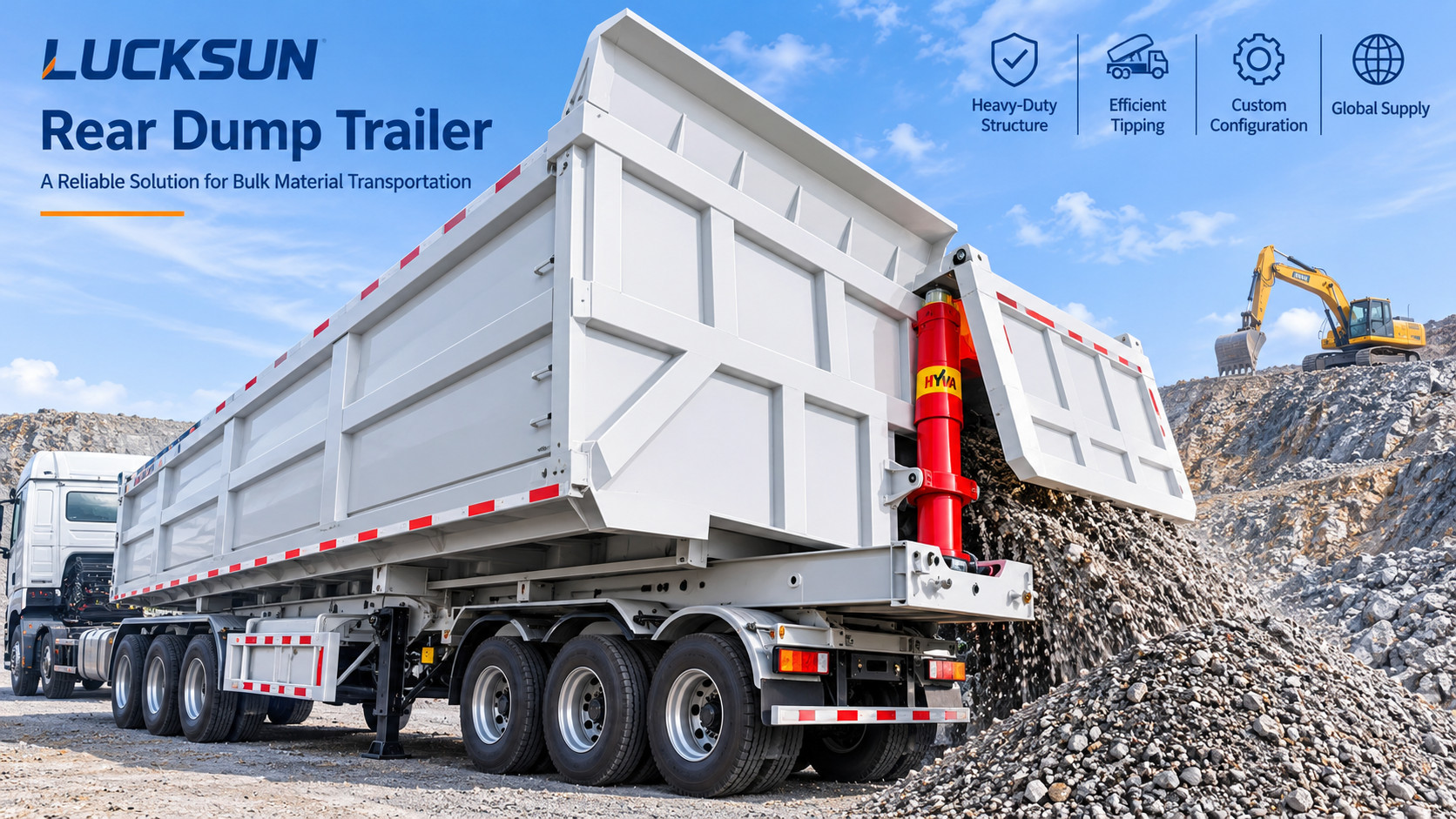
LUCKSUN heavy-duty rear dump semi-trailer featuring a reinforced white steel cargo body, front-mounted red hydraulic lifting cylinder, and three-axle chassis. Designed for efficient rear unloading of sand, gravel, aggregates, coal, and other bulk materials in construction, mining, and infrastructure transportation applications.
The tractor supplies hydraulic power through its PTO-driven system. Hydraulic oil is delivered to the lifting cylinder, which raises the front section of the cargo body. As the body tilts upward, gravity moves the cargo toward the rear discharge opening.
After unloading, the hydraulic system lowers the body back onto the chassis.
A typical rear dump semi trailer consists of the following major assemblies:
Heavy-duty chassis and main beams
Steel cargo body and reinforced side panels
Front-mounted telescopic hydraulic cylinder
Rear tipping hinges and pivot connections
Axle and suspension assemblies
Pneumatic braking system
Landing gear and kingpin
Rear tailgate and discharge mechanism
The design allows bulk materials to be discharged without requiring a separate mechanical unloading machine at every delivery location.
For companies transporting sand, aggregates, coal, soil and construction materials, this arrangement can simplify daily loading and unloading operations.
If you are comparing different trailer structures, see our complete semi-trailer types guide.
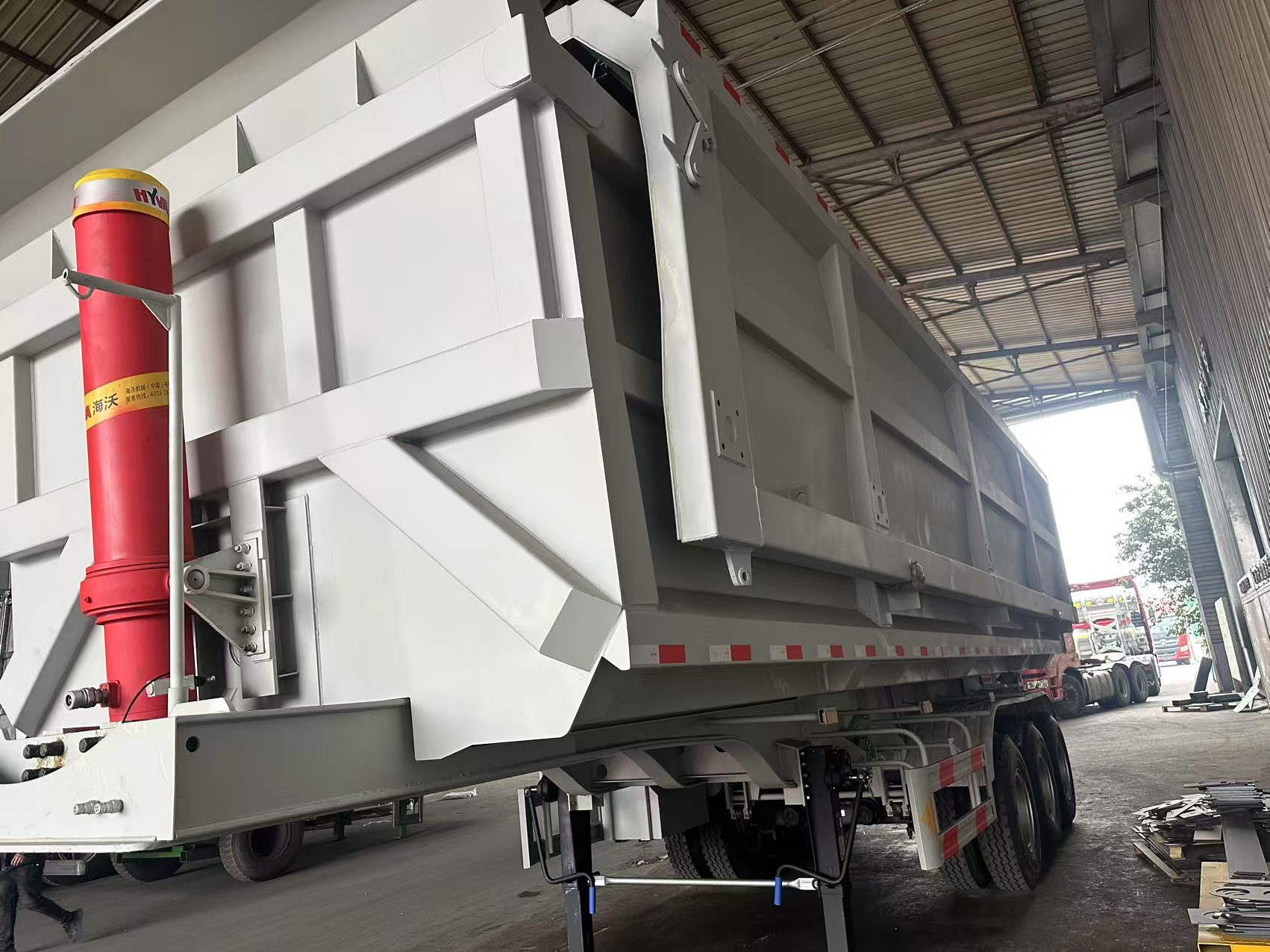
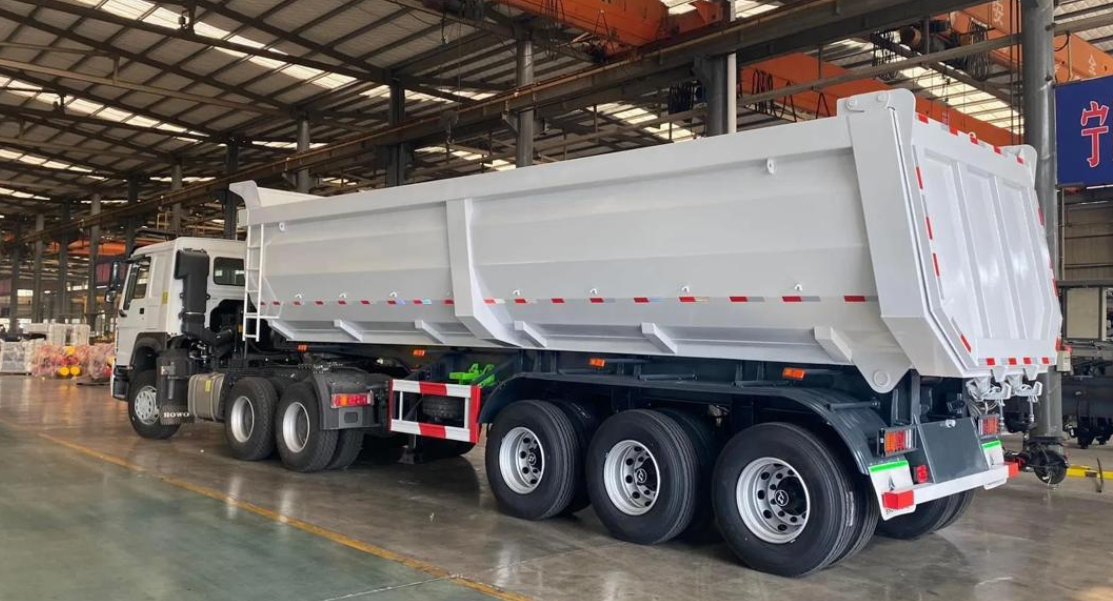
The LUCKSUN rear dump trailer shown in the product photograph combines a steel cargo body with a front-mounted hydraulic lifting arrangement.
Rather than treating the trailer as a simple steel container mounted on wheels, buyers should evaluate how its main structural components work together.
The cargo body is directly exposed to loading impact, material abrasion and repeated unloading cycles.
Its structural design should consider:
Side panel strength and reinforcement layout
Floor plate material and thickness
Front wall reinforcement
Corner connections and welding quality
Rear hinge and tailgate structure
For example, transporting sand creates different wear conditions from carrying large pieces of crushed stone.
A trailer designed for abrasive or heavy materials may require additional reinforcement and a more suitable wear-resistant steel specification.
The correct configuration should therefore be selected according to the cargo rather than simply choosing the thickest available steel.
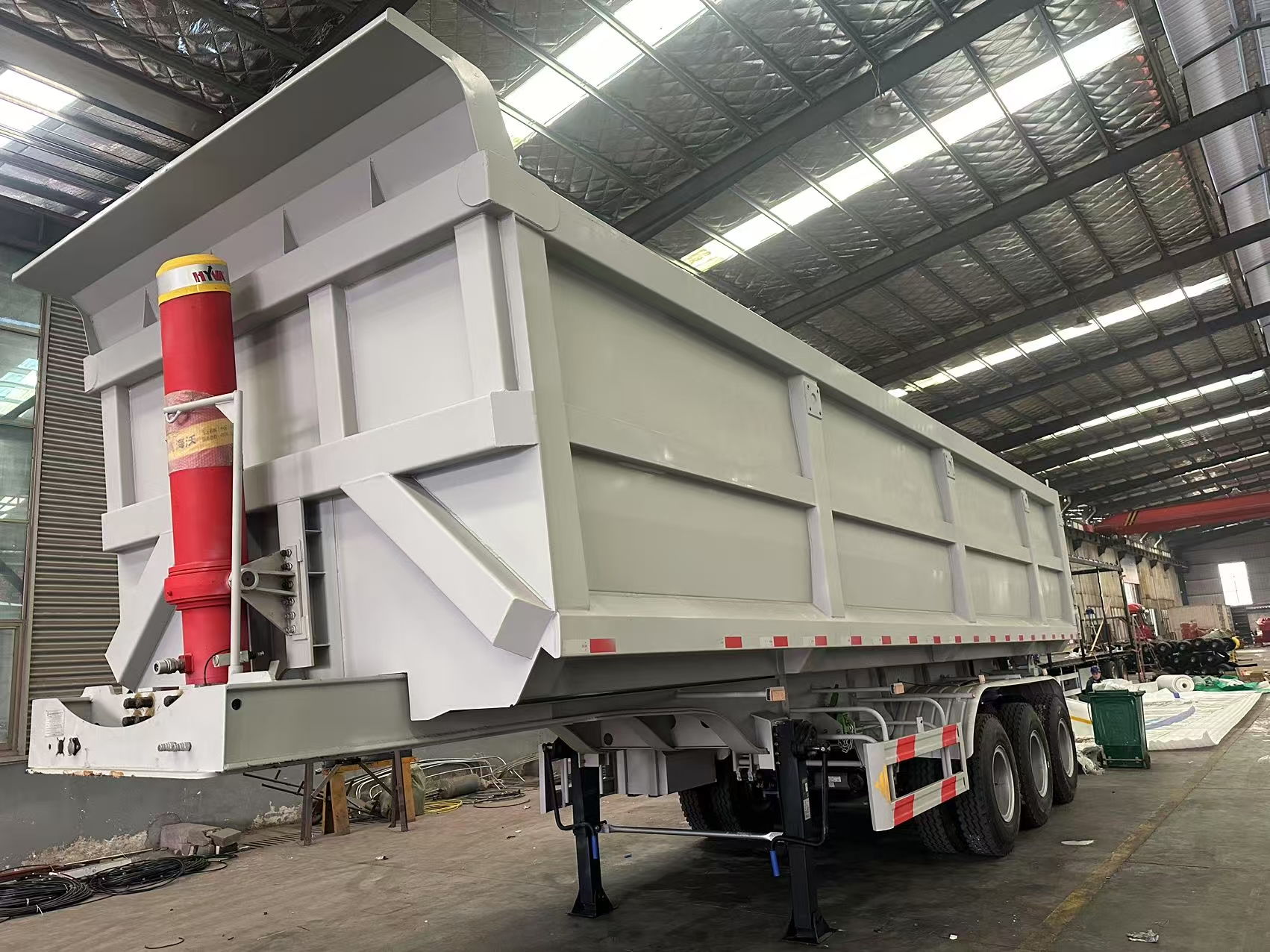
This component provides the lifting force required to raise the loaded body.
The front-mounted arrangement creates the leverage needed to rotate the body around its rear tipping pivots.
When evaluating this system, buyers should pay attention to:
Hydraulic cylinder capacity
Number of telescopic stages
Maximum lifting stroke
Operating pressure
Installation geometry
Hydraulic hose and connection quality
Compatibility with the tractor's hydraulic power system
The cylinder must be correctly matched to the trailer's body dimensions, maximum intended cargo weight and operating requirements.
A larger cylinder is not automatically a better choice. The complete hydraulic system must be engineered as a compatible unit.
The chassis supports the cargo body and transfers the load to the axle and suspension assemblies.
During transportation, it experiences vertical loading, braking forces and road impacts.
During tipping, the load distribution changes significantly, creating additional structural demands around the chassis, rear pivot connections and lifting mechanism.
For this reason, the following areas deserve particular attention:
Main beam material and dimensions
Crossmember arrangement
Reinforcement around the tipping pivot
Hydraulic cylinder mounting points
Welding quality
Corrosion protection
The chassis should be designed around the actual payload, cargo type and road conditions.
For related structural components, explore our semi-trailer components guide.
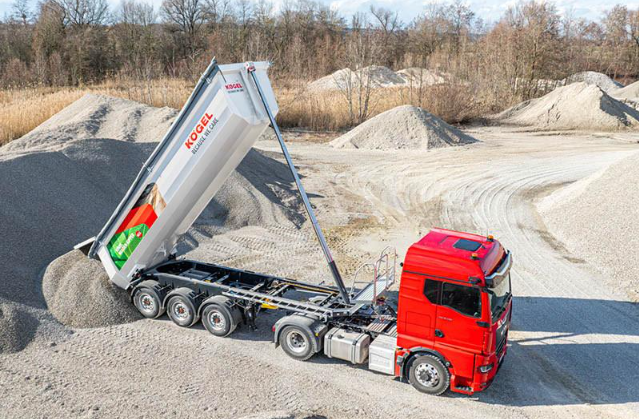
Its purpose is to generate controlled lifting force and allow the cargo body to return safely to its transport position.
A typical hydraulic lifting system includes several interconnected components.
|
Component |
Main function |
|---|---|
|
Power Take-Off (PTO) |
Transfers power from the tractor transmission |
|
Hydraulic Pump |
Generates hydraulic oil flow |
|
Hydraulic Oil Tank |
Stores hydraulic oil |
|
Telescopic Cylinder |
Raises the cargo body |
|
Control Valve |
Controls lifting and lowering |
|
Hydraulic Hoses |
Transport pressurized oil |
|
Safety Components |
Help protect the system against abnormal operating conditions |
Step 1 – Power activation
The driver engages the tractor's PTO according to the manufacturer's operating procedure.
Step 2 – Hydraulic oil delivery
The pump draws oil from the reservoir and supplies it to the lifting circuit.
Step 3 – Cargo body lifting
Pressurized oil extends the telescopic cylinder and gradually raises the front of the cargo body.
Step 4 – Material discharge
The cargo moves toward the rear opening under gravity.
Step 5 – Controlled lowering
The control valve releases hydraulic pressure in a controlled manner, allowing the body to return to its normal position.
For frequent unloading operations, hydraulic component compatibility, correct oil specifications and routine inspection are essential.
LUCKSUN can discuss hydraulic configurations according to the intended tractor, trailer dimensions and operating requirements.
Cargo body geometry is an important consideration when purchasing a rear dump trailer.
The two common designs are rectangular box-type and U-shaped bodies.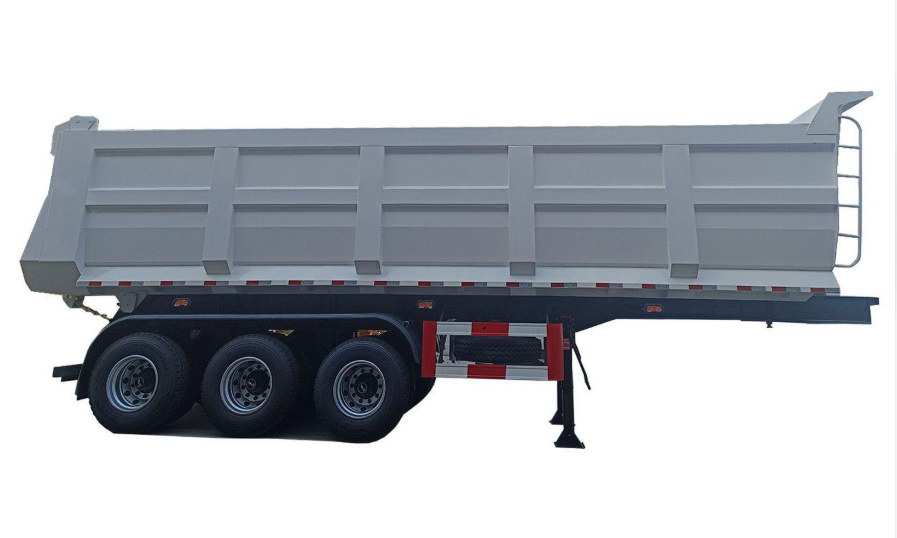
Box-Type Rear Dump Trailer
A practical option for general bulk materials, with a relatively straightforward cargo body structure.
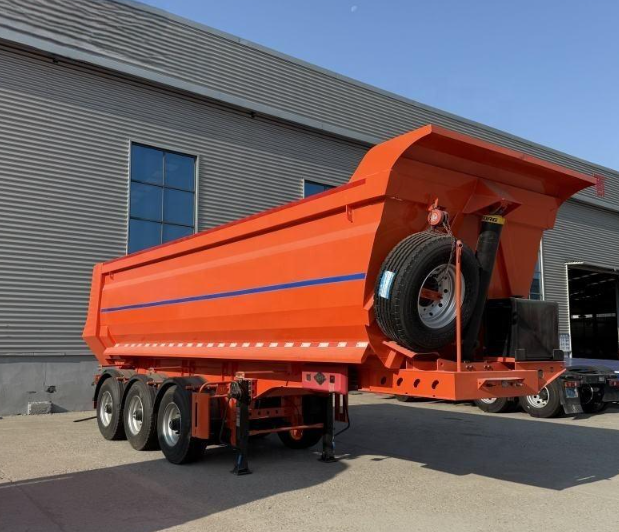
U-Shape Rear Dump Trailer
A curved internal profile can help reduce material accumulation in suitable applications.
|
Selection factor |
Box-type body |
U-shape body |
|---|---|---|
|
Internal structure |
Rectangular |
Curved |
|
Cargo applications |
General bulk cargo |
Suitable loose and potentially sticky materials |
|
Manufacturing |
Conventional panel structure |
Curved body fabrication |
|
Material retention |
Depends on internal corners and surface |
Curved profile may reduce material retention |
|
Selection priority |
Versatility and cargo requirements |
Discharge characteristics |
There is no universal answer.
A box-type trailer may be suitable for general sand, gravel and construction material transportation. A U-shaped body may be worth considering where cargo tends to accumulate around internal corners.
The decision should account for material moisture, particle size, abrasion, loading method and unloading frequency.
For the product shown in the supplied photograph, the visible body is a box-type steel configuration.
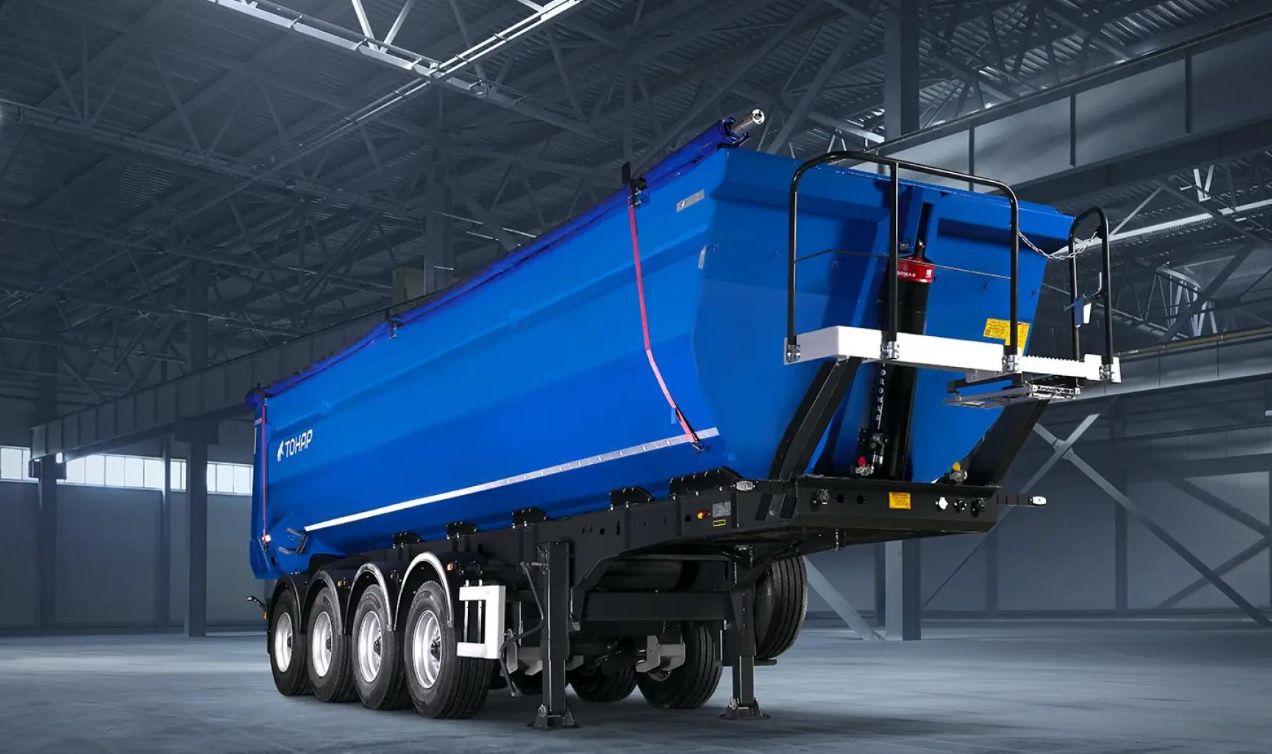
Rear dump trailers are widely used in industries that depend on the movement of loose bulk materials.
Sand and gravel transportation is common in road construction, concrete production and building material distribution.
Important considerations include cargo density, body volume, loading impact and discharge characteristics.
Coal transportation requires a suitable cargo body and a configuration matched to the material's density and the operating environment.
The buyer should also consider loading methods, dust control and tailgate sealing.
Mining applications can create more demanding conditions because of abrasive materials and heavy loading impact.
Body floor protection, structural reinforcement and axle configuration become especially important.
Earthmoving and construction projects often require frequent loading and unloading at different job sites.
The trailer should be matched to the material, site accessibility and the ground conditions at unloading locations.
For bulk material applications, the most important question is not simply how much the trailer can carry, but whether the complete vehicle configuration is suitable for the work.
A rear dump trailer's running gear determines how the vehicle carries and distributes its load during transportation.
Selecting the correct axle and suspension system is particularly important for heavy-duty applications.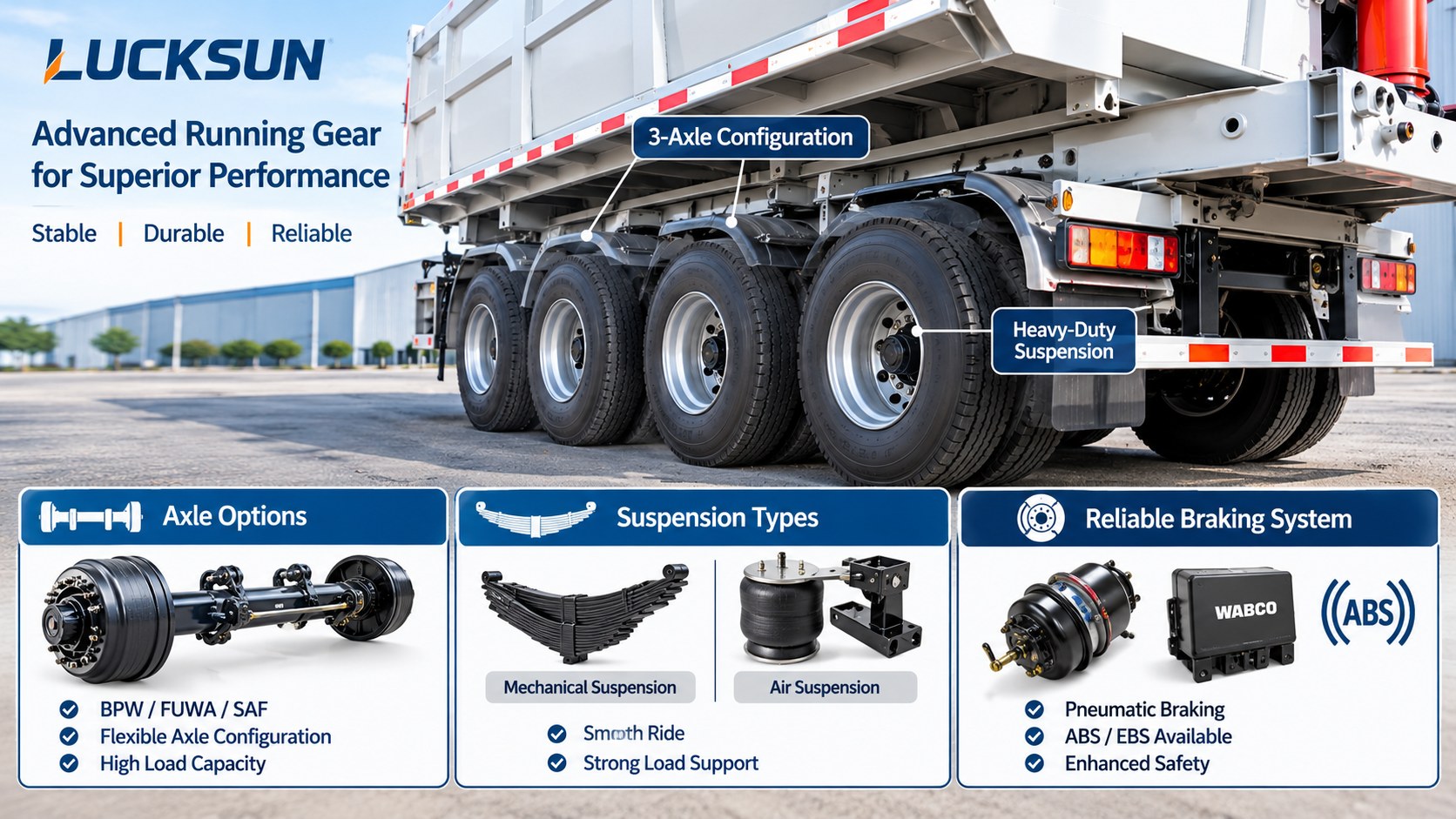
LUCKSUN heavy-duty rear dump semi-trailer running gear featuring a three-axle configuration, durable suspension components and a reliable braking system. The technical presentation highlights BPW, FUWA and SAF axle options, mechanical leaf spring and air suspension systems, and pneumatic braking with ABS/EBS options. Designed for demanding bulk transportation applications, including construction, mining and aggregate transportation.
Three-axle configurations are widely used in conventional rear dump semi trailers, while other axle arrangements may be considered for different payload requirements and local road regulations.
Buyers should confirm:
Rated axle capacity
Axle spacing
Wheel track
Brake configuration
Hub and bearing specifications
Tire load ratings
The axle arrangement must be evaluated together with the tractor, trailer weight and applicable axle-load restrictions.
Explore our semi-trailer axle kit for related component solutions.
Both mechanical and air suspension systems have their own applications.
Mechanical suspension
Relatively straightforward construction
Practical maintenance requirements
Commonly used in heavy-duty transportation
Suitable for many construction and mining operations
Air suspension
Adjustable suspension characteristics
Improved ride characteristics in suitable applications
Useful for operations requiring particular suspension performance
The correct choice depends on road quality, cargo, maintenance resources and local operating conditions.
See our trailer leaf spring solutions and semi-trailer parts range for more information.
A reliable braking system is essential for a fully loaded semi-trailer.
Depending on the destination market and vehicle configuration, buyers can consider pneumatic braking equipment and compatible ABS or EBS systems.
The braking system must be compatible with the tractor and comply with applicable regulations.
LUCKSUN also supplies trailer ABS components for different semi-trailer applications.
Here are seven important factors to consider.
1. Cargo Type
Identify whether the trailer will carry sand, gravel, coal, ore, soil or other bulk materials.
Cargo characteristics determine the body design, material selection and reinforcement requirements.
2. Required Cargo Volume
The body volume should match the actual material density and the legal payload limit.
A larger cargo body does not necessarily mean a higher usable payload.
3. Hydraulic Lifting Capacity
The hydraulic cylinder should be selected according to the cargo body, operating load and required tipping performance.
4. Axle Configuration
The axle arrangement must comply with destination-market regulations and support the intended load distribution.
5. Road Conditions
Consider whether the trailer will mainly operate on highways, construction roads, mining routes or mixed road surfaces.
6. Maintenance and Spare Parts
Check the availability of hydraulic seals, hoses, brake components, bearings and suspension parts.
7. Local Compliance
Confirm overall dimensions, axle loads, lighting, braking requirements and applicable vehicle certification before placing an order.
For companies importing trailers from China, early confirmation of these requirements can reduce specification changes during production.
A rear dump trailer operates under different loading conditions when the cargo body is raised.
The center of gravity moves upward, and the chassis and suspension experience changing forces.
For this reason, safe unloading procedures should be part of the equipment selection and operating plan.
Important precautions include:
Select a firm, level and sufficiently stable unloading surface.
Check the ground for soft soil, uneven areas and underground obstacles.
Ensure the tractor and trailer are properly aligned.
Confirm that the rear discharge area is clear.
Avoid sudden steering or vehicle movement while the body is raised.
Follow the hydraulic system manufacturer's lifting and lowering procedures.
Never exceed the rated operating limits.
Lower the cargo body completely before returning to normal travel.
Why does ground condition matter?
An uneven unloading surface can cause unequal support forces across the trailer. When the body rises, this may increase lateral instability and rollover risk.
A properly designed trailer still requires correct operating procedures. Equipment design and driver practices must work together.
Different markets have different transportation requirements.
A construction company transporting sand in East Africa may have different needs from a mining contractor moving heavy aggregates or a distributor supplying bulk materials to multiple customers.
LUCKSUN provides customized semi-trailer solutions based on the customer's intended application.
Available configuration discussions include:
|
Configuration |
Customization considerations |
|---|---|
|
Cargo body |
Box-type or U-shape, dimensions and volume |
|
Body material |
Steel grade and wear resistance |
|
Floor and side panels |
Thickness and reinforcement |
|
Hydraulic system |
Cylinder type, lifting capacity and components |
|
Axles |
Number, capacity and brand |
|
Suspension |
Mechanical or air suspension |
|
Tires |
Size and load rating |
|
Brakes |
Pneumatic, ABS or EBS options |
|
Appearance |
Paint color and customer requirements |
|
Accessories |
Tailgate, spare tire carrier and toolboxes |
The final specification should be confirmed through technical communication rather than assuming that every option is suitable for every trailer.
Customers can also explore our side wall semi-trailers and flatbed semi-trailers when comparing alternative cargo transportation solutions.
For a heavy-duty rear dump trailer, quality control should cover more than the external paint finish.
Important inspection points include:
Steel material and structural component verification.
Main beam and crossmember welding inspection.
Cargo body assembly and reinforcement inspection.
Rear pivot and hydraulic cylinder installation checks.
Axle and suspension installation.
Brake and electrical system inspection.
Hydraulic lifting and lowering function testing.
Final appearance and configuration verification.
The objective is to ensure that the trailer's major assemblies work together according to the confirmed technical specification.
Learn more about LUCKSUN and its manufacturing background.
Buyers sometimes compare rear dump trailers with side dump trailers when selecting equipment for bulk material transportation.
Both use hydraulic lifting systems, but their discharge directions and operating requirements are different.
Rear Dump Trailer
Discharges through the rear
Suitable for conventional rear unloading areas
Common in construction and bulk transport
Side Dump Trailer
Discharges to the side
Useful for specific site layouts
Requires suitable lateral unloading clearance
|
Comparison |
Rear Dump |
Side Dump |
|---|---|---|
|
Unloading direction |
Rear |
Side |
|
Hydraulic movement |
Rear tipping |
Side tipping |
|
Typical applications |
Sand, gravel, soil, aggregates |
Selected mining and construction applications |
|
Site requirement |
Rear discharge clearance |
Side discharge clearance |
|
Selection priority |
Conventional unloading workflow |
Specific unloading-site layout |
Neither design is universally better.
The best choice depends on the unloading location, material characteristics, available space, operating method and safety requirements.
Selecting a supplier is an important part of the purchasing process.
For international buyers, the supplier should understand not only trailer manufacturing but also technical communication, configuration confirmation and export requirements.
LUCKSUN focuses on semi-trailers and related components for international transportation markets.
Our approach includes:
Application-Based Configuration
We discuss the cargo type, operating conditions, payload requirements and destination-market specifications before confirming the trailer configuration.
Semi-Trailer and Parts Supply
In addition to complete trailers, LUCKSUN offers related components such as axles, suspension assemblies, braking components and other replacement parts.
Customized Product Solutions
Dimensions, cargo body design, axle arrangements and selected components can be discussed according to project requirements.
Export-Oriented Communication
We support international buyers with product specifications, quotation communication and export arrangements.
If you are comparing multiple trailer types, you can also explore our semi-trailer product catalogue.
A rear dump trailer is mainly used to transport loose bulk materials such as sand, gravel, coal, soil, aggregates and certain mining materials. Its hydraulic lifting system allows the cargo body to tilt backward for unloading.
The tractor's PTO drives a hydraulic pump, which supplies pressurized oil to the lifting cylinder. The cylinder raises the front of the cargo body, allowing the material to move toward the rear discharge opening under gravity.
A rear dump semi-trailer is a separate towing unit connected to a tractor through a fifth-wheel coupling. A dump truck is a single powered vehicle with an integrated chassis and tipping cargo body.
The choice depends on transportation distance, operating requirements, fleet structure and loading conditions.
Yes. Cargo body dimensions and volume can be discussed according to the intended cargo, material density, loading equipment, legal payload restrictions and transportation requirements.
The selection depends on the body dimensions, rated load, tipping geometry, hydraulic pressure and required lifting stroke.
A suitable cylinder should be matched to the complete hydraulic system rather than selected by brand or size alone.
Yes, provided that its body material, floor reinforcement, chassis, axles, suspension and hydraulic system are appropriately specified for the cargo and operating environment.
Heavy or abrasive materials may require additional structural and wear protection.
Yes. LUCKSUN can discuss trailer dimensions, axle configurations, suspension, tires, braking systems and other specifications according to destination-market requirements.
The most useful information includes:
Destination country and port
Cargo type
Required cargo volume
Expected payload
Preferred axle configuration
Suspension requirements
Hydraulic system requirements
Quantity required
Providing these details helps the supplier prepare a more accurate technical proposal.
Looking for a reliable rear dump trailer manufacturer in China?
Whether you are purchasing a single rear tipping semi-trailer or sourcing multiple units for a transportation fleet, LUCKSUN can help you evaluate suitable configurations based on your cargo, operating conditions and destination market.
Tell us what materials you transport, how much volume you need and where the trailer will operate.
Our team can discuss the appropriate cargo body, hydraulic lifting system, axle configuration and other technical requirements.
LUCKSUN – Semi-Trailer Solutions for Global Transportation.
Visit our official website or contact the LUCKSUN team to discuss your project and request a quotation.
The LUCKSUN 3 Axle 40FT Rear Dump Semi Trailer is designed for heavy-duty bulk material transportation and efficient rear unloading. Featuring a reinforced steel chassis, a hydraulic tipping mechanism and a durable cargo body, this trailer provides a practical solution for construction, mining, quarrying and infrastructure transportation projects.
The trailer adopts a reinforced frame structure with an X-shaped reinforcement design to improve structural support under demanding operating conditions. Its front-mounted external hydraulic cylinder seat allows convenient cylinder installation and maintenance. The integrated tipping hinge mechanism is designed to support stable cargo body movement during unloading.
1. Reinforced Chassis Structure
The chassis incorporates an X-shaped reinforcement arrangement and a high-strength steel structure to support the cargo body and distribute operating loads.
2. Front-Mounted Hydraulic Lifting System
The front external cylinder mounting arrangement facilitates hydraulic cylinder installation and maintenance. The hydraulic tipping system raises the cargo body to discharge bulk materials through the rear opening.
3. Heavy-Duty Cargo Body
The steel cargo body is designed for transporting sand, gravel, coal, soil and other compatible bulk materials. Body material, floor thickness and reinforcement can be configured according to cargo characteristics.
4. Three-Axle Configuration
The three-axle running gear provides a practical configuration for heavy-duty semi-trailer transportation. Axle brand, suspension and tire specifications can be selected according to operating conditions and destination-market requirements.
5. Flexible Component Selection
Options include different axle brands, mechanical or air suspension, braking components, tires and other accessories to meet individual fleet requirements.
LUCKSUN provides customized rear dump semi-trailer solutions for international buyers, trailer distributors, construction contractors and transportation companies.
| Item | Specification |
|---|---|
| Product Name | 3 Axle 40FT Rear Dump Semi Trailer |
| Trailer Type | Rear Dump / Rear Tipping Semi Trailer |
| Reference Length | 40 FT |
| Axle Configuration | 3 Axles |
| Main Frame Material | T700 High-Strength Steel |
| Frame Structure | Reinforced X-Type Structure |
| Cargo Body | Reinforced Steel Structure |
| Bottom Plate | 2.0 – Original specification; unit and material to be confirmed |
| Hydraulic Cylinder | 180-4-6180 |
| Cylinder Mounting | External Front-Mounted Cylinder Seat |
| Tipping Mechanism | Hydraulic Rear Tipping System |
| Suspension | Mechanical Suspension / Air Suspension |
| Leaf Spring | 4 Pieces × 22 mm × 90 mm |
| Axle Brand | BPW / FUWA / SAF / Customized |
| Tire Brand | Double Coin / Triangle / Linglong / Chaoyang / Customized |
| Brake Relay Valve | WABCO |
| ABS System | Comey |
| Brake Chambers | 4 Pairs + 2 Singles |
| Landing Gear | Aluminum Alloy |
| Rear Lighting | LED |
| Reflective Tape | 3M |
| Surface Finish | Electrophoretic Coating / Powder Spraying |
| Exterior Color | Customized |
| OEM / ODM | Available |
Configuration Note: The above specifications are based on the referenced product configuration. Final dimensions, cargo body capacity, payload, floor material and thickness, axle ratings, hydraulic operating parameters, braking configuration and component brands must be confirmed in the final technical agreement. Optional configurations are subject to engineering compatibility and customer requirements.
The LUCKSUN rear dump semi trailer is suitable for a range of commercial transportation applications involving loose and bulk materials.
Construction Materials
Suitable for transporting sand, gravel, crushed stone, soil and other construction materials used in building and infrastructure projects.
Mining and Quarry Operations
Designed for bulk material transportation in mining and quarry environments, with cargo body and chassis specifications selected according to material density, abrasion and operating conditions.
Coal Transportation
Can be configured for transporting coal and other compatible bulk materials, with appropriate cargo body volume and load distribution.
Infrastructure Projects
Suitable for supporting road construction, earthmoving, aggregate distribution and other large-scale infrastructure transportation operations.
LUCKSUN can discuss different configurations according to the customer's transportation requirements.
| Customization Item | Available Options |
|---|---|
| Axle Configuration | 2 Axle / 3 Axle / Other Configurations Subject to Design |
| Axle Brand | BPW / FUWA / SAF / Customized |
| Suspension | Mechanical / Air Suspension |
| Cargo Body | Rectangular / Customized Design |
| Steel Material | High-Strength Steel / Wear-Resistant Steel Subject to Design |
| Hydraulic System | Customized Cylinder and Hydraulic Components |
| Tire Configuration | Different Tire Sizes and Brands |
| Braking System | Drum Brake / ABS / EBS Subject to Compatibility |
| Landing Gear | Aluminum Alloy / Other Options |
| Painting | Customized Color and Surface Treatment |
| Accessories | Spare Tire Carrier, Toolboxes and Other Accessories |
When ordering a rear dump semi trailer, buyers should consider the following factors:
Cargo type and material density
Required payload and cargo volume
Local road conditions and axle load regulations
Tractor compatibility
Hydraulic power and lifting requirements
Destination-country vehicle regulations
The final trailer configuration should be confirmed through technical drawings and a detailed quotation before production.
Looking for a 3 axle rear dump semi trailer manufacturer in China?
Contact LUCKSUN with your required cargo capacity, material type, destination country and preferred configuration. Our team can help you evaluate a suitable rear tipping semi trailer solution for your transportation business.
