


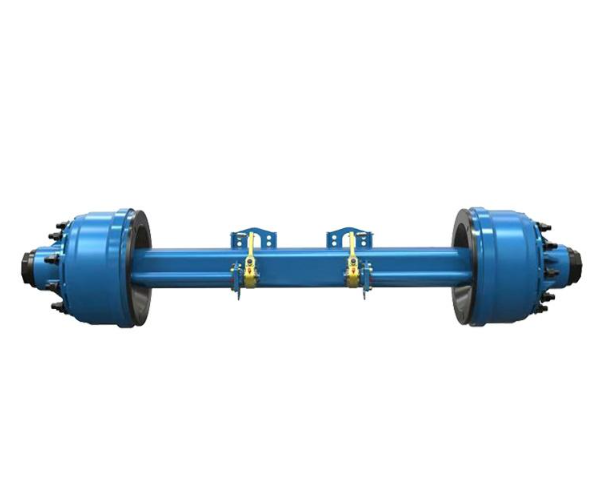
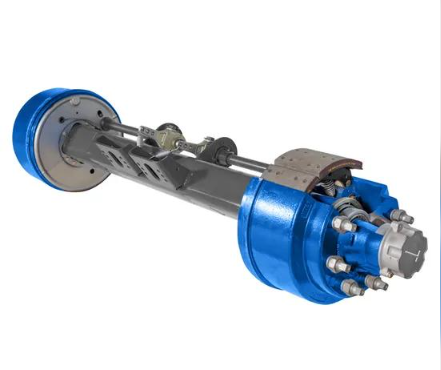
A semi trailer axle is a critical component of a trailer's running gear system. It supports the trailer wheels, transfers vertical loads from the trailer structure to the road, and works together with the suspension, hubs, bearings and braking system.
For commercial semi-trailers, the axle assembly directly affects load distribution, wheel alignment, braking performance, vehicle stability and maintenance requirements.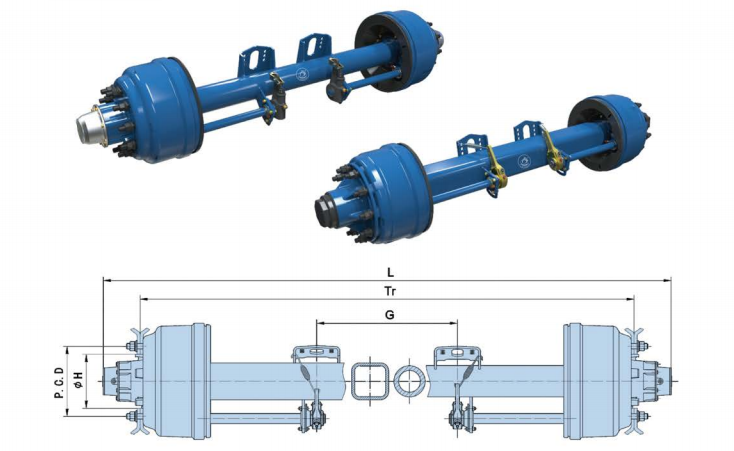
Unlike a simple axle beam, a complete semi trailer axle assembly may include several matched components:
Axle Beam: The main structural member that supports the wheel-end assemblies and transfers loads to the suspension.
Wheel Hubs: Connect the wheels to the axle through the bearing system.
Bearings and Seals: Support wheel rotation and help protect the wheel-end assembly.
Brake Assembly: Provides the braking force through drum or disc brake configurations.
Brake Mounting Components: Include brake spiders, brackets and associated mounting structures.
Suspension Mounting Brackets: Connect the axle assembly to the trailer suspension system.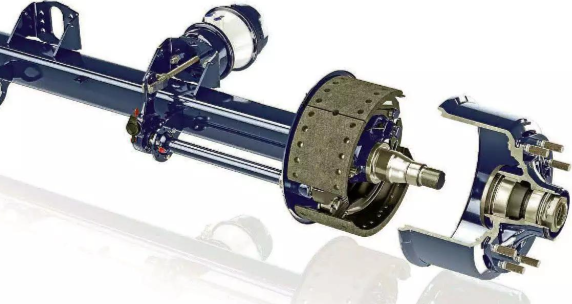
The correct axle configuration depends on the trailer's gross vehicle weight, axle-group load distribution, suspension arrangement, wheel specifications, braking requirements and local road regulations.
Different trailer applications require different axle structures. Understanding the main axle types helps buyers select suitable components for new trailer production or replacement projects.
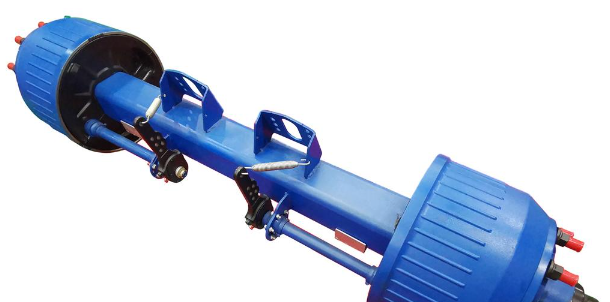
German type drum brake axles are commonly used in European-style semi-trailer configurations and various international trailer markets.
They typically feature a compatible axle beam, wheel hubs and drum brake assemblies. Their design needs to match the suspension mounting arrangement and wheel-end specifications of the trailer.
Main characteristics:
Drum brake configuration.
Suitable for compatible German-style suspension systems.
Available in different axle load ratings.
Designed for heavy-duty commercial trailer applications.
Suitable for flatbed, skeletal and cargo semi-trailers.
Typical applications: Container chassis, flatbed trailers, sidewall trailers and general cargo semi-trailers.
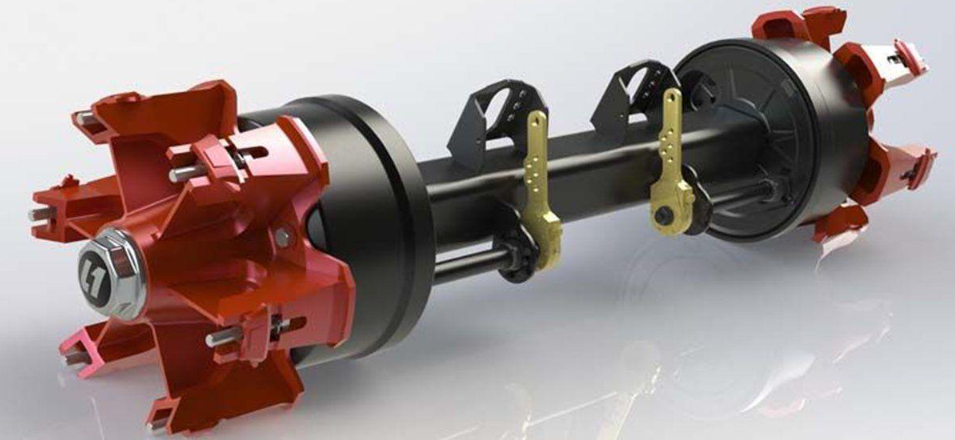
This design is associated with certain traditional heavy-duty trailer configurations and can be selected according to the intended wheel mounting arrangement.
Main characteristics:
Spoke-style hub design.
Heavy-duty axle structure.
Compatible with specified wheel and brake configurations.
Available for selected commercial trailer applications.
Before ordering, buyers should confirm the hub design, wheel mounting interface, brake dimensions and replacement-part compatibility.
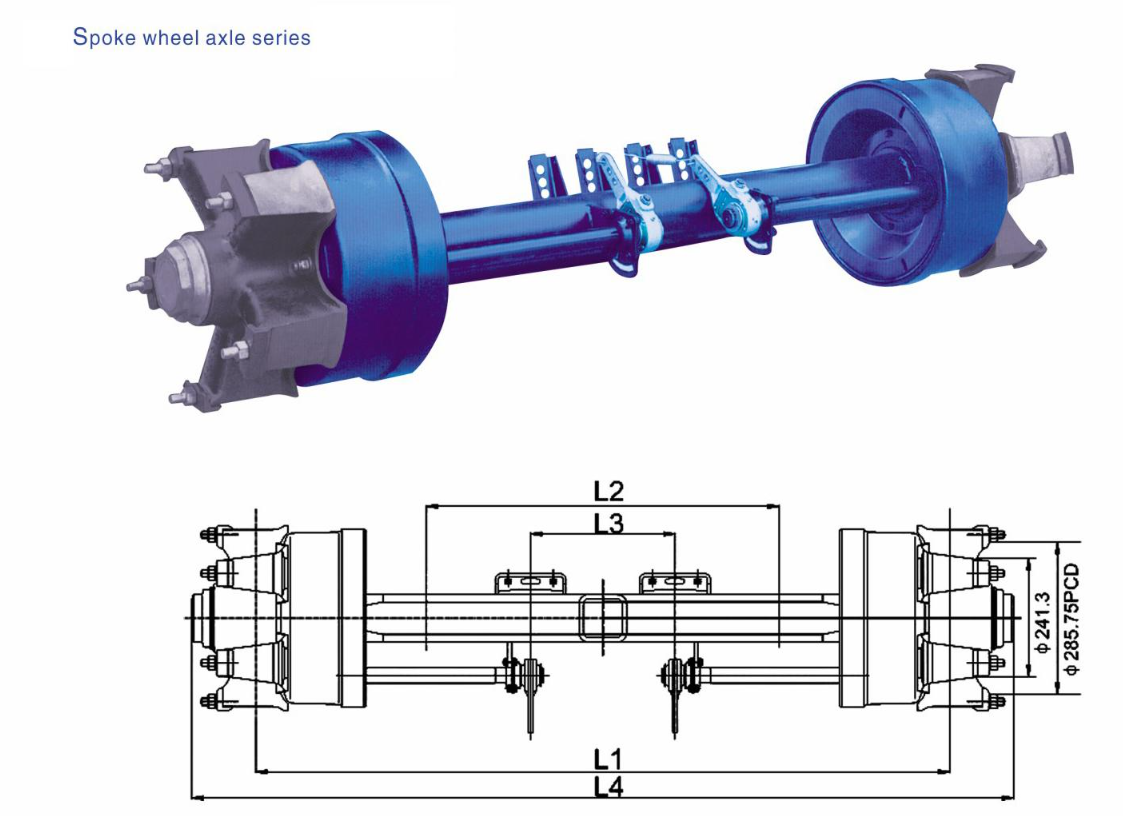
American type spoke hub axles are designed for trailer configurations that use compatible American-style wheel-end and hub arrangements.
They are relevant to buyers who operate trailers with established American-type axle and wheel specifications.
Key considerations:
Hub and spoke configuration.
Wheel mounting dimensions.
Brake assembly compatibility.
Axle load rating.
Suspension mounting dimensions.
For fleet operators, maintaining consistency with existing axle and wheel-end components can simplify maintenance and spare-parts procurement.
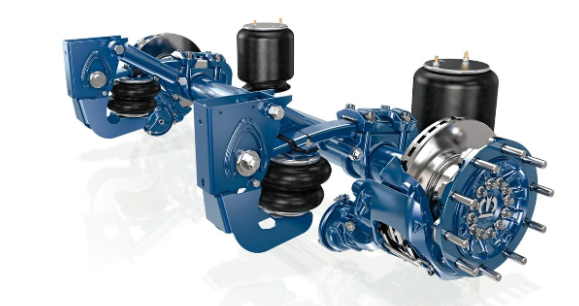
Disc brake axles use brake rotors and calipers to generate braking force.
Compared with drum brake systems, air disc brakes have different braking components, maintenance procedures and installation requirements.
Main advantages:
Consistent braking performance when correctly specified.
Accessible brake components for inspection.
Different service and replacement procedures from drum brakes.
Suitable for trailer configurations designed for air disc braking systems.
Buyers should confirm rotor dimensions, caliper model, brake chamber arrangement, ABS compatibility and wheel clearance before selecting a disc brake axle.
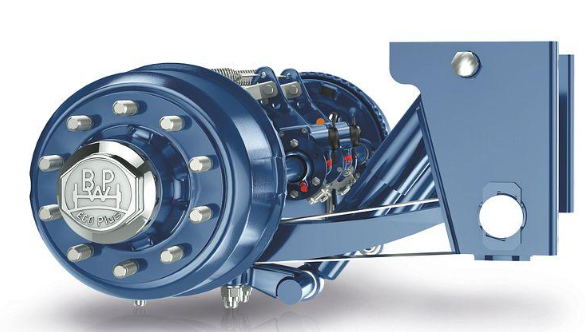
They are particularly relevant to trailers transporting excavators, bulldozers, construction machinery and other heavy equipment.
Main characteristics:
Application-specific axle geometry.
Compatible with designated lowbed suspension systems.
Available with different braking configurations.
Designed around required ground clearance and loading height.
The axle design must be coordinated with the trailer frame, suspension position, deck height and wheel clearance.
A full drop axle features a lowered beam geometry compared with a conventional straight axle.
It can be used in trailer designs where the axle position and ground-clearance arrangement require a specific lowered configuration.
Its final dimensions must be matched with the suspension and trailer chassis design to avoid interference and incorrect wheel positioning.
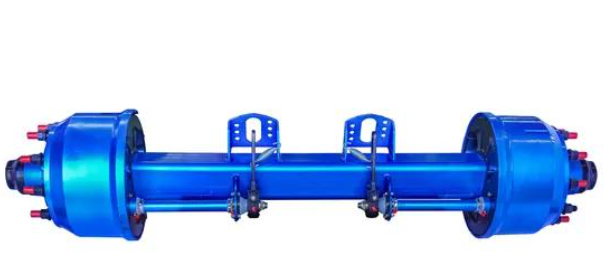
A drop centre axle incorporates a lowered central beam section.
This configuration can help accommodate specific chassis layouts and clearance requirements, depending on the overall trailer suspension design.
When selecting this axle, buyers should pay attention to beam geometry, mounting dimensions, axle rating and tire clearance.
An axle beam is the main structural component of an axle assembly. It supports the wheel-end components and connects the wheel loads to the suspension system.
Axle beams can be supplied as part of a complete axle assembly or as individual components for compatible replacement and manufacturing applications.
Important specifications include:
Beam profile and material.
Beam diameter or cross-section.
Overall length.
Spindle configuration.
Spring seat spacing.
Mounting bracket positions.
A trailer axle should be evaluated as an integrated system rather than as an individual steel beam.
|
Component |
Main Function |
|---|---|
|
Axle Beam |
Supports the axle structure and transfers loads |
|
Spindle |
Provides the mounting and rotating interface for wheel hubs |
|
Wheel Hub |
Connects the wheel to the axle |
|
Bearings |
Support smooth wheel rotation |
|
Oil Seal |
Helps prevent lubricant leakage and contamination |
|
Brake Drum / Rotor |
Provides the friction surface for braking |
|
Brake Shoes / Caliper |
Generates braking force |
|
ABS Components |
Support anti-lock braking system operation |
|
Mounting Brackets |
Connect the axle to the suspension |
Component compatibility is essential. For example, replacing a drum brake axle with a disc brake axle may require changes to the brake system, wheel clearance, mounting arrangement and related control components.
One of the most common purchasing decisions is choosing between drum brake and disc brake axle configurations.
Drum Brake Axle
Enclosed drum and brake shoe configuration.
Disc Brake Axle
Rotor and caliper braking configuration.
|
Comparison |
Drum Brake |
Disc Brake |
|---|---|---|
|
Braking components |
Drum and brake shoes |
Rotor and caliper |
|
Maintenance |
Requires drum and shoe inspection |
Requires rotor and pad inspection |
|
Heat management |
Depends on drum design and operating conditions |
Generally offers better heat dissipation |
|
Wheel compatibility |
Requires suitable drum and hub dimensions |
Requires rotor and caliper clearance |
|
Selection |
Common established trailer configurations |
Suitable for compatible modern braking systems |
Which one should buyers choose?
Drum brake axles may be appropriate when the trailer fleet already uses drum brake systems and replacement-part availability is important.
Disc brake axles may be preferable when the trailer design, operating conditions and braking specifications support an air disc brake system.
Neither configuration is universally better. The decision should be based on operating conditions, maintenance capability, vehicle regulations and total ownership costs.
Selecting the correct axle requires more than confirming the rated load. The axle must match the complete trailer running gear system.
The axle rating must be selected according to the trailer's intended payload, tare weight, load distribution and number of axles.
For example, a three-axle trailer cannot automatically be considered suitable for a particular payload simply by multiplying the nominal rating of one axle by three.
Buyers should consider:
Maximum gross vehicle weight.
Actual axle-group load distribution.
Kingpin load.
Axle spacing.
Road and operating conditions.
Applicable legal axle-load limits.
The rated capacity of an individual axle is not the same as the legally permitted payload of the complete trailer.
These dimensions are essential for installation compatibility.
The axle track determines the relevant wheel positioning dimension, while the spring centre distance defines the spacing between the suspension mounting or spring seat reference points.
Incorrect dimensions may cause installation problems, wheel alignment issues or suspension incompatibility.
Confirm whether the trailer requires drum brakes or disc brakes.
Also check:
Brake drum or rotor dimensions.
Brake shoe or pad specifications.
Brake chamber type.
ABS sensor and tone ring arrangement.
Brake mounting interfaces.
The hub must match the wheel mounting arrangement.
Important details include:
Number of wheel studs.
Bolt circle diameter (PCD).
Hub pilot diameter.
Stud thread specifications.
Wheel offset and clearance.
Bearing and seal specifications.
Different countries and trailer fleets may use different axle, braking and suspension standards.
Before placing an order, buyers should confirm the applicable vehicle approval requirements, axle load regulations, braking regulations and compatibility with existing fleet components.
The following table is a product-page specification template based on the axle series shown in your supplied images. Exact values should be completed using the corresponding production drawings and confirmed configurations.
|
Specification |
Available Options / Details |
|---|---|
|
Product Name |
Semi Trailer Axle Assembly |
|
Product Category |
Heavy-Duty Trailer Axle |
|
Axle Types |
German / American / Spoke Hub |
|
Brake Type |
Drum Brake / Disc Brake |
|
Axle Structure |
Straight / Full Drop / Drop Centre |
|
Rated Axle Load |
Customized according to application |
|
Axle Beam |
Standard / Customized |
|
Track Width |
Customized |
|
Spring Centre (G) |
Customized |
|
Overall Length (L) |
Customized |
|
Track Dimension (Tr) |
As per technical drawing |
|
Bolt Circle Diameter (PCD) |
Customized |
|
Hub Pilot Diameter (ØH) |
Customized |
|
Suspension Type |
Mechanical / Compatible Bogie |
|
Wheel-End Components |
Hubs / Bearings / Seals |
|
Application |
Flatbed / Lowbed / Skeletal / Dump Trailer |
|
Installation |
Customized mounting configuration |
Understanding the axle drawing dimensions
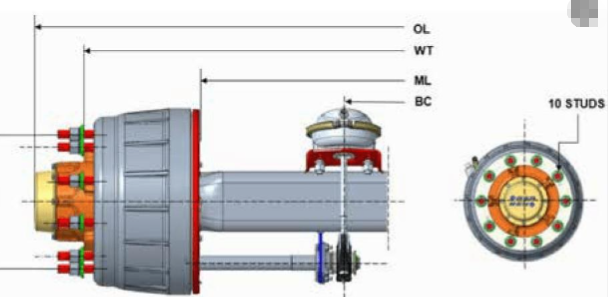
The technical drawing provided with your product images identifies several important reference dimensions:
L: Overall axle length.
Tr: Track-related reference dimension.
G: Spring centre distance.
P.C.D: Wheel stud pitch circle diameter.
ØH: Hub-related diameter reference.
These labels should be confirmed against the original engineering drawing before being used as final manufacturing dimensions.
Different axle configurations serve different semi-trailer applications.
Suitable axle assemblies support container, steel and general cargo transportation.
Low-loader axles are selected according to deck height, suspension geometry and heavy-equipment transportation requirements.
Axle assemblies must be matched to the trailer's load distribution and operating conditions.
Suitable axle configurations support container transportation and compatible suspension systems.
LUCKSUN focuses on semi-trailers and semi-trailer parts for international commercial vehicle markets.
Our axle product range covers different structural designs and braking configurations to support various trailer manufacturing, replacement and fleet maintenance requirements.
What We Offer
Multiple Axle Configurations: German type, American type, spoke hub, disc brake, drum brake and specialized axle designs.
Application-Based Selection: Axle configurations selected according to trailer type, load requirements and operating conditions.
Customized Specifications: Dimensions, mounting interfaces, hub configurations and braking arrangements can be discussed according to technical requirements.
Trailer Parts Supply: Axles and related semi-trailer components for different procurement needs.
Export-Oriented Service: Support for overseas importers, trailer manufacturers, distributors and fleet operators.
Our objective is to help buyers identify compatible axle solutions for their trailer projects and long-term spare-parts requirements.
They differ in structural design, hub configuration, mounting interfaces and commonly used wheel-end arrangements. The correct selection depends on the trailer's existing specifications and destination market.
A drum brake axle uses brake drums and brake shoes, while a disc brake axle uses rotors and calipers. Their maintenance procedures, component dimensions and installation requirements are different.
Axle load ratings vary according to axle design, beam construction, spindle configuration and intended application. Common commercial trailer configurations include different 9-ton, 11-ton, 13-ton and higher-capacity options. Final ratings must be confirmed against the manufacturer's specifications and applicable regulations.
Yes. Depending on the product design, customization can include axle length, track width, spring centre distance, hub configuration, bolt pattern, brake type and mounting dimensions.
Yes. Dedicated low-loader axle configurations are available for compatible lowbed trailer designs. The axle geometry must be matched to the suspension, frame clearance and intended loading requirements.
Buyers should provide the original axle model, rated load, axle dimensions, hub specifications, brake type and suspension mounting measurements. Photos of the existing axle and its identification plate are also helpful.
Bulk procurement can be discussed for trailer manufacturers, importers, distributors and fleet operators. The order quantity, technical configuration, packaging and delivery requirements should be confirmed before quotation.
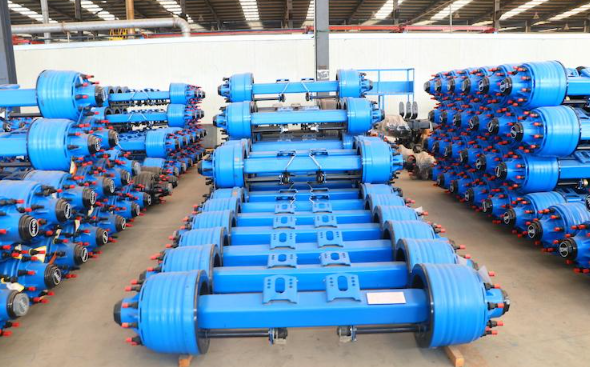
Looking for a reliable semi trailer axle supplier?
Whether you need German type axles, American spoke hub axles, drum brake axles, disc brake axles, low-loader axles or customized axle beams, LUCKSUN can help you identify a suitable configuration.
To receive an accurate quotation, please provide:
Required axle type and quantity.
Rated axle load.
Brake type: Drum or Disc.
Track width and spring centre distance.
Hub and wheel specifications.
Destination country.
Technical drawing or existing axle photos, if available.
Contact LUCKSUN today to discuss your semi trailer axle requirements and request a quotation.
Product Description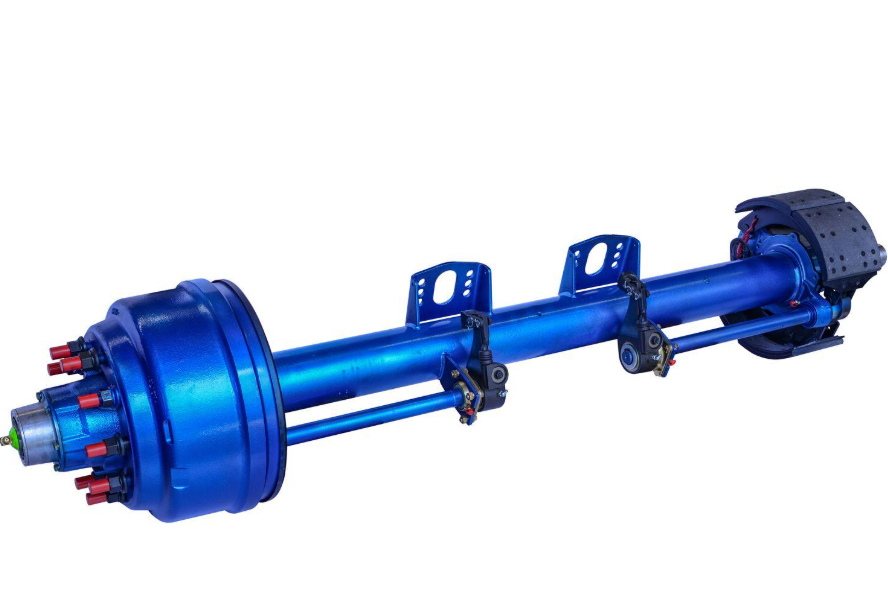
LUCKSUN supplies heavy-duty semi-trailer axle assemblies designed for different trailer configurations and transportation applications. Our product range includes German type drum brake axles, German spoke hub axles, American spoke hub axles, disc brake axles, low-loader axles, full-drop axles, drop-centre axles and axle beams.
These axle assemblies are designed to support the trailer's load-bearing system and work with compatible suspension, wheel-end and braking components.
Different configurations can be selected according to trailer design, rated axle load, operating conditions and destination-market requirements.
Main Configuration Options
Rated axle load: Multiple capacity options
Axle design: German type / American type / Spoke hub type
Brake system: Drum brake / Disc brake
Axle structure: Straight / Drop centre / Full drop
Suspension: Mechanical suspension / Compatible bogie suspension
Wheel-end: Hub, bearings and related components
Installation: Customized mounting dimensions
Application: Flatbed, skeletal, lowbed, dump and other semi-trailers
Application Scenarios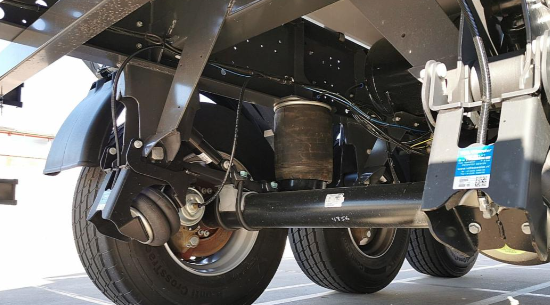
Flatbed and container chassis semi-trailers
Lowbed and low-loader trailers
Dump and tipper semi-trailers
Heavy-duty cargo trailers
Trailer axle replacement and maintenance
Customization Support
Axle load rating, track width, spring centre distance, hub configuration, bolt pattern, brake type and mounting interfaces can be discussed according to the customer's technical drawings and application requirements.

