


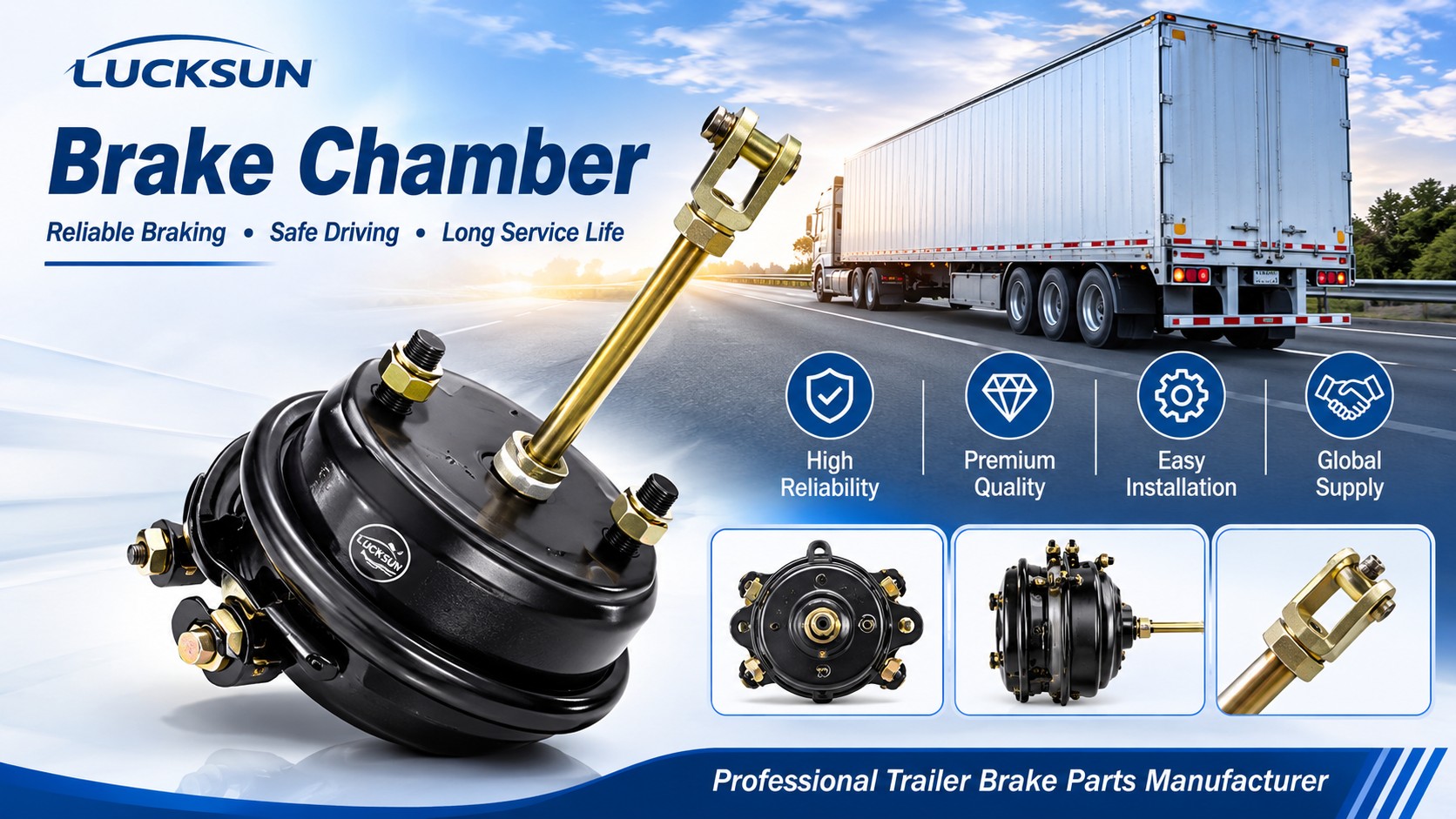
A brake chamber, also known as an air brake chamber or brake actuator, is an important component of a commercial vehicle air braking system. It converts compressed air pressure into mechanical force, which is transferred through a pushrod and brake linkage to activate the wheel braking mechanism.
Brake chambers are widely used on heavy-duty trucks, semi-trailers, container chassis, flatbed trailers, lowbed trailers and other commercial vehicles equipped with air brakes.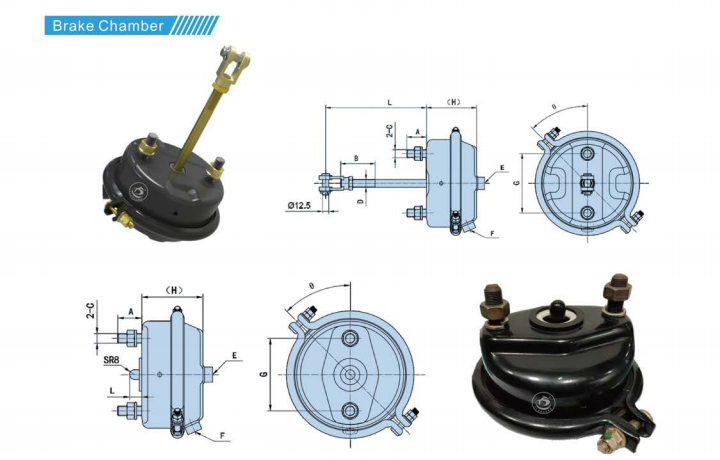
Heavy-duty semi-trailer brake chamber featuring a durable housing, precision-engineered pushrod assembly and detailed mounting dimensions. Designed for commercial vehicle air brake systems, offering reliable braking performance and compatibility with various trailer configurations.
In a typical trailer braking system, the brake chamber works together with several components:
Air brake control valves
Air supply lines and fittings
Brake chamber diaphragm
Pushrod and clevis
Slack adjuster
Brake camshaft
Brake shoes and drum, or compatible disc brake components
The correct brake chamber is essential for maintaining braking compatibility, reliable operation and appropriate braking force.
For trailer manufacturers, fleet operators and spare-parts distributors, selecting a compatible brake chamber is an important part of brake system maintenance and replacement.
An air brake chamber converts compressed air into mechanical movement. The operating process depends on whether the vehicle uses a service brake chamber or a spring brake chamber.
When the driver applies the service brake, compressed air enters the brake chamber through the air inlet.
The pressure acts on the flexible diaphragm inside the chamber.
As air pressure increases, the diaphragm moves against the internal return spring and transfers force to the pushrod assembly.
The amount of force generated depends on the applied air pressure and the effective diaphragm area.
The pushrod moves outward and transfers mechanical force to the slack adjuster.
The slack adjuster rotates the brake camshaft, which moves the brake shoes against the brake drum in a compatible drum brake system.
For air disc brake systems, the chamber and linkage must be designed to match the corresponding brake actuator and caliper arrangement.
When the service brake is released, air pressure is exhausted from the chamber.
The internal return spring moves the diaphragm and pushrod back toward their original positions, allowing the brake mechanism to release.
The actual operating arrangement depends on the brake chamber type and the vehicle's braking system design.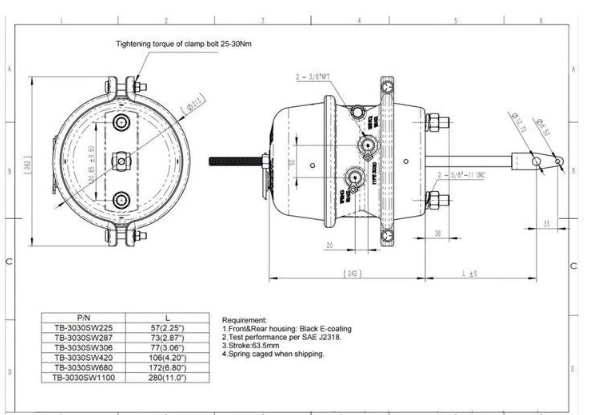
Heavy-duty air brake chamber assembly with pushrod, mounting components and technical dimensions for commercial truck and semi-trailer braking systems.
Selecting the correct brake chamber starts with understanding the differences between the main chamber configurations.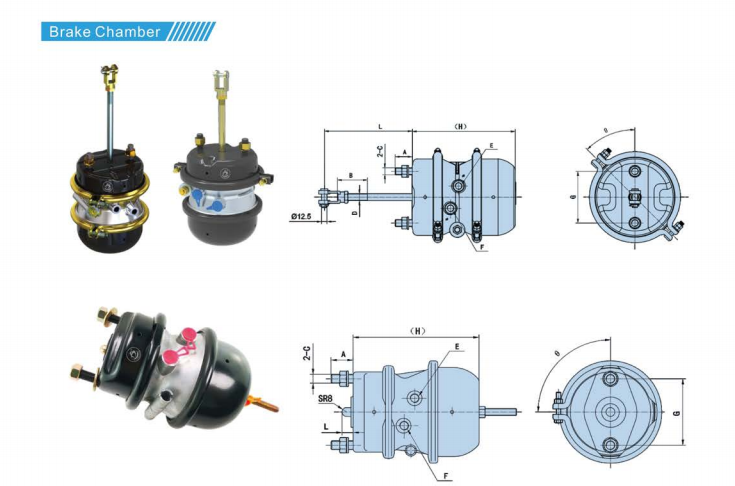
Looking for a reliable brake chamber supplier? Our spring brake chambers and diaphragm brake chambers are engineered for semi-trailers, trucks, and buses, offering strong, consistent braking force and excellent air-tightness. Built with corrosion-resistant housings and long-life diaphragms, they are fully tested for stable performance in demanding conditions. We supply OEM and aftermarket brake chamber models, support custom specifications, and ship worldwide. Contact us for a quote.
A service brake chamber is designed to apply the service brakes using compressed air pressure.
It generally consists of:
Metal chamber housing
Flexible rubber diaphragm
Internal return spring
Pushrod assembly
Air inlet connection
Mounting studs and hardware
When compressed air enters the chamber, the diaphragm moves and pushes the rod outward. When the air pressure is released, the return spring moves the diaphragm and pushrod back.
Main Applications:
Commercial trucks
Semi-trailer service braking systems
Trailer axle brake assemblies
Compatible drum and disc brake applications
A spring brake chamber combines a service brake section with a separate spring brake section.
It is commonly used for service braking, parking braking and emergency braking functions in compatible commercial vehicle air brake systems.
Its main components include:
Service brake section
Spring brake section
Diaphragms
Powerful internal coil spring
Pushrod assembly
Air connections
Housing and mounting hardware
During normal operation, air pressure holds the powerful spring in its compressed position.
When the parking brake is applied or the relevant air pressure is lost, the spring extends and mechanically applies the brake.
Main Applications:
Semi-trailer parking brake systems
Heavy-duty truck braking systems
Commercial trailer emergency braking systems
Important Safety Note: The spring inside a spring brake chamber is under high mechanical tension. Never attempt to disassemble the spring section without the correct safety procedures and qualified personnel.
A combination brake chamber incorporates both service braking and spring parking brake functions in one assembly.
The two sections operate through different mechanisms:
The service section uses compressed air to apply the service brakes.
The spring section uses mechanical spring force to apply the parking or emergency brakes.
This configuration is commonly selected for trailer braking systems that require both functions.
Buyers should confirm the chamber size, spring section specification, stroke, mounting dimensions and air connection arrangement before ordering.
Brake chamber sizes are commonly identified by type numbers. The type number generally corresponds to the effective diaphragm area in square inches.
For example, a Type 30 service chamber has an effective diaphragm area of approximately 30 square inches.
However, chamber size alone does not determine whether a unit is suitable for a particular trailer.
The complete brake configuration, operating pressure, required pushrod force, stroke, foundation brake and installation dimensions must also be considered.
| Specification | Description |
|---|---|
| Product Name | Air Brake Chamber |
| Product Category | Commercial Vehicle Brake Components |
| Chamber Type | Service / Spring / Combination |
| Chamber Size | Multiple Type Options |
| Housing Material | To Be Confirmed by Product Model |
| Diaphragm | Compatible Replacement Design |
| Pushrod | Standard / Customized Length |
| Pushrod Stroke | Standard / Long Stroke, as applicable |
| Mounting Type | Bolt-On Mounting |
| Mounting Stud Spacing | According to Technical Drawing |
| Air Inlet | According to Chamber Design |
| Clevis Connection | Compatible Configuration |
| Brake System | Compatible Drum / Disc Brake Application |
| Application | Truck / Semi-Trailer |
| Packaging | Export Packaging |
| Customization | Subject to Model and Drawing Confirmation |
When replacing or ordering a brake chamber, buyers should pay attention to the following dimensions:
Overall Length (L)
The overall length of the assembly, used to check installation clearance and compatibility.
Housing Dimensions (D)
The relevant housing diameter or dimensional reference, depending on the chamber drawing.
Mounting Dimensions (A and K)
Reference dimensions associated with the mounting arrangement and installation interface.
Connection Dimensions (E and F)
Reference positions for the relevant fittings or connection features.
Pushrod and Connection Geometry (G)
Important for matching the existing brake linkage and installation position.
The exact meaning of each dimension must follow the manufacturer's engineering drawing. Buyers should not rely on approximate visual measurements when ordering replacement parts.
Choosing a brake chamber requires checking the entire braking system rather than selecting a product based only on its external appearance.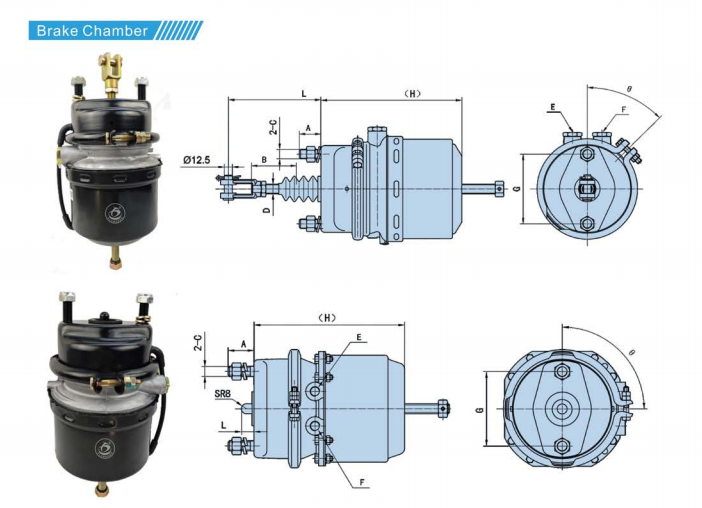
Spring Brake Chambers for Semi-Trailers, Trucks & Buses
These combined spring and service brake chambers provide both service braking and emergency/parking braking in one compact unit, and are widely used on trailer and truck axle systems. The drawings show key fitment dimensions, including pushrod length, mounting stud spacing, air port positions, clevis pin size (Ø12.5) and mounting angle, so you can quickly check compatibility with your axle and slack adjuster. Available in standard sizes with OEM and custom specifications. Send us your model number or drawing to get a quote and fast worldwide delivery.
Spring brake chambers for semi-trailers and trucks, combining service and emergency braking in one unit. Dimensional drawings included for easy fitment checks. OEM and custom sizes available. Contact us for a quote.
First, determine whether the existing unit is:
Service brake chamber
Spring brake chamber
Combination brake chamber
Installing the wrong type may result in braking-system incompatibility.
Check the original chamber type number and the manufacturer's identification information.
The chamber size must be compatible with the brake system's required force and operating design.
Pushrod stroke is an important parameter because it affects how the brake linkage operates.
The replacement chamber must match the approved brake configuration and applicable stroke requirements.
Check the mounting stud spacing, housing clearance, mounting orientation and pushrod connection.
Incorrect mounting dimensions can make installation difficult or prevent proper operation.
Confirm the air inlet location, port configuration, thread specifications and hose compatibility.
For spring brake chambers, the service and parking brake air connections must also match the vehicle's pneumatic circuit.
Check whether the trailer uses a drum brake or air disc brake system and confirm that the chamber is designed for the relevant brake assembly.
The axle, slack adjuster, brake linkage and foundation brake must work together as a compatible system.
A damaged or worn brake chamber may affect the performance of the vehicle's air braking system.
Common warning signs include:
Air leakage around the chamber housing or connections.
Damaged or deteriorated diaphragms.
Corrosion or physical damage to the chamber body.
Abnormal pushrod movement.
Slow or incomplete brake release.
Reduced braking performance.
Excessive air consumption caused by leakage.
These symptoms can also result from other brake system faults. A qualified technician should inspect the complete braking system before replacing components.
Brake chamber maintenance should follow the vehicle and component manufacturer's instructions.
Regular inspection helps identify problems before they lead to more serious braking-system failures.
Recommended inspection points include:
Housing Condition
Check for corrosion, deformation, cracks and physical damage.
Air Leakage
Inspect the air connections and chamber housing for leakage using an approved inspection procedure.
Pushrod Condition
Check for bending, abnormal wear and incorrect movement.
Mounting Hardware
Inspect mounting bolts, nuts and connections for looseness or damage.
Brake Adjustment
Check the associated brake linkage and pushrod stroke according to the manufacturer's maintenance requirements.
Replacement Compatibility
Use a replacement chamber that matches the original approved configuration.
Spring brake chambers must never be opened or disassembled by unqualified personnel because the internal spring stores substantial mechanical energy.
LUCKSUN focuses on semi-trailers and semi-trailer spare parts for international commercial vehicle markets.
We understand that overseas buyers need more than a product photograph. They need clear specifications, compatible components and reliable communication throughout the purchasing process.
Our brake chamber supply requirements can be discussed according to:
Different chamber types and sizes.
Service and spring brake configurations.
Mounting dimensions and connection details.
Pushrod and stroke requirements.
Compatible trailer braking systems.
Replacement and bulk procurement requirements.
Our Main Customers
Semi-trailer manufacturers
Trailer spare-parts importers
Commercial vehicle distributors
Fleet maintenance companies
Truck and trailer repair workshops
International wholesale buyers
For accurate product selection, buyers are encouraged to provide the original part number, product photographs or technical drawings.
A brake chamber converts compressed air into mechanical force and movement. The pushrod transfers this force to the brake linkage, activating the trailer's braking mechanism.
A service brake chamber uses compressed air to apply the service brakes and an internal return spring to release them.
A spring brake chamber includes an additional powerful spring section for parking and emergency braking functions.
Type 30 generally refers to a chamber with an effective diaphragm area of approximately 30 square inches. It does not, by itself, specify the complete chamber configuration or guarantee compatibility.
Not automatically. The replacement must be checked against the approved brake system design, required braking force, mounting dimensions, stroke and linkage compatibility.
Check the original part number, chamber type, size, stroke, mounting dimensions, air connections and pushrod specifications. Clear photographs and technical drawings can help confirm compatibility.
Different brake chamber and actuator configurations are used with drum and air disc brake systems. Compatibility must be confirmed with the corresponding foundation brake and installation arrangement.
Yes. Bulk purchasing requirements can be discussed with suppliers based on the required models, specifications, quantities, packaging and delivery destination.
Looking for a suitable brake chamber for your semi-trailer or commercial vehicle?
LUCKSUN welcomes inquiries from trailer manufacturers, spare-parts distributors, importers and fleet operators.
To help us identify the correct product, please provide:
Required chamber type.
Chamber size or model number.
Required quantity.
Pushrod stroke and length.
Mounting dimensions.
Air inlet specifications.
Destination country.
Original product photograph or technical drawing.
Contact LUCKSUN today for product information, technical confirmation and a quotation for your brake chamber requirements.
A brake chamber may be a small component, but it plays an important role in every journey. From our experience in the semi-trailer parts industry, we believe that choosing the right braking components is not just about price — it is about safety, reliability and peace of mind. A dependable brake chamber helps keep vehicles operating smoothly and gives drivers greater confidence on the road. We recommend checking the specifications and compatibility carefully before purchasing. At LUCKSUN, we believe good products, honest communication and long-term partnerships are what truly make a difference.
We look forward to supporting your semi-trailer parts procurement and long-term business cooperation.
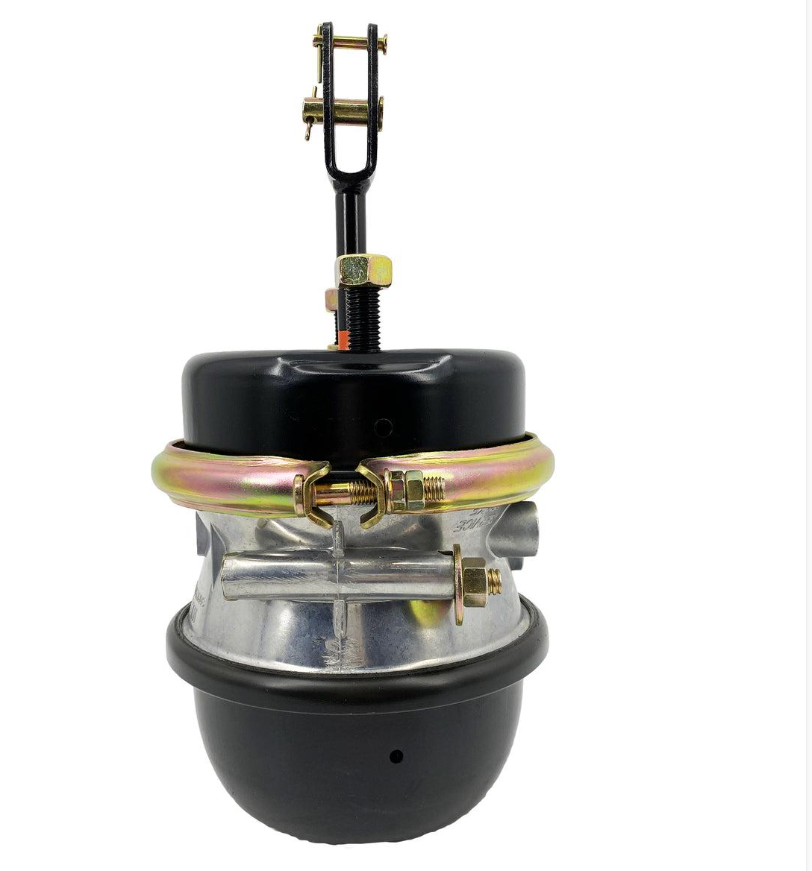
LUCKSUN offers brake chamber solutions for commercial vehicle and semi-trailer braking systems.
An air brake chamber converts compressed air pressure into mechanical force, moving the pushrod to operate the foundation brake through the brake linkage.
Depending on the vehicle and braking system configuration, brake chambers are available in service-only and spring brake designs.
Designed for compatible commercial vehicle applications, brake chambers should be selected according to brake type, chamber size, mounting dimensions, pushrod specifications and air system requirements.
Product Highlights
Heavy-duty metal housing.
Compressed-air-operated braking mechanism.
Pushrod and mounting connection.
Different chamber sizes and configurations.
Replacement and OEM procurement options, subject to confirmed availability.
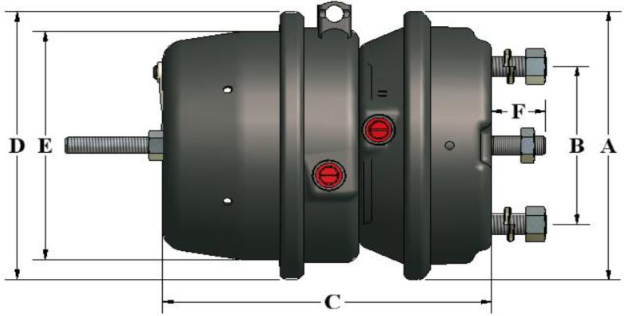
The brake chamber's mounting structure, pushrod geometry and housing dimensions are important for installation compatibility.
Buyers can provide the original part number or technical drawing to confirm the appropriate configuration.
Key references include overall length, housing dimensions, mounting-hole spacing, pushrod length and connection specifications.
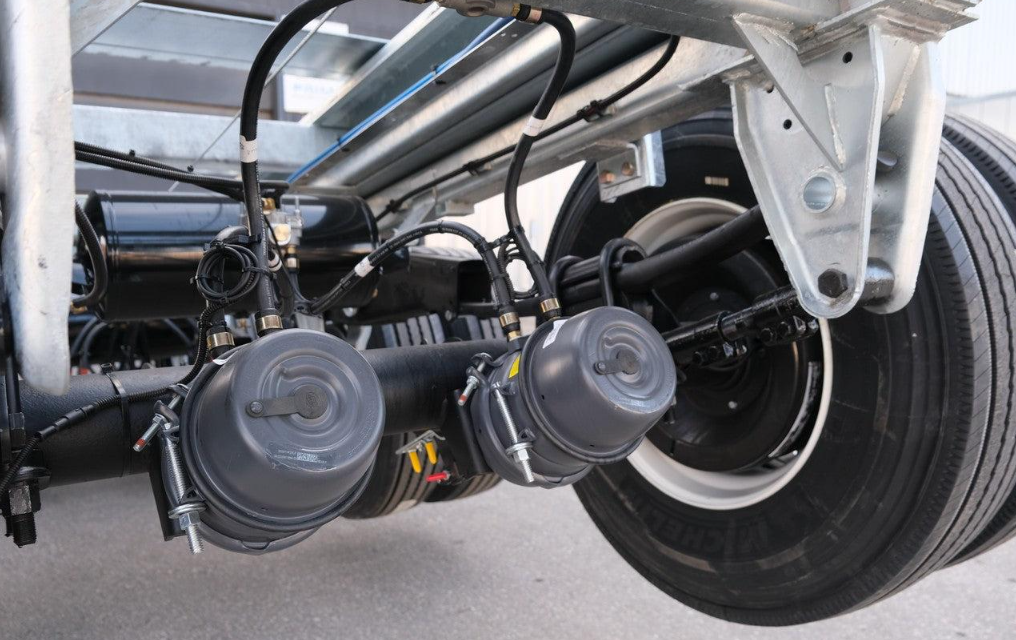
Main Applications
Flatbed semi-trailers.
Container skeletal trailers.
Lowbed and low-loader trailers.
Dump and tipper trailers.
Heavy-duty cargo trailers.
Commercial truck and trailer brake systems.
Configuration Support
Product selection can be discussed according to chamber type, size, stroke, mounting arrangement, pushrod connection, air-port position and brake-system compatibility.


