


Reliable braking performance is essential for heavy-duty semi-trailers operating under demanding transportation conditions. Among the key components of a drum braking system, the brake shoe plays an important role in generating the friction required to slow down and stop a vehicle.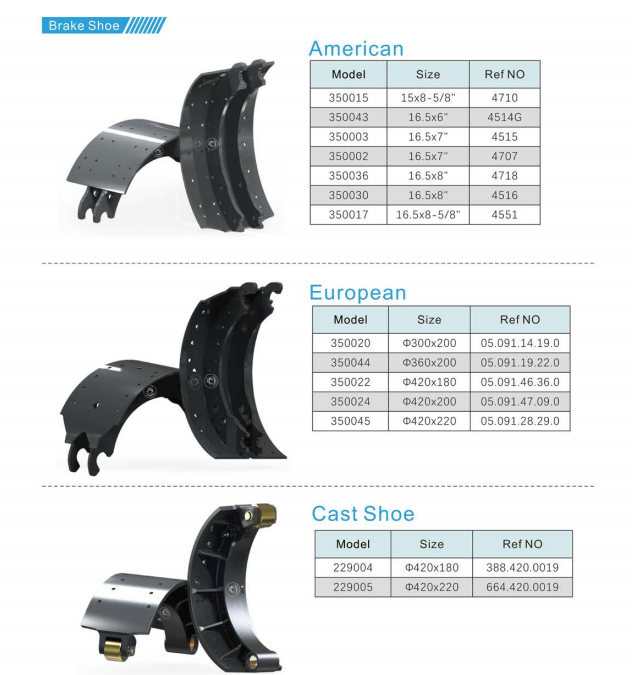
Trailer brake shoes: American, European and cast types with model numbers, sizes and reference numbers
Trailer brake shoes are designed to work with brake drums in commercial vehicle drum brake systems. When the braking system is activated, the shoes move outward and press their friction linings against the inner surface of the brake drum, producing the friction needed for braking.
For flatbed trailers, container chassis, lowbed trailers, dump trailers, and other heavy-duty applications equipped with drum brakes, selecting the correct brake shoe assembly is important for compatibility, consistent braking performance, and maintenance efficiency.
LUCKSUN supplies semi-trailers and related spare parts for international markets, supporting buyers looking for commercial vehicle brake components and customized parts sourcing.
Whether you are a trailer manufacturer, importer, spare parts distributor, or fleet operator, understanding brake shoe specifications can help you select suitable products and reduce unnecessary replacement costs.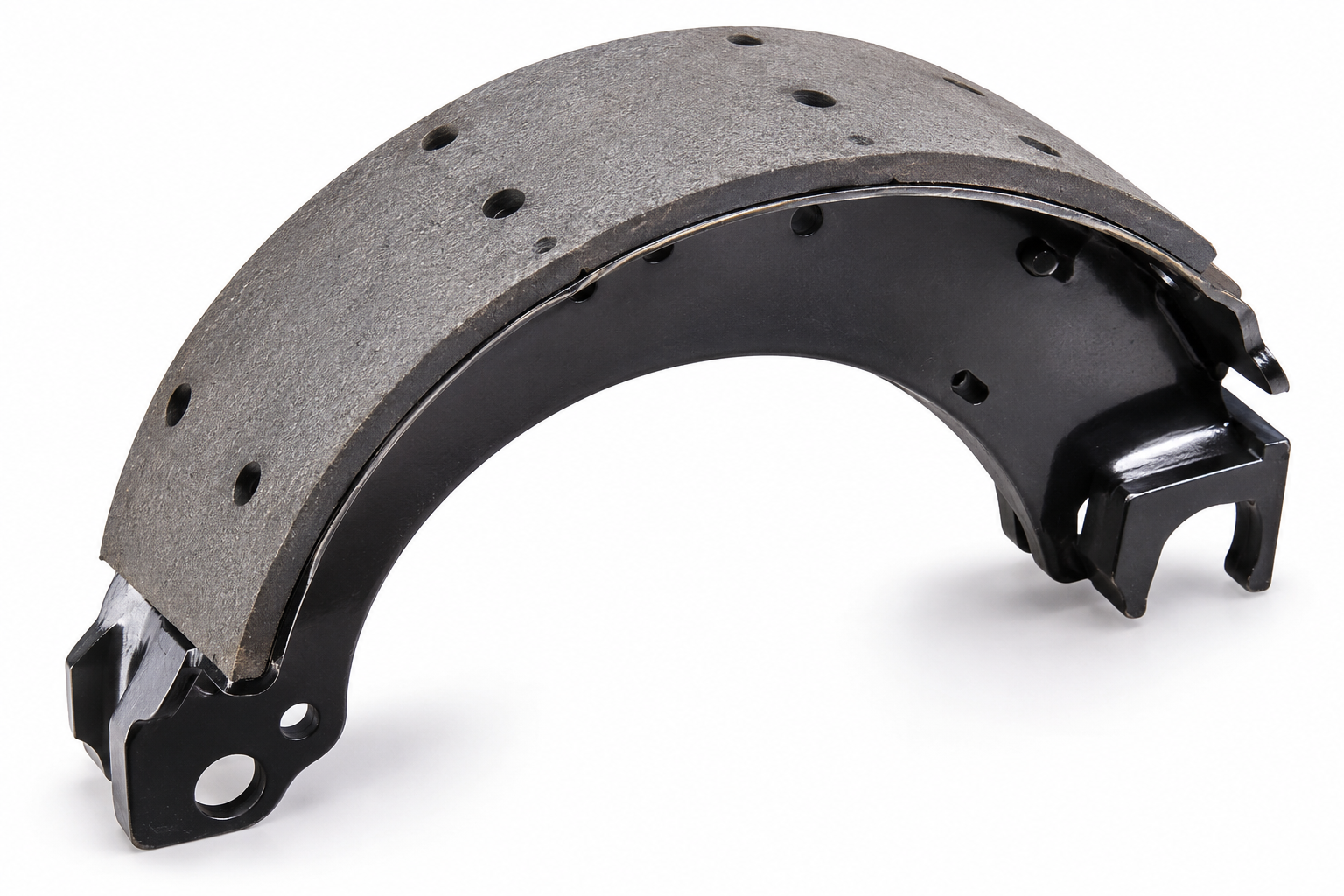
Heavy Duty Trailer Brake Shoe Assembly for Commercial Vehicle Drum Brake Systems.
A trailer brake shoe is a curved metal component that supports the friction lining inside a drum braking system.
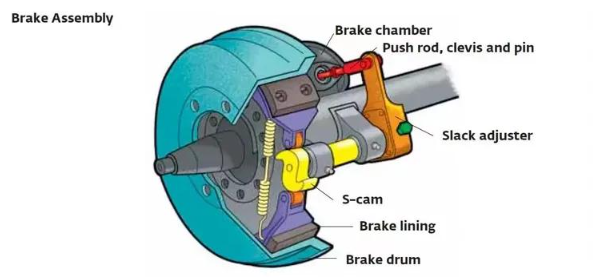
It is typically installed inside the brake drum assembly and works together with the S-cam, brake chamber, slack adjuster, return springs, and other brake hardware.
When compressed air activates the brake chamber, the push rod moves the slack adjuster, which rotates the S-cam. The cam pushes the brake shoes outward through the cam rollers, bringing the friction linings into contact with the rotating brake drum.
This friction slows down the wheel and helps the trailer stop.
A typical brake shoe assembly consists of the following components:
Brake Shoe Table: The curved metal section supporting the friction lining.
Brake Shoe Web: The structural section connecting the shoe to its operating and mounting points.
Brake Lining: The friction material that contacts the brake drum.
Anchor Pin Contact Area: The section supporting the shoe at the anchor end.
Cam Roller Contact Area: The section receiving force from the S-cam mechanism.
Rivets or Bonding Structure: Used to secure the friction lining to the shoe, depending on the design.
The exact structure varies according to the brake model and manufacturer.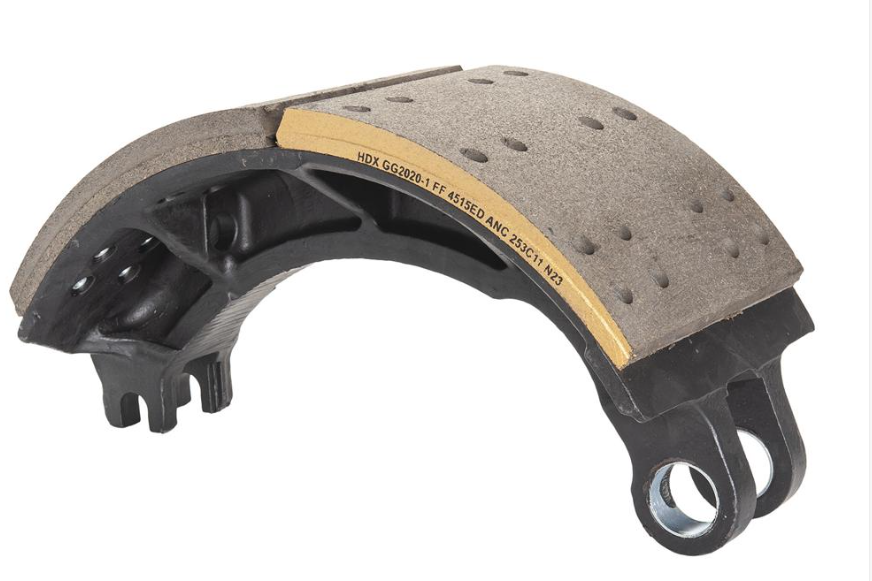
Heavy-duty trailer brake shoe assembly designed for commercial vehicle drum braking systems.
Brake shoes are available in different structures and friction lining configurations to meet various commercial vehicle braking requirements.
Riveted brake shoes use mechanical rivets to secure the friction lining to the metal shoe.
This traditional construction is widely used in heavy-duty drum brake applications.
Key characteristics:
Mechanical fastening structure.
Replaceable friction lining on compatible designs.
Suitable for specific commercial vehicle drum brake systems.
Requires correct rivet installation and inspection.
Replacement must follow the original shoe and lining specifications.
Bonded brake shoes use specialized adhesive technology to attach the friction lining to the metal shoe.
The bonding process is designed to provide a secure connection between the friction material and the shoe structure.
Key characteristics:
Adhesive bonding construction.
No conventional lining rivets.
Uniform contact between the lining and shoe when properly manufactured.
Requires compatible bonding materials and manufacturing processes.
Replacement should follow the specified assembly design.
A complete brake shoe assembly is supplied with the friction lining already installed on the metal shoe.
Depending on the product configuration, a brake shoe kit may also include related hardware such as rollers, return springs, pins, and retaining clips.
For wholesale buyers, purchasing a complete brake shoe kit can simplify parts sourcing and maintenance preparation.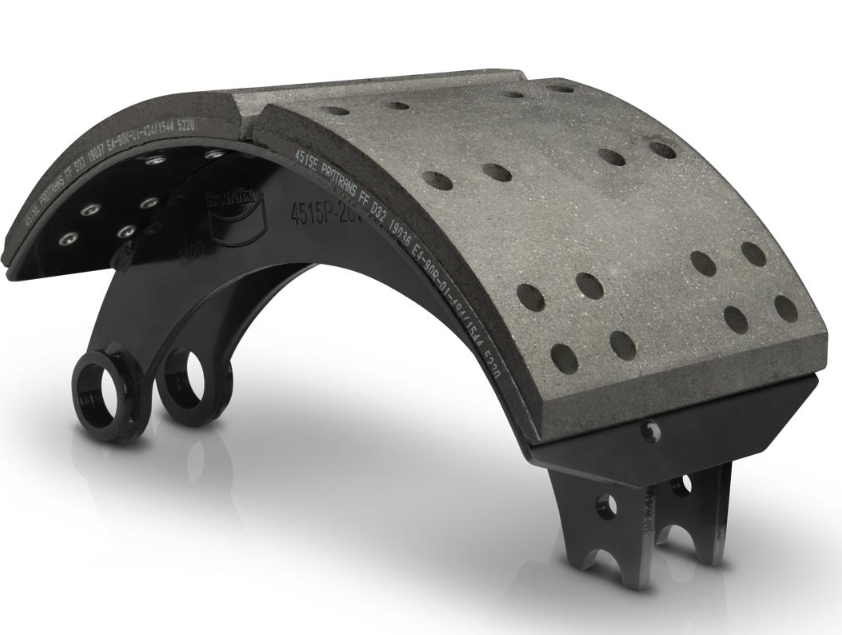
Different brake shoe constructions and assembly configurations for commercial vehicle applications.
Brake shoes operate through a mechanical friction process inside the drum brake assembly.
The working principle of an S-cam drum brake system involves four main steps.
Step 1 – Brake Activation
When the driver applies the brake pedal, compressed air enters the brake chamber.
Step 2 – S-Cam Movement
The brake chamber push rod moves the slack adjuster, causing the S-camshaft to rotate.
Step 3 – Brake Shoe Expansion
The S-cam pushes against the rollers and forces the brake shoes outward. Their friction linings contact the inner surface of the brake drum.
Step 4 – Braking and Release
Friction between the lining and brake drum slows the wheel. When the braking force is released, the return springs pull the shoes away from the drum.
This mechanism is commonly used in heavy-duty commercial vehicle S-cam drum brake systems

Different brake shoe constructions and assembly configurations for commercial vehicle applications.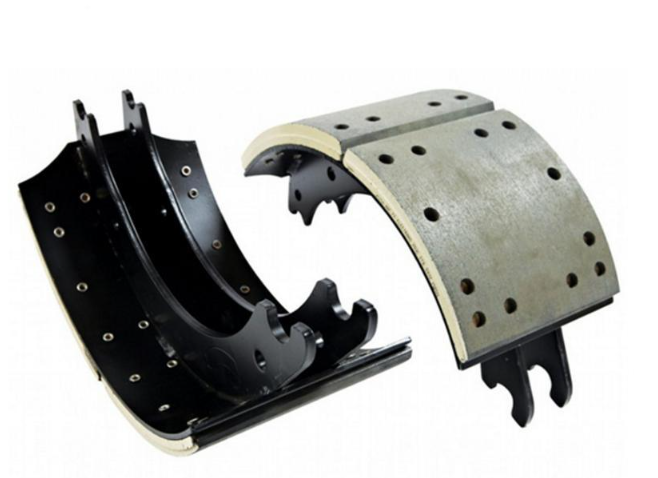
Different brake shoe constructions and assembly configurations for commercial vehicle applications
When purchasing brake shoes for semi-trailers, buyers should pay close attention to product dimensions and compatibility.
Unlike a generic replacement component, a brake shoe must match the brake drum and foundation brake configuration.
|
Specification |
Description |
|---|---|
|
Product Name |
Trailer Brake Shoe |
|
Product Category |
Commercial Vehicle Brake Parts |
|
Brake Type |
Drum Brake |
|
Operating System |
Air-Actuated S-Cam |
|
Shoe Construction |
Single Web / Double Web / Model Specific |
|
Lining Type |
Riveted / Bonded |
|
Drum Diameter |
According to Brake Model |
|
Shoe Width |
According to Brake Model |
|
Friction Material |
According to Specification |
|
Mounting Structure |
Model Specific |
|
Cam End Design |
According to S-Cam |
|
Anchor End Design |
According to Axle |
|
Application |
Truck / Semi-Trailer |
|
Supply Type |
Individual Shoes / Complete Kits |
Some common heavy-duty drum brake configurations include:
|
Drum Size |
Nominal Diameter |
Nominal Width |
|---|---|---|
|
15 × 4 in |
15 in |
4 in |
|
16.5 × 5 in |
16.5 in |
5 in |
|
16.5 × 7 in |
16.5 in |
7 in |
|
16.5 × 8.625 in |
16.5 in |
8.625 in |
These are examples of drum brake dimensions, not a universal brake shoe compatibility list. A shoe must be matched to the exact brake model, shoe profile, anchor and cam ends, and lining specifications.
Heavy-duty brake shoes are used in different commercial transportation applications where drum braking systems are installed.
Used in drum brake systems for transporting steel, construction materials, machinery, and containerized cargo.
Skeletal Container Chassis
Applied to container transportation trailers operating in ports, distribution centers, and logistics networks.
Lowbed Semi-Trailers
Used in compatible drum brake systems for heavy equipment and machinery transportation.
Dump Semi-Trailers
Suitable for compatible drum brake configurations used in bulk material transportation.
Note: These are trailer application categories, not a claim that every trailer configuration uses drum brakes. Some commercial trailers are equipped with air disc brakes.
Brake shoes experience continuous friction, heat, pressure, and mechanical stress during vehicle operation.
Over time, the friction lining wears down, reducing its available working thickness.
Regular inspection helps identify problems before they affect braking performance.
Common replacement warning signs include:
Excessively worn brake linings.
Cracked or damaged friction material.
Loose or missing rivets.
Cracked or bent brake shoe webs.
Elongated anchor pin or roller contact holes.
Uneven lining wear.
Abnormal contact between the brake shoe and drum.
It is important to inspect the complete drum brake assembly rather than checking only the lining thickness.
The brake drum, S-cam, rollers, anchor pins, return springs, and mounting components should also be checked for wear and damage.
These inspection points are consistent with commercial vehicle brake service guidance.
Maintenance Recommendation
Replace brake shoes according to the vehicle and brake manufacturer's specifications. Do not wait until the friction lining is completely worn away or metal components begin contacting the brake drum.
Selecting the correct brake shoe is important for both replacement purchasing and new trailer production.
Before placing an order, buyers should verify the following details.
1. Confirm the Brake Model
Identify the original brake assembly manufacturer, brake model, and part number.
2. Check the Drum Diameter and Width
The brake shoe must match the corresponding brake drum dimensions.
3. Verify the Shoe Structure
Confirm whether the original design uses a single-web or double-web structure, and check the anchor and cam end configurations.
4. Select the Correct Friction Lining
Different operating environments may require different friction materials and performance characteristics.
5. Check the Lining Attachment Method
Confirm whether the original assembly uses riveted or bonded friction linings.
6. Verify the Complete Assembly
For wholesale orders, confirm whether you need individual brake shoes, lined shoe assemblies, or complete brake shoe kits.
Providing original product photographs, part numbers, and dimensions is an effective way to reduce ordering mistakes.
For international trailer importers and spare parts distributors, finding a reliable source of compatible braking components is an important part of long-term business cooperation.
LUCKSUN focuses on semi-trailers and related spare parts for international markets.
Our business covers complete semi-trailers and supporting components, helping overseas buyers source different products according to their requirements.
What We Focus On
Semi-trailer and spare parts supply.
Product selection based on technical specifications.
Support for different trailer configurations.
Customized sourcing requirements.
Export-oriented customer communication.
Long-term cooperation with international buyers.
Whether you are looking for brake shoes for trailer maintenance, replacement components for your fleet, or bulk orders for spare parts distribution, we welcome your inquiries.
Send us your product photo, part number, brake model, or required dimensions.
Our team can help review your requirements and discuss suitable product sourcing options.
LUCKSUN – Semi-Trailers & Spare Parts for Global Markets.
Q1. What is a brake shoe on a semi-trailer?
A brake shoe is a curved metal component fitted with friction lining inside a drum brake assembly. It presses against the brake drum to generate braking friction.
Q2. What is the difference between brake shoes and brake pads?
Brake shoes are used in drum brake systems, while brake pads are used in disc brake systems. They have different structures and operating principles.
Q3. What is the difference between riveted and bonded brake shoes?
Riveted brake shoes use mechanical fasteners to secure the lining, while bonded brake shoes use specialized adhesive bonding technology. The correct design depends on the original brake system.
Q4. How do I identify the correct trailer brake shoe?
Check the brake model, original part number, drum diameter, shoe width, anchor end, cam end, and lining specifications.
Q5. Can trailer brake shoes be used on different axle brands?
Not automatically. Compatibility depends on the actual brake assembly dimensions, shoe geometry, and manufacturer's specifications. Always verify cross-reference information before ordering.
Q6. How often should trailer brake shoes be replaced?
There is no single replacement interval for all trailers. Inspection frequency and replacement decisions should follow the vehicle manufacturer's maintenance recommendations and applicable regulations.
Q7. Can I order complete brake shoe kits?
Yes, depending on the supplier's product range. A complete kit may include lined brake shoes and selected installation hardware, such as rollers, springs, and retaining clips. Confirm the kit contents before ordering.
Trailer brake shoes are essential friction components in heavy-duty drum braking systems. Their dimensions, lining materials, and structural design all influence compatibility and braking performance.
For trailer manufacturers, fleet operators, and spare parts distributors, choosing the correct brake shoe assembly helps support reliable maintenance and long-term vehicle operation.
Contact LUCKSUN for trailer brake shoe specifications, product details, and wholesale inquiries.
LUCKSUN Heavy Duty Trailer Brake Shoes are designed for compatible commercial vehicle drum brake systems. Manufactured with a structural metal shoe and friction lining, they provide the contact surface required for effective braking.
Available configurations include riveted and bonded lining designs, subject to model specifications.
Key Features:
Heavy-duty metal shoe construction.
Multiple friction lining options.
Different shoe dimensions and configurations.
Compatible with selected S-cam drum brake systems.
Suitable for commercial trucks and semi-trailers.
Wholesale and customized sourcing support.
Technical Specifications
|
Parameter |
Specification |
|---|---|
|
Product Name |
Trailer Brake Shoe |
|
Product Type |
Drum Brake Component |
|
Brake System |
S-Cam Drum Brake |
|
Shoe Structure |
Single / Double Web |
|
Lining Type |
Riveted / Bonded |
|
Drum Diameter |
Model Dependent |
|
Shoe Width |
Model Dependent |
|
Friction Material |
Customized by Requirement |
|
Shoe Material |
According to Model |
|
Installation |
Anchor Pin / Cam Roller |
|
Application |
Truck / Semi-Trailer |
|
Package |
Standard Export Packaging |
|
Supply |
Wholesale / OEM |
Applications & Supply
Main Applications:
Flatbed Semi-Trailers
Skeletal Container Chassis
Lowbed Semi-Trailers
Dump Semi-Trailers
Heavy-Duty Commercial Trucks
Supply Services:
Individual brake shoe assemblies.
Brake shoe kits and related hardware.
Different lining configurations.
Specification-based sourcing.
Bulk orders for distributors and importers.
