
Trailer Leaf Springs: Types, Functions, Load Capacity & Buying Guide
\Trailer leaf springs are an essential part of a mechanical suspension system. They support the trailer's load, absorb road impacts and help maintain the correct position of the axles during transportation.
For commercial semi-trailers, choosing the right leaf spring is not simply a matter of selecting a spring with more steel leaves or a higher advertised capacity. The spring must work together with the axle, suspension brackets, U-bolts, shackles and trailer frame.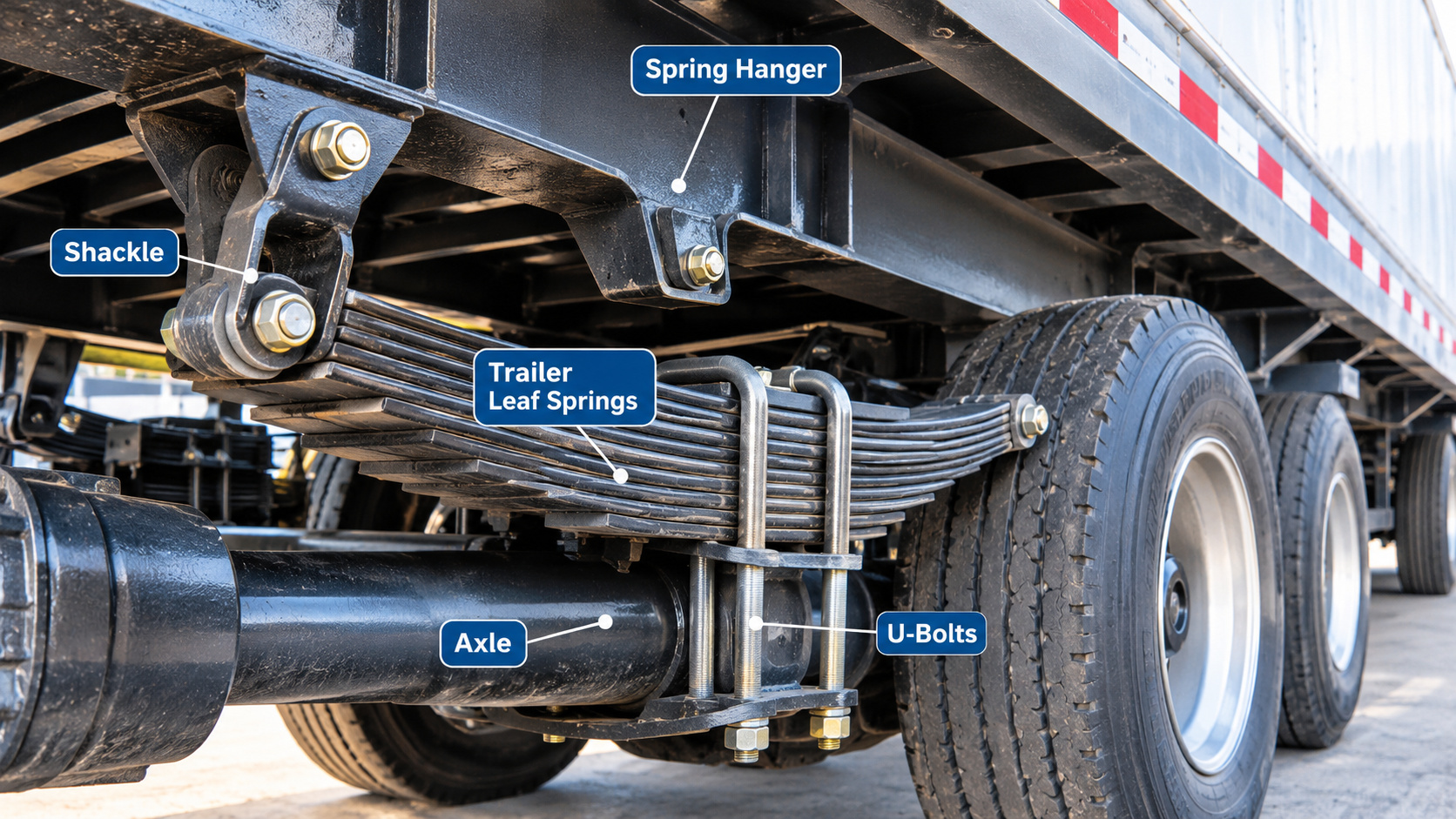
Trailer Leaf Springs – Heavy-Duty Semi-Trailer Suspension | LUCKSUN
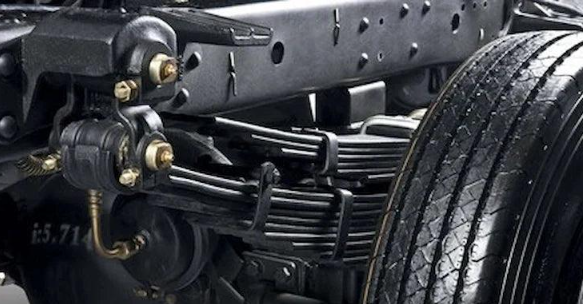
A close-up of a heavy-duty trailer suspension, showing a multi-leaf spring pack clamped to the axle by U-bolts and anchored at both ends by the shackle and spring hanger, engineered to carry heavy loads and absorb road shock.
A mismatch between these components can lead to uneven load distribution, premature wear, poor axle alignment and unnecessary maintenance costs.
Whether you are purchasing a new flatbed trailer, replacing suspension components or sourcing heavy-duty trailer spare parts, understanding leaf spring specifications can help you make a more informed decision.
In this guide, LUCKSUN explains trailer leaf spring construction, common types, working principles, load considerations, failure symptoms, maintenance requirements and purchasing recommendations for international buyers.
1. What Are Trailer Leaf Springs?
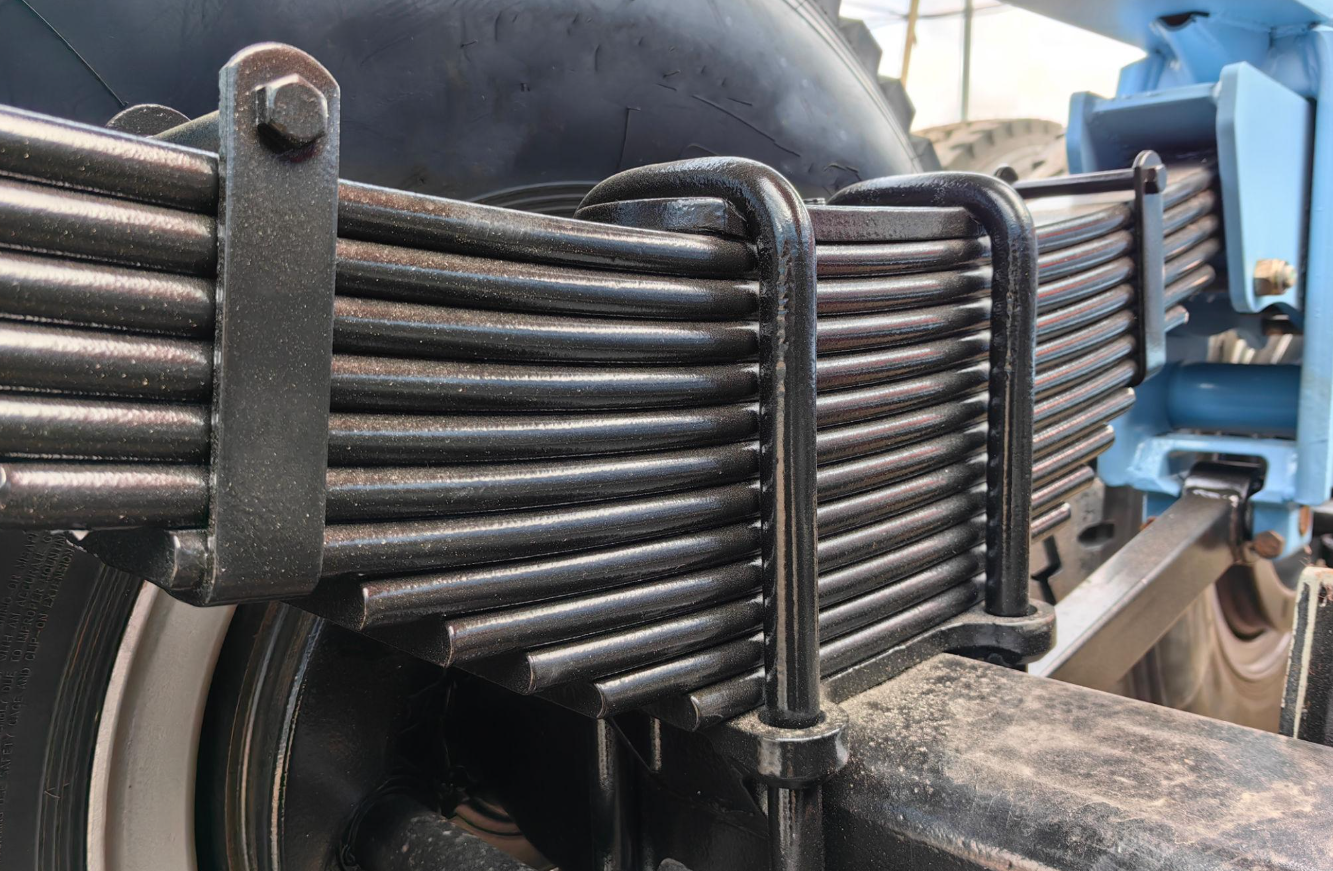
Trailer leaf springs are curved steel spring assemblies installed between the trailer frame and axle system.
A conventional multi-leaf spring consists of several layers of specially formed spring steel. Each layer is called a leaf. These leaves work together to support vertical loads and flex when the trailer travels over uneven road surfaces.
Trailer leaf springs are curved steel spring assemblies installed between the trailer frame and axle system.
In a mechanical semi-trailer suspension system, the leaf spring is connected to the chassis through spring hangers, shackles and related mounting components. The axle is secured to the spring assembly using U-bolts and spring seats.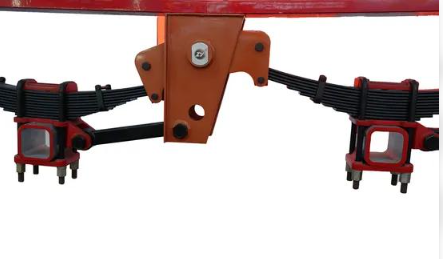
Trailer leaf springs are curved steel spring assemblies installed between the trailer frame and axle system.
The main functions include:
-
Load support: Transfers part of the trailer and cargo weight through the suspension to the axles and wheels.
-
Shock absorption: Flexes when the trailer encounters road irregularities, reducing the direct transmission of impact forces.
-
Axle positioning: Helps maintain the designed relationship between the axle and trailer frame.
-
Suspension stability: Works with other suspension components to control axle movement during transportation.
-
Load distribution: In multi-axle configurations, works with the suspension geometry and equalizer system to help distribute loads.
For a better understanding of the complete system, see our guide to [semi-trailer components and their functions].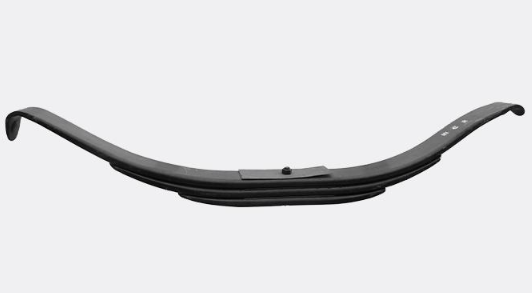
Trailer leaf springs are curved steel spring assemblies installed between the trailer frame and axle system.
2. How Does a Trailer Leaf Spring Suspension Work?
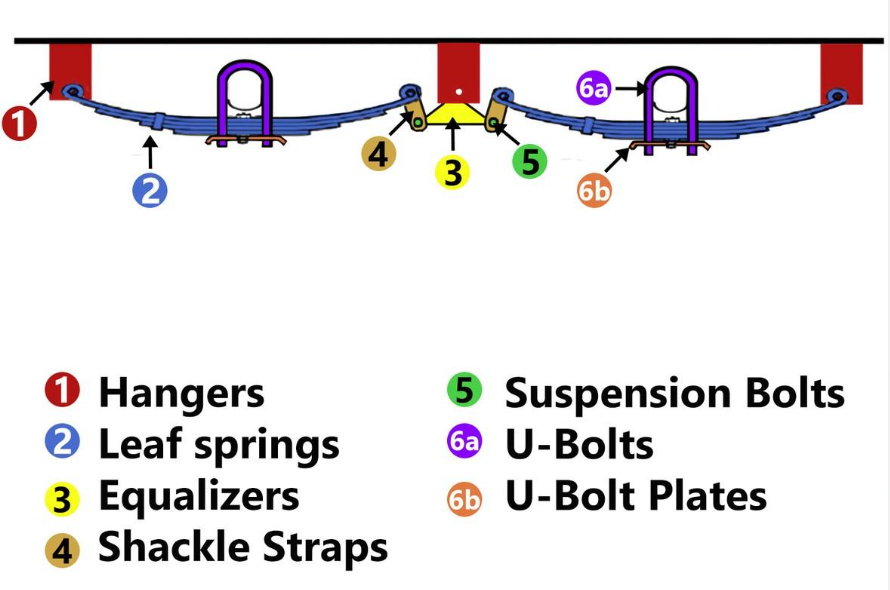
A leaf spring suspension system works through controlled elastic deformation.
When a trailer travels over a bump, the wheel and axle move relative to the trailer frame. The spring bends under the applied load and stores part of the resulting elastic energy.
As the wheel moves back toward its normal position, the spring releases this energy and returns toward its original shape.
In a multi-leaf assembly, friction between individual leaves also contributes to suspension damping. However, the damping characteristics are influenced by spring design, surface condition, clamping force and operating conditions.
The complete working process involves several connected components:
|
Component |
Main Function |
|---|---|
|
Leaf spring pack |
Supports load and flexes under road impact |
|
Spring hanger |
Connects the spring to the trailer frame |
|
Shackle assembly |
Allows spring movement as its effective length changes |
|
U-bolts |
Secure the spring assembly to the axle |
|
Spring seat |
Provides the axle-to-spring mounting interface |
|
Equalizer |
Helps distribute movement and loads between axles in applicable tandem or multi-axle systems |
|
Bushings |
Reduce wear and friction at suspension pivot points |
One important detail is often overlooked: a leaf spring does not work independently.
Its performance depends on the complete suspension geometry, mounting positions, axle arrangement and rated capacity of the supporting components.
For additional technical information, read our [trailer axle selection and configuration guide].
3. Different Types of Trailer Leaf Springs
Not all leaf springs have the same structure or operating characteristics.
The most suitable type depends on trailer weight, suspension design, road conditions, maintenance requirements and the manufacturer's engineering specifications.
3.1 Multi-Leaf Springs
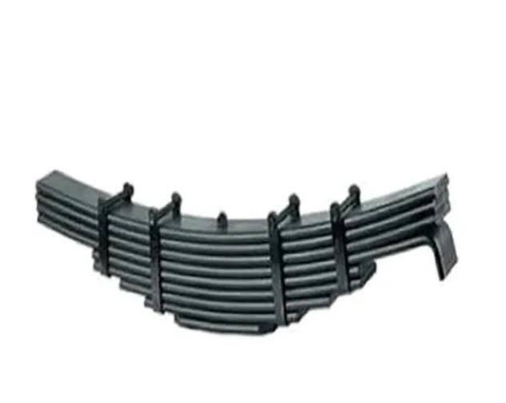
Multi-leaf springs are constructed from several layers of spring steel with different lengths.
The individual leaves are assembled into a spring pack, generally secured around a central bolt and retained with clips.
This design is commonly used in heavy-duty commercial vehicles and mechanical trailer suspension systems.
Main characteristics:
-
Multiple steel leaves form one spring assembly.
-
The spring pack provides structural support under vertical loading.
-
Interleaf friction contributes to suspension damping.
-
Different leaf thicknesses and lengths can be used according to the design.
-
Suitable for various commercial trailer suspension configurations.
Multi-leaf springs are often considered for applications where a mechanically straightforward suspension structure and established maintenance procedures are important.
3.2 Parabolic Leaf Springs
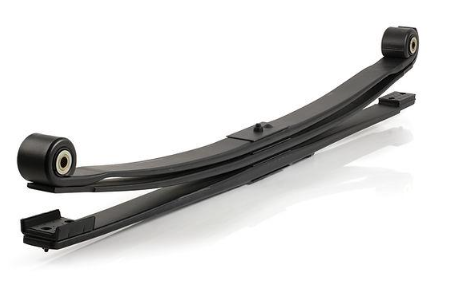
Parabolic leaf springs use specially tapered leaf profiles rather than conventional flat-section leaves of uniform thickness.
Their cross-sectional design distributes material according to the intended stress requirements.
Compared with conventional multi-leaf designs, parabolic springs may reduce unnecessary material and interleaf friction.
Potential characteristics include:
-
Reduced spring assembly weight.
-
Fewer leaves in certain configurations.
-
Different load-deflection characteristics.
-
Reduced interleaf contact compared with conventional multi-leaf packs.
-
Application-specific ride and durability characteristics.
However, parabolic springs are not automatically suitable for every heavy-duty trailer. Their capacity, dimensions and mounting arrangements must match the suspension design.
3.3 Double-Eye Leaf Springs
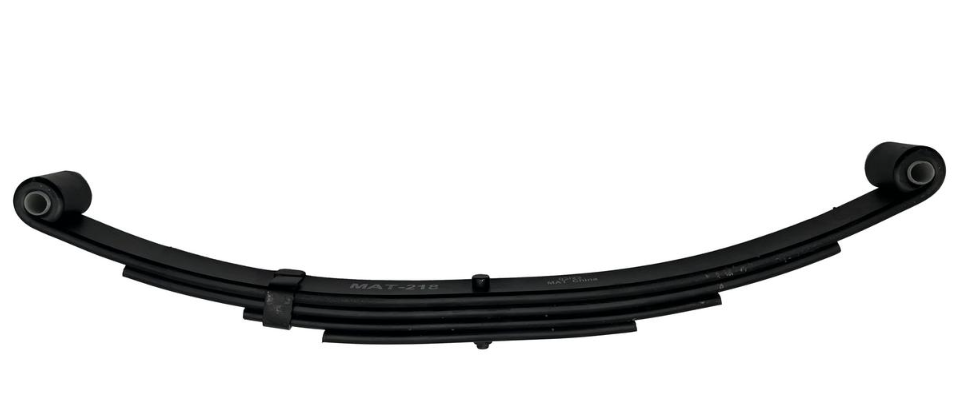
Double-eye leaf springs have a circular mounting eye at both ends.
Bushings and bolts connect the spring to the suspension brackets. One end is generally arranged to accommodate spring movement through a shackle.
This configuration is common in many conventional trailer suspension systems.
Important purchasing dimensions include:
-
Eye-to-eye length.
-
Spring width.
-
Spring thickness.
-
Eye diameter.
-
Bushing dimensions.
-
Number of leaves.
-
Rated spring capacity.
3.4 Slipper Leaf Springs
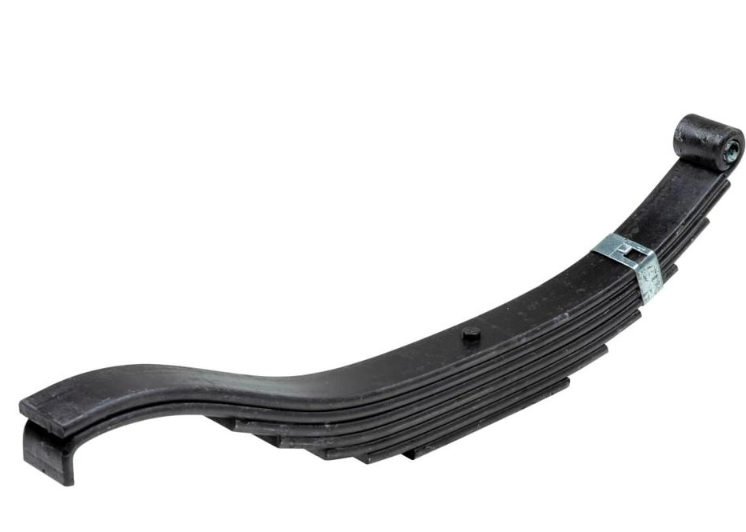
Slipper leaf springs use a sliding end instead of having circular mounting eyes at both ends.
One end is attached through an eye or another specified mounting arrangement, while the other end slides within a compatible hanger.
This structure allows the spring to change its effective length during compression and rebound.
Slipper springs are found in selected trailer suspension designs, particularly where the mounting arrangement is engineered for sliding spring movement.
The replacement spring must match the original mounting geometry. A double-eye spring should not be substituted for a slipper spring simply because the overall length appears similar.
Comparison of Common Trailer Leaf Spring Types
|
Spring Type |
Structural Design |
Main Consideration |
|---|---|---|
|
Multi-leaf |
Several stacked steel leaves |
Established heavy-duty mechanical design |
|
Parabolic |
Tapered leaf profile |
Weight and spring-rate optimization |
|
Double-eye |
Circular eyes at both ends |
Pivot and shackle compatibility |
|
Slipper |
Sliding spring end |
Hanger and sliding-contact compatibility |
These classifications describe different design characteristics. Multi-leaf and parabolic refer primarily to spring construction, while double-eye and slipper describe end configurations. They are not necessarily mutually exclusive categories.
4. Trailer Leaf Spring Specifications: What Should Buyers Check?
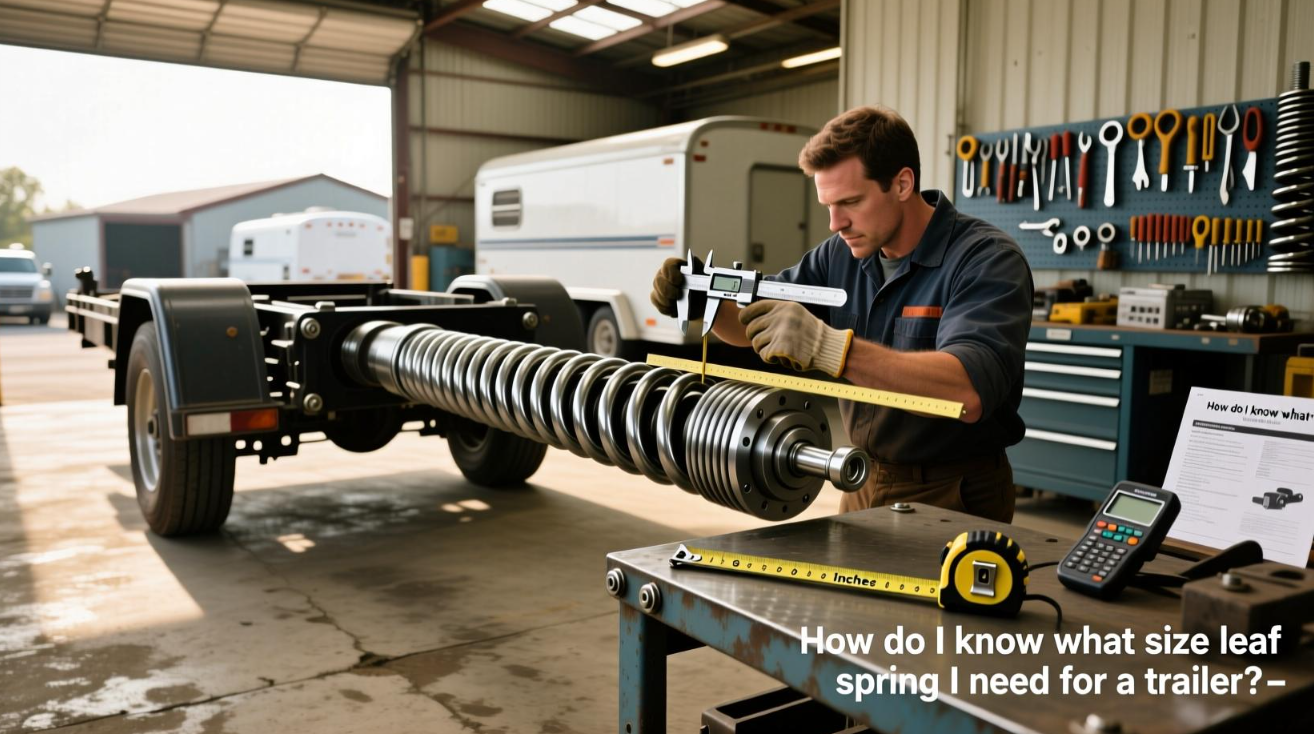
A spring may look similar to the original component but still have different mounting dimensions or load-deflection characteristics.
The following specifications should be checked before ordering.
|
Specification |
What It Means |
Why It Matters |
|---|---|---|
|
Overall length |
Spring length measured using the specified reference points |
Ensures mounting compatibility |
|
Spring width |
Width of the individual leaf or specified section |
Affects dimensional compatibility |
|
Leaf thickness |
Thickness of each spring leaf |
Influences spring characteristics |
|
Number of leaves |
Total leaves in the assembly |
Identifies the spring configuration |
|
Free camber |
Spring curvature without the specified applied load |
Helps identify the designed spring profile |
|
Eye diameter |
Internal diameter of the spring eye |
Must match the mounting hardware |
|
Center bolt diameter |
Diameter of the central locating bolt |
Ensures correct spring-pack assembly |
|
Load rating |
Manufacturer-specified capacity under defined conditions |
Supports correct application selection |
|
Material grade |
Specified spring steel grade |
Influences mechanical properties |
Important: Spring dimensions and load ratings should be confirmed using the manufacturer's drawings, part number or verified sample. There is no universal specification suitable for every semi-trailer.
How to Measure a Trailer Leaf Spring
When replacing an existing spring, follow a consistent measurement procedure:
-
Identify whether the spring is double-eye, slipper or another design.
-
Measure the length using the correct reference points.
-
Measure the width and thickness of the spring leaves.
-
Count the individual leaves.
-
Measure the spring eye and bushing dimensions where applicable.
-
Record the center bolt position and diameter.
-
Confirm the free camber and manufacturer's load specification.
For a complete suspension package, buyers should also confirm spring centers, axle spacing, hanger locations and U-bolt dimensions.
5. How to Choose the Right Leaf Springs for Different Semi-Trailers
Different trailer applications create different suspension requirements.
A component suitable for a standard cargo trailer may not be appropriate for a lowbed trailer carrying heavy construction machinery.
5.1 Flatbed Semi-Trailers
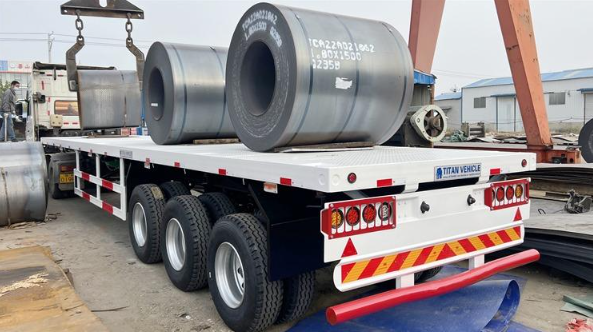
Flatbed trailers are commonly used for transporting steel products, construction materials, machinery and general cargo.
Leaf spring selection should consider:
-
Trailer tare weight and intended payload.
-
Axle configuration.
-
Cargo distribution.
-
Road conditions.
-
Suspension mounting dimensions.
-
Required axle and spring load ratings.
Explore our [40ft flatbed semi-trailer] configurations for different commercial transportation applications.
5.2 Lowbed Semi-Trailers
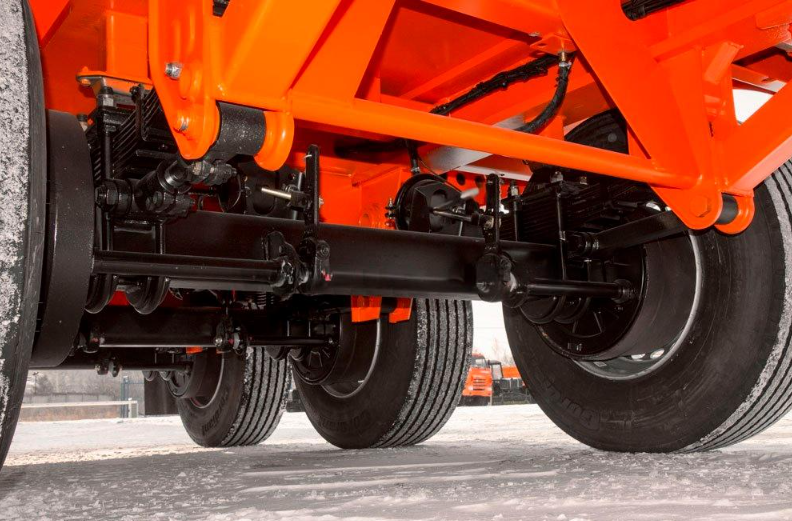
Lowbed trailers are designed to transport heavy equipment, excavators, bulldozers and other oversized machinery.
Their suspension requirements depend on the complete vehicle design, axle configuration, cargo weight and load distribution.
When specifying leaf springs for this application, particular attention should be given to:
-
Individual axle load requirements.
-
Suspension geometry.
-
Spring assembly dimensions.
-
Heavy-duty mounting components.
-
Operating conditions on construction roads.
For specialized lowbed applications, the spring should be selected according to the complete suspension engineering design rather than its appearance alone.
5.3 Dump Semi-Trailers
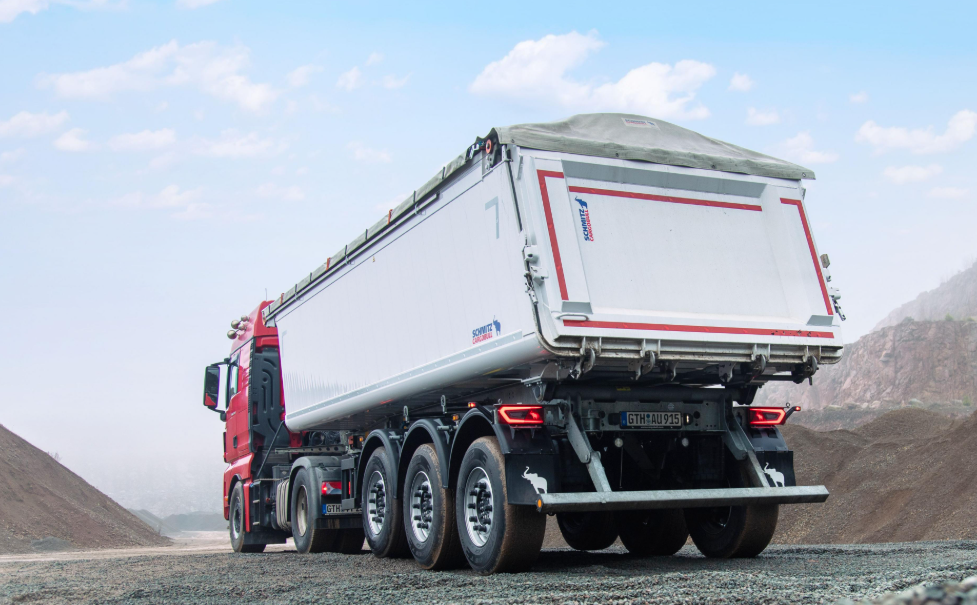
Dump trailers frequently operate in construction, mining, aggregate and bulk-material transportation environments.
These applications may expose suspension components to repeated impact loads, dust, mud and uneven road surfaces.
The selection process should consider:
-
Loaded and unloaded operating conditions.
-
Axle load distribution.
-
Suspension movement.
-
Corrosion protection.
-
Mounting component strength.
-
Inspection accessibility.
See our [dump semi-trailer] product information for related commercial applications.
5.4 Skeletal Container Chassis
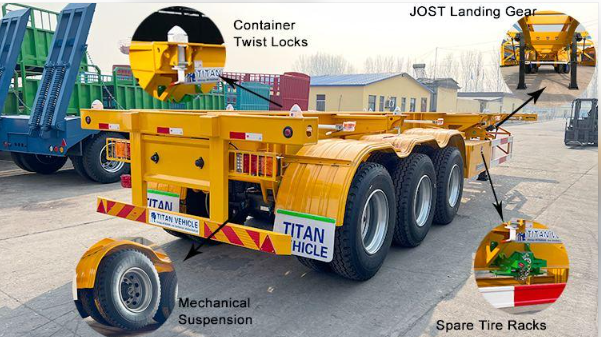
Skeletal container chassis are used for transporting shipping containers between ports, logistics centers, warehouses and industrial facilities.
Their suspension configuration must be matched to the chassis design and expected container loading conditions.
Important considerations include axle group load distribution, suspension spacing, spring centers and compatibility with the chassis structure.
Explore our [40ft skeletal container chassis trailer] for more information.
6. What Determines the Load Capacity of a Trailer Leaf Spring?
This is one of the most important questions when selecting heavy-duty trailer springs.
The load capacity of a leaf spring is determined by more than its number of leaves.
Several engineering factors work together.
6.1 Spring Steel Material
Leaf springs are manufactured from spring steel selected for the required strength, elasticity and fatigue performance.
Material grade, chemical composition and heat treatment influence the spring's mechanical properties.
Different manufacturers may specify different spring steel grades according to their design and production requirements.
6.2 Leaf Thickness and Width
The cross-sectional dimensions of the spring affect its stiffness and stress distribution.
Two springs with the same overall length and number of leaves may have different load-deflection characteristics because of differences in width, thickness and profile.
6.3 Spring Camber
Camber describes the curvature of the spring in its unloaded condition.
The specified camber influences the spring's deflection characteristics and its position within the suspension system.
A flattened spring may indicate fatigue, overloading or other damage, but the condition must be evaluated against the original design and measurement procedure.
6.4 Heat Treatment and Surface Quality
Heat treatment is important for achieving the required mechanical properties of spring steel.
Surface condition also matters because fatigue cracks may initiate at surface defects, corrosion pits or areas of stress concentration.
Depending on the design and manufacturing process, shot peening and suitable protective finishes may be used to improve spring performance and corrosion resistance.
6.5 Complete Suspension Compatibility
Even a correctly rated spring can perform poorly if the supporting suspension components are incorrectly selected.
The following must be evaluated together:
-
Axle capacity.
-
Spring load rating.
-
Spring centers.
-
U-bolt and spring seat dimensions.
-
Hanger and shackle geometry.
-
Equalizer arrangement, where applicable.
-
Tire and wheel ratings.
-
Trailer frame capacity.
Engineering reminder: A higher-rated leaf spring does not increase the legal or structural capacity of the entire trailer. The complete vehicle must remain within its rated limits.
7. Common Trailer Leaf Spring Problems and Their Causes
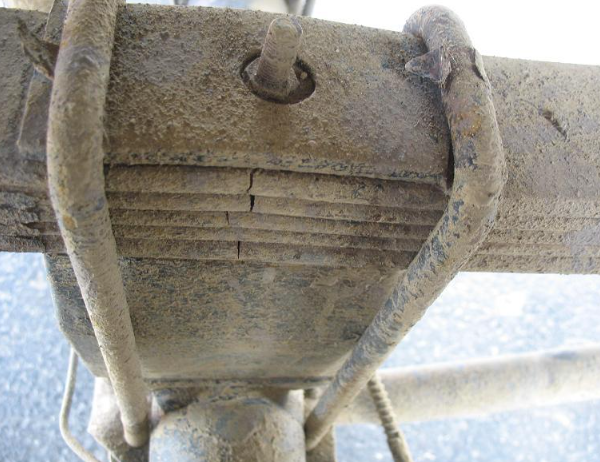
Leaf springs are designed for repeated loading, but they are not maintenance-free components.
Long-term operation, overloading, corrosion and incorrect installation can gradually reduce their performance.
The following table summarizes common problems.
|
Problem |
Possible Cause |
Recommended Action |
|---|---|---|
|
Broken spring leaf |
Fatigue, overload or impact damage |
Stop operation and arrange replacement |
|
Flattened spring |
Permanent deformation or excessive loading |
Check spring condition and load history |
|
Uneven spring height |
Different spring condition or load distribution |
Inspect both sides and suspension geometry |
|
Severe corrosion |
Moisture, road salt or inadequate protection |
Assess material loss and replace if structurally damaged |
|
Loose U-bolts |
Incorrect tightening or movement |
Inspect and follow specified torque procedures |
|
Worn spring bushings |
Repeated movement and friction |
Replace compatible bushings and hardware |
|
Damaged spring hangers |
Structural stress or poor mounting condition |
Inspect the frame and mounting structure |
7.1 Broken or Cracked Spring Leaves
A cracked or broken leaf is a serious suspension defect.
The spring may no longer distribute loads as designed, and axle positioning can be affected.
The trailer should not continue operating until the condition has been assessed and corrected.
7.2 Loss of Spring Camber
A spring that has permanently lost its original curvature may indicate excessive loading, fatigue or other damage.
This can affect trailer ride height and suspension geometry.
7.3 Corrosion and Surface Damage
Surface rust is not necessarily a reason for immediate replacement.
However, deep pitting, flaking material and corrosion that reduces the effective steel section require professional evaluation.
7.4 Worn Bushings and Mounting Hardware
Worn bushings and elongated mounting holes can allow excessive movement within the suspension.
These problems may contribute to alignment issues and accelerated wear of connected components.
The entire mounting assembly should be checked when replacing the spring.
8. Trailer Leaf Spring Maintenance: Practical Inspection Checklist
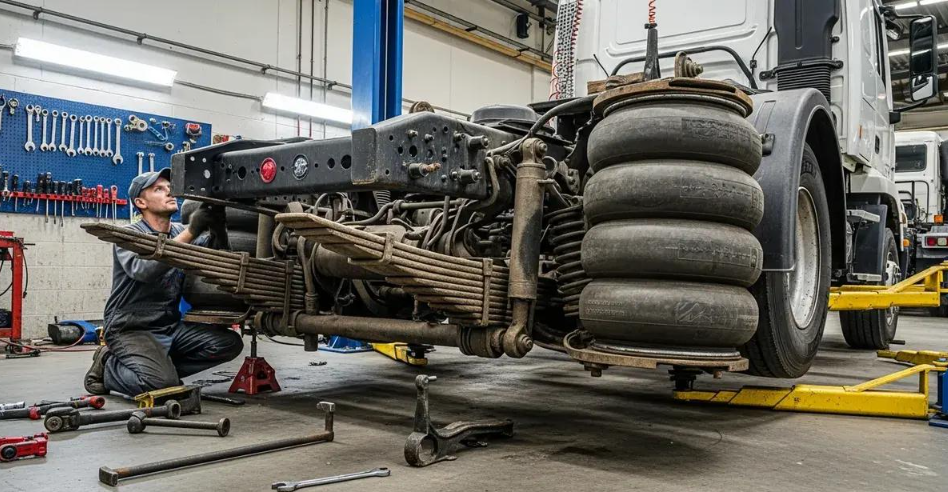
A practical maintenance program should focus on early identification of wear and damage.
The inspection frequency should follow the trailer manufacturer's recommendations and be adjusted for actual operating conditions.
For trailers working on rough roads, in mining areas or in coastal environments, more frequent inspections may be appropriate.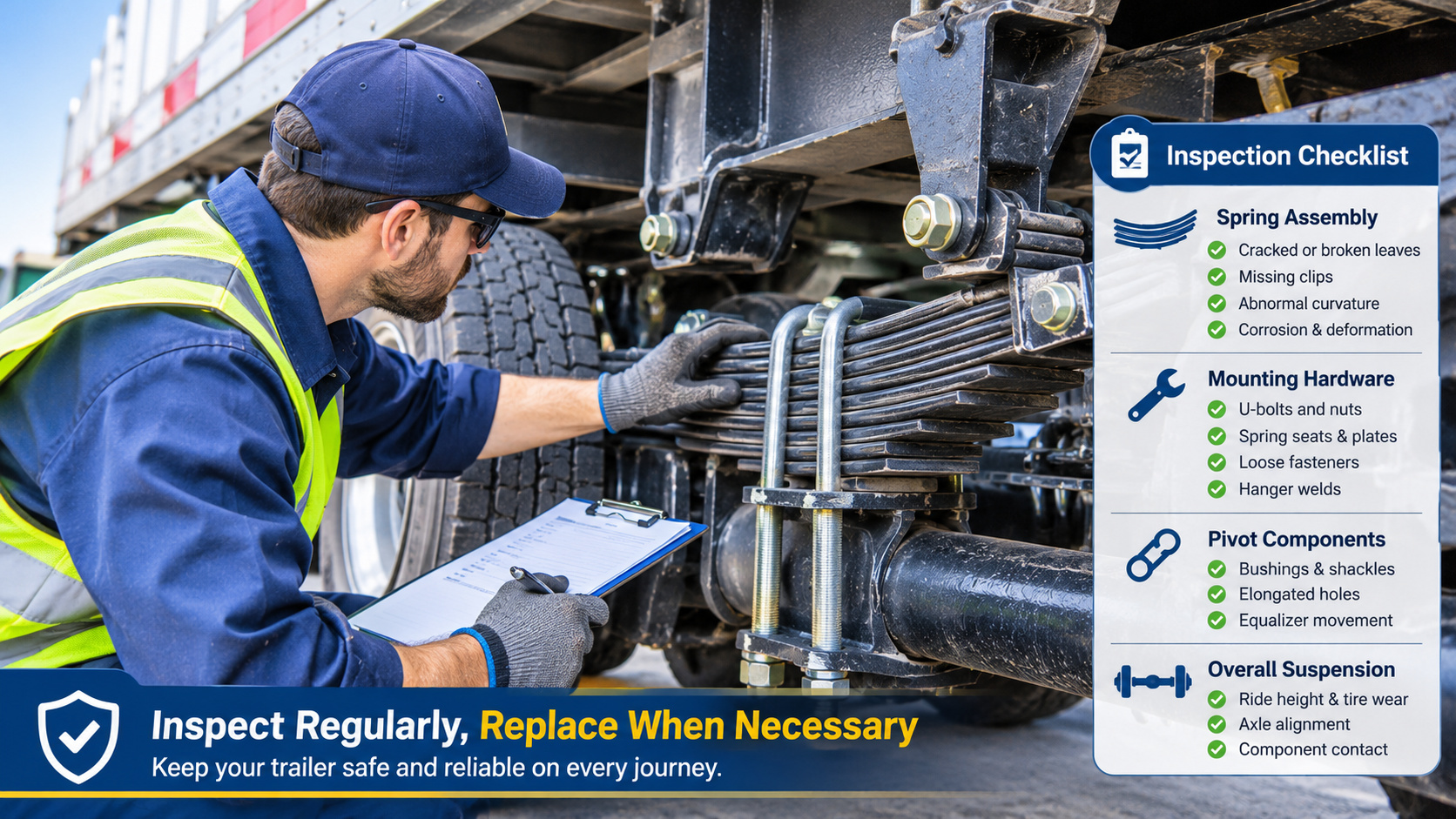
Regular inspection of leaf springs, mounting hardware and suspension components helps identify early signs of wear, prevent unexpected failures and maintain reliable trailer performance.
Regular inspection of leaf springs, mounting hardware and suspension components helps identify early signs of wear, prevent unexpected failures and maintain reliable trailer performance.
Recommended Inspection Items
Spring assembly
-
Check for cracked or broken leaves.
-
Look for missing spring clips.
-
Check for unusual changes in spring curvature.
-
Inspect for deep corrosion and deformation.
Mounting hardware
-
Inspect U-bolts and nuts.
-
Check spring seats and mounting plates.
-
Look for damaged or loose fasteners.
-
Inspect hanger welds and mounting brackets.
Pivot components
-
Check bushings for excessive wear.
-
Inspect shackle plates and bolts.
-
Look for elongated mounting holes.
-
Check equalizer movement where fitted.
Overall suspension
-
Compare ride height on both sides.
-
Look for unusual tire wear.
-
Check for signs of axle displacement.
-
Inspect for contact between suspension and surrounding components.
When Should Leaf Springs Be Replaced?
Replacement should be considered when the spring has:
-
A cracked or broken structural leaf.
-
Permanent deformation beyond the manufacturer's allowable limits.
-
Significant corrosion-related material loss.
-
Damage affecting the spring eye or mounting area.
-
An incorrect load rating or incompatible configuration.
Damaged spring leaves should not be welded, heated or manually reshaped as a substitute for an approved replacement.
When replacing a spring, inspect the U-bolts, bushings, shackles, spring seats and axle alignment as part of the same maintenance process.
9. Trailer Leaf Springs vs. Air Suspension: Which Is Better?
Mechanical leaf spring suspension and air suspension are two widely used configurations in commercial trailers.
Neither system is automatically better for every application.
The appropriate choice depends on cargo requirements, road conditions, vehicle design, operating costs and maintenance resources.
|
Comparison |
Leaf Spring Suspension |
Air Suspension |
|||
|---|---|---|---|---|---|
|
Main support element |
Steel spring assembly |
Air springs |
|||
|
Structure |
Mechanical components |
Pneumatic and mechanical components |
|||
|
Ride characteristics |
Depend on spring design and damping |
Can provide controlled ride characteristics |
|||
|
Height adjustment |
Generally limited by design |
Available in compatible systems |
|||
|
Maintenance |
Mechanical inspection and hardware replacement |
Requires inspection of air bags, valves, lines and controls |
|||
|
System complexity |
Generally straightforward |
More components and control requirements |
|||
|
Common considerations |
Spring fatigue and mounting wear |
Air leakage and pneumatic component condition |
For many conventional cargo and heavy-duty trailer applications, mechanical suspension remains a practical option.
Air suspension may be preferred when ride-height control and cargo protection are important considerations.
The decision should be based on the intended operating environment rather than general claims about one system being superior.
For additional information, see our [trailer axle kit and suspension component guide].
10. How to Choose a Reliable Trailer Leaf Spring Supplier
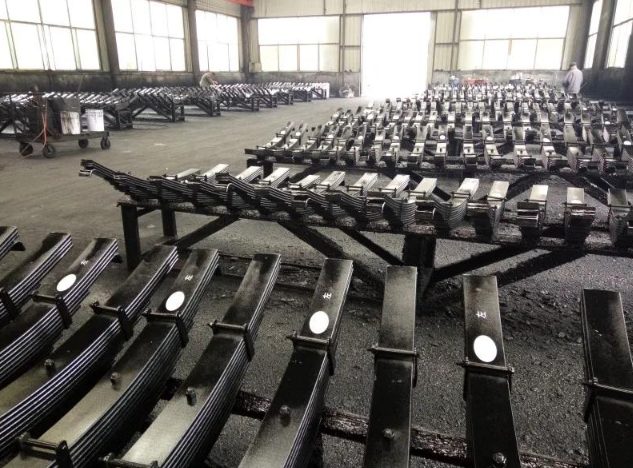
Correct identification, technical compatibility, product quality and consistent supply are equally important.
Before placing an order, consider the following factors.
10.1 Confirm the Original Specifications
Provide the existing spring's part number, technical drawing or clear photographs.
If no part number is available, provide measurements and the relevant trailer and suspension information.
10.2 Check Material and Manufacturing Requirements
Ask the supplier to confirm:
-
Specified spring steel grade.
-
Heat treatment requirements.
-
Dimensional tolerances.
-
Surface treatment.
-
Applicable quality inspection documentation.
10.3 Verify the Complete Suspension Compatibility
Confirm that the spring matches the existing axle, spring seats, hangers, shackles and mounting hardware.
A dimensionally similar spring is not necessarily a technically interchangeable product.
10.4 Consider Spare Parts Availability
For fleet operators and distributors, it can be more efficient to source related suspension components together.
Depending on the suspension configuration, the purchasing list may include:
-
Trailer leaf springs.
-
Spring hangers.
-
U-bolts.
-
Spring seats.
-
Shackle assemblies.
-
Bushings.
-
Equalizers.
-
Mounting bolts and nuts.
10.5 Confirm Export Requirements
For international orders, buyers should also discuss:
-
Product quantities.
-
Individual packing requirements.
-
Export packaging.
-
Shipping arrangements.
-
Commercial documentation.
-
Replacement-part identification.
A clear specification before ordering helps reduce misunderstandings and unnecessary replacement costs.
11. LUCKSUN – Semi-Trailers and Spare Parts for Global Buyers
At LUCKSUN, our business focuses on semi-trailers and related spare parts for international markets.
We understand that suspension components must be considered as part of the complete trailer system.
For buyers sourcing trailer components, we focus on practical product matching, clear specification communication and coordinated supply according to project requirements.
Our product range covers different commercial trailer applications, including:
-
Flatbed semi-trailers.
-
Lowbed semi-trailers.
-
Dump semi-trailers.
-
Skeletal container chassis.
-
Trailer axles and related components.
-
Mechanical and air suspension components.
-
Other semi-trailer spare parts.
Whether you are a trailer importer, fleet operator, distributor or maintenance company, providing the original part number, technical drawing or product photographs can help us understand your requirements.
After years of working with semi-trailers and their components, I have come to appreciate that reliability often comes down to the smallest details. Trailer leaf springs may not be the most visible part of a trailer, but they carry an important responsibility every day. The right spring is not simply about strength; it is about proper matching, consistent performance and long-term safety. I believe good trailer components should be selected with care, not just by price. Because in real transportation, reliability is measured not only by how much a trailer can carry, but also by how confidently it can keep moving.
Looking for trailer leaf springs or related suspension components?
Contact LUCKSUN with your required specifications, quantity and destination country. Our team can help coordinate product information and quotation requirements.
Visit LUCKSUN Official Website | Explore Semi-Trailer Products | Contact LUCKSUN
12. Frequently Asked Questions About Trailer Leaf Springs
Q1. What do leaf springs do on a trailer?
Trailer leaf springs support the trailer's load, absorb road impacts and help maintain axle positioning. They are important components of mechanical suspension systems.
Q2. What is the difference between multi-leaf and parabolic springs?
Multi-leaf springs use several stacked steel leaves, while parabolic springs use specially tapered profiles. Their weight, stiffness and load-deflection characteristics differ according to the design.
Q3. How many leaves should a heavy-duty trailer spring have?
There is no universal number. The required leaf count depends on spring dimensions, material, thickness, profile, rated capacity and suspension design.
The manufacturer's specification should always be followed.
Q4. How do I identify the correct replacement leaf spring?
Check the part number, overall length, width, thickness, leaf count, eye configuration, center bolt position and load rating.
The original technical drawing or a verified sample is the most reliable reference.
Q5. What causes trailer leaf springs to break?
Common contributing factors include repeated fatigue loading, overloading, severe impacts, corrosion, material defects and incorrect installation.
The actual cause should be identified before fitting a replacement.
Q6. Can I replace only one leaf in a spring pack?
This depends on the spring manufacturer's design and approved repair procedures. For many commercial trailer applications, replacing the complete spring assembly is the safer approach when a structural leaf is cracked, broken or damaged.
Q7. Are leaf springs suitable for three-axle semi-trailers?
Yes. Mechanical leaf spring suspension can be used in three-axle semi-trailers when the complete suspension system is properly designed for the intended load and operating conditions.
Q8. Do leaf springs require regular maintenance?
Yes. Inspections should cover spring condition, mounting hardware, bushings, shackles, U-bolts and axle alignment. Maintenance frequency should follow the manufacturer's instructions and operating conditions.
Q9. What is the difference between a leaf spring and an air spring?
A leaf spring is a mechanical steel spring assembly. An air spring uses compressed air within a flexible air bag to support the load. The two systems have different structural and maintenance requirements.
Q10. Can LUCKSUN supply semi-trailer suspension parts?
LUCKSUN focuses on semi-trailers and related spare parts for international buyers. Contact us with your required component specifications, drawings or photographs to discuss product availability and supply requirements.