
Semi Trailer Maintenance: Complete Guide & Checklist
A semi-trailer works under constant road vibration, changing weather conditions, heavy cargo loads, and repeated loading and unloading operations. Over time, these conditions can affect its tires, axles, brakes, suspension, chassis, and other mechanical components.
For fleet operators and transportation companies, semi-trailer maintenance is not simply about repairing damaged parts. It is about identifying potential problems early, maintaining component compatibility, and keeping the trailer in suitable operating condition.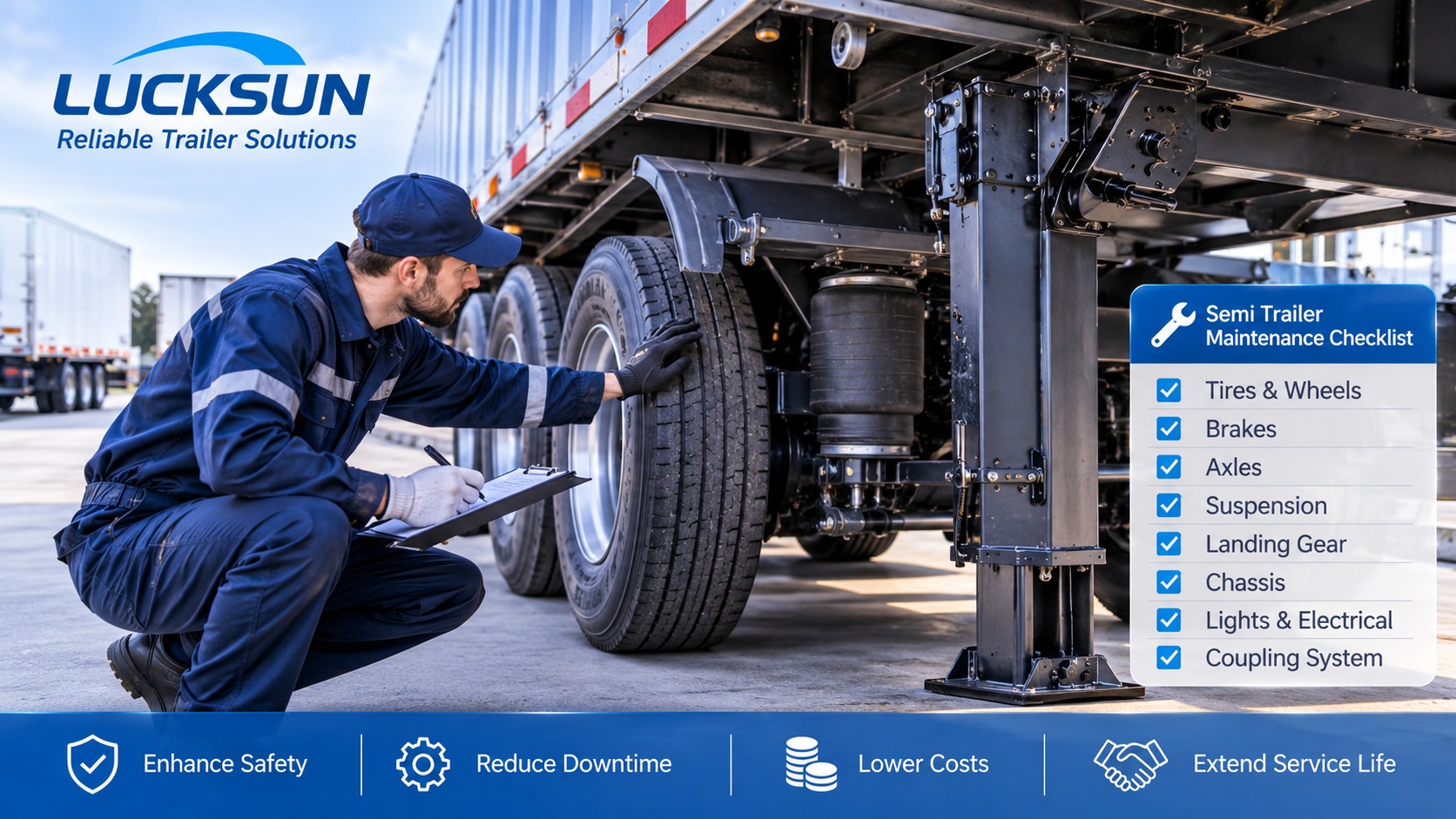
LUCKSUN semi trailer maintenance checklist: technician inspecting trailer tires, suspension and landing gear
A practical semi-trailer maintenance checklist covering tires, brakes, axles, suspension, landing gear, chassis, lighting and coupling, helping enhance safety and reduce downtime.
A well-organized preventive maintenance program helps reduce unexpected downtime, avoid unnecessary component replacement, and improve the overall reliability of commercial transportation equipment.
Whether you operate flatbed trailers, container chassis, lowbed trailers, dump trailers, or tanker semi-trailers, understanding the correct maintenance procedures is essential.
This guide explains how to maintain a semi-trailer, what components require regular inspection, how to organize a practical maintenance schedule, and when replacement parts should be considered.
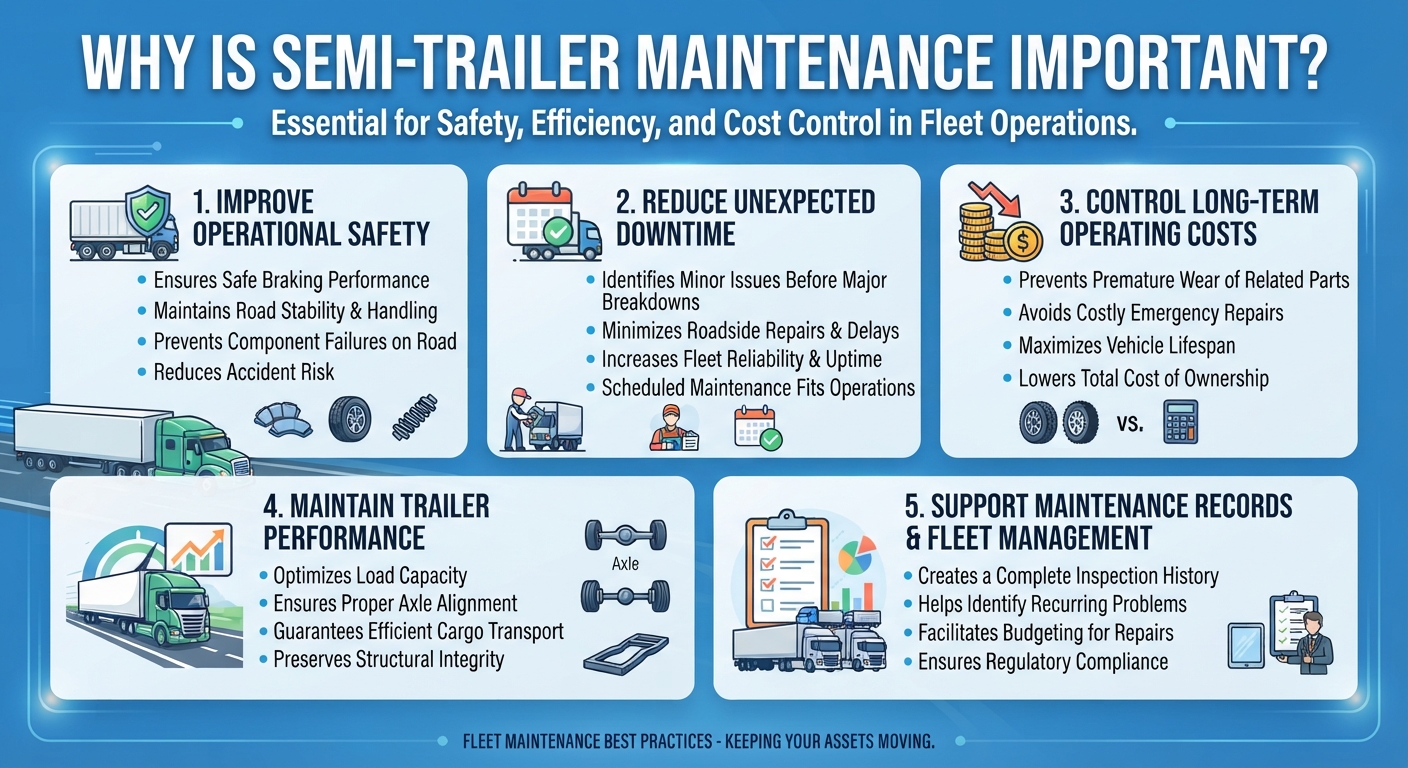
1. Why Is Semi-Trailer Maintenance Important?
A semi-trailer may not have an engine or transmission like a tractor unit, but it contains several important mechanical and structural systems.
These systems work together to support cargo, transfer loads, maintain road stability, and provide safe braking performance.
Neglecting one component can affect the performance of other parts.
For example, incorrect axle alignment may contribute to uneven tire wear. A worn suspension component can affect axle positioning. An air leak may reduce the effectiveness of the braking system.
Regular maintenance provides several important benefits.
1.1 Improve Operational Safety
Tires, brakes, suspension components, coupling devices, and lighting systems all contribute to safe trailer operation.
Routine inspection helps identify visible damage, excessive wear, loose fasteners, air leaks, and other conditions that require attention.
1.2 Reduce Unexpected Downtime
A minor issue identified during a scheduled inspection is often easier to address than a major failure discovered during transportation.
Preventive maintenance allows fleet operators to plan repairs and arrange replacement parts before a vehicle becomes unavailable.
1.3 Control Long-Term Operating Costs
Replacing a damaged component at the appropriate time may prevent additional damage to related assemblies.
For example, addressing abnormal wheel-bearing noise early may help prevent more extensive wheel-end damage.
1.4 Maintain Trailer Performance
Regular inspection of axles, suspension, tires, brakes, and structural components helps maintain the trailer's intended operating condition.
1.5 Support Maintenance Records and Fleet Management
A written inspection history helps fleet managers understand component conditions, identify recurring problems, and plan maintenance budgets.
For a better understanding of the systems involved, see our guide to Semi-Trailer Components and Their Functions.
2. Complete Semi-Trailer Maintenance Checklist
A practical maintenance checklist should cover the complete trailer rather than focusing only on tires and brakes.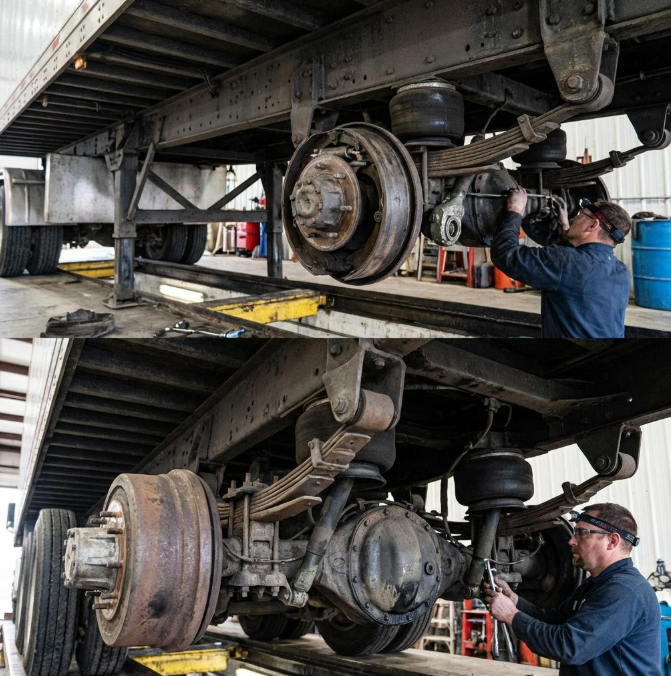
Trailer Inspection
The following inspection areas provide a useful starting point for fleet operators, maintenance technicians, and trailer owners.
2.1 Tire and Wheel Maintenance
Tires are among the most important components affecting trailer operation, road contact, and load distribution.
Regularly inspect: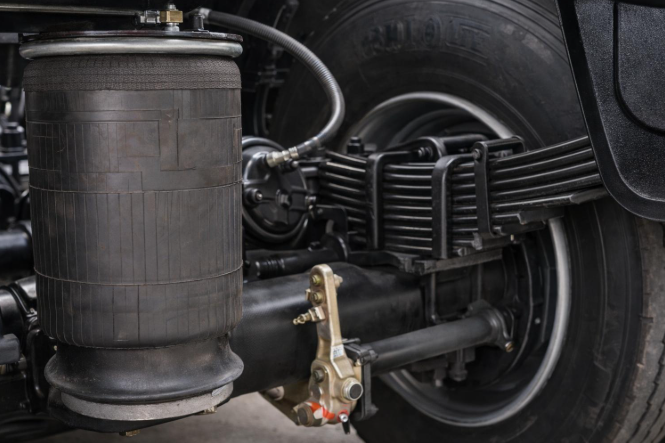
Suspension Maintenance
-
Tire inflation pressure according to the tire and trailer manufacturer's specifications.
-
Tread depth and uneven wear patterns.
-
Sidewall cuts, cracks, bulges, and visible damage.
-
Embedded stones, metal objects, and other foreign materials.
-
Wheel rims for deformation, cracks, or corrosion.
-
Wheel nuts and fasteners for looseness or damage.
-
Signs of abnormal wheel-end heating.
Incorrect inflation pressure, overloading, alignment problems, and suspension issues can contribute to premature tire wear.
When uneven wear appears, do not simply replace the tire without investigating the underlying cause.
Check axle alignment, suspension condition, load distribution, and tire specifications.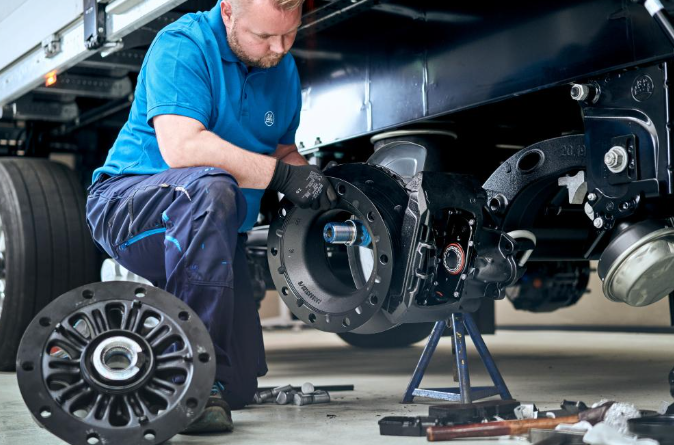
Brake System
2.2 Trailer Axle Maintenance
Trailer axles transfer loads from the trailer structure to the wheels and work together with the suspension and braking systems.
A damaged or improperly maintained axle assembly may affect trailer stability, tire wear, and overall operating reliability.
Important inspection points include:
-
Axle beam condition.
-
Visible cracks, bending, or deformation.
-
Hub and bearing condition.
-
Bearing lubrication and seal condition.
-
Brake assembly condition.
-
Axle alignment.
-
Suspension mounting points.
-
Fasteners and connection components.
Pay particular attention to unusual wheel-end noise, grease leakage, abnormal temperatures, and irregular tire wear.
Wheel-bearing inspection, adjustment, lubrication, and replacement must follow the axle manufacturer's instructions.
Different axle designs may have different service requirements.
Learn more about Trailer Axles: Types, Components, Capacity and Selection.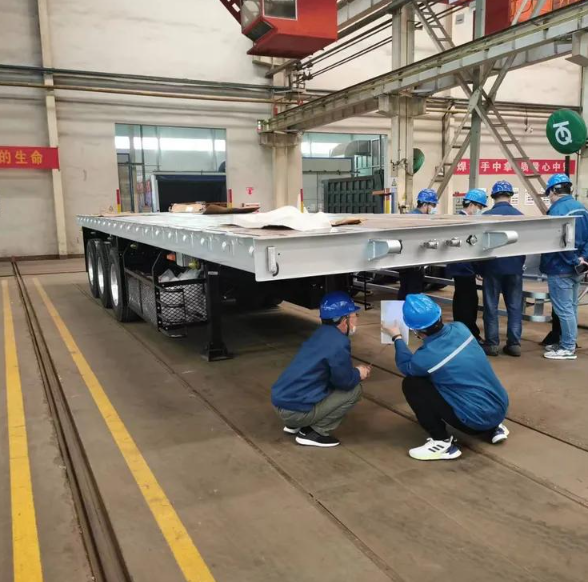
Chassis Inspection
2.3 Brake System Maintenance
The braking system is a critical safety system on every commercial semi-trailer.
Depending on the trailer configuration, the system may include brake chambers, air lines, valves, slack adjusters, brake shoes, drums, discs, and ABS or EBS equipment.
Regularly check:
-
Brake chambers for visible damage and air leakage.
-
Air hoses and connections for cracks or abrasion.
-
Brake linings and pads for wear.
-
Brake drums and discs for damage.
-
Slack adjuster operation.
-
Brake system air pressure and related components.
-
ABS sensors, wiring, and warning indicators.
-
EBS components where fitted.
For trailers equipped with ABS or EBS, diagnostic checks should follow the relevant system manufacturer's instructions.
An ABS warning light should not be ignored. The fault should be identified using the appropriate diagnostic procedure.
Uneven braking, dragging brakes, delayed brake release, abnormal noise, and excessive heat may indicate a problem requiring professional inspection.
For additional technical information, read our article about Common Reasons Why a Semi-Trailer Brake Does Not Return.
2.4 Suspension System Maintenance
The suspension system connects the axles to the trailer chassis and helps support cargo loads while absorbing road impacts.
A suspension system in poor condition may contribute to uneven tire wear, abnormal vibration, poor axle positioning, and reduced driving stability.
Inspection points include:
-
Leaf springs for cracks or deformation.
-
Spring hangers and brackets.
-
U-bolts and mounting fasteners.
-
Suspension bushings.
-
Equalizers and connecting components.
-
Shock absorbers where fitted.
-
Air springs and air lines on air suspension systems.
-
Visible movement or damage around suspension mounting points.
Pay attention to loose fasteners, damaged bushings, air leakage, and unusual suspension movement.
Do not tighten suspension fasteners using assumed torque values. Follow the specific component manufacturer's torque specifications.
For more information, explore Mechanical Suspension Systems for Semi-Trailers and our Air Suspension Product Range.
2.5 Landing Gear Inspection
Landing gear supports the front section of a semi-trailer when it is disconnected from the tractor unit.
It is used during parking, loading, unloading, and coupling operations.
Regularly inspect:
-
Outer and inner support legs.
-
Gearbox operation.
-
Crank handle and transmission shaft.
-
Connecting linkage.
-
Mounting plates and fasteners.
-
Supporting shoes.
-
Visible cracks around welded connections.
-
Abnormal resistance during lifting and lowering.
Check for lubrication problems, damaged gears, loose mounting points, and deformation.
Landing gear should be operated according to its rated capacity and manufacturer's instructions.
Never attempt to operate damaged support legs or exceed their specified load ratings.
2.6 Chassis and Frame Inspection
The chassis is the main structural foundation of a semi-trailer.
It supports the cargo body, axles, suspension, coupling components, and other assemblies.
Regularly inspect:
-
Main longitudinal beams.
-
Cross members.
-
Welded connections.
-
Suspension mounting areas.
-
Kingpin mounting structure.
-
Corrosion and paint damage.
-
Visible cracks or deformation.
-
Loose bolts and structural fasteners.
Pay particular attention to areas exposed to repeated loading stress, impact, and vibration.
Any structural crack or deformation should be evaluated by qualified personnel.
Repairs to load-bearing structural members should follow an approved engineering repair procedure.
2.7 Lighting and Electrical System
Trailer lighting helps other road users identify vehicle position, braking, and turning movements.
Inspect:
-
Brake lights.
-
Turn signals.
-
Tail lights.
-
Side marker lights.
-
Clearance lights.
-
Reflectors.
-
Wiring connections.
-
Electrical plugs.
-
Cable supports and protective clips.
Check for broken lenses, corroded connectors, loose wiring, and water intrusion.
Electrical problems should be corrected before the trailer returns to operation.
2.8 Coupling System and Kingpin
The kingpin and fifth-wheel coupling arrangement connect the semi-trailer to the tractor unit.
These components are essential for secure vehicle connection and load transfer.
Inspect:
-
Kingpin condition.
-
Visible wear or deformation.
-
Mounting plate condition.
-
Fastening points.
-
Signs of cracks around the mounting structure.
-
Lubrication requirements.
-
Compatibility with the tractor's fifth-wheel system.
Any excessive wear or damage should be assessed according to the relevant component manufacturer's limits.
Do not operate a trailer with an uncertain or defective coupling connection.
2.9 Trailer Body and Cargo Equipment
Maintenance requirements also depend on the trailer type.
For flatbed trailers, inspect deck condition, lashing points, side rails, and cargo-securing equipment.
For container chassis, check twist locks, mounting brackets, and related locking mechanisms.
For dump trailers, inspect hydraulic hoses, cylinders, connections, and the body structure.
For tanker trailers, inspection should also cover tank structures, valves, manholes, pipelines, and applicable pressure or safety equipment.
For refrigerated trailers, the refrigeration unit requires its own maintenance program according to the equipment manufacturer's recommendations.
3. Semi-Trailer Maintenance Schedule
A maintenance schedule helps organize inspections and prevents important tasks from being overlooked.
However, there is no single maintenance interval suitable for every semi-trailer.
Actual requirements depend on the trailer manufacturer, axle and brake suppliers, operating mileage, cargo weight, road conditions, climate, and applicable regulations.
The following table is a practical fleet-management reference, not a universal replacement for manufacturer service instructions.
Daily or Before Every Trip
| Inspection Item | What to Check |
|---|---|
| Tires | Inflation condition, visible damage, abnormal wear |
| Wheels | Visible wheel damage and loose fasteners |
| Brakes | Obvious defects, air leaks, warning indicators |
| Lights | Brake lights, turn signals, marker lights |
| Coupling | Kingpin connection and locking condition |
| Landing Gear | Fully raised and properly secured |
| Chassis | Visible damage and abnormal conditions |
| Cargo Equipment | Load restraints and locking devices |
Weekly Inspection
| Inspection Item | What to Check |
|---|---|
| Tires and Wheels | Pressure, wear patterns, damage |
| Air System | Hoses, connections, visible leakage |
| Suspension | Springs, bushings, brackets |
| Landing Gear | Operation, lubrication, mounting |
| Electrical System | Wiring, connectors, lamps |
| Chassis | Cracks, corrosion, loose components |
| Cargo Body | Doors, hinges, locks, seals |
Monthly Inspection
| Inspection Item | What to Check |
|---|---|
| Axles | Beam condition and alignment indicators |
| Wheel Ends | Bearings, seals, abnormal heating |
| Brakes | Wear condition and system operation |
| Suspension | Mounting points and component wear |
| Frame | Welds, cross members, corrosion |
| Coupling | Kingpin and mounting condition |
| Fasteners | Condition and specified torque requirements |
Quarterly or Scheduled Workshop Inspection
-
Perform a more detailed brake system inspection.
-
Check axle and wheel-end condition according to manufacturer procedures.
-
Inspect suspension components and mounting points.
-
Review ABS or EBS fault records where applicable.
-
Inspect structural welds and high-stress areas.
-
Check landing gear and transmission components.
-
Review maintenance records and recurring defects.
Annual or Legally Required Inspection
Arrange a comprehensive inspection according to the applicable local regulations and vehicle manufacturer's requirements.
This may include detailed checks of:
-
Structural integrity.
-
Axle and suspension assemblies.
-
Brake performance.
-
Wheel-end components.
-
Coupling devices.
-
Lighting and electrical systems.
-
Specialized trailer equipment.
-
Required safety and compliance documentation.
The inspection schedule should be adjusted when a trailer operates in severe conditions, carries unusually heavy loads, or shows signs of accelerated component wear.
4. Preventive Maintenance vs. Breakdown Repairs
One important difference between well-managed fleets and poorly maintained fleets is how they respond to component problems.
A reactive maintenance approach waits until a component fails before arranging repairs.
Preventive maintenance identifies developing problems and schedules appropriate action in advance.
| Comparison | Preventive Maintenance | Reactive Maintenance |
|---|---|---|
| Inspection | Planned and recorded | Often after a problem occurs |
| Repairs | Scheduled when needed | Usually unplanned |
| Spare Parts | Can be prepared in advance | May require urgent sourcing |
| Downtime | Easier to manage | More difficult to predict |
| Cost Control | Better maintenance planning | Greater risk of unexpected expense |
| Fleet Management | Based on inspection history | Based on reported failures |
For example, a small air leak discovered during a routine inspection can be investigated before it affects brake system performance.
Similarly, a damaged suspension bushing can be replaced before related components experience additional wear.
Preventive maintenance does not eliminate all failures, but it provides a more structured way to manage equipment condition.
5. Common Semi-Trailer Problems and Warning Signs
Understanding early warning signs helps maintenance teams decide when further inspection is necessary.
Uneven Tire Wear
Possible contributing factors include:
-
Incorrect tire inflation.
-
Axle misalignment.
-
Suspension wear.
-
Incorrect load distribution.
-
Damaged wheel-end components.
The underlying cause should be identified before replacing tires.
Abnormal Brake Performance
Possible warning signs include delayed brake release, uneven braking, unusual noise, air leakage, and excessive heat.
The brake system should be inspected by qualified technicians using the correct procedures.
Excessive Trailer Vibration
Possible causes may include wheel imbalance, tire damage, bearing problems, suspension wear, or axle alignment issues.
The trailer should be inspected to identify the source rather than treating vibration as a normal operating condition.
Landing Gear Difficult to Operate
Possible causes include inadequate lubrication, internal gear damage, bent components, or mechanical obstruction.
Check the complete landing gear assembly and follow the manufacturer's service instructions.
Air Suspension Leakage
Possible warning signs include abnormal trailer height, uneven suspension position, and audible air leakage.
Inspect air springs, hoses, fittings, and related valves.
Structural Cracks or Corrosion
Cracks around welds, brackets, and mounting points may indicate structural stress or fatigue.
Any suspected structural damage should be assessed by qualified personnel before continued operation.
6. How Operating Conditions Affect Semi-Trailer Maintenance
A maintenance plan should reflect the actual working environment.
The same trailer model may require different inspection attention depending on where and how it operates.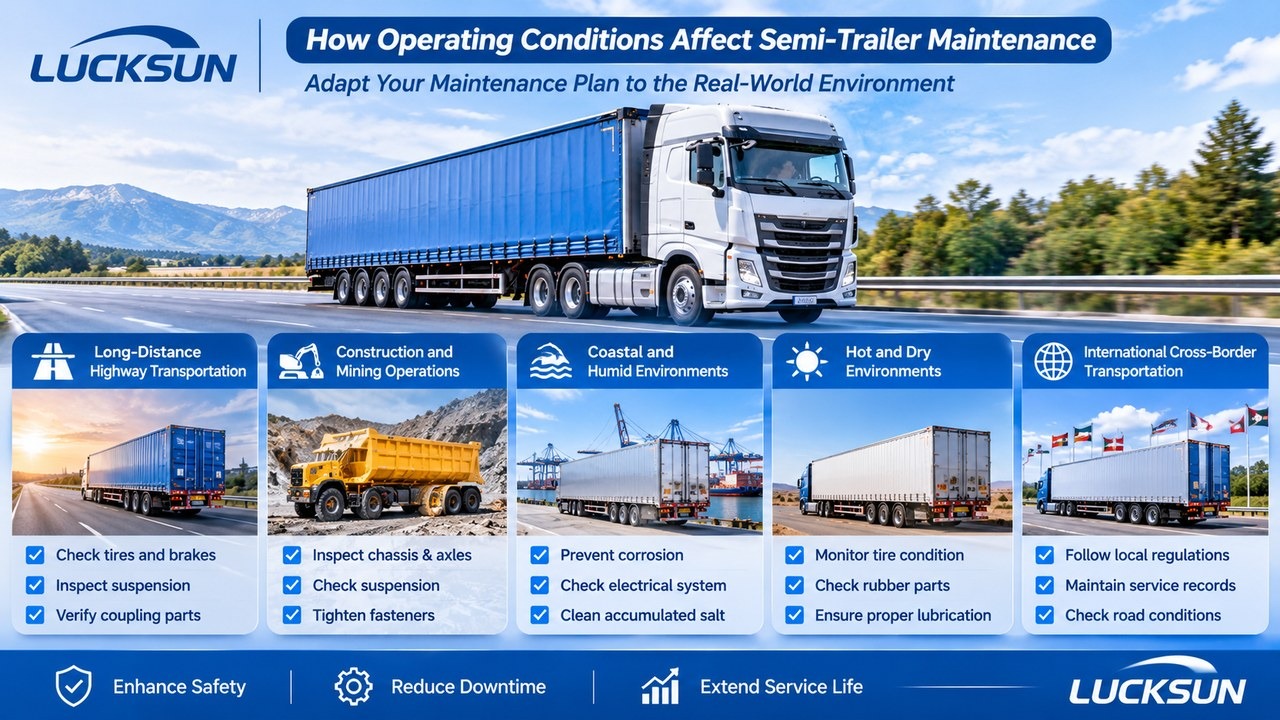
How Operating Conditions Affect Semi-Trailer Maintenance – LUCKSUNSemi-trailer maintenance requirements vary by operating conditions, including long-distance highways, construction sites, coastal areas, hot climates, and international transportation.
Long-Distance Highway Transportation
Long-distance trailers experience repeated vibration, braking cycles, and tire loading.
Pay particular attention to tire condition, wheel ends, brakes, suspension, and coupling components.
Construction and Mining Operations
Trailers working on rough roads may experience increased impact loads, dust exposure, and component vibration.
Inspect chassis welds, suspension brackets, tires, axles, and mounting fasteners more frequently when operating conditions require it.
Coastal and Humid Environments
Moisture and salt exposure may accelerate corrosion on exposed metal surfaces and electrical connections.
Pay attention to chassis protection, fasteners, wiring connectors, and areas where water or dirt can accumulate.
Hot and Dry Environments
High temperatures and dusty conditions can place additional demands on tires, rubber components, electrical connections, and lubrication systems.
Follow component manufacturers' recommendations for operating temperature and inspection requirements.
International Cross-Border Transportation
Trailers operating across different countries may encounter different road surfaces, climates, loading practices, and regulatory requirements.
Fleet managers should maintain clear service records and ensure that the trailer meets the requirements of its operating markets.
7. Semi-Trailer Spare Parts: When Should Components Be Replaced?
Maintenance is not only about inspection. It also involves knowing when a component should be repaired, adjusted, or replaced.
Replacing parts too early can increase maintenance expenses, while delaying replacement may increase safety risks and damage to related assemblies.
Important considerations include:
Component Condition
Inspect for cracks, deformation, excessive wear, corrosion, and leakage.
Manufacturer Specifications
Use the original manufacturer's service limits and approved replacement procedures.
Component Compatibility
Confirm dimensions, load ratings, mounting arrangements, and connection specifications.
Operating Environment
Consider road conditions, load levels, climate, and frequency of operation.
Replacement Part Quality
Select components suitable for the trailer model and intended operating conditions.
Common replacement components may include:
-
Trailer axles and axle accessories.
-
Wheel hubs, bearings, and seals.
-
Brake shoes, pads, drums, and discs.
-
Brake chambers and related valves.
-
Leaf springs and suspension components.
-
Air suspension parts.
-
Landing gear components.
-
Tires and wheels.
-
Lighting and electrical accessories.
For a detailed component overview, read our Trailer Axle Kit: Components and Buying Guide.
You can also explore the LUCKSUN Semi-Trailer Parts Range for related components and trailer configurations.
8. Maintenance Differences Between Semi-Trailer Types
Different trailer structures require different maintenance priorities.
A standard inspection program should therefore be adjusted according to the trailer's design and application.
Flatbed Semi-Trailers
Inspect the deck, main frame, lashing points, side rails, landing gear, axles, tires, and brakes.
Pay attention to damage caused by loading machinery and unsecured cargo.
Skeletal Container Chassis
Inspect twist locks, container support areas, chassis connections, axles, suspension, brakes, and lighting.
Ensure that all container-locking devices operate correctly.
Lowbed Semi-Trailers
Check the main beams, loading ramps, suspension, axles, and structural connections.
Because lowbed trailers may carry heavy machinery, the frame and loading equipment require particular attention.
Dump Semi-Trailers
Inspect the hydraulic system, cylinders, hoses, body structure, hinges, locking components, axles, and suspension.
Any hydraulic leakage or abnormal body movement should be investigated.
Fuel Tanker Semi-Trailers
Inspect the tank body, valves, piping, manhole covers, safety equipment, chassis, brakes, and running gear.
Tank-specific inspection and testing must follow the applicable regulations and manufacturer's instructions.
See our Fuel Tanker Semi-Trailer Guide for more information about tanker configurations and components.
Refrigerated Semi-Trailers
In addition to the standard trailer maintenance program, inspect the refrigeration unit, electrical connections, insulation, door seals, and drainage arrangements.
The refrigeration equipment must follow its own manufacturer-defined service schedule.
9. How to Build an Effective Semi-Trailer Maintenance Record
A good maintenance program needs more than a checklist.
Fleet operators should maintain a clear record for every trailer so that inspections, repairs, and replacement decisions can be tracked over time.
A useful maintenance record should include:
| Record Field | Information |
|---|---|
| Trailer Identification | Trailer number or VIN |
| Inspection Date | Date of inspection |
| Mileage | Recorded operating mileage |
| Inspection Type | Daily, weekly, monthly, or scheduled |
| Component | Axle, brake, tire, suspension, etc. |
| Condition | Normal, worn, damaged, or defective |
| Action Required | Monitor, adjust, repair, or replace |
| Replacement Parts | Part name and specification |
| Technician | Person responsible |
| Next Inspection | Planned inspection date |
Why Are Maintenance Records Important?
First, they help identify recurring defects.
Second, they make it easier to plan spare parts purchasing.
Third, they provide a reference when evaluating component performance.
Finally, they help fleet managers make better decisions about repair budgets and equipment replacement.
A well-maintained record also improves communication between drivers, maintenance teams, fleet managers, and parts suppliers.
10. Choosing the Right Semi-Trailer Parts for Maintenance
When replacing semi-trailer components, product compatibility should always come before price alone.
A replacement component may look similar to the original part but still have different dimensions, connection points, load ratings, or technical specifications.
Before purchasing, confirm:
-
Trailer model and application.
-
Original component model.
-
Required dimensions.
-
Rated capacity where applicable.
-
Mounting and connection details.
-
Brake and suspension compatibility.
-
Required quantity.
-
Destination-market requirements.
For fleet operators and distributors, keeping commonly used compatible replacement parts available can also help reduce maintenance delays.
LUCKSUN focuses on semi-trailers and related components for international markets, including axles, suspension systems, landing gear, and other trailer parts.
Learn more about LUCKSUN's company and product background.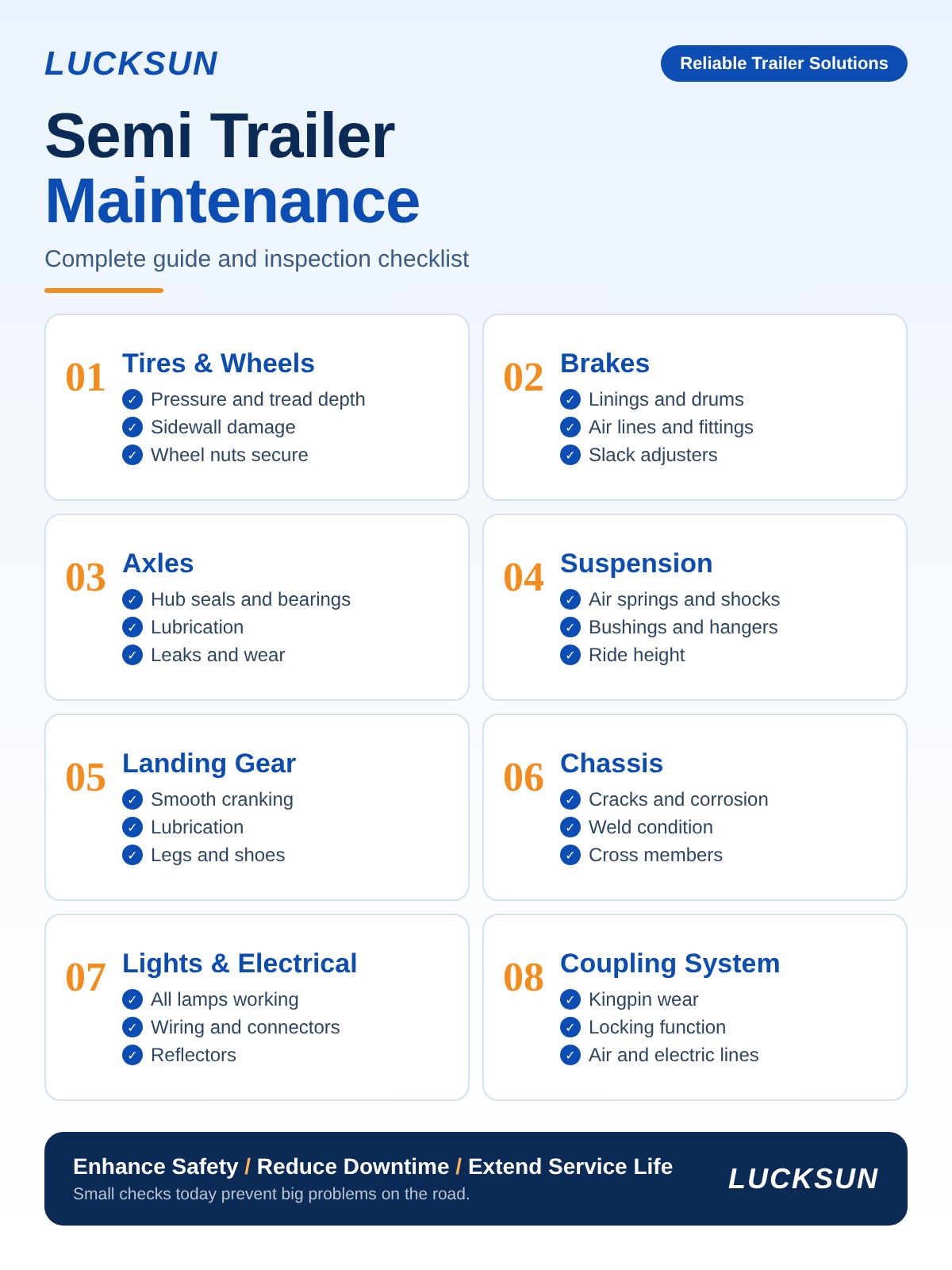
A trailer rarely fails on the day you check it. It fails weeks later, on a long highway stretch, with a driver who is already tired and a delivery that can’t wait. That is why I’ve come to see maintenance as a form of respect: for the person behind the wheel, for the cargo, and for the road everyone shares.
Most breakdowns start small. A tire pressure left unchecked, a brake that feels slightly different, a landing gear crank that has grown stiff. None of it looks urgent until it is. A checklist doesn’t feel exciting, but ten careful minutes with it can save a day of downtime and a lot of worry.
For us, this is the heart of reliable trailer solutions. The parts matter, but the habit of looking after them matters more. Take care of your trailer, and it will take care of you, mile after mile.
11. Frequently Asked Questions About Semi-Trailer Maintenance
Q1. How often should a semi-trailer be maintained?
The maintenance frequency depends on the trailer manufacturer, component specifications, operating conditions, mileage, and local regulations.
Daily pre-trip checks should be combined with planned weekly, monthly, and more detailed workshop inspections as appropriate.
Always follow the applicable manufacturer's maintenance schedule.
Q2. What should be checked before every trip?
Important items include tires, visible wheel defects, brakes, lights, coupling devices, landing gear position, cargo restraints, and visible chassis damage.
Any safety-critical defect should be addressed before the trailer is operated.
Q3. What are the most important semi-trailer maintenance components?
The main inspection areas include tires, wheels, axles, brakes, suspension, landing gear, chassis, coupling devices, and electrical systems.
Specialized trailers require additional equipment-specific checks.
Q4. Why do semi-trailer tires wear unevenly?
Possible causes include incorrect inflation pressure, axle alignment problems, suspension wear, load distribution, and wheel-end issues.
The root cause should be investigated before fitting replacement tires.
Q5. How do I know when trailer bearings need maintenance?
Warning signs may include abnormal noise, excessive heat, lubrication leakage, or unusual wheel movement.
Bearing inspection, adjustment, lubrication, and replacement should follow the axle manufacturer's instructions.
Q6. How should trailer brakes be maintained?
Inspect brake components, air lines, chambers, valves, and ABS or EBS equipment where fitted.
Wear limits, adjustment, lubrication, and service procedures must follow the relevant brake manufacturer's specifications.
Q7. Does a semi-trailer need maintenance even when it is not being used?
Yes. Long periods of storage can contribute to tire pressure loss, corrosion, battery-related issues on equipped systems, and deterioration of seals or other components.
Before returning a stored trailer to service, conduct an appropriate inspection.
Q8. What is preventive maintenance for semi-trailers?
Preventive maintenance is a planned inspection and service approach designed to identify wear, damage, and potential failures before they cause major operating problems.
It includes regular inspections, lubrication, adjustments, maintenance records, and timely replacement of worn components.
Q9. Which spare parts should fleet operators keep available?
The appropriate inventory depends on trailer types, fleet size, operating environment, and maintenance history.
Commonly considered items include brake components, bearings, seals, lighting parts, suspension components, fasteners, and other model-specific accessories.
Q10. Can maintenance extend the service life of a semi-trailer?
Regular maintenance helps control wear, identify defects early, and maintain the condition of major components.
Actual service life depends on design, manufacturing quality, loading conditions, road environment, maintenance practices, and replacement-part quality.
12. Final Thoughts: Maintenance Is an Investment in Trailer Reliability
A semi-trailer is made up of many interconnected systems. Tires, axles, brakes, suspension, landing gear, and chassis components all contribute to its overall operating condition.
The most effective maintenance strategy is not simply to repair problems after they occur. It is to establish a consistent inspection routine, record component conditions, follow manufacturer service requirements, and replace damaged parts at the appropriate time.
For fleet operators, this approach supports better equipment management and more predictable maintenance planning.
For trailer manufacturers, importers, and spare parts distributors, understanding component specifications and compatibility is equally important when selecting replacement parts.
At LUCKSUN, we focus on semi-trailers and related components for international customers.
Whether you are sourcing trailer axles, suspension systems, landing gear, or complete semi-trailers, selecting the correct specifications is an important first step.
LUCKSUN – Semi-Trailers and Parts for Global Markets.
Explore our product range and contact our team to discuss your semi-trailer and spare parts requirements.