Semi Trailer Manufacturing: Our Production & QC Process
From Steel Fabrication to Finished Trailer Body | LUCKSUN
Introduction: What Is Trailer Manufacturing?
Trailer manufacturing is the process of designing, fabricating, assembling, finishing, and inspecting trailers for commercial transportation and industrial applications.
Dump Semi-Trailer Body Manufacturing – Finished Paint & Structure Details
A reliable semi-trailer is more than a steel structure with wheels. Its performance depends on structural design, material selection, welding quality, load distribution, surface protection, and the compatibility of its running gear.
For fleet operators, importers, logistics companies, and equipment distributors, choosing the right semi-trailer manufacturer is an important investment decision. Manufacturing quality directly influences operating reliability, maintenance requirements, service life, and transportation efficiency.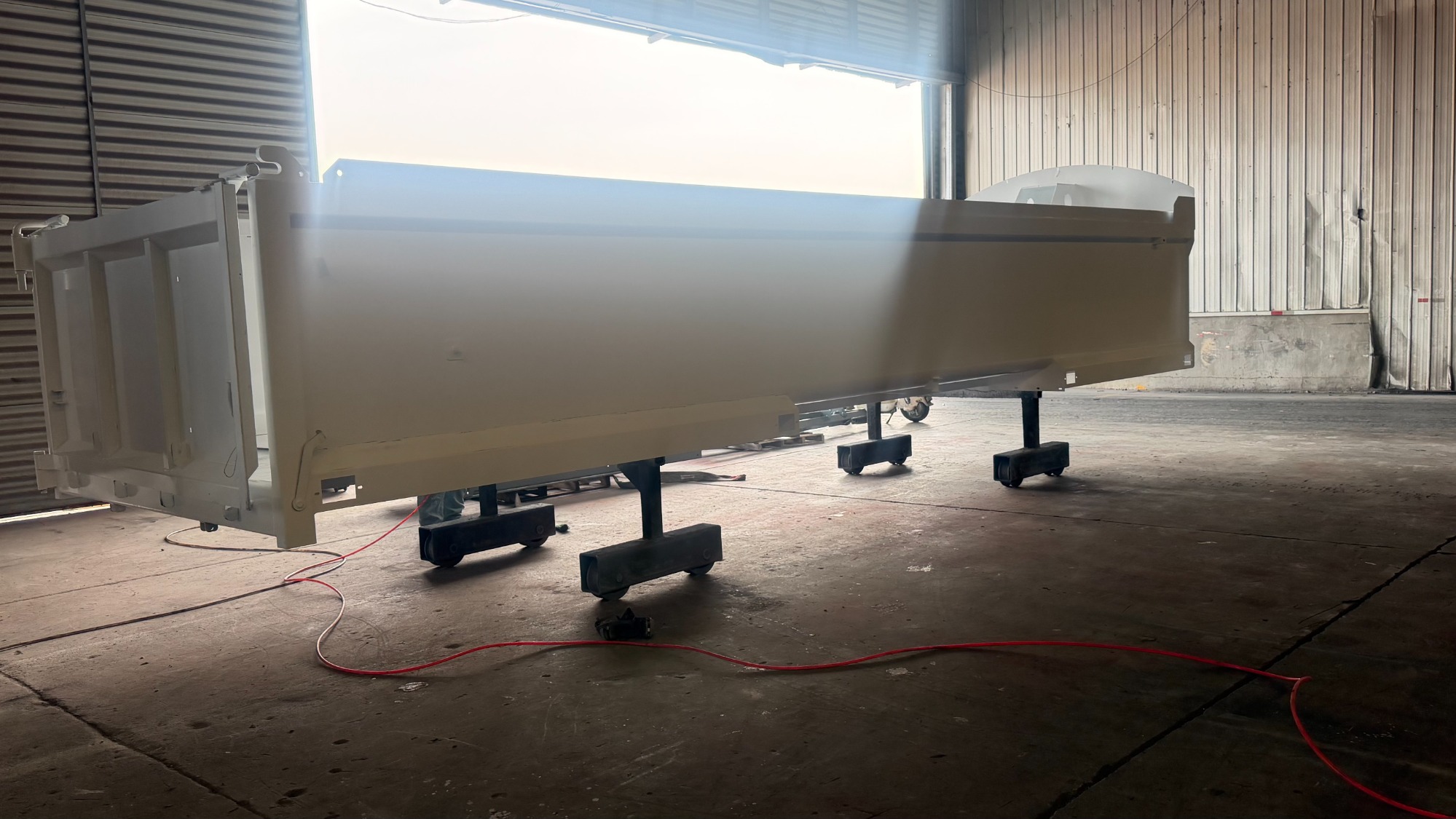
A large steel semi-trailer body undergoing fabrication and structural assembly in an industrial workshop. The image highlights its reinforced side panels, rear door structure, and precision manufacturing work, reflecting the attention to detail in semi-trailer production
At LUCKSUN, we focus on semi-trailers and trailer components for international markets, offering different trailer configurations and customized solutions according to customer requirements.
This article explains the main stages of trailer manufacturing, the importance of steel body fabrication, finishing processes, quality considerations, and what international buyers should check before placing an order.
1. Understanding the Main Stages of Trailer Manufacturing
A complete semi-trailer manufacturing process generally includes several interconnected stages. Each stage contributes to the structural strength, functionality, and final appearance of the trailer.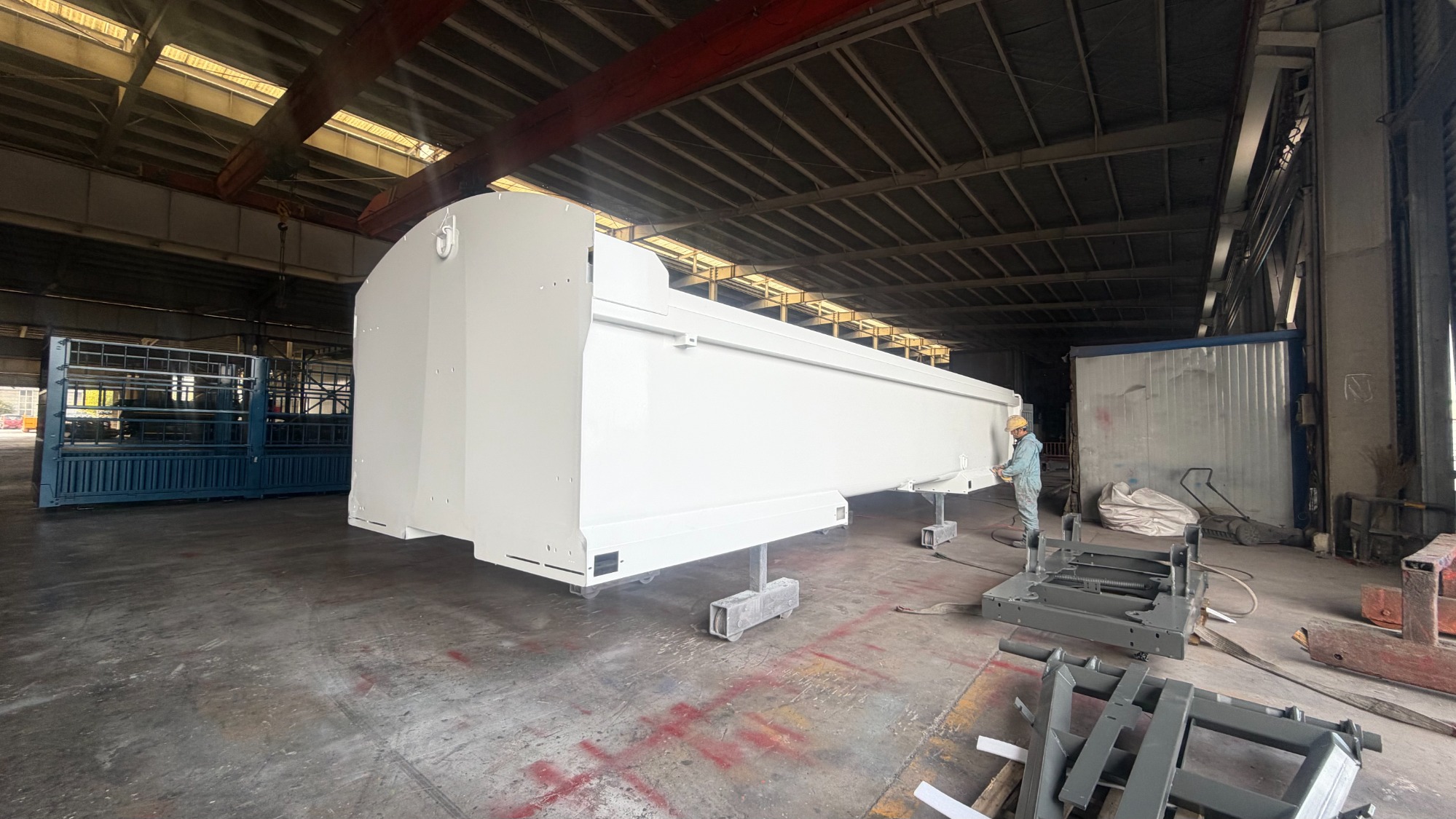
A large semi-trailer body undergoing manufacturing and surface finishing inside an industrial workshop. The image highlights its steel structure, professional fabrication details, and careful finishing work, reflecting LUCKSUN’s focus on quality and customized trailer solutions.
1.1 Design and Engineering
Every trailer project should begin with a clear understanding of its intended application.
Before production, the manufacturer needs to confirm:
-
Trailer type and transportation application.
-
Overall length, width, and height.
-
Required payload and axle configuration.
-
Steel material and structural requirements.
-
Suspension and braking system.
-
Tire and wheel specifications.
-
Hydraulic equipment, if required.
-
Destination-country regulations.
Engineering drawings establish the manufacturing dimensions and component positions.
For customized trailers, the buyer should review and approve the technical drawings before material cutting and fabrication begin.
1.2 Steel Material Preparation
Steel is one of the most important materials in semi-trailer manufacturing.
The selected steel grade, thickness, mechanical properties, and structural design should match the intended operating conditions.
Common structural components include:
-
Main beams and cross members.
-
Side walls and front panels.
-
Floor plates and support structures.
-
Reinforcement sections.
-
Rear doors and locking structures.
-
Mounting brackets and connecting plates.
Proper material preparation helps improve fabrication accuracy and reduce unnecessary rework.
1.3 Cutting and Forming
Steel plates and structural profiles are processed according to approved manufacturing drawings.
Depending on the product design, manufacturing may involve plasma cutting, laser cutting, shearing, bending, and other metal-forming operations.
Accurate cutting and forming are essential because dimensional errors at this stage can affect later welding, assembly, and installation.
1.4 Welding and Structural Fabrication
Welding connects individual steel components into a complete structural assembly.
For semi-trailer bodies, important welding areas may include:
-
Side-wall connections.
-
Floor support structures.
-
Front and rear panels.
-
Reinforcement sections.
-
Structural brackets and mounting points.
Welding quality influences the strength and durability of the finished structure.
Appropriate welding procedures, joint preparation, welding sequence, and inspection help control distortion and maintain structural accuracy.
1.5 Surface Preparation and Painting
Surface treatment is an important stage in trailer manufacturing, especially for trailers operating in humid, dusty, coastal, or demanding outdoor environments.
Before painting, the steel surface should be properly cleaned and prepared according to the specified coating system.
Depending on project requirements, the process may include:
-
Removing oil, dust, rust, and surface contaminants.
-
Surface preparation or abrasive blasting where specified.
-
Applying a suitable primer.
-
Applying the specified intermediate or finishing coating.
-
Allowing sufficient curing time.
-
Checking the final coating appearance and thickness.
A properly selected coating system helps protect steel structures against corrosion and environmental exposure.
1.6 Final Assembly and Component Installation
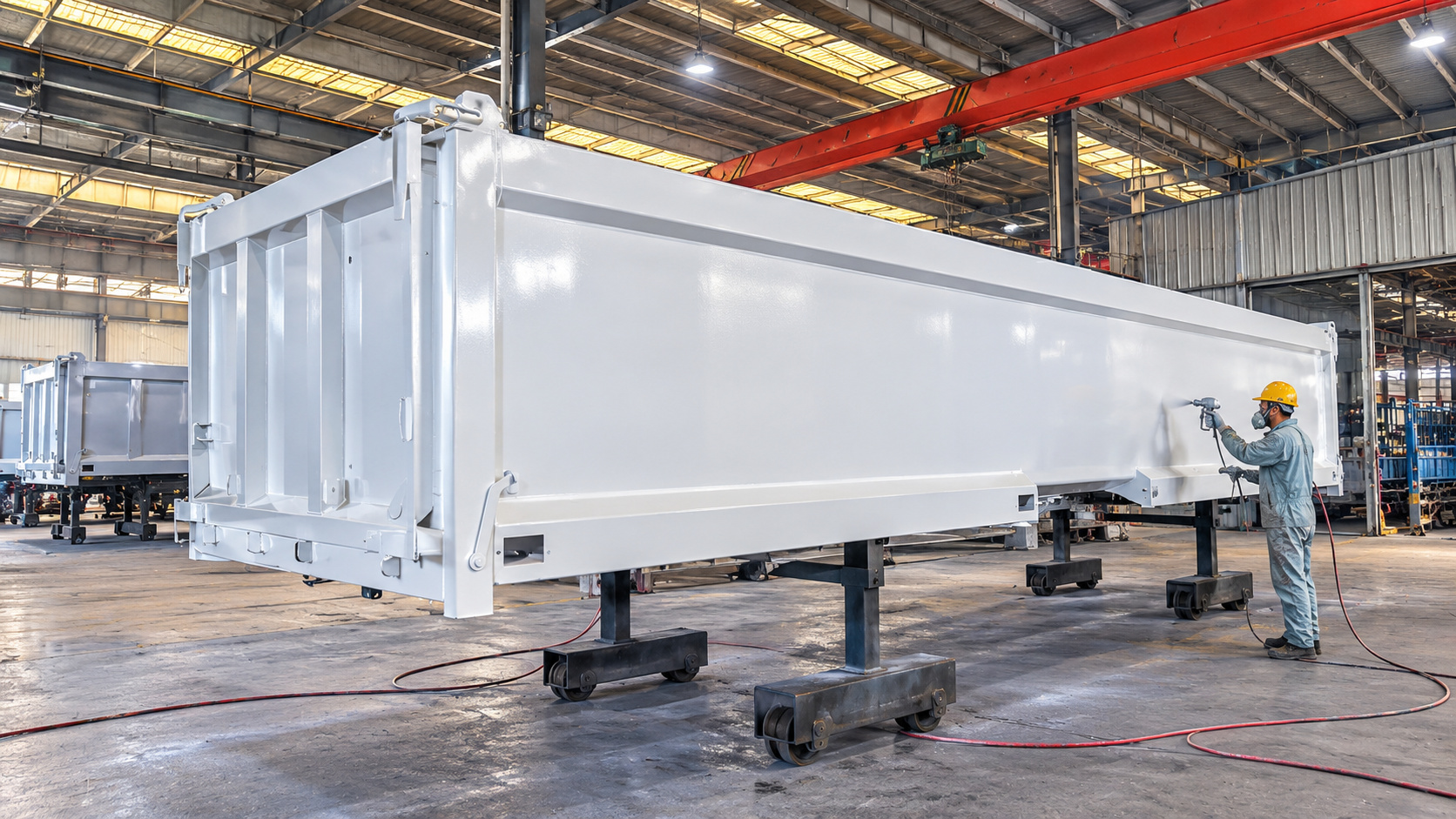
White Semi-Trailer Body Manufacturing and Surface Finishing at LUCKSUN
After fabrication and finishing, the trailer proceeds to final assembly.
Depending on the trailer model, major components may include:
-
Trailer axles.
-
Mechanical or air suspension.
-
Landing legs.
-
Kingpin.
-
Brake systems and ABS.
-
Wheels and tires.
-
Electrical wiring and LED lighting.
-
Hydraulic cylinders and accessories.
Component compatibility is important. Axle capacity, suspension configuration, braking equipment, and other components should be selected according to the trailer design and operating conditions.