
Trailer ABS Light: What It Means, Common Causes, Troubleshooting and Repa
A trailer ABS light is an important warning indicator that helps truck drivers, fleet managers, and maintenance technicians monitor the condition of a trailer's Anti-lock Braking System (ABS).
If the trailer ABS light stays on, flashes unexpectedly, or fails to illuminate during its normal startup check, the system may have detected an electrical, sensor, power supply, or electronic control fault.
However, an illuminated ABS warning light does not automatically mean that all trailer service brakes have stopped working. In many systems, conventional braking remains available while the anti-lock function is impaired. The exact behavior depends on the ABS design and the nature of the fault.
For commercial fleets, ignoring an ABS warning can increase safety risks and lead to unexpected maintenance costs.
This guide explains what a trailer ABS light means, the difference between trailer-mounted and dashboard warning lights, common causes, practical troubleshooting procedures, and how to maintain ABS-equipped semi-trailers.
1. What Is a Trailer ABS Light?
A trailer ABS light is an amber malfunction indicator associated with the trailer's Anti-lock Braking System.
ABS monitors wheel-speed signals and controls brake pressure when necessary to help prevent wheel lock during braking. By helping maintain tire rotation, the system supports directional stability and steering control during hard braking.
A typical commercial trailer ABS system includes:
-
ABS Electronic Control Unit (ECU).
-
Wheel speed sensors.
-
Tone rings or exciter rings.
-
ABS modulator valves.
-
Electrical wiring and connectors.
-
Pneumatic brake components.
-
ABS malfunction indicator lamp.
The ECU receives wheel-speed information from the sensors. When it detects a potential wheel-lock condition or a system malfunction, it communicates with the modulator valves or activates the warning indicator, depending on the situation.
For a broader understanding of how the braking system fits into the complete vehicle, see our guide to the main parts of a semi-trailer.
Where Is the Trailer ABS Light Located?
Commercial trailers may have two separate ABS warning indicators.
1. Trailer-mounted ABS warning light
This is normally a yellow or amber indicator installed on the trailer body, commonly near the rear wheel area.
It allows drivers and maintenance personnel to check the trailer ABS status directly, even when the trailer is disconnected from the tractor.
2. Tractor dashboard trailer ABS light
Some truck tractors have a separate dashboard indicator that communicates the trailer ABS condition through the electrical connection, including Power Line Carrier (PLC) communication where equipped.
The dashboard trailer ABS light is different from the tractor's own ABS warning light.
A fault in the trailer ABS system may activate the trailer indicator, the tractor dashboard indicator, or both, depending on the system configuration and communication arrangement.
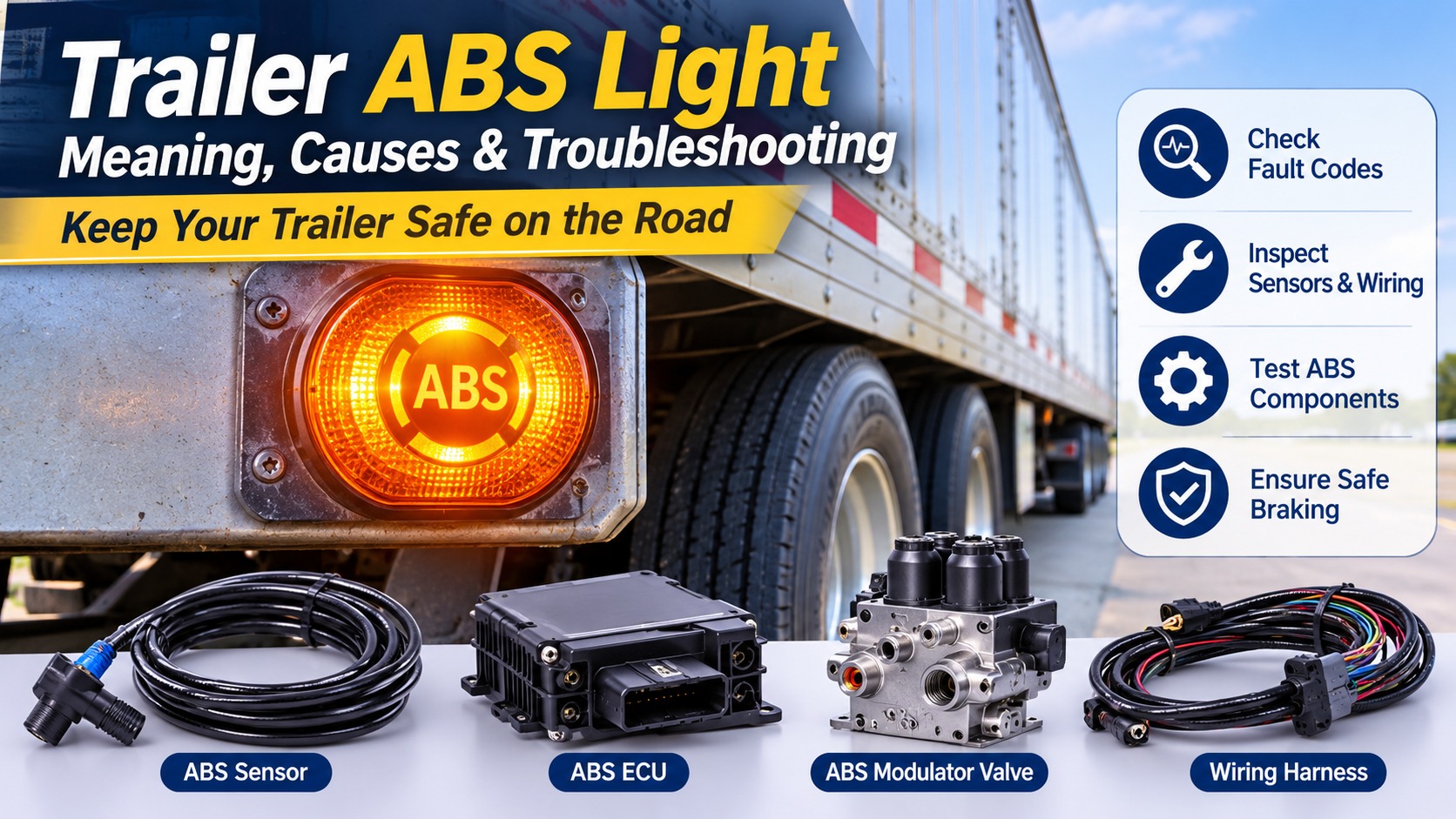
Trailer ABS warning light and key braking system components, highlighting common ABS faults, diagnostic checks, and troubleshooting steps for commercial semi-trailers.
2. What Does the Trailer ABS Light Mean?
The meaning of a trailer ABS light depends on when it illuminates, how long it stays on, and whether the trailer is connected to the towing vehicle.
The following table provides a practical overview.
| ABS Light Condition | Possible Meaning | Recommended Action |
|---|---|---|
| Turns on briefly, then goes off | Normal startup bulb check | No action if the system passes its self-check |
| Stays on after startup | Possible active ABS fault | Retrieve diagnostic codes |
| Stays on while driving | ABS malfunction may be present | Arrange prompt professional inspection |
| Flashes repeatedly | Diagnostic blink code or electrical issue | Follow the specific ECU diagnostic procedure |
| Does not illuminate | Indicator, power supply, or wiring fault | Inspect the indicator circuit and ECU power |
| Tractor dashboard light stays on | Trailer ABS fault or communication issue | Check both tractor and trailer systems |
2.1 ABS Light Turns On and Then Goes Off
This is generally normal behavior.
When electrical power is supplied to the trailer ABS system, the warning indicator normally illuminates briefly to perform a bulb check.
If the light switches off after the prescribed startup sequence and no malfunction is detected, the initial system check has been completed.
Some Bendix TABS-6 configurations specify a typical indicator check lasting approximately 2–6 seconds. Other manufacturers and systems may use different timing.
Therefore, drivers should follow the operating instructions for the specific ABS controller rather than assuming that every trailer uses the same indicator timing.
2.2 Trailer ABS Light Stays On
If the warning light remains illuminated beyond the manufacturer's normal self-check, the system may have detected an active fault.
Possible causes include:
-
Faulty wheel speed sensor.
-
Damaged sensor wiring.
-
Loose or corroded electrical connectors.
-
Insufficient ECU power supply.
-
Incorrect sensor installation.
-
Damaged tone ring.
-
ABS modulator valve malfunction.
-
ECU internal fault.
A diagnostic scan or manufacturer-specific blink-code procedure is needed to identify the actual cause.
2.3 Trailer ABS Light Flashes
A flashing ABS light does not always mean that the system has a new failure.
Some ABS controllers use the trailer-mounted indicator to communicate diagnostic blink codes. The number and sequence of flashes can represent specific fault categories.
For example, manufacturer-specific diagnostic codes may identify:
-
Wheel speed sensor faults.
-
ECU or modulator problems.
-
Power supply failures.
-
Wiring or communication faults.
-
Internal electronic faults.
Do not apply one manufacturer's blink-code chart to another ABS system. Always identify the ECU model and use its corresponding service manual.
2.4 Trailer ABS Light Does Not Come On
A warning lamp that fails to illuminate during the expected bulb check should also be investigated.
Possible causes include:
-
Damaged ABS indicator lamp.
-
Broken indicator wiring.
-
Poor grounding.
-
No electrical power reaching the ECU.
-
Loose connectors.
-
Incorrect wiring installation.
An ABS light that remains off is not proof that the system is functioning correctly.
3. Why Is My Trailer ABS Light On? 8 Common Causes
When a trailer ABS warning light stays on, replacing the ECU immediately is usually not the best first step.
A systematic diagnosis should examine the electrical supply, wheel-end sensors, wiring, mechanical components, and electronic controller.
3.1 Faulty Wheel Speed Sensor
Wheel speed sensors measure the rotational speed of individual monitored wheels.
The ECU uses these signals to determine whether a wheel is approaching a lock-up condition.
A damaged sensor, incorrect installation, contaminated sensor tip, or excessive sensor gap can interrupt the signal.
Common symptoms include:
-
ABS warning light staying on.
-
Intermittent warning during driving.
-
Wheel-speed signal loss.
-
Repeated sensor-related diagnostic codes.
Check the sensor, mounting condition, wiring, and manufacturer-specified installation requirements before replacing the component.
3.2 Damaged ABS Wiring Harness
Trailer wiring is exposed to vibration, moisture, road debris, temperature changes, and mechanical movement.
Over time, these conditions may damage insulation, connectors, or cable connections.
Common wiring problems include:
-
Broken or stretched sensor cables.
-
Short circuits.
-
Open circuits.
-
Loose connectors.
-
Corroded electrical terminals.
-
Water entering connector housings.
Check wiring around the axle, suspension mounting points, wheel ends, and chassis areas where cables may rub against metal components.
Pay particular attention to connectors that have been exposed to water, mud, road salt, or repeated vibration.
3.3 Damaged Tone Ring or Exciter Ring
The tone ring, also known as an exciter ring, provides the rotating reference signal used by certain ABS wheel speed sensors.
If the ring is cracked, damaged, corroded, or contaminated, the sensor may not produce a reliable signal.
Potential symptoms include:
-
Intermittent ABS warnings.
-
Irregular wheel-speed readings.
-
Sensor-related fault codes.
-
ABS intervention problems.
Because the tone ring is installed near the wheel hub or axle assembly, inspection may require removing specific wheel-end components.
Follow the axle and ABS manufacturer's maintenance procedures.
3.4 Insufficient Power Supply
The ABS ECU requires a suitable electrical power supply and ground connection.
Low voltage, poor grounding, damaged power cables, or intermittent electrical connections may cause the ABS controller to malfunction.
Technicians should verify:
-
Power supply condition.
-
Ground connection quality.
-
Connector seating.
-
Voltage under operating conditions.
-
Wiring continuity and circuit condition.
A voltage check without an appropriate load test may not reveal every electrical fault.
3.5 Faulty ABS ECU
The Electronic Control Unit processes sensor signals and manages the ABS system.
Although ECU failure is possible, it should not be assumed before checking the power supply, ground, wiring, sensor circuits, and external components.
Some diagnostic codes may also indicate incorrect system configuration or an installation problem rather than an internally damaged ECU.
Before replacing the controller, confirm the exact fault through the manufacturer's diagnostic software or approved procedure.
3.6 ABS Modulator Valve Problems
The ABS modulator valve controls pneumatic brake pressure according to ECU commands.
If the valve or its electrical connection develops a fault, the ABS system may record a diagnostic code and activate the warning indicator.
Possible problems include:
-
Damaged valve wiring.
-
Electrical faults in the modulator.
-
Loose connectors.
-
Incorrect pneumatic connections.
-
Internal valve malfunction.
The brake system should be inspected by a qualified technician using the correct pneumatic and electronic testing procedures.
3.7 Poor Sensor Installation or Incorrect Air Gap
A wheel speed sensor must be positioned according to the manufacturer's installation specifications.
An incorrect sensor position, damaged bracket, excessive sensor gap, or poor sensor seating may cause an unreliable wheel-speed signal.
Technicians should confirm:
-
Sensor mounting condition.
-
Correct sensor positioning.
-
Tone ring condition.
-
Bracket integrity.
-
Wheel-end movement or excessive runout where applicable.
Never assume that all sensors share the same installation gap or adjustment procedure.
3.8 Connector Corrosion and Moisture
Commercial trailers often operate in wet, dusty, coastal, and chemically aggressive environments.
Water and corrosion inside electrical connectors can cause intermittent resistance changes or signal interruptions.
This problem may become more noticeable when the trailer travels over uneven roads or experiences significant vibration.
Inspect connector seals, terminal condition, cable protection, and mounting arrangements.
Use only manufacturer-approved cleaning, repair, and replacement procedures.
4. How to Troubleshoot a Trailer ABS Light Step by Step
A systematic diagnostic process helps prevent unnecessary parts replacement and reduces vehicle downtime.
The following procedure is intended as a maintenance overview. Electrical and pneumatic testing should be performed by trained personnel using the appropriate equipment and service documentation.
Step 1: Identify Which ABS Warning Light Is On
First, determine whether the warning comes from:
-
The trailer-mounted ABS indicator.
-
The tractor dashboard trailer ABS indicator.
-
The tractor's own ABS indicator.
-
A separate brake-system warning lamp.
This distinction matters because a tractor ABS fault and trailer ABS fault may require completely different diagnostic procedures.
Record the warning condition before disconnecting power or clearing fault codes.
Step 2: Check the Normal Startup Sequence
Turn on the vehicle electrical system according to the manufacturer's operating instructions.
Observe whether:
-
The trailer ABS lamp illuminates.
-
The lamp turns off after its normal check.
-
The lamp stays on.
-
The lamp flashes in a diagnostic pattern.
-
The dashboard indicator behaves differently from the trailer-mounted indicator.
Remember that ABS systems may use stoplight-powered or constant-power configurations.
The expected lamp behavior depends on the controller and wiring architecture.
Step 3: Inspect Power and Ground Connections
A technician should inspect the electrical supply to the ABS ECU.
Check for:
-
Loose electrical connectors.
-
Damaged power cables.
-
Poor grounding.
-
Moisture or corrosion.
-
Incorrect wiring repairs.
Perform electrical measurements according to the ABS manufacturer's instructions.
Step 4: Inspect Wheel Speed Sensors
Examine the sensor mounting points, cable routing, connectors, and wheel-end components.
Check the tone ring for visible damage and confirm that the sensor installation follows the manufacturer's specifications.
A faulty sensor signal should be verified through diagnostic testing rather than assumed from the warning lamp alone.
Step 5: Read ABS Diagnostic Trouble Codes
Use a compatible diagnostic tool or the approved blink-code procedure.
Different manufacturers use different tools and diagnostic methods.
For example:
-
ZF/WABCO systems may use TOOLBOX diagnostic software or approved blink-code procedures.
-
Bendix TABS-6 systems use their own diagnostic procedures and blink-code information.
-
Other ABS manufacturers have their own software, ECU configurations, and fault identification methods.
Record all active and stored diagnostic codes before performing repairs.
Step 6: Inspect the Modulator and Pneumatic Components
If the diagnostic information identifies a valve or pneumatic fault, inspect the relevant components.
Check wiring, valve connections, air lines, mounting condition, and pneumatic supply according to the service manual.
Never replace a modulator valve simply because the ABS warning lamp is illuminated.
Step 7: Repair and Verify the System
After repairing the identified fault:
-
Reconnect components according to the manufacturer's procedure.
-
Clear faults only when permitted by the diagnostic process.
-
Perform the required ECU self-check.
-
Verify wheel speed sensor signals.
-
Confirm correct warning-lamp behavior.
-
Complete the manufacturer's prescribed end-of-line or road test.
A warning light that disappears temporarily does not necessarily prove that the original problem has been permanently repaired.
The system must pass its required verification procedure.
5. Trailer ABS Fault Codes: What Should Technicians Check?
ABS fault codes are useful because they help narrow down the affected component or circuit.
However, there is no single universal trailer ABS fault-code chart.
The following table describes common diagnostic categories rather than manufacturer-specific blink-code numbers.
| Diagnostic Category | Possible Fault | Inspection Focus |
|---|---|---|
| Wheel speed sensor | No signal or irregular signal | Sensor, cable, tone ring |
| Sensor circuit | Open circuit or short circuit | Wiring, connector, terminals |
| Power supply | Low voltage or power interruption | ECU supply, ground, electrical connector |
| Modulator valve | Electrical or valve-control fault | Modulator, connections, pneumatic lines |
| ECU internal fault | Controller-related problem | ECU condition and configuration |
| Communication fault | PLC or communication interruption | Tractor connection, power line and wiring |
| Sensor installation | Incorrect positioning | Sensor fit, air gap and tone ring |
Active Fault vs. Stored Fault
Understanding the difference between these two fault types is important.
Active Fault
An active fault is a problem that currently exists in the system.
For example, a broken sensor cable may continue to interrupt the wheel-speed signal.
The fault normally cannot be considered repaired until the underlying condition is corrected.
Stored Fault
A stored fault records a condition that occurred previously but may no longer be present.
For example, a temporary electrical interruption caused by a loose connector may be stored in the ECU even after the connection becomes stable.
Technicians should investigate the fault history rather than clearing stored codes without understanding the cause.
ZF's diagnostic documentation specifically explains these two fault categories and the role of manufacturer-specific diagnostic software.
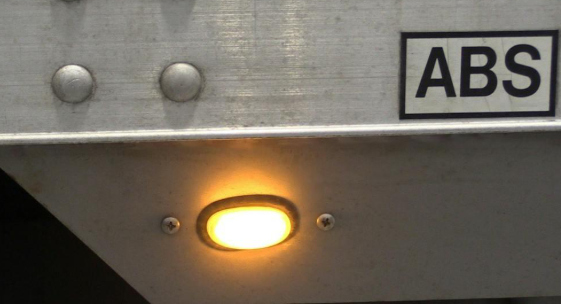
A trailer ABS light is an amber warning indicator connected to the trailer's Anti-lock Braking System.
6. Can You Drive with the Trailer ABS Light On?
This is one of the most important questions for commercial drivers and fleet managers.
An ABS fault does not necessarily mean that the entire service braking system has stopped functioning.
Depending on the system design, conventional service braking may remain available while the anti-lock function is unavailable at an affected wheel or axle. Other monitored wheels may continue to receive ABS control.
However, the driver should not treat this as a guarantee that the vehicle is safe to operate normally.
Consider the following situations:
Situation 1: ABS light turns off after the normal self-check
If the system passes its specified startup check and there are no other warning signs, this is generally normal behavior.
Situation 2: ABS warning light remains on
Arrange professional diagnosis and repair as soon as possible. Follow the applicable regulations, fleet procedures, and ABS manufacturer's instructions.
Situation 3: ABS warning light and red brake warning appear together
This requires additional attention. The issue may involve the service braking system rather than ABS alone.
If braking performance is abnormal, air pressure is insufficient, or a serious brake fault is suspected, stop in a safe location and obtain qualified assistance.
Situation 4: Trailer ABS light flashes intermittently
Do not assume that an intermittent warning is harmless. Record the conditions, retrieve the diagnostic information, and inspect the wiring and sensors.
The correct operating decision should always follow the specific vehicle and system requirements.
7. Trailer ABS Light Regulations in the United States
For buyers manufacturing or importing commercial semi-trailers into the United States, ABS warning indicators are also a regulatory consideration.
Two important references are:
FMVSS No. 121 – Air Brake Systems
Federal Motor Vehicle Safety Standard No. 121 establishes requirements for air-braked vehicles, including ABS malfunction indicators and signaling arrangements.
For applicable trailers, the standard addresses the external ABS malfunction indicator lamp, including its color, identification, location, and operation.
FMCSA 49 CFR 393.55 – Antilock Brake Systems
This regulation establishes ABS requirements for applicable commercial motor vehicles.
It also addresses malfunction signaling from trailer ABS systems to towing vehicles and the requirement for external trailer ABS malfunction indicator lamps.
For US-bound trailer orders, the correct ABS specification must be verified according to the vehicle category and production date.
Official references:
Export buyers should also confirm the applicable braking and approval requirements in their own countries. US regulations should not be assumed to apply universally to European, African, Middle Eastern, or Australian markets.
8. How to Prevent Trailer ABS Warning Light Problems
Preventive maintenance can reduce electrical faults, sensor failures, and unnecessary downtime.
Fleet operators should establish a routine inspection program covering the following areas.
Electrical System Inspection
Check ABS power connections, ground points, sensor harnesses, and electrical connectors.
Look for damaged insulation, loose terminals, corrosion, moisture, and areas where cables may rub against moving components.
Wheel Speed Sensor Inspection
Inspect sensor mounting brackets and cables during wheel-end maintenance.
Confirm correct installation and inspect the tone ring for visible damage.
ECU and Modulator Protection
Check that ECU connectors are properly secured and protected from water and road debris.
Inspect modulator valve wiring and air connections according to the manufacturer's maintenance requirements.
Pre-Trip ABS Indicator Check
Drivers should observe the ABS indicator during the specified startup procedure.
If the lamp does not behave as expected, record the condition and report it for inspection.
Maintain Complete Diagnostic Records
For fleet operators managing multiple trailers, keeping maintenance records is particularly useful.
Record:
-
Trailer identification number.
-
ABS manufacturer and ECU model.
-
Diagnostic fault codes.
-
Sensor or valve replacement history.
-
Electrical repairs.
-
Date of inspection.
-
Final verification results.
These records help maintenance teams identify recurring failures and manage replacement parts more effectively.
9. Trailer ABS Configuration: What Should Buyers Check When Purchasing a New Semi-Trailer?
For trailer importers, distributors, and fleet procurement teams, ABS should be discussed before production rather than treated as an accessory added at the end of assembly.
A complete ABS configuration includes several important considerations.
9.1 ABS Sensor and Modulator Configuration
Commercial trailer ABS systems may use different configurations, such as:
| Configuration | General Description |
|---|---|
| 2S/1M | Two wheel-speed sensors and one modulator |
| 2S/2M | Two sensors and two modulators |
| 4S/2M | Four sensors and two modulators |
| 4S/3M | Four sensors and three modulators |
S means sensors, while M means modulators.
The appropriate configuration depends on axle arrangement, brake-control strategy, ABS manufacturer requirements, and approved vehicle design.
More sensors or modulators do not automatically mean a better system. The selected layout must be engineered for the intended trailer.
9.2 ABS Manufacturer and ECU Model
Buyers should confirm the ABS supplier, ECU part number, modulator-valve model, and availability of diagnostic software.
This is important when the fleet already operates trailers using a specific ABS platform.
Standardizing components can simplify maintenance and spare-parts management.
9.3 Wiring Harness and Tractor Compatibility
The trailer ABS system must be compatible with the towing vehicle's electrical architecture.
Confirm:
-
Power supply arrangement.
-
Grounding requirements.
-
Trailer electrical connector.
-
PLC communication, where applicable.
-
External ABS indicator lamp.
-
Cable routing and connector protection.
9.4 Destination-Market Compliance
Different markets may require different ABS configurations, documentation, testing, and approvals.
Before ordering, provide the manufacturer with the destination country and applicable standards.
9.5 Factory Installation and Quality Inspection
The ABS installation should be included in the final vehicle inspection.
Ask the manufacturer to confirm:
-
Sensor installation.
-
Electrical connector condition.
-
ECU configuration.
-
Modulator operation.
-
ABS indicator functionality.
-
Required system diagnostic checks.
-
Relevant inspection records.
For B2B buyers, these details are more useful than simply specifying that the trailer comes with ABS.
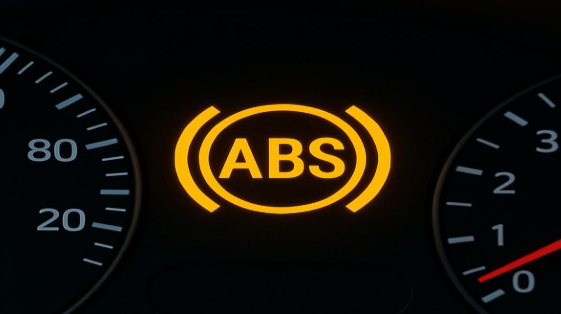
Understanding the different ABS indicator conditions helps drivers identify potential problems before they become more serious.
10. Lucksun Semi-Trailer ABS and Braking System Solutions
As a semi-trailer manufacturer, Lucksun focuses on complete trailer configurations for different cargo applications and export markets.
Depending on the selected model and customer requirements, trailer braking specifications can include conventional air brakes, ABS, or EBS.
For example, our skeletal semi-trailer range is designed for container transportation, where axle configuration, braking, and suspension should be selected according to operating conditions and destination-market requirements.
For other commercial applications, buyers can explore:
Our manufacturing process includes brake-system installation and vehicle inspection. For a complete overview, see our semi-trailer manufacturing process.
When requesting an OEM quotation, buyers should specify the required ABS brand, ECU configuration, axle quantity, brake type, electrical interface, warning-lamp requirements, and destination-country standards.
Actual ABS components, brands, and testing scope should be confirmed in the final technical specification.

When a trailer ABS warning light stays on, identifying the root cause is more important than simply replacing components.
11. Frequently Asked Questions About Trailer ABS Lights
Q1. What does a trailer ABS light mean?
A trailer ABS light indicates the status of the trailer's Anti-lock Braking System. If it illuminates briefly and turns off during the normal startup check, this is generally normal. If it stays on or behaves unexpectedly, the system may have detected a malfunction.
Q2. Why does my trailer ABS light stay on?
Common causes include faulty wheel speed sensors, damaged wiring, loose connectors, low electrical voltage, incorrect sensor installation, modulator problems, and ECU faults. Diagnostic codes should be retrieved before replacing components.
Q3. Is it normal for the trailer ABS light to come on when starting the truck?
Yes. Many systems illuminate the ABS indicator briefly during startup to perform a bulb check. The exact timing and behavior depend on the ABS manufacturer and power supply configuration.
Q4. What is the difference between the trailer ABS light and the tractor ABS light?
The tractor ABS light monitors the tractor's ABS, while the trailer ABS indicator communicates the status of the trailer's anti-lock braking system. They are separate systems, although certain tractors can receive trailer malfunction signals through PLC communication.
Q5. Can I drive with the trailer ABS light on?
A trailer ABS malfunction does not necessarily mean that conventional service braking has failed. However, anti-lock protection may be reduced or unavailable. Arrange professional inspection promptly and follow applicable regulations and fleet procedures. Stop safely if braking performance is abnormal or another serious brake warning appears.
Q6. Where is the trailer ABS light located?
The external trailer ABS malfunction indicator is typically mounted on the left side of the trailer near the rear wheel area, subject to the applicable vehicle requirements. The towing tractor may also have a dashboard-mounted trailer ABS warning indicator.
Q7. Can a faulty ABS sensor cause the trailer ABS light to turn on?
Yes. A faulty wheel speed sensor, damaged sensor cable, incorrect sensor positioning, or damaged tone ring can interrupt the wheel-speed signal and trigger an ABS fault.
Q8. What does a flashing trailer ABS light mean?
On some systems, flashing is used to communicate diagnostic codes. On others, unusual flashing may indicate a power or electrical problem. Always refer to the specific ABS manufacturer's diagnostic instructions.
Q9. What is the difference between trailer ABS and EBS?
ABS helps prevent wheel lock during braking by regulating brake pressure. EBS uses electronic control to manage braking signals and can integrate additional functions depending on the system design. They are related but not interchangeable terms.
Q10. How do I reset a trailer ABS light?
First, diagnose and repair the underlying fault. Then use the manufacturer's approved procedure to clear stored codes and verify the system. Simply disconnecting the power or clearing codes without repairing the problem will not provide a reliable solution.
Conclusion
A trailer ABS light is an important indicator of the condition of a commercial trailer's anti-lock braking system.
A brief startup illumination is generally normal, but a warning light that stays on, flashes unexpectedly, or fails its self-check should be investigated.
Common causes include wheel speed sensor problems, damaged wiring, poor electrical connections, tone ring damage, modulator faults, and ECU issues.
For drivers and fleet operators, the best approach is to identify the warning condition, retrieve manufacturer-specific fault codes, inspect the relevant components, and verify the system after repairs.
For trailer importers and fleet procurement teams, ABS configuration should be confirmed during the vehicle specification stage. Sensor arrangements, ECU models, modulator valves, wiring, tractor compatibility, and destination-market compliance all deserve attention.
A properly specified and maintained trailer ABS system supports safer braking operation, more reliable fleet performance, and better long-term maintenance management.