
Shipping Container Trailer: Types, Specifications and How to Choose the Right One
Shipping Container Trailer: Types, Specifications and How to Choose the Right One
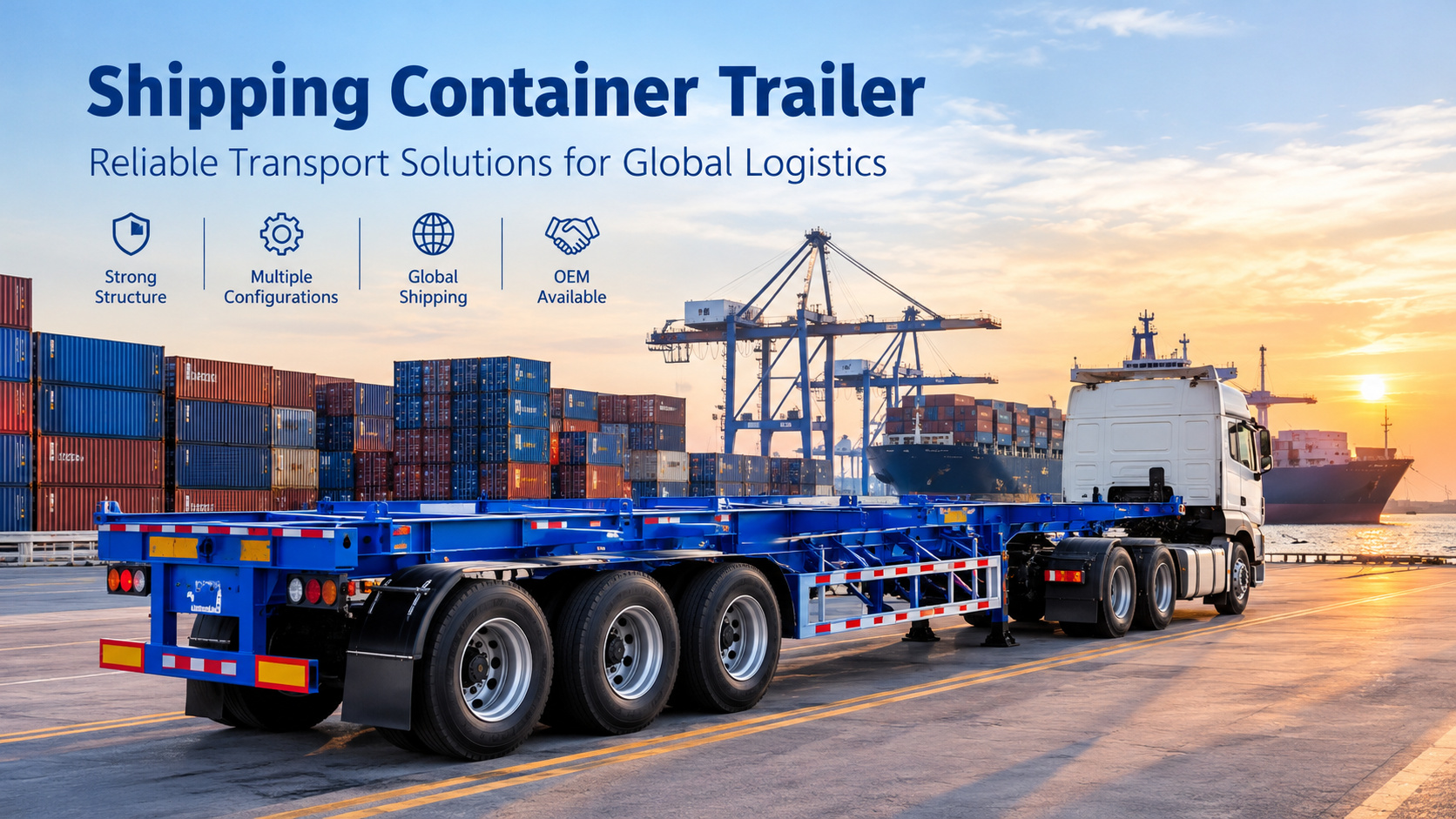
A shipping container trailer is an essential part of road freight and intermodal logistics. It is designed to transport shipping containers between ports, container terminals, warehouses, distribution centers, and inland destinations.
For fleet operators, freight companies, container depots, and international logistics businesses, choosing the right container trailer is about more than matching a trailer to a container length. The chassis must also suit the loaded weight, road conditions, tractor specifications, loading methods, and local transport regulations.
This guide explains the main types of shipping container trailers, the differences between common configurations, and the specifications buyers should evaluate before requesting a quotation.
What Is a Shipping Container Trailer?
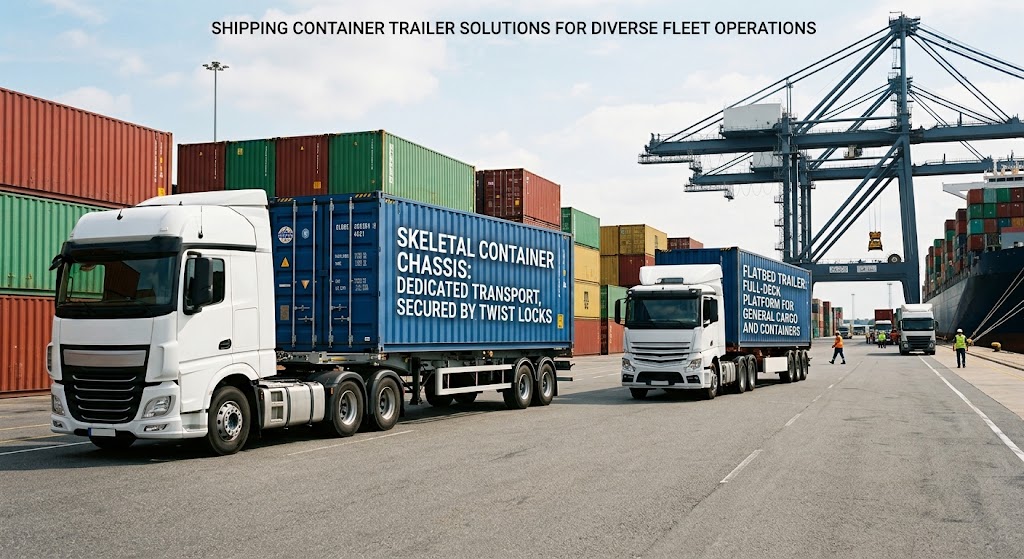
A shipping container trailer is a road trailer designed to carry shipping containers using a compatible tractor unit.
Depending on the application, it may feature a skeletal steel frame, a flatbed platform, or an extendable chassis.
A skeletal container chassis is commonly used for dedicated container transport. It supports the container at designated points and uses twist locks to secure the container's corner fittings.
Compared with a full-deck flatbed trailer, a skeletal chassis generally has a more open structure and can reduce unnecessary trailer weight. However, it is not automatically the best choice for every operation. A flatbed trailer may offer greater flexibility when the fleet also handles general cargo.
The right solution depends on how the trailer will be used, not simply on its purchase price.
Common Types of Shipping Container Trailers
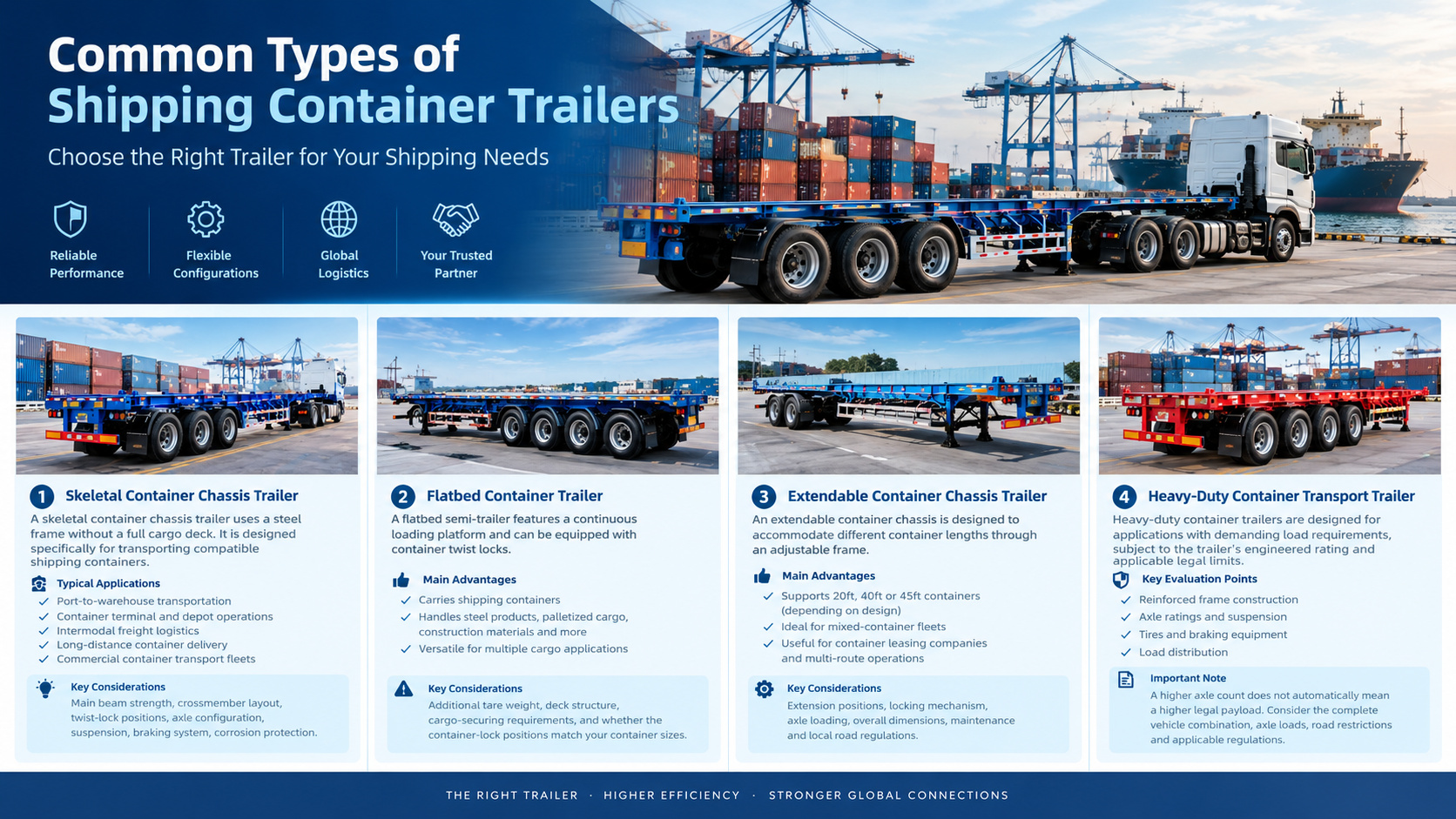
1. Skeletal Container Chassis Trailer
A skeletal container chassis trailer uses a steel frame without a full cargo deck. It is designed specifically for transporting compatible shipping containers.
Typical applications include:
-
Port-to-warehouse container transportation
-
Container terminal and depot operations
-
Intermodal freight logistics
-
Long-distance container delivery
-
Commercial container transport fleets
Key considerations include main beam strength, crossmember layout, twist-lock positions, axle configuration, suspension, braking system, and corrosion protection.
For operators who mainly transport standard ISO containers, a skeletal chassis is often a practical starting point.
2. Flatbed Container Trailer
A flatbed semi-trailer features a continuous loading platform and can be equipped with container twist locks.
Its main advantage is versatility. In addition to compatible shipping containers, it may carry steel products, palletized cargo, construction materials, and other suitable freight when properly configured.
A flatbed can be a suitable option for businesses that need one trailer type for several cargo applications.
However, buyers should consider the additional tare weight, deck structure, cargo-securing requirements, and whether the trailer's container-lock positions match their actual container sizes.
3. Extendable Container Chassis Trailer
An extendable container chassis is designed to accommodate different container lengths through an adjustable frame.
Depending on the specific design, it may support selected combinations of 20ft, 40ft, or 45ft containers.
This configuration can be useful for mixed-container fleets, container leasing companies, and operators serving different shipping routes.
Before selecting an extendable model, confirm the permitted extension positions, locking mechanism, axle loading, overall dimensions, maintenance requirements, and compatibility with local road regulations.
An extendable chassis offers flexibility, but its additional mechanisms should be evaluated against the fleet's actual operating needs.
4. Heavy-Duty Container Transport Trailer
Heavy-duty container trailers are designed for applications with demanding load requirements, subject to the trailer's engineered rating and applicable legal limits.
Depending on the operating environment, buyers may need to evaluate reinforced frame construction, axle ratings, suspension, tires, braking equipment, and load distribution.
A higher axle count alone does not guarantee a higher legal payload. The complete vehicle combination, axle loads, road restrictions, and applicable regulations must all be considered.
For heavy container operations, buyers should provide the expected gross container weight and route requirements before confirming the trailer specification.
20ft vs. 40ft vs. 45ft Container Trailer: What Should You Choose?
Container length is one of the first details to confirm when selecting a container chassis.
20ft Container Trailer
A dedicated 20ft chassis may suit short-distance container movements, port operations, and routes that regularly handle 20ft containers.
However, a 20ft container can carry dense cargo and may place substantial loads on the trailer and tractor. Container length should never be used as a substitute for checking gross weight and axle loading.
40ft Container Trailer
A 40ft container chassis is commonly considered by operators transporting standard 40ft containers on regular freight routes.
Depending on its locking arrangement, a compatible chassis may also accommodate other container configurations. Buyers should confirm the exact twist-lock positions rather than assuming that every 40ft chassis can carry two 20ft containers.
45ft Container Trailer
A 45ft chassis may suit operations that regularly transport 45ft containers, provided the vehicle dimensions, frame design, tractor combination, and route regulations permit its use.
A longer chassis is not automatically more versatile. Overall length, turning clearance, axle position, container-lock layout, and local restrictions all affect suitability.
Our recommendation: Select the container lengths you handle most frequently first. Add multi-size capability when the operational benefit justifies the extra cost and complexity.
Key Specifications to Check Before Buying
1. Container Compatibility and Twist Locks
Twist locks secure the container to the trailer at designated corner fittings. Their number and positions must match the intended container arrangement.
Before ordering, confirm:
-
Container length and type
-
Required twist-lock positions
-
Compatibility with one 20ft, one 40ft, or other approved combinations
-
Locking mechanism and operating method
-
Access for inspection and maintenance
Incorrect locking positions can make an otherwise suitable-looking chassis unusable for the intended container configuration.
2. Axles and Suspension
Axle selection should reflect the expected load, operating distance, road conditions, and applicable axle-load limits.
Common considerations include axle rating, axle brand, mechanical or air suspension, spare-parts availability, and local service support.
Mechanical suspension may be appropriate for certain cost-sensitive or demanding operating environments. Air suspension may offer benefits for selected highway applications, depending on road conditions and maintenance capabilities.
Neither option is universally superior. The operating environment should determine the choice.
3. Main Beam and Frame Structure
The chassis frame transfers loads through the kingpin, suspension, and axle system. Its design must suit the intended gross weight and load distribution.
Ask the supplier to specify the steel grade, beam dimensions, plate thicknesses, crossmember arrangement, and structural rating for the proposed model.
Avoid comparing trailers solely by advertised tonnage. Two trailers with similar stated capacities may have different structural designs, component specifications, and legal operating limits.
4. Braking and Electrical Systems
The braking system should be compatible with the tractor unit and the destination market's technical requirements.
Depending on the specification, buyers may consider ABS or EBS, brake components, electrical connections, lighting, and the availability of replacement parts.
Confirm the actual system configuration and any applicable approval or certification requirements before production.
5. Tires, Wheels, and Landing Gear
Tire size, load rating, wheel specifications, and landing gear capacity should be selected as part of the complete trailer design.
Buyers should also consider whether the proposed tire size and replacement components are readily available in the destination market.
For export orders, locally available spare parts can be just as important as the initial purchase price.
6. Surface Treatment and Corrosion Protection
Container trailers used in coastal ports, humid climates, or regions with challenging road conditions may require particular attention to corrosion protection.
Discuss surface preparation, primer, paint system, coating thickness where specified, and the protection of exposed components.
For demanding environments, buyers should evaluate the expected maintenance conditions rather than assuming that one paint specification suits every market.
How Much Does a Shipping Container Trailer Cost?
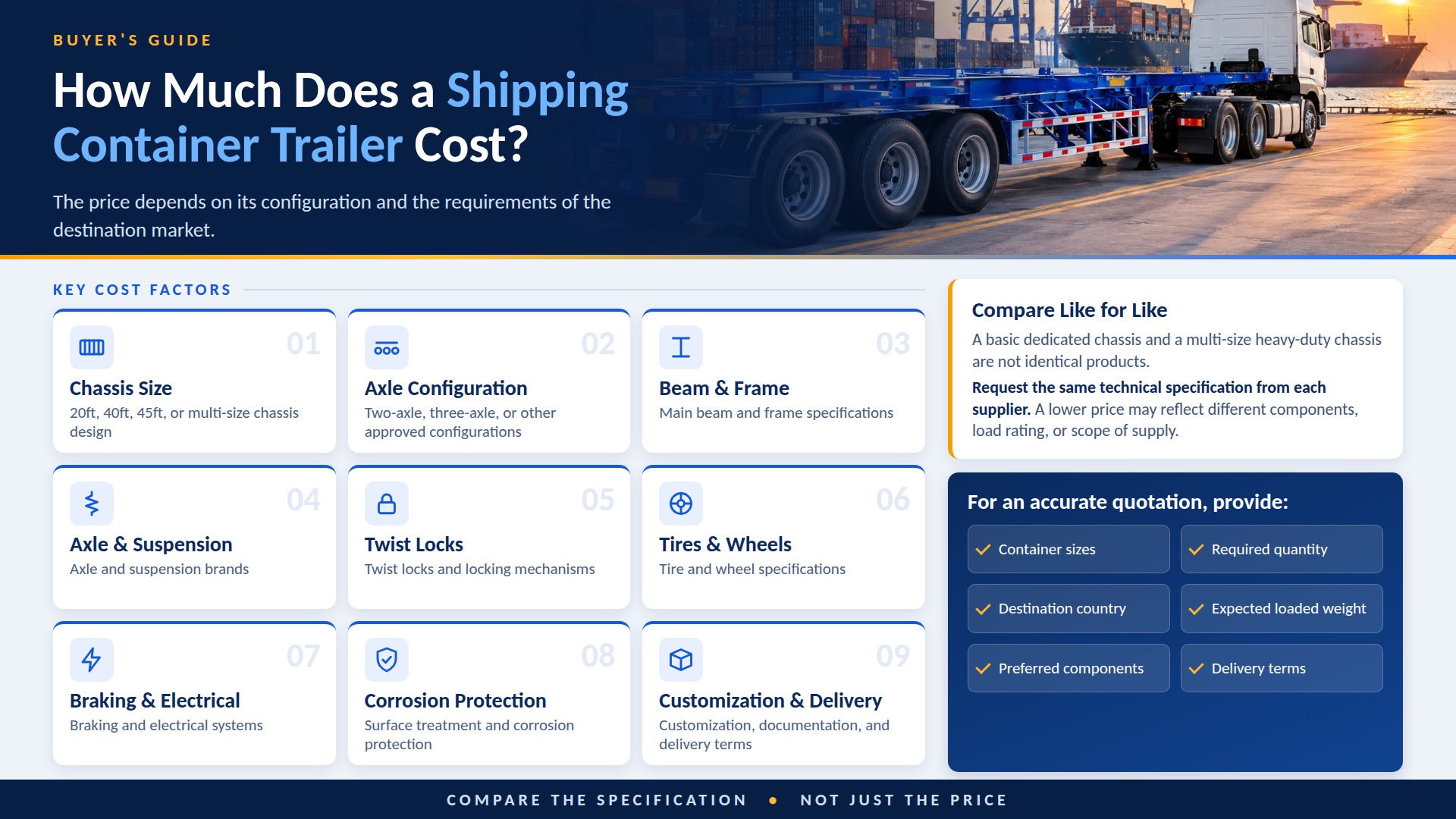
The price of a shipping container trailer depends on its configuration and the requirements of the destination market
Important cost factors include:
-
20ft, 40ft, 45ft, or multi-size chassis design
-
Two-axle, three-axle, or other approved configurations
-
Main beam and frame specifications
-
Axle and suspension brands
-
Twist locks and locking mechanisms
-
Tire and wheel specifications
-
Braking and electrical systems
-
Surface treatment and corrosion protection
-
Customization, documentation, and delivery terms
A basic dedicated chassis and a multi-size heavy-duty chassis should not be compared as if they were identical products.
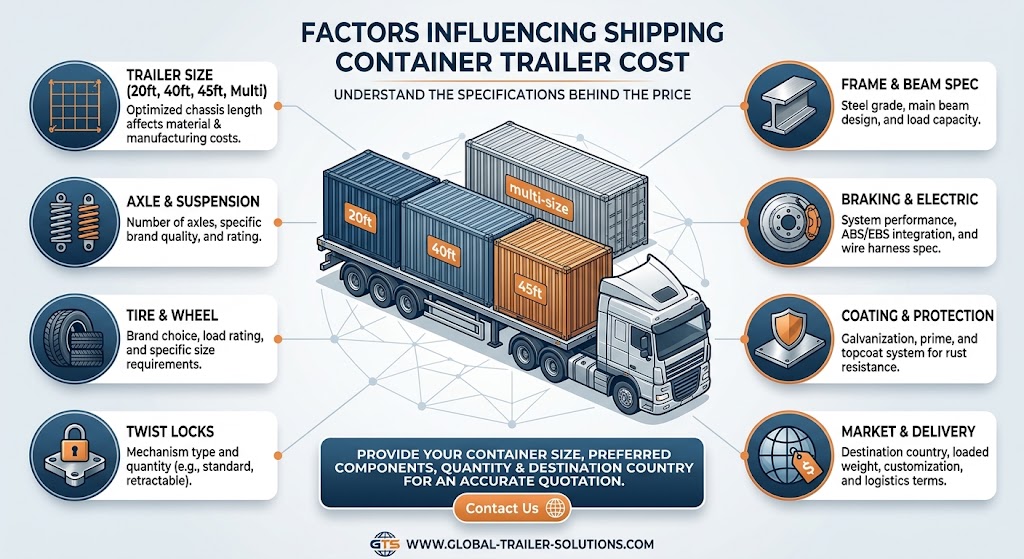
When comparing quotations, request the same technical specification from each supplier. A lower initial price may reflect different components, a different load rating, or a different scope of supply.
For an accurate quotation, provide the container sizes, required quantity, destination country, expected loaded weight, preferred components, and delivery terms.
Buying a Shipping Container Trailer from China
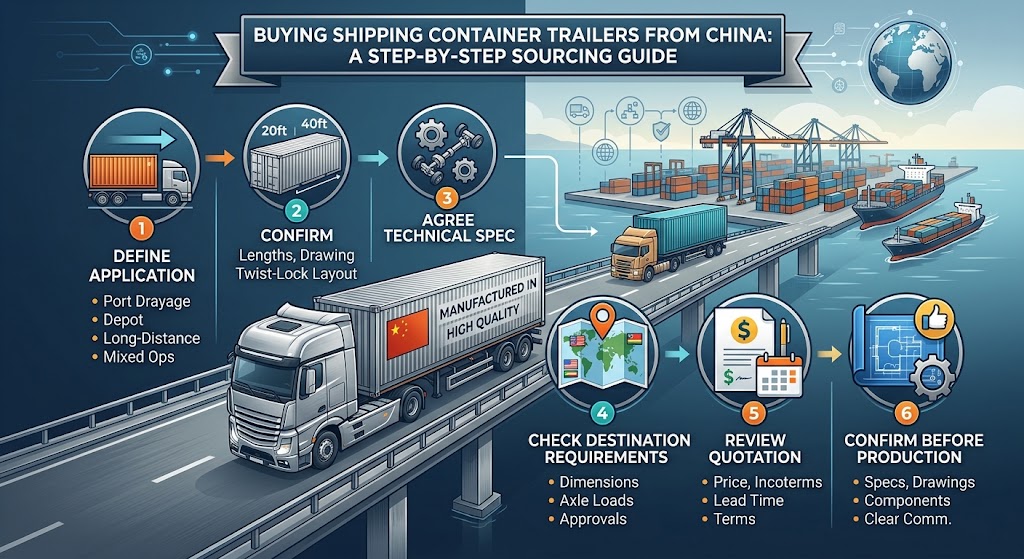
Sourcing container chassis trailers from China can give international buyers access to a range of configurations and component options. However, a successful purchase depends on clear specifications and reliable order communication.
Before placing an order, consider the following steps.
Step 1: Define your application.
Identify whether the trailer will be used for port drayage, depot movements, long-distance road freight, or mixed-container operations.
Step 2: Confirm the container configuration.
Specify the container lengths and combinations you need. Request a drawing or clearly documented twist-lock layout.
Step 3: Agree on the technical specification.
Confirm dimensions, axle configuration, suspension, braking system, tires, landing gear, frame construction, and other essential components.
Step 4: Check destination-market requirements.
Verify applicable vehicle dimensions, axle loads, braking requirements, road restrictions, and any required approvals with the relevant authorities or qualified local professionals.
Step 5: Review the quotation and delivery scope.
Check the quantity, unit price, Incoterms, production lead time, payment terms, inspection arrangements, and export documentation.
Step 6: Confirm before production.
Ensure the final technical specification, drawings, and agreed component brands are documented before manufacturing begins.
Clear communication at this stage helps reduce avoidable specification changes and delivery disputes.
Frequently Asked Questions
Can one container chassis carry both 20ft and 40ft containers?
Some chassis designs can accommodate both sizes, but not all can. Compatibility depends on the frame design, twist-lock positions, load distribution, and rated configuration. Confirm the exact arrangement with the supplier.
Is a skeletal trailer better than a flatbed for container transport?
A skeletal chassis is often suitable for dedicated container transport because it is purpose-built for supporting and securing containers. A flatbed may be preferable when the same trailer must also carry other compatible cargo.
How many axles should a container trailer have?
The appropriate axle configuration depends on the loaded weight, axle-load regulations, route, tractor unit, and trailer design. Select axles based on the complete operating requirements rather than axle count alone.
Can I customize a container chassis trailer?
Depending on the model and supplier's capabilities, customization may include chassis length, twist-lock positions, axle brand, suspension, tires, braking equipment, and surface treatment. All changes should be checked against structural ratings and destination-market requirements.
What information is needed for a container trailer quotation?
The most useful starting information is the container size, required configuration, quantity, destination country, expected gross container weight, preferred component brands, and delivery terms. A reference drawing or photograph can also help clarify the requirement.
Request a Container Trailer Quotation
Looking for a shipping container trailer for your logistics fleet, container depot, or vehicle transport business?
We supply semi-trailer solutions and components for export customers, with configurations discussed according to container dimensions, operating conditions, component preferences, and destination-market requirements.
To help us prepare a relevant quotation, please share:
-
Container size: 20ft, 40ft, 45ft, or a combination
-
Trailer configuration: Skeletal chassis, flatbed, or extendable chassis
-
Axle and suspension requirements: Preferred brands and configuration, if specified
-
Destination country: For reviewing applicable technical requirements
-
Order quantity: Number of trailers required
-
Delivery terms: EXW, FOB, CIF, or another agreed Incoterm
Contact our sales team with your requirements to discuss a suitable configuration and request a detailed quotation.