
Heavy-Duty Hydraulic Side Dump Semi Trailer for Mining and Construction
1. What Is a Side Dump Trailer?
A side dump trailer is a heavy-duty semi-trailer designed to transport and unload bulk materials by tilting its trailer body to one side. Unlike conventional rear dump trailers, which discharge materials through the rear of the body, a side dump trailer uses a hydraulic tipping system to unload cargo laterally.
This design makes it particularly useful for operations where materials need to be discharged along a road, beside a construction area, or across a designated unloading zone.
For businesses involved in mining, road construction, quarry operations, infrastructure development, and bulk material transportation, a side dump trailer can provide a practical solution for handling large quantities of loose materials.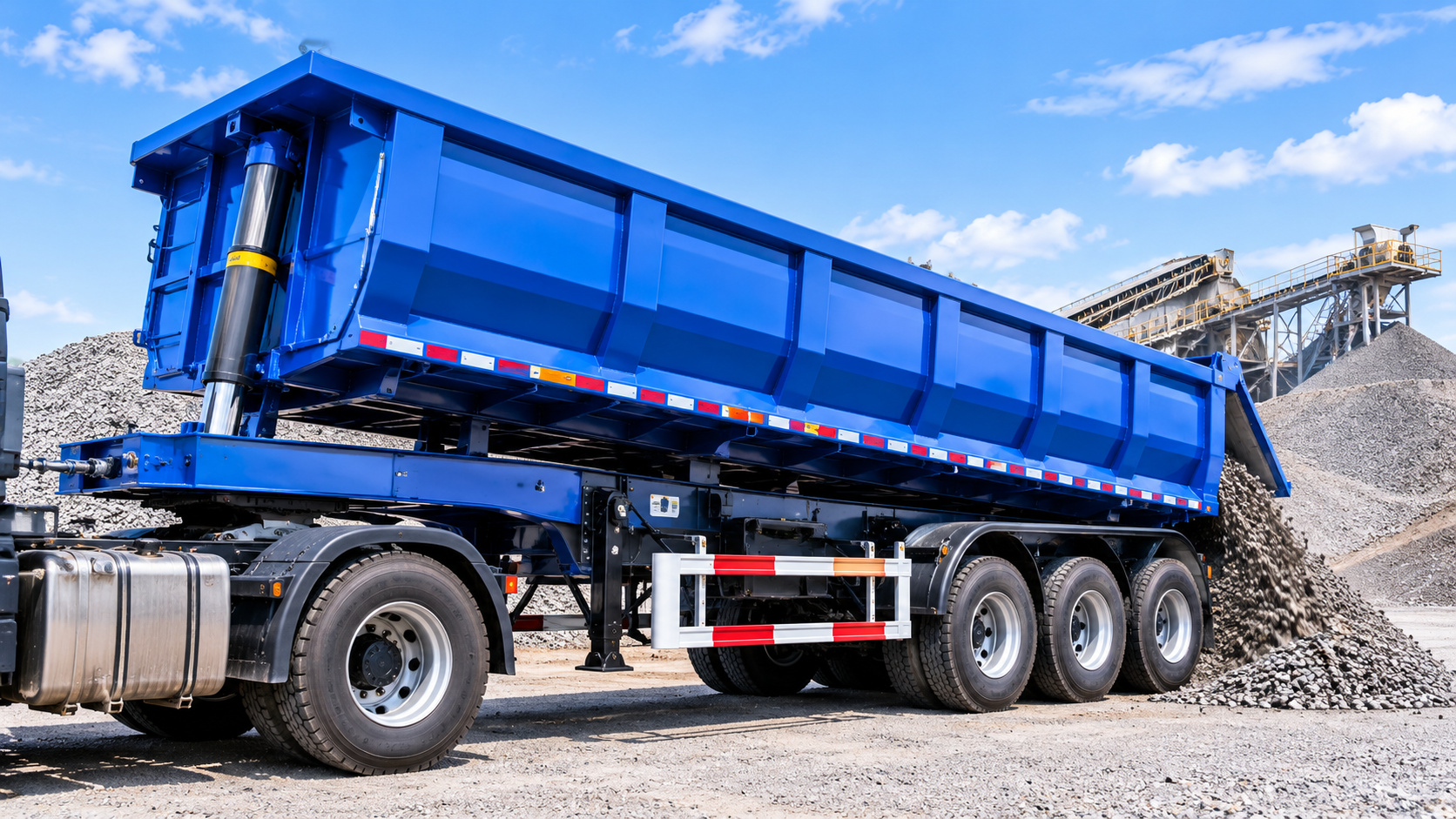
A heavy-duty LUCKSUN side dump semi-trailer unloading crushed stone at a quarry, designed for efficient bulk material transportation in mining and construction applications.
A hydraulic side dump trailer is commonly used to transport:
-
Sand and gravel
-
Crushed stone and aggregates
-
Coal and mineral materials
-
Construction soil and earth
-
Demolition waste
-
Other suitable bulk materials
When looking for a side dump trailer for sale, buyers should consider more than the appearance and loading capacity. The tipping mechanism, trailer structure, axle configuration, suspension, hydraulic compatibility, and operating environment all influence the trailer's performance.
LUCKSUN provides semi-trailer supply and customized configuration solutions for international buyers, with specifications developed according to cargo requirements, local operating conditions, and transportation regulations.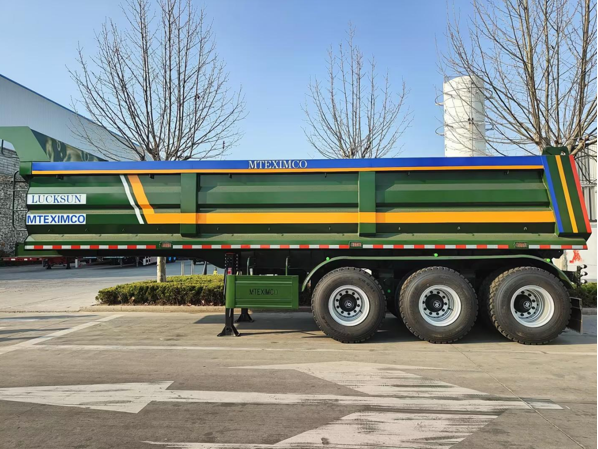
Heavy-Duty Side Dump Semi-Trailer
Designed for efficient bulk material transportation, this heavy-duty side dump semi-trailer features a robust steel body, reinforced chassis, and tri-axle configuration. Its hydraulic side-tipping system enables efficient unloading, making it suitable for transporting sand, gravel, soil, and other bulk materials in construction, mining, and infrastructure projects.
2. How Does a Hydraulic Side Dump Trailer Work?
The main working principle of a side dump trailer is relatively straightforward: hydraulic pressure lifts the trailer body, allowing gravity to move the cargo toward the selected unloading side.
The complete operation involves several important components.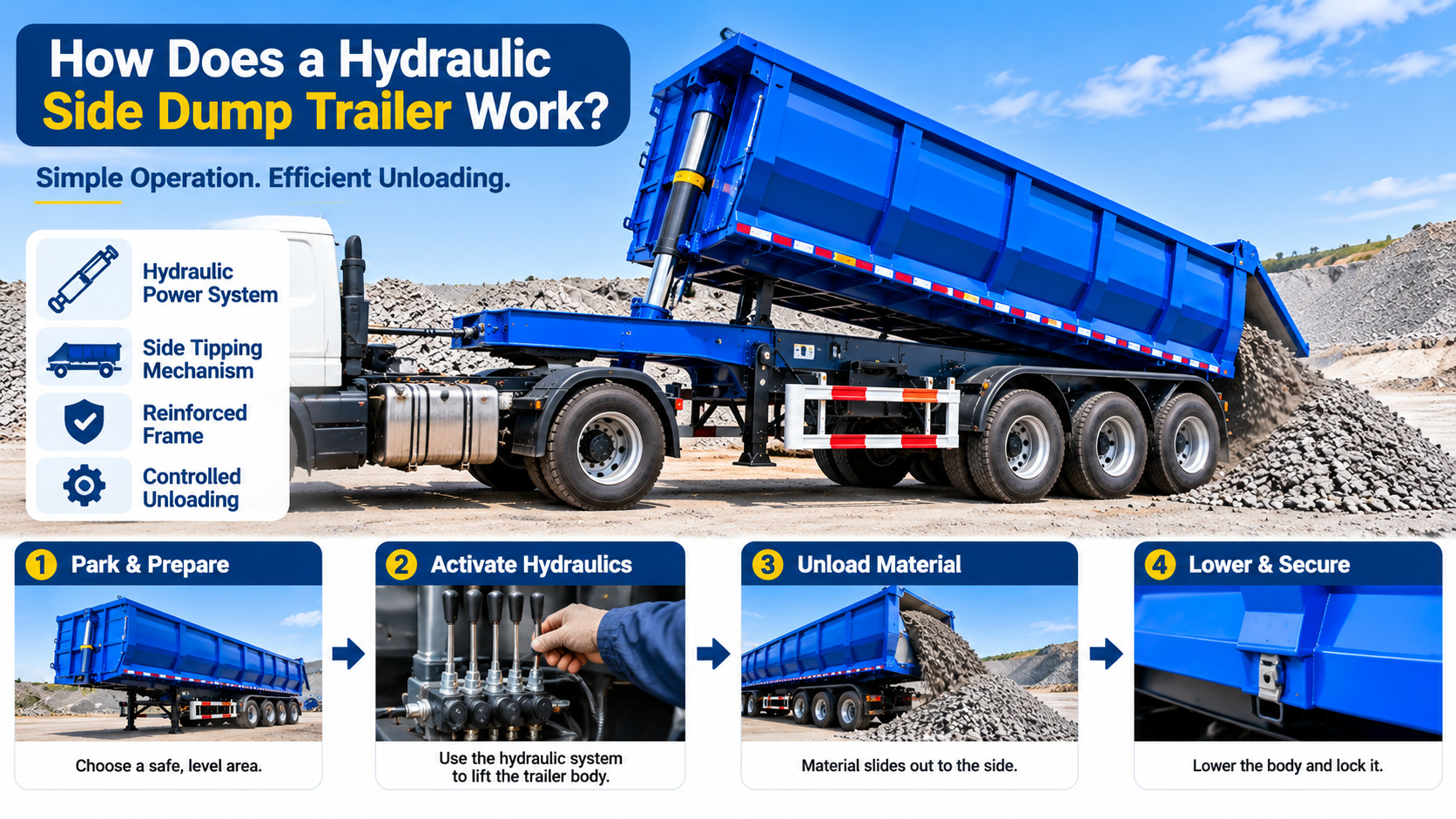
This infographic illustrates how a hydraulic side dump trailer operates, from hydraulic lifting and side unloading to safely lowering and securing the trailer body.
2.1 Hydraulic Power System
The hydraulic system provides the force required to lift and lower the trailer body.
Depending on the trailer design, the system may include:
-
Hydraulic cylinders
-
Hydraulic hoses and connections
-
Control valves
-
Hydraulic power supply
-
Safety and pressure-control components
The hydraulic power may come from the tractor's wet kit or a separately configured hydraulic power system.
Before purchasing, buyers should confirm that the tractor's hydraulic pressure, oil flow, connections, and control arrangement are compatible with the trailer.
2.2 Side Tipping Mechanism
The tipping mechanism connects the trailer body to its supporting structure.
When hydraulic pressure is applied, the cylinders extend and raise the body toward the selected side. The cargo then slides out under gravity.
Depending on the design, the trailer may support left-side or right-side unloading, or a configuration with selectable discharge direction.
The lifting geometry, pivot points, locking system, and cylinder arrangement should be properly matched to the body dimensions and intended payload.
2.3 Trailer Frame and Supporting Structure
The main frame carries the trailer body and distributes the load to the axles and suspension.
During transportation, it must withstand dynamic road loads, braking forces, and uneven cargo distribution.
During unloading, it also needs to resist the additional structural forces generated by the tipping operation.
For this reason, frame strength, cross-member arrangement, welding quality, and tipping support design should all be considered when evaluating a side dump semi trailer.
2.4 Controlled Unloading Process
A typical unloading process involves the following steps:
-
Park the trailer on a suitable, firm, and reasonably level unloading surface.
-
Apply the required parking and vehicle safety procedures.
-
Confirm that the unloading area is clear of people, equipment, overhead obstructions, and other hazards.
-
Activate the hydraulic system and operate the tipping controls according to the manufacturer's instructions.
-
Allow the cargo to discharge toward the designated side.
-
Lower the body completely and confirm that all mechanical locks and supports are correctly engaged before moving.
The unloading procedure must follow the trailer manufacturer's operating manual. Never operate a side dump trailer on unstable or excessively sloped ground.
3. Key Features of a Heavy-Duty Side Dump Trailer
When evaluating a side dump trailer for sale, buyers should pay particular attention to the following structural and functional features.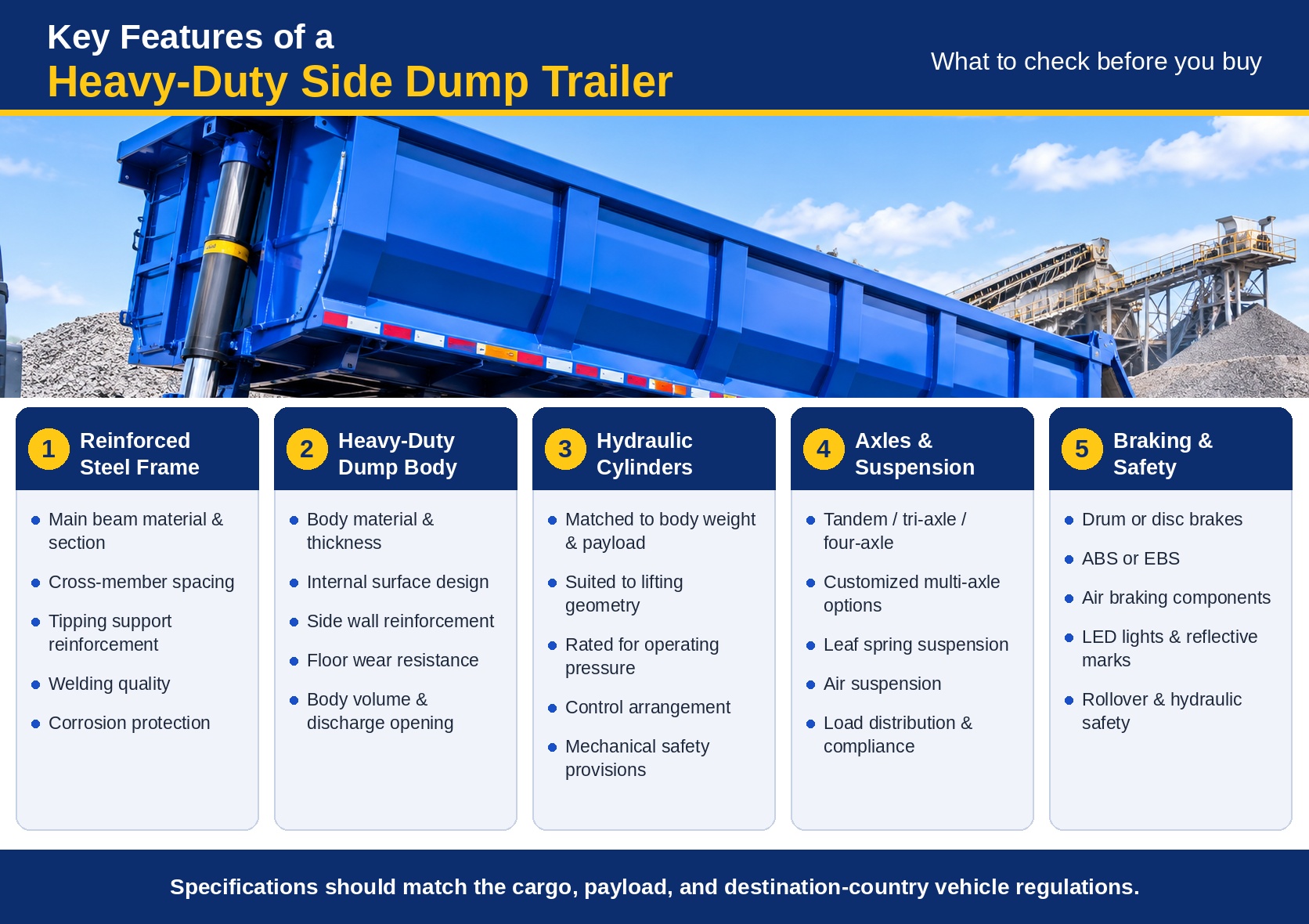
Infographic showing the five key features of a heavy-duty side dump trailer: reinforced steel frame, wear-resistant dump body, hydraulic cylinders, axle and suspension configuration, and braking and safety systems.
3.1 Reinforced Steel Trailer Frame
The main chassis is the foundation of the entire trailer.
A suitable frame design should provide adequate structural strength while keeping the trailer's tare weight under control.
Important considerations include:
-
Main beam material and section dimensions
-
Cross-member spacing
-
Reinforcement around tipping supports
-
Welding quality
-
Corrosion protection
The appropriate steel grade and thickness should be determined according to the intended payload, operating environment, and structural calculations.
3.2 Heavy-Duty Dump Body
The dump body is in direct contact with the transported materials.
For applications involving crushed stone, gravel, and other abrasive cargo, wear resistance is particularly important.
Buyers should consider:
-
Body material and thickness
-
Internal surface design
-
Side wall reinforcement
-
Floor wear resistance
-
Body volume
-
Discharge opening design
The material specification should match the actual cargo. A thicker body is not automatically better if it unnecessarily increases the trailer's tare weight.
3.3 Hydraulic Cylinders and Tipping Components
The hydraulic cylinders are among the most important components of a side tipping semi trailer.
Their specifications should be matched to the body weight, maximum intended payload, lifting geometry, and operating pressure.
The tipping system should also incorporate an appropriate control arrangement and mechanical safety provisions.
3.4 Axles and Suspension System
The axle configuration directly affects load distribution, road performance, and compliance with local regulations.
Depending on the operating requirements, a side dump trailer may use:
-
Tandem axle configuration
-
Tri-axle configuration
-
Four-axle configuration
-
Customized multi-axle arrangements
Suspension options may include mechanical leaf spring suspension or air suspension, depending on the intended application and road conditions.
3.5 Braking and Safety System
A reliable braking system is essential for heavy-duty transportation.
Depending on the target market and vehicle configuration, the trailer may be equipped with:
-
Drum or disc brakes
-
ABS or EBS
-
Air braking components
-
LED lighting
-
Reflective markings
-
Suitable rollover and hydraulic safety provisions
The exact specification should meet the applicable vehicle regulations in the destination country.
4. Main Applications of Side Dump Trailers
A side dump semi trailer is suitable for various bulk transportation operations, especially where side discharge provides an operational advantage.
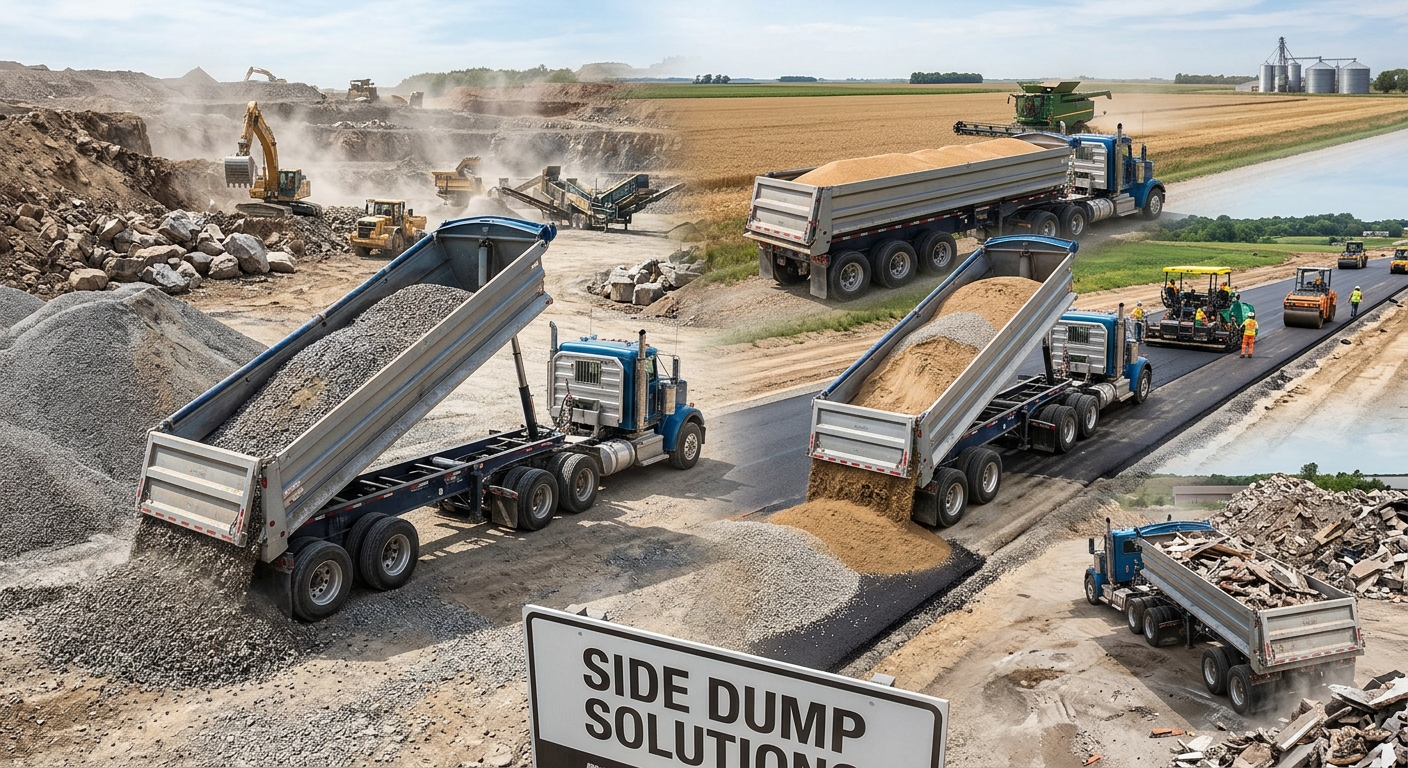
This composite image vividly illustrates the applications of side-dump trailers across four key areas: a bustling mine or gravel quarry in the top-left; a grain harvest scene in an expansive agricultural field in the top-right; precise unloading at a road construction site on the middle-right; and the removal of demolition debris in the bottom-right. The image as a whole highlights the versatility and efficiency of side-dump trailers in transporting various types of bulk materials.
4.1 Mining and Quarry Operations
Mining and quarry businesses frequently transport crushed stone, aggregates, mineral materials, and other bulk cargo.
A side dump trailer can unload materials beside designated stockpiles or receiving areas, making it suitable for certain mining and quarry transportation operations.
For rougher working environments, buyers should pay attention to frame reinforcement, suspension selection, tire specifications, and the abrasion resistance of the dump body.
4.2 Road Construction and Infrastructure Projects
Road construction projects often require the transportation and distribution of sand, gravel, crushed stone, and earth materials.
Side unloading can be useful when materials need to be placed alongside a road or within a designated construction area.
It can also help reduce the need for precise rear positioning at certain unloading locations.
4.3 Agricultural and Bulk Material Transportation
Depending on the body design and material compatibility, side dump trailers can transport certain agricultural bulk materials and other loose cargo.
The body volume, side wall height, and unloading arrangement should be selected according to material density and loading conditions.
4.4 Demolition and Waste Transportation
Suitable side dump configurations can also be used for transporting construction debris and selected demolition materials.
For irregular or highly abrasive cargo, buyers should confirm the body structure, wear protection, and discharge clearance before placing an order.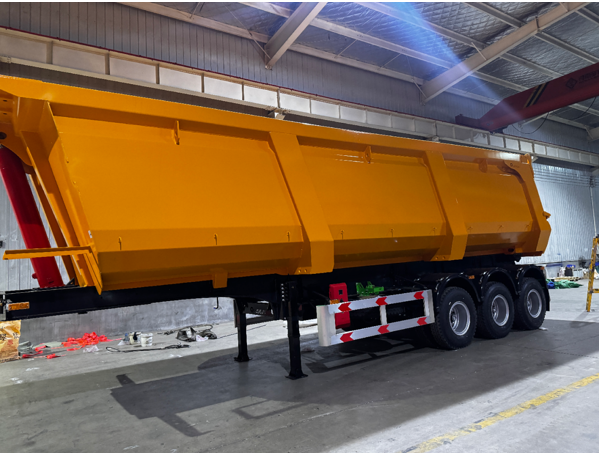
Heavy-Duty Side Dump Semi-Trailer
Built for demanding bulk transportation, this heavy-duty side dump semi-trailer features a reinforced steel tipping body, robust chassis, and tri-axle configuration. Designed for efficient hydraulic side unloading, it is ideal for transporting sand, gravel, soil, and construction materials in mining, infrastructure, and construction operations.
5. Side Dump Trailer vs. Rear Dump Trailer: Which Is Better?
One of the most common questions from buyers is whether to purchase a side dump trailer or a conventional rear dump trailer.
Both types are designed for bulk material transportation, but their unloading directions and operating requirements are different.
|
Comparison |
Side Dump Trailer |
Rear Dump Trailer |
|---|---|---|
|
Unloading direction |
Sideways |
Rearward |
|
Hydraulic system |
Side tipping system |
Rear lifting system |
|
Discharge area |
Alongside the trailer |
Behind the trailer |
|
Typical applications |
Construction, mining, aggregate |
Construction, mining, bulk transport |
|
Operating requirements |
Suitable lateral unloading space |
Suitable rear unloading clearance |
|
Main consideration |
Side stability and tipping design |
Rear stability and lifting geometry |
When Should You Choose a Side Dump Trailer?
A side dump trailer may be the better option when:
-
Materials need to be discharged along a designated roadside area.
-
The project requires lateral material distribution.
-
Rear unloading space is restricted.
-
The operation benefits from side tipping rather than rear tipping.
When Is a Rear Dump Trailer More Suitable?
A rear dump trailer may be more appropriate when:
-
Materials need to be discharged directly behind the vehicle.
-
The receiving area is designed for rear unloading.
-
The transportation operation already uses conventional rear tipping equipment.
-
The buyer prefers a traditional rear dump configuration.
Our recommendation: Do not choose a trailer based only on its purchase price. Consider the unloading location, cargo characteristics, working surface, tractor compatibility, and daily operating requirements.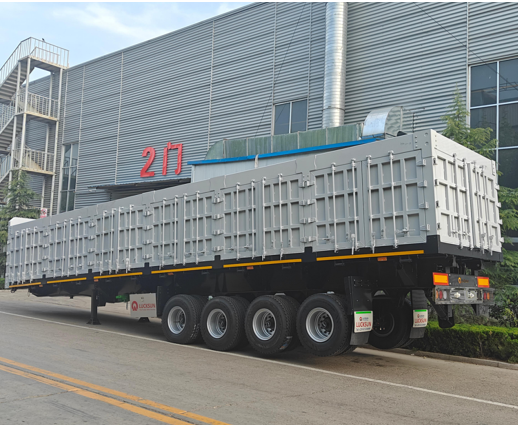
Heavy-Duty Multi-Axle Flatbed Semi-Trailer
Designed for heavy-duty cargo transportation, this multi-axle flatbed semi-trailer features a reinforced steel platform, high-strength side structures, and a stable chassis configuration. With four axles and a spacious loading deck, it is suitable for transporting steel materials, construction supplies, industrial equipment, and other heavy cargo.
6. How to Choose the Right Side Dump Trailer for Sale
Choosing the right configuration is one of the most important steps before requesting a quotation.
A trailer that works well in one country or project may not be suitable for another because of different road conditions, legal axle loads, and operating environments.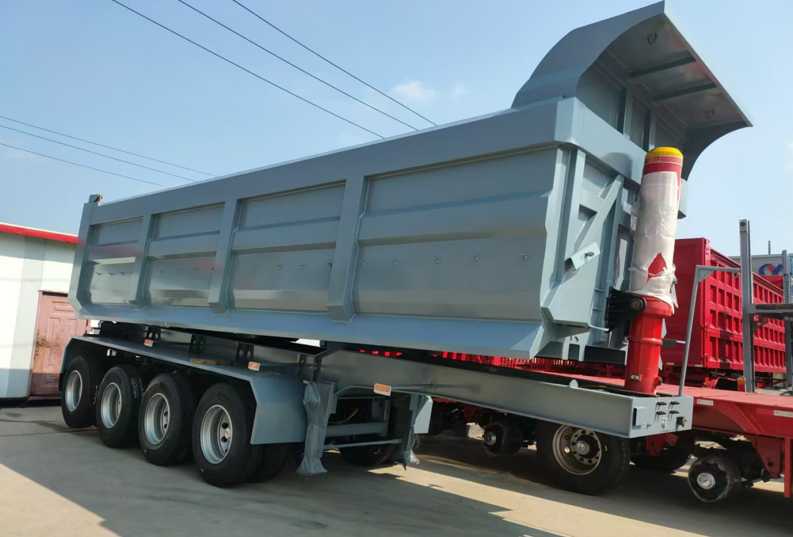
Heavy-Duty Rear Dump Semi-Trailer
Engineered for demanding bulk material transportation, this rear dump semi-trailer features a reinforced steel tipping body, heavy-duty chassis, and tri-axle configuration. Equipped with a hydraulic lifting system, it provides efficient rear unloading and is suitable for transporting sand, gravel, soil, and other bulk materials in construction, mining, and infrastructure projects.
6.1 Confirm the Cargo Type and Payload
Start by identifying what the trailer will transport.
For example:
|
Cargo Type |
Important Selection Considerations |
|---|---|
|
Sand |
Body volume, side wall height, sealing |
|
Gravel |
Floor wear resistance, body strength |
|
Crushed Stone |
Abrasion resistance, structural reinforcement |
|
Coal |
Body volume, load distribution |
|
Construction Soil |
Payload, unloading conditions |
|
Mining Materials |
Heavy-duty frame, wear-resistant body |
Cargo density is especially important.
A trailer designed for relatively light materials may reach its volume limit before its rated payload, while dense materials may reach the weight limit with a partially filled body.
6.2 Select the Appropriate Axle Configuration
The axle configuration should be selected according to the required payload, road regulations, and tractor compatibility.
|
Configuration |
Typical Selection Purpose |
|---|---|
|
2 Axles |
Lower payload requirements and suitable road conditions |
|
3 Axles |
General commercial heavy-duty transportation |
|
4 Axles |
Higher load requirements where regulations permit |
|
Customized |
Special transport requirements and local regulations |
These are selection categories, not universal payload ratings. Actual legal loading capacity depends on axle ratings, axle spacing, tractor configuration, and destination-country regulations.
6.3 Choose the Right Body Dimensions and Capacity
The trailer body dimensions determine how much material can be transported in one trip.
Before ordering, buyers should confirm:
-
Overall trailer length and width
-
Dump body length
-
Internal body width
-
Side wall height
-
Body volume
-
Maximum permitted loading weight
For bulk cargo, both volume and weight must be considered.
6.4 Check Tractor and Hydraulic Compatibility
This is an important point that buyers sometimes overlook.
A side dump trailer may require a specific hydraulic pressure, oil flow, return line, and control arrangement.
Before purchasing, provide the tractor specifications to the supplier.
Confirm:
-
Tractor hydraulic system type
-
Hydraulic working pressure
-
Required oil flow
-
Hydraulic hose and coupling specifications
-
Electrical and control connections
-
Kingpin size and fifth-wheel compatibility
6.5 Consider the Destination Country
Different markets have different road regulations and transportation requirements.
For example:
|
Target Market |
Key Purchasing Considerations |
|---|---|
|
Tanzania and Kenya |
Road conditions, axle loads, mining and construction applications |
|
Zambia and DR Congo |
Heavy-duty operation, payload distribution, suspension |
|
Ghana |
Cargo requirements, road conditions, local vehicle regulations |
|
Saudi Arabia and UAE |
Operating environment, heat protection, local compliance |
|
Australia |
Strict dimensional, axle-load and vehicle compliance requirements |
The final configuration should always be confirmed against the current regulations of the importing country.
7. Side Dump Trailer Specifications and Customization Options
The following table provides a preliminary reference for buyers evaluating a LUCKSUN side dump semi trailer.
Actual specifications should be confirmed according to the engineering design and customer requirements.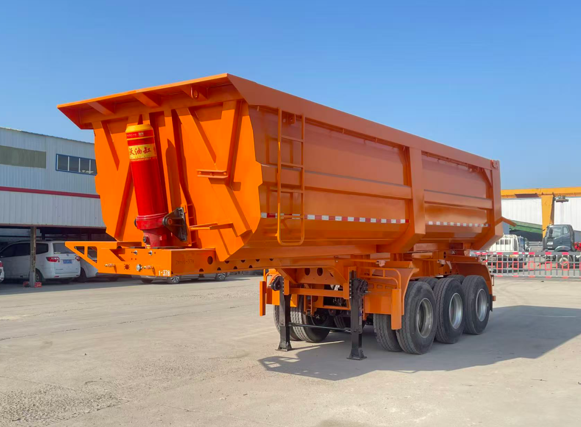
Heavy-Duty Rear Dump Semi-Trailer
Designed for high-capacity bulk transportation, this rear dump semi-trailer features a reinforced steel dump body, heavy-duty hydraulic lifting system, and tri-axle configuration. Its robust structural design supports efficient unloading and reliable operation in demanding mining, construction, and infrastructure applications.
|
Item |
Configuration Reference |
|---|---|
|
Product Name |
Side Dump Semi Trailer |
|
Trailer Type |
Hydraulic Side Tipper |
|
Axle Configuration |
2 / 3 / 4 Axles |
|
Axle Brand |
FUWA / BPW / Customized |
|
Suspension |
Mechanical / Air Suspension |
|
Main Frame |
High-Strength Steel |
|
Dump Body |
Reinforced Steel |
|
Hydraulic System |
Customized Hydraulic Tipping System |
|
Braking System |
Drum Brake / Disc Brake |
|
ABS / EBS |
Optional, According to Requirements |
|
Tires |
12R22.5 / 12.00R20 / Customized |
|
Landing Gear |
Heavy-Duty Landing Legs |
|
Kingpin |
2-inch / 3.5-inch |
|
Electrical System |
24V |
|
Surface Treatment |
Painting / Customized Coating |
|
Application |
Mining, Construction, Aggregates and Bulk Materials |
Note: The above is a preliminary configuration reference, not a confirmed standard production specification. Tire size, axle brands, kingpin, hydraulic design, dimensions, and braking system are subject to the final technical agreement.
Available Customization Options
LUCKSUN can discuss customized trailer configurations according to the buyer's application.
Chassis and running gear
-
Axle brand and quantity
-
Mechanical or air suspension
-
Tire and rim specifications
-
Brake system configuration
Dump body
-
Body dimensions and capacity
-
Steel material and thickness
-
Side wall height
-
Floor reinforcement
-
Customized surface treatment
Hydraulic and electrical systems
-
Hydraulic cylinder configuration
-
Control valves and connections
-
Hydraulic hose arrangement
-
Lighting and electrical connections
The objective is to provide a trailer configuration that matches the buyer's transportation requirements rather than simply offering a standard specification.
8. How Much Does a Side Dump Trailer Cost?
The price of a side dump trailer depends on its structure, dimensions, material specifications, hydraulic system, axle configuration, and selected components.
Unlike standard flatbed or container chassis trailers, a hydraulic side dump trailer has additional structural and hydraulic requirements. These factors influence the overall manufacturing cost.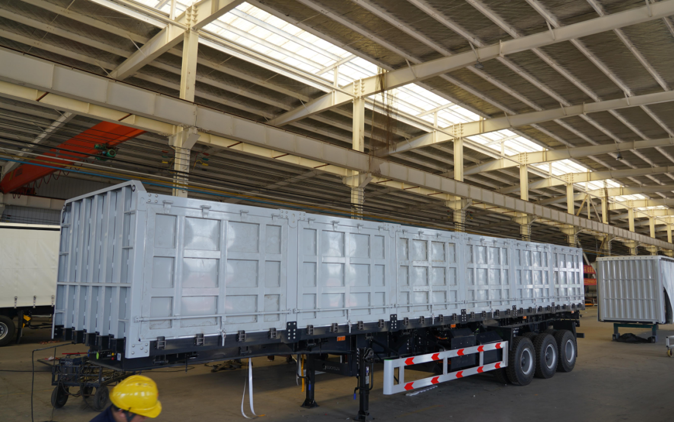
Heavy-Duty Multi-Axle Side Wall Semi-Trailer
Designed for versatile bulk and general cargo transportation, this multi-axle side wall semi-trailer features a reinforced steel cargo body, robust chassis, and high-capacity loading structure. Its spacious loading platform and durable side panels make it suitable for transporting agricultural products, construction materials, steel, and other industrial goods.
Main Factors Affecting Side Dump Trailer Price
|
Cost Factor |
How It Affects the Price |
|---|---|
|
Axle Quantity |
More axles generally increase component and manufacturing costs |
|
Steel Material |
Grade, thickness and material quantity affect the cost |
|
Trailer Dimensions |
Larger bodies require more structural materials |
|
Hydraulic System |
Cylinder size, control valves and hydraulic components affect pricing |
|
Axle and Suspension Brand |
Different brands and configurations have different costs |
|
Braking System |
ABS, EBS and disc brake options affect the total |
|
Customization |
Special designs and non-standard specifications may increase costs |
|
Shipping and Destination |
Freight, port charges and destination requirements affect landed cost |
What Information Is Needed for an Accurate Quotation?
To provide a practical quotation, buyers should prepare the following information:
-
Required trailer quantity.
-
Intended cargo and average material density.
-
Expected payload and body volume.
-
Required axle configuration.
-
Destination country and operating environment.
-
Tractor and hydraulic system specifications.
-
Required components and preferred brands.
-
Shipping destination and preferred trade terms.
For overseas buyers, it is also important to distinguish between EXW, FOB, CFR, and CIF quotations.
The total landed cost may include international freight, insurance, customs duties, and local transportation, depending on the agreed delivery terms.
LUCKSUN quotation approach: Rather than providing an arbitrary fixed price, we recommend confirming the required configuration first, then preparing a quotation based on the actual technical requirements.
9. Why Choose LUCKSUN for Your Side Dump Trailer?
When purchasing a side dump trailer from an overseas supplier, price is only one part of the decision.
Buyers also need to consider product configuration, component selection, communication efficiency, export documentation, and long-term cooperation.
LUCKSUN focuses on semi-trailer supply and international export business, providing product selection and customized configuration support for overseas buyers.
9.1 Customized Trailer Solutions
Different transportation projects require different trailer structures.
LUCKSUN can discuss trailer dimensions, axle configurations, suspension systems, braking systems, and component selections according to the customer's intended application.
9.2 Complete Semi-Trailer and Parts Supply
Beyond complete semi-trailers, buyers can also discuss related components and spare parts.
This can help importers and distributors coordinate their purchasing requirements through one supplier.
9.3 Export-Oriented Communication
International orders require clear communication regarding:
-
Technical specifications
-
Product drawings and configuration
-
Commercial quotations
-
Proforma invoices
-
Production and delivery arrangements
-
Export documents and shipping coordination
Our objective is to make the purchasing process clearer and more efficient.
9.4 Long-Term Business Cooperation
For importers, distributors, and fleet operators, a reliable supply relationship is often more valuable than a one-time purchase.
LUCKSUN welcomes inquiries from international trailer dealers, equipment distributors, mining companies, construction contractors, and fleet operators looking for long-term cooperation.
10. Side Dump Trailer Maintenance and Operating Considerations
A properly maintained side dump trailer can help reduce unexpected downtime and extend its service life.
The following components deserve regular attention.
|
Component |
Maintenance Focus |
|---|---|
|
Hydraulic Cylinders |
Check for oil leakage, damage and abnormal movement |
|
Hydraulic Hoses |
Inspect connections, wear and potential leakage |
|
Tipping Pivots |
Check wear, alignment and lubrication requirements |
|
Trailer Frame |
Inspect welds, cracks and structural deformation |
|
Axles and Suspension |
Check fasteners, bushings and suspension condition |
|
Braking System |
Inspect brake pads, chambers, air lines and ABS/EBS |
|
Tires |
Check pressure, tread wear and damage |
|
Electrical System |
Check lighting, wiring and connectors |
Important Safety Considerations
Side dumping changes the trailer's center of gravity and introduces lateral forces during unloading.
Operators should always:
-
Use a firm, stable, and suitable unloading surface.
-
Avoid unloading on excessive slopes or unstable ground.
-
Follow the specified loading distribution.
-
Keep personnel clear of the discharge side.
-
Check overhead clearance and surrounding obstacles.
-
Never exceed the rated payload or operating pressure.
-
Follow the manufacturer's operating and maintenance instructions.
Correct operating procedures are essential for both equipment life and workplace safety.
11. Frequently Asked Questions About Side Dump Trailers
Q1. What is a side dump trailer used for?
A side dump trailer is mainly used for transporting and unloading bulk materials such as sand, gravel, crushed stone, coal, construction soil, and selected mining materials. It discharges cargo sideways through a hydraulic tipping mechanism.
Q2. What is the difference between a side dump trailer and a side tipper trailer?
These terms generally refer to the same category of trailer. Side dump trailer, side tipper trailer, and side tipping semi trailer are commonly used to describe trailers that unload bulk materials by tilting their bodies laterally.
However, the specific tipping structure and hydraulic arrangement may differ between manufacturers.
Q3. How many axles does a side dump semi trailer have?
Common configurations include two, three, and four axles. The correct number depends on the required payload, axle-load regulations, trailer dimensions, and operating conditions.
Q4. Can a side dump trailer unload on both sides?
Some side dump trailer designs support unloading in either direction, while others are designed for a specific discharge direction. Buyers should confirm the tipping mechanism, hydraulic control arrangement, and locking system before ordering.
Q5. What tractor is required for a hydraulic side dump trailer?
The tractor must have compatible fifth-wheel dimensions, towing capacity, braking connections, and hydraulic equipment.
The required hydraulic pressure, oil flow, and connection arrangement depend on the specific trailer design.
Q6. Is a side dump trailer suitable for mining operations?
Yes. It can be used for transporting suitable bulk materials in mining and quarry operations. Buyers should prioritize frame strength, abrasion-resistant body materials, axle capacity, suspension, and tire selection.
The trailer must also be suitable for the site's road conditions and unloading environment.
Q7. How much does a side dump trailer cost?
There is no single price applicable to all configurations. The cost depends on axle quantity, steel specifications, trailer dimensions, hydraulic components, suspension, braking systems, and customization.
Contact LUCKSUN with your requirements to receive a configuration-based quotation.
Q8. Can LUCKSUN customize a side dump semi trailer for my country?
Yes. LUCKSUN can discuss customized dimensions, axle configurations, suspension, tires, braking systems, hydraulic components, and other specifications according to the destination market's operating requirements and applicable regulations.
Q9. What information should I provide when requesting a quotation?
Please provide the required quantity, cargo type, payload, preferred axle configuration, destination country, tractor information, and any specific component requirements.
Photos or technical drawings of your intended application are also helpful.
12. Request a Side Dump Trailer Quotation from LUCKSUN
Choosing the right side dump trailer is about more than purchasing a piece of transportation equipment. It is about matching the trailer's structure, hydraulic system, payload, and unloading method to your actual working conditions.
Whether you are an importer, trailer distributor, mining contractor, or fleet operator, LUCKSUN can help you evaluate the appropriate configuration for your project.
Looking for a reliable side dump trailer for sale?
Contact LUCKSUN and tell us what you need.
-
Product: Side Dump Semi Trailer
-
Required quantity:
-
Cargo type:
-
Payload requirement:
-
Axle configuration:
-
Destination country:
-
Special requirements:
Send us your inquiry to discuss technical specifications and receive a quotation based on your requirements.
LUCKSUN – Semi Trailers and Components for Global Markets.