
What Is a Semi Cargo Trailer? Complete Types, Specs & Buying Guide for 2026
What Is a Semi Cargo Trailer? Complete Types, Specs & Buying Guide for 2026
For fleet operators, logistics companies, importers, and wholesale buyers, choosing the right trailer is a commercial decision—not simply a matter of comparing prices.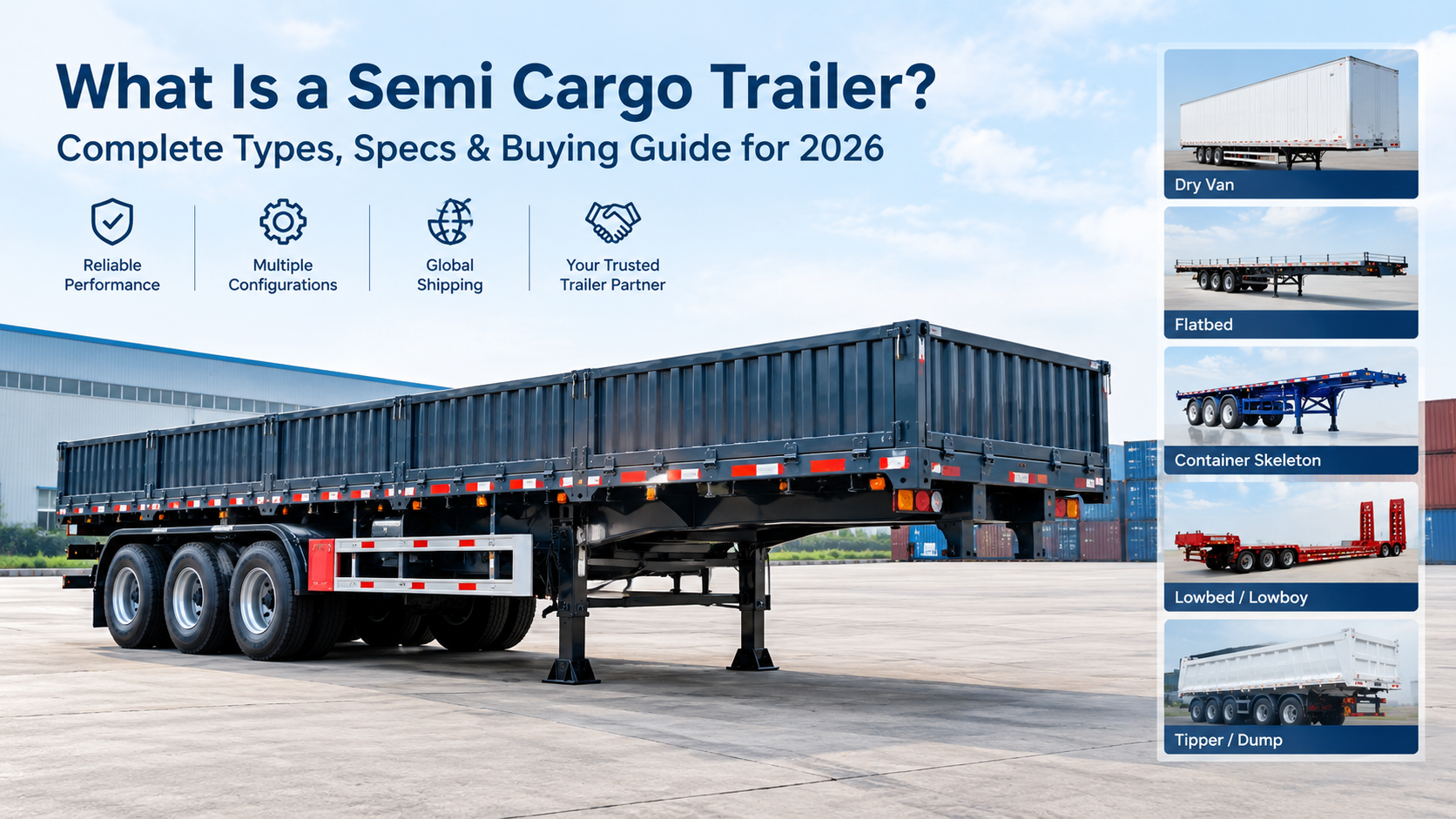
A suitable semi cargo trailer needs to match the cargo, tractor configuration, road conditions, legal axle limits, loading method, and operating environment. A trailer that looks inexpensive at the quotation stage can become expensive if its axle rating, suspension, dimensions, or braking system does not suit the destination market.
This guide explains what a semi cargo trailer is, the different types available, important specifications, 2026 price references, and the key points international buyers should consider when sourcing from China.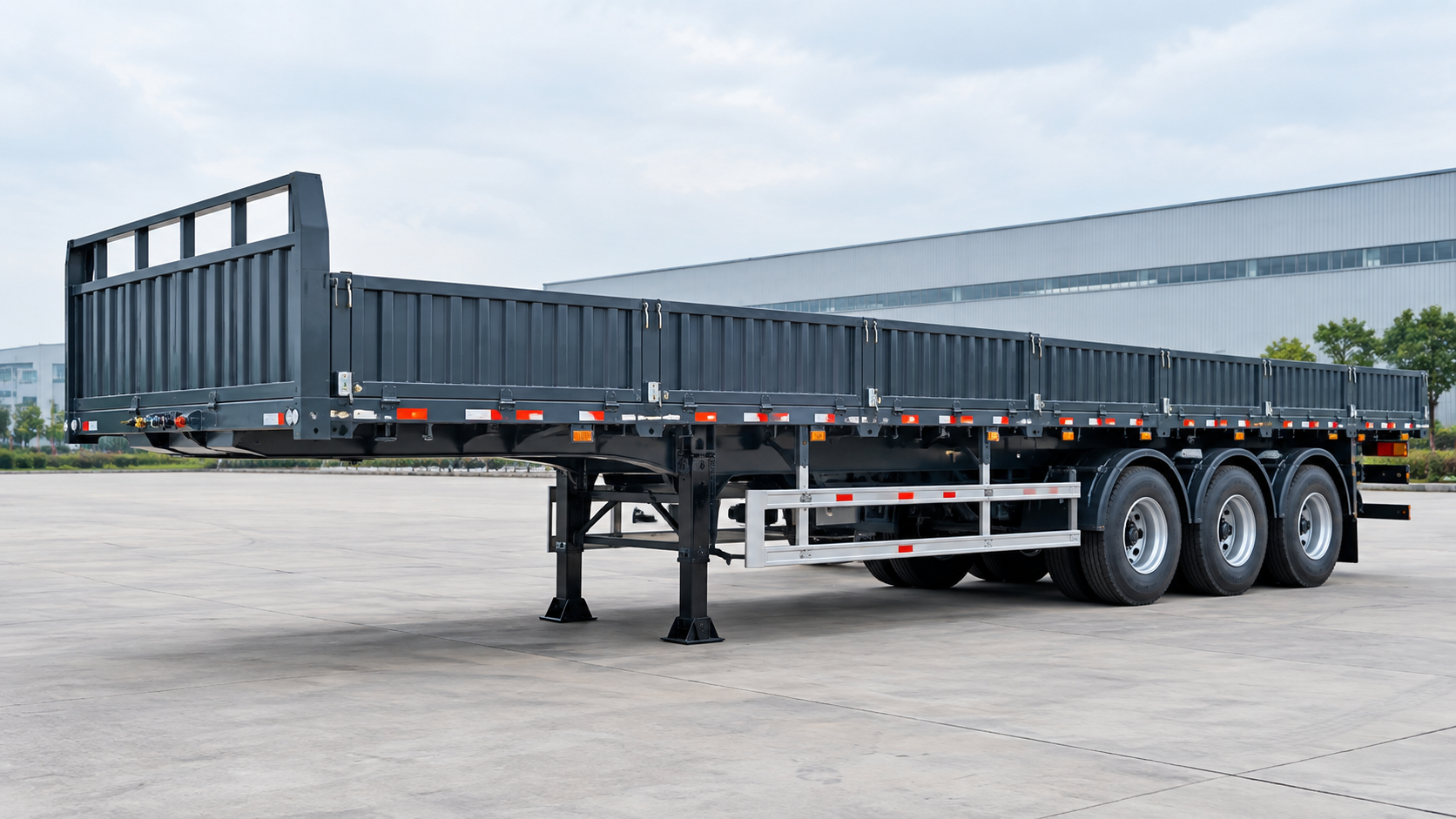
1. What Exactly Is a Semi Cargo Trailer?
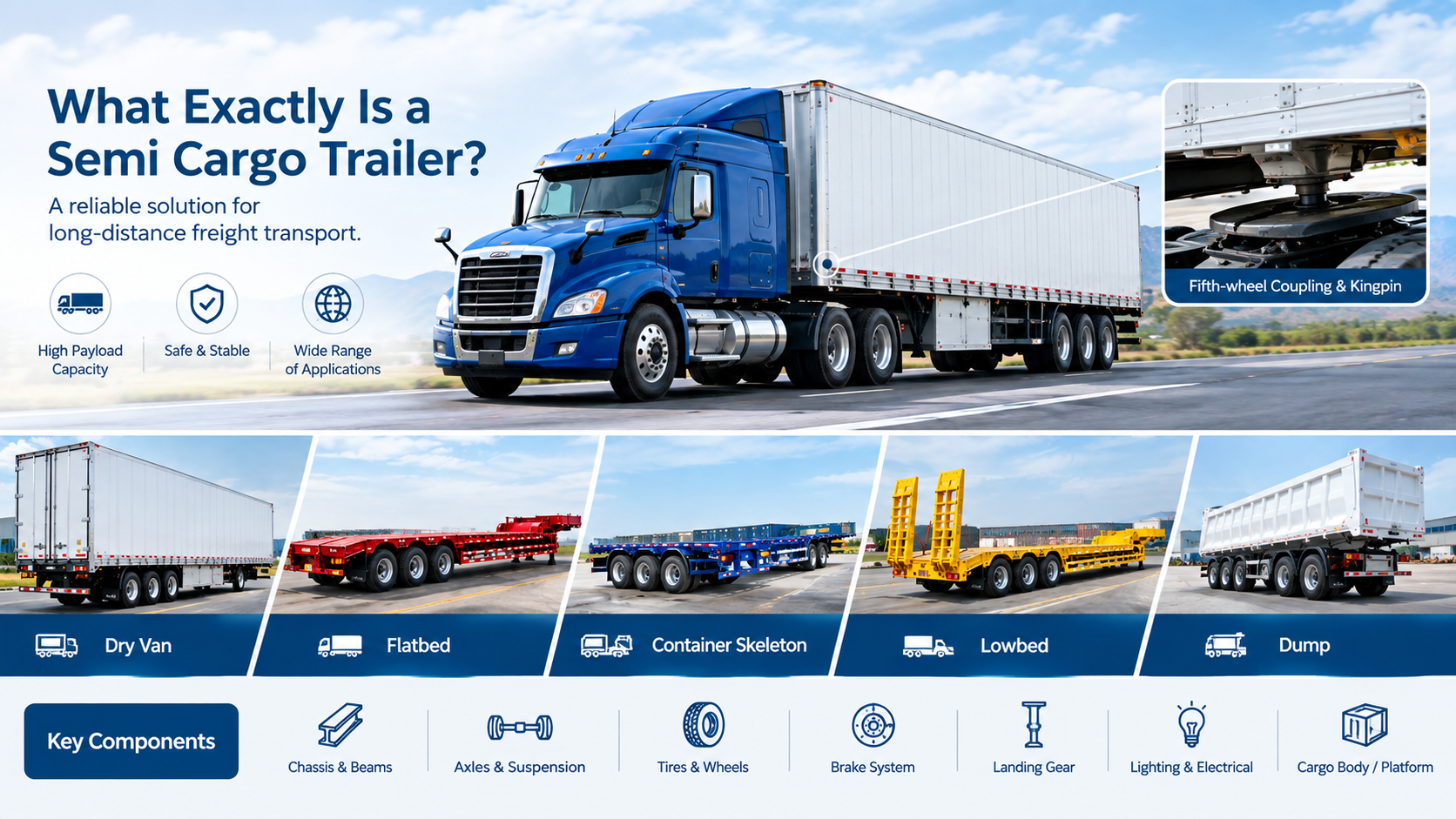
A semi cargo trailer is a cargo-carrying trailer designed to be connected to a tractor truck through a fifth-wheel coupling. Unlike a full trailer, much of the trailer's weight is supported by the tractor through the kingpin and fifth wheel.
This configuration allows manufacturers to build trailers with high payload capacity while keeping the overall combination practical for long-distance freight transportation.
Depending on the design, a semi cargo trailer can transport general freight, containers, construction machinery, steel products, agricultural materials, bulk goods, and many other types of cargo.
The basic operating system consists of several major components:
-
Main chassis and longitudinal beams
-
Kingpin and fifth-wheel connection
-
Axles and suspension
-
Wheels and tires
-
Brake system
-
Landing gear
-
Lighting and electrical system
-
Cargo platform, box, sidewalls, or tipping body
The term is broad. A flatbed, container chassis, lowbed, dry van, and dump trailer can all be considered specialized forms of semi cargo trailers when designed for tractor-trailer operation.
The key difference is the cargo-handling structure.
For example, a flatbed provides an open loading platform, while a dry van protects cargo inside an enclosed body. A container chassis is optimized for standardized shipping containers, whereas a lowbed is designed for heavy equipment with a lower deck height.
For buyers searching for a semi cargo trailer for sale, understanding this distinction is important before comparing manufacturers or quotations.
2. Main Types of Semi Cargo Trailers
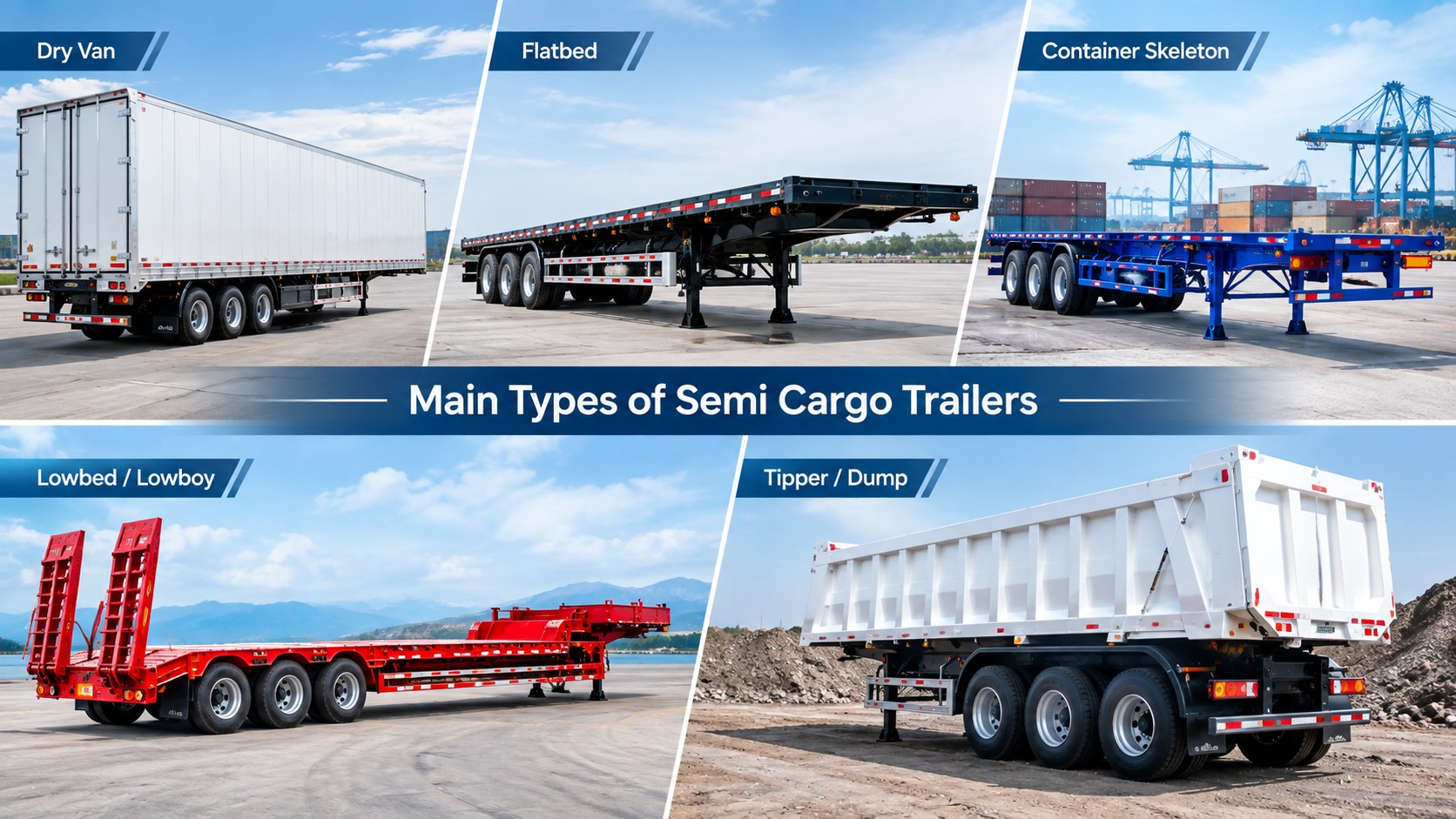
There is no single trailer configuration that works efficiently for every freight application. The most suitable choice depends primarily on cargo type, loading method, payload, route, and local regulations.
Dry Van / Box Cargo Semi Trailer
A dry van semi trailer is an enclosed trailer used for general freight that needs protection from weather, dust, and unauthorized access.
Typical cargo includes packaged goods, consumer products, electronics, furniture, textiles, and palletized freight.
Common configurations include tandem or tri-axle layouts, depending on the target market and required payload.
Buyers should pay attention to:
-
Internal and external dimensions
-
Door configuration
-
Floor construction
-
Wall and roof materials
-
Axle rating
-
Suspension type
-
Brake system
-
Cargo tie-down provisions
Dry van trailers generally cost more than open-platform designs because they require a complete enclosed body.
Flatbed Semi Cargo Trailer
Flatbed trailers are among the most versatile options for freight transportation.
They feature an open deck without fixed sidewalls, making them suitable for cargo that can be loaded by crane, forklift, or from the side.
Common applications include:
-
Steel coils and structural steel
-
Pipes
-
Machinery
-
Construction materials
-
Timber
-
Large industrial components
-
Containers with suitable securing equipment
A semi cargo trailer for sale in flatbed configuration may be offered with two, three, or more axles depending on the required payload and regulations.
For international buyers, deck thickness, main beam design, axle capacity, tire specification, and container locks should be confirmed before ordering.
Container Skeleton Cargo Trailer
A container skeleton trailer, also called a container chassis, is designed specifically to carry standard intermodal containers.
It is commonly used for port transportation and inland container logistics.
Typical configurations support 20-foot, 40-foot, or other standardized container arrangements. Some models can accommodate multiple container lengths through adjustable or strategically positioned twist-lock systems.
A china semi cargo trailer in skeleton configuration is often selected by international container-hauling companies because the design can be customized around local axle requirements, suspension preferences, and container combinations.
The buyer should confirm container compatibility before production rather than relying only on the trailer's overall length.
Lowbed / Lowboy Cargo Trailer
Lowbed trailers are designed for transporting heavy and oversized equipment.
The lowered deck reduces the overall transport height, which is particularly useful for excavators, bulldozers, wheel loaders, cranes, and other construction machinery.
A heavy duty semi cargo trailer in lowbed configuration normally requires stronger main beams, reinforced suspension components, higher-rated axles, and appropriate ramps or loading equipment.
A tri-axle lowbed is a common configuration, although heavier applications may require additional axles.
For oversized cargo, buyers must also evaluate local regulations concerning gross combination weight, axle loading, overall width, height, and route restrictions.
Tipper / Dump Cargo Trailer
Dump trailers are designed to transport loose bulk materials and unload them through hydraulic tipping.
Typical applications include:
-
Sand
-
Gravel
-
Stone
-
Construction waste
-
Coal
-
Soil
-
Agricultural bulk materials
The body capacity and steel thickness need to be matched to the cargo density.
A larger body is not automatically better. If the material is particularly dense, the trailer may reach its legal weight limit before the body is physically full.
3. Critical Specifications for Semi Cargo Trailer Buyers
A trailer quotation should never be evaluated on price alone. The most important step is comparing the complete semi cargo trailer specifications.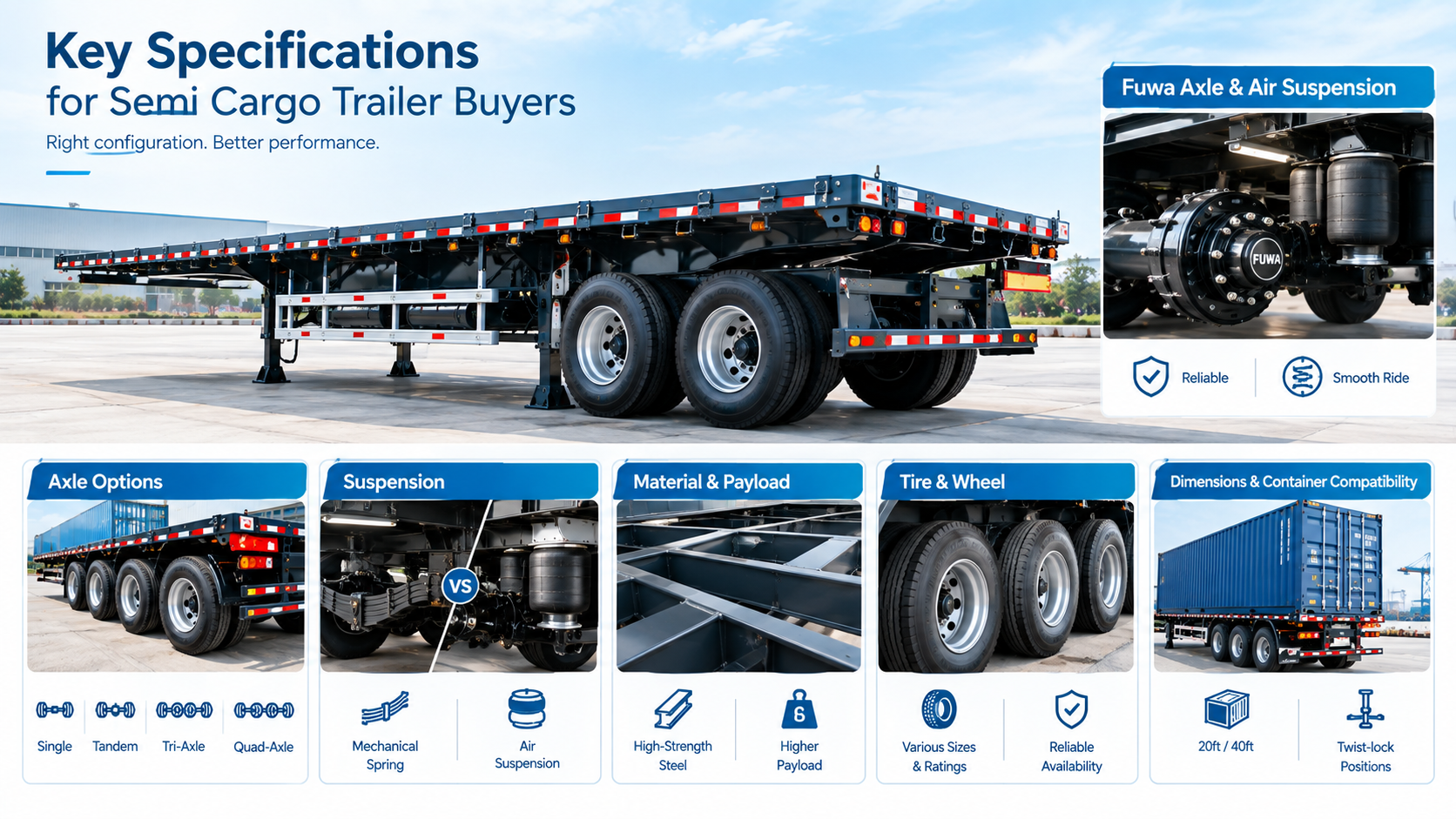
Axle Options: Single, Tandem, Tri-Axle and Quad-Axle
Axle configuration directly affects payload capacity, weight distribution, maneuverability, tire wear, and legal compliance.
Single axle configurations are generally used for lighter applications.
Tandem axle trailers provide a practical balance between payload capacity and operating cost.
Tri-axle semi cargo trailer configurations are widely used for heavier freight and applications where local regulations permit higher axle-group loads.
Quad-axle configurations are designed for particularly heavy cargo, but they add weight, tires, maintenance requirements, and purchase cost.
The correct choice should be based on the legal axle-load limits in the destination country rather than simply selecting the maximum number of axles available.
Suspension: Mechanical Spring vs. Air Suspension
Mechanical suspension is popular because of its relatively simple structure, durability, and ease of maintenance.
It is often suitable for demanding road conditions and markets where repair infrastructure is limited.
Air suspension provides better ride characteristics and can help protect sensitive cargo from excessive vibration. It is also widely used in higher-end fleet applications.
For premium export configurations, Fuwa axle and air suspension are popular options among international buyers. Fuwa axles are widely recognized in the commercial trailer sector and can be specified where the customer's operating requirements justify the additional cost.
The final choice should consider road quality, payload, maintenance capability, local parts availability, and operating cost.
Material and Payload Capacity
The chassis needs sufficient structural strength without unnecessary dead weight.
Common trailer structures use high-strength steel for critical load-bearing components. The exact material grade and structural design should be confirmed with the manufacturer.
Payload should always be considered together with trailer tare weight and local legal limits.
For example:
Payload = Maximum permitted combination/trailer weight − applicable tractor and trailer tare weight
A stronger trailer is not necessarily a better trailer if excessive structural weight reduces the legal payload.
Tire and Wheel Configuration
Tire specifications influence operating cost and road performance.
Common factors include:
-
Tire size
-
Ply or load rating
-
Rim size
-
Number of tires
-
Tubeless or tube-type construction
-
Local tire availability
For export projects, it is sensible to select tire brands and sizes that are readily available in the destination market.
A low purchase price can become less attractive if replacement tires are difficult or expensive to source.
Dimension and Container Compatibility
Trailer dimensions must match both cargo requirements and destination regulations.
Buyers should confirm:
-
Overall length
-
Overall width
-
Deck height
-
Platform length
-
Platform width
-
Container positions
-
Twist-lock locations
-
Rear and side clearance
For container transportation, compatibility with the required container sizes is especially important.
4. 2026 Semi Cargo Trailer General Price Range (USD)
Semi-trailer prices vary substantially according to trailer type, steel specification, axle brand, suspension, tires, braking system, customization, certification, and shipping destination.
The following figures provide a practical 2026 international purchasing reference for new trailers, particularly for China-export quotations. Actual offers can vary by configuration and order quantity.
| Trailer Type | Typical New Price, USD | Typical Application | Common Configuration |
|---|---|---|---|
| Skeleton Semi Cargo Trailer | $8,000–$15,500 | Container transport | Tandem / Tri-axle |
| Flatbed Semi Cargo Trailer | $7,000–$18,000 | General / steel cargo | 2–3 axles |
| Tri-Axle Lowbed | $11,000–$22,000 | Heavy machinery | 3 axles |
| Standard Dry Van | $32,000–$75,000 | Enclosed freight | Tandem / Tri-axle |
| Used Semi Cargo Trailer | 40%–70% of new price | Budget fleet expansion | Condition dependent |
These numbers should be treated as market reference ranges rather than fixed quotations.
For example, a basic flatbed may be close to the lower end of the range, while a customized unit with premium axles, air suspension, advanced braking equipment, special steel, and destination-specific certification can be significantly more expensive.
Used trailers can reduce the initial investment, but buyers should inspect chassis condition, axle wear, suspension, brakes, tires, floor condition, corrosion, and maintenance history before purchasing.
5. Key Points When You Import Semi Cargo Trailer from China
China has become an important sourcing market for commercial trailers because manufacturers can offer a broad range of configurations and relatively flexible customization.
However, importing successfully requires more than finding the lowest factory price.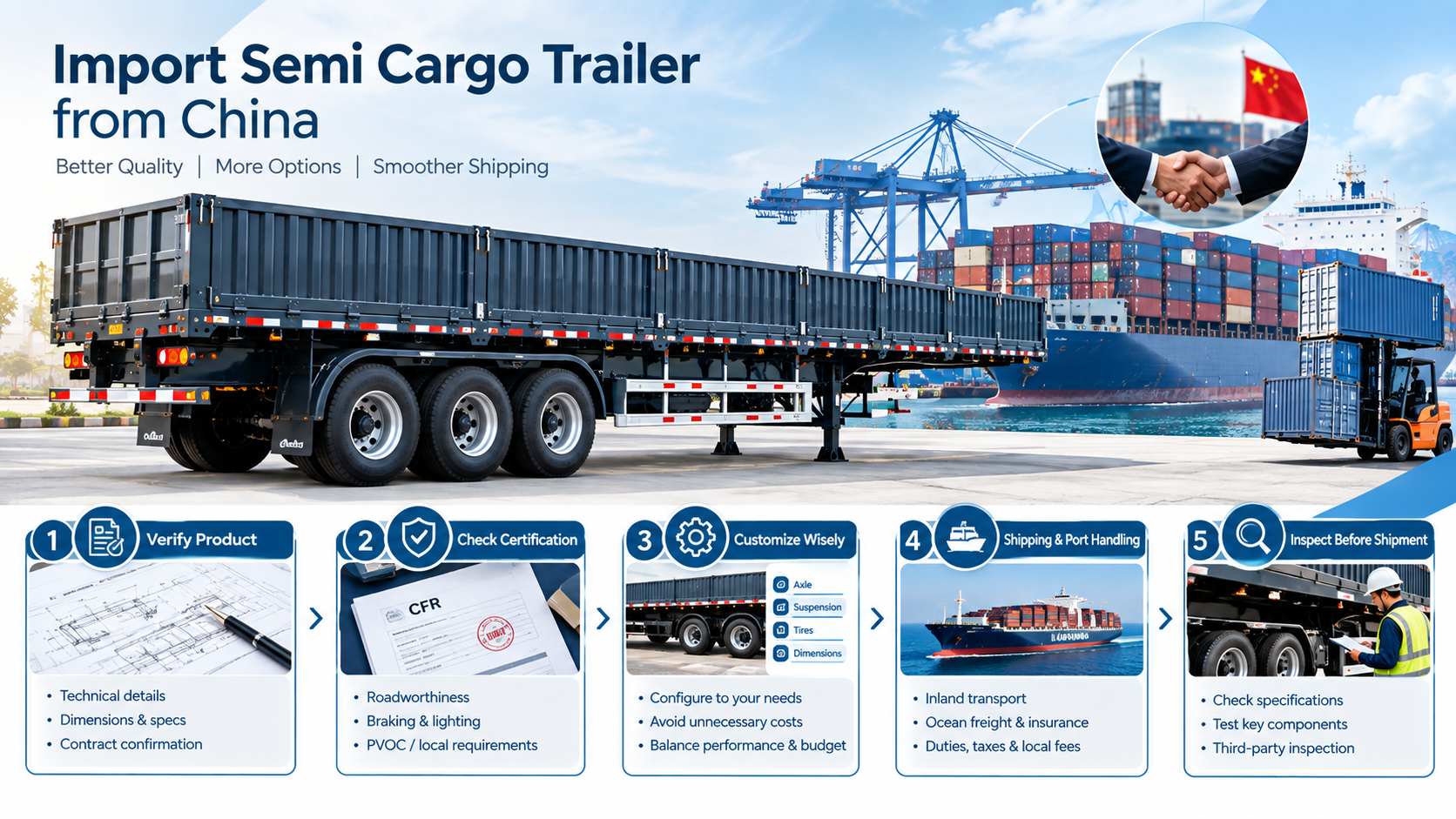
Verify the Product Before Production
Request detailed technical drawings and specifications before confirming the order.
Important items include:
-
Trailer dimensions
-
Payload rating
-
Axle model and capacity
-
Suspension
-
Tire specification
-
Brake system
-
Kingpin
-
Landing gear
-
Electrical components
-
Steel specification
-
Accessories
The purchase contract should reflect the agreed configuration rather than relying on informal messages.
Confirm Certification Requirements
Different countries have different requirements for commercial trailers.
Depending on the destination, buyers may need specific roadworthiness documentation, braking compliance, lighting requirements, registration documents, or inspection/certification documents.
Some markets may also require specific conformity procedures such as PVOC or other pre-export verification.
The exporter and buyer should determine the destination-market requirements before production begins.
Use Customization Carefully
One advantage of sourcing from China is the ability to customize trailer specifications.
Possible customization areas include:
-
Axle quantity
-
Axle brand
-
Suspension
-
Tire brand
-
Deck dimensions
-
Sidewall height
-
Kingpin position
-
Hydraulic system
-
Paint and surface treatment
-
Container locks
-
Braking configuration
Customization is valuable when it solves a real operating requirement.
It is less useful when unnecessary options increase cost, tare weight, or maintenance complexity.
Consider Shipping and Port Handling
Trailer purchasing cost is only one component of the landed cost.
International buyers should also consider:
-
Inland transportation
-
Export customs clearance
-
Port charges
-
Ocean freight
-
Marine insurance
-
Destination port charges
-
Import duties and taxes
-
Local registration
-
Inspection costs
Ask for a clear quotation structure so that product cost and logistics cost can be evaluated separately.
Inspect Before Shipment
For wholesale orders, pre-shipment inspection is an important quality-control step.
The inspection should verify the actual trailer against the approved specification.
Pay particular attention to VIN or identification information, dimensions, axle configuration, tires, lighting, braking components, weld quality, paint condition, accessories, and documentation.
For larger orders, a third-party inspection can provide additional assurance before the trailers leave China.
6. FAQ — Frequently Asked Questions About Semi Cargo Trailer
1. What is the best semi cargo trailer for general freight?
For general cargo, a flatbed or dry van is usually the most practical choice. A flatbed offers flexible loading, while a dry van provides weather protection and better cargo security.
The best option depends on cargo type, loading method, route, and local regulations.
2. How much does a semi cargo trailer cost in 2026?
Indicative new prices range from approximately $7,000 for basic flatbed configurations to more than $75,000 for certain enclosed or highly customized trailers.
Container skeleton trailers commonly fall around $8,000–$15,500, while tri-axle lowbeds are typically around $11,000–$22,000.
3. Is a tri axle semi cargo trailer better than a tandem axle trailer?
Not necessarily.
A tri-axle trailer can provide greater legal load capacity where regulations permit it, but it also adds tires, weight, maintenance, and potentially higher operating costs.
The correct configuration depends on the destination country's axle-load regulations and the cargo being transported.
4. What should I check when buying a semi cargo trailer for sale?
Start with the complete specification rather than the advertised price.
Check the axle capacity, suspension, steel structure, tires, dimensions, braking system, kingpin, landing gear, payload rating, certification requirements, and warranty terms.
For used equipment, inspect corrosion, cracks, brakes, tires, suspension, and maintenance history.
5. Are China semi cargo trailers reliable?
Quality varies between manufacturers and specifications.
China offers both basic and premium trailer configurations. Reliability depends on engineering, material selection, welding quality, component brands, quality control, and maintenance.
Buyers should evaluate the actual specification and production quality rather than judging a trailer solely by its country of origin.
6. Is Fuwa axle and air suspension worth choosing?
For fleets operating heavy loads or demanding long-distance routes, premium axle and air-suspension configurations can be worthwhile.
Fuwa axle systems combined with air suspension are a popular higher-end configuration for international buyers seeking durability, ride performance, and established component support.
The decision should still be based on operating conditions and the availability of local service and replacement parts.
7. How do I choose a semi cargo trailer for my country?
Start with four questions:
-
What cargo will the trailer carry?
-
What is the maximum legal payload?
-
What are the local axle and dimensional regulations?
-
What road and climate conditions will the trailer encounter?
After answering these questions, select the trailer type, axle configuration, suspension, dimensions, and components accordingly.
8. Can semi cargo trailers from China be customized?
Yes. Many manufacturers can customize dimensions, axle configurations, suspension, tires, cargo structures, braking systems, container locks, hydraulic equipment, and other components.
For export orders, customization should be finalized in a written technical specification before production begins.
7. Conclusion
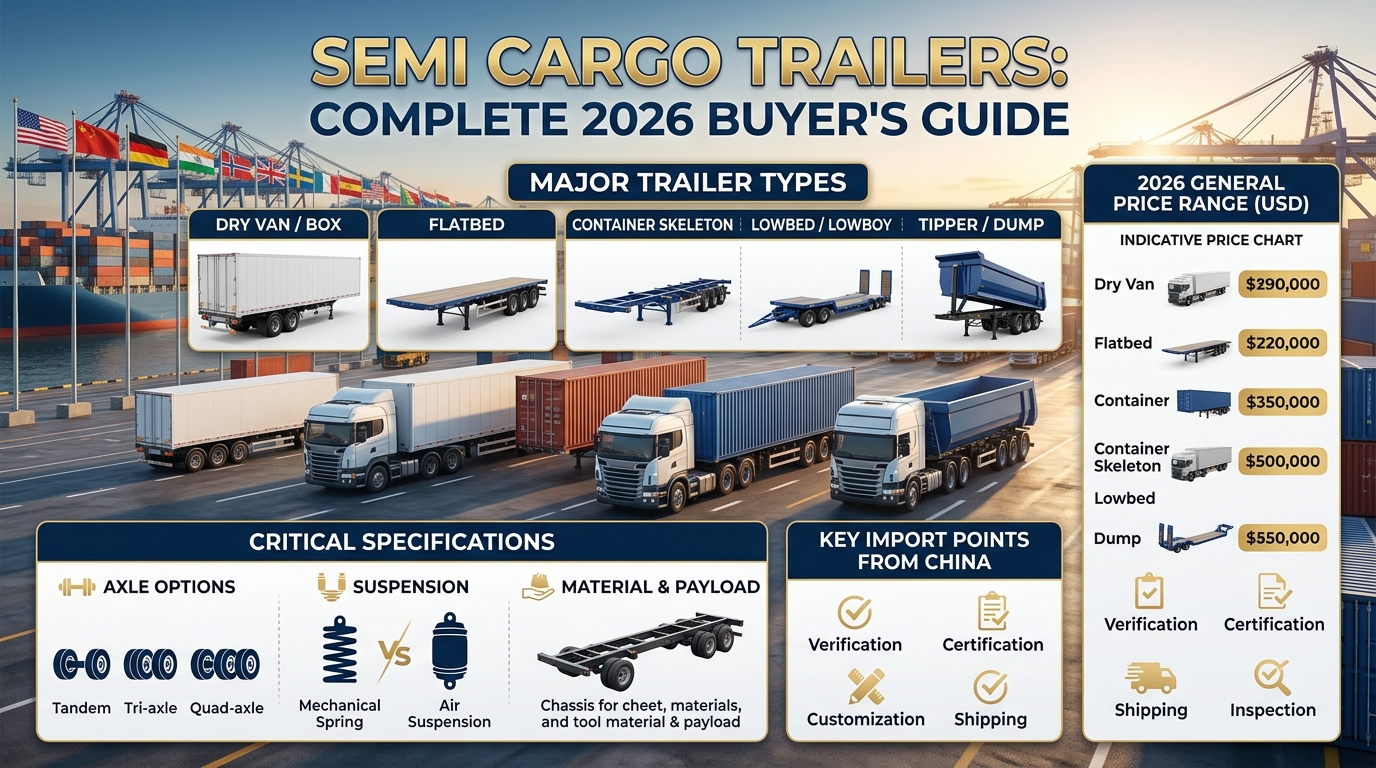
Choosing the right semi cargo trailer is ultimately a matter of matching equipment to the actual transportation job.
A flatbed may be ideal for steel and machinery. A skeleton trailer makes more sense for container logistics. A dry van protects enclosed freight, while a lowbed is better suited to heavy construction equipment. Dump trailers are designed for bulk materials and frequent unloading.
For international buyers, the most important considerations are not simply purchase price and appearance. Axle capacity, suspension, structural strength, tire availability, braking configuration, legal dimensions, certification, shipping cost, and after-sales support all influence the trailer's long-term operating value.
China can be a competitive sourcing market when buyers compare complete specifications, verify quality before shipment, and customize the trailer around their destination-market requirements.
If you are evaluating semi cargo trailers for wholesale purchase or fleet use, a practical next step is to prepare your cargo type, target payload, preferred axle configuration, destination market, and required certification. Those details allow a manufacturer or export supplier to recommend a configuration that fits the actual application rather than simply offering the lowest-priced trailer.
If you'd like to learn more about our semi-trailers, please contact us using the details on our website, and we'll promptly introduce our products and provide a specific quote based on your needs.