
Flatbed Trailer for Cars: How to Choose the Right Vehicle Transport Solution
Flatbed Trailer for Cars: How to Choose the Right Vehicle Transport Solution
Choosing the right flatbed trailer for cars is not simply about finding a platform large enough to carry a vehicle. For dealers, vehicle exporters, logistics companies, and commercial transport operators, the right trailer must provide suitable loading access, reliable cargo securement, sufficient payload capacity, and compatibility with local road regulations.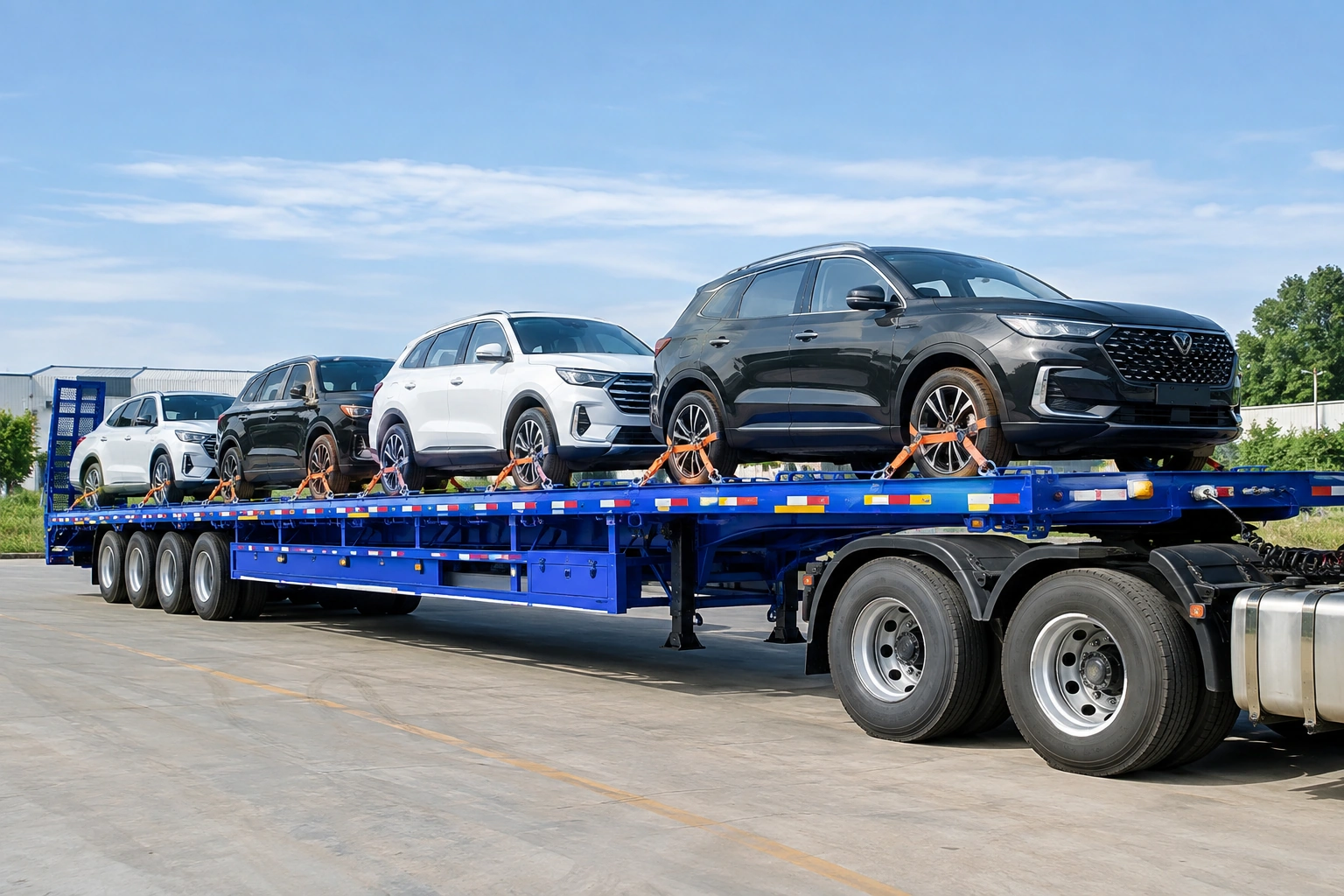
Flatbed Trailer for Cars- Flatbed trailer for cars with multiple SUVs secured on an open deck
A flatbed trailer can offer flexible transportation for cars, SUVs, light commercial vehicles, and other compatible cargo. However, a standard flatbed semi-trailer is not automatically suitable for every vehicle transport application. Deck height, ramp design, axle configuration, load distribution, and tie-down arrangements all need to match the vehicles being transported.
This guide explains what to consider when selecting a flatbed trailer for cars, which specifications matter most, and how to prepare for a more accurate quotation when sourcing a trailer for your business.
1. What Is a Flatbed Trailer for Cars?
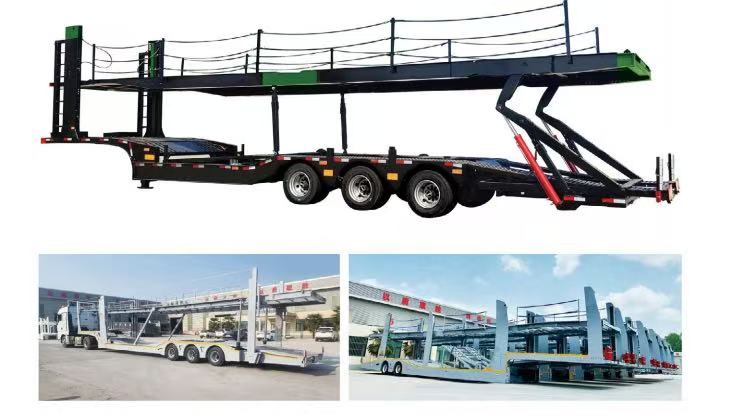
A flatbed trailer for cars is an open-deck trailer used to transport vehicles on a flat loading platform. Depending on its design, capacity, and intended application, it may be suitable for moving passenger cars, SUVs, pickup trucks, light commercial vehicles, or other wheeled equipment.
Compared with an enclosed trailer, an open flatbed provides easier access from the sides and rear, subject to the loading equipment and surrounding conditions. It can also be useful when a business needs a versatile platform for different types of cargo.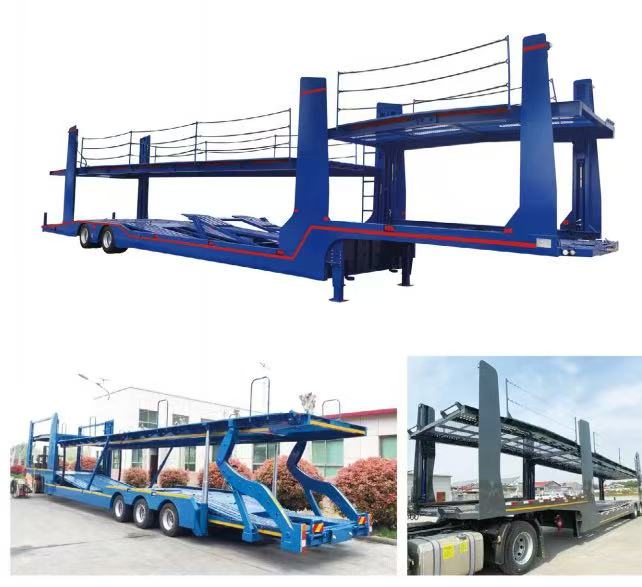
Typical applications include:
-
Vehicle transportation between dealerships and distribution centers
-
Moving cars between warehouses, ports, and logistics facilities
-
Transporting selected vehicles for automotive trading businesses
-
Carrying compatible wheeled equipment and other cargo
-
Supporting commercial fleets that require flexible loading arrangements
For buyers transporting vehicles regularly, the most important question is whether a general-purpose flatbed or a purpose-built car transporter will better suit their operation.
2. Flatbed Trailer vs. Dedicated Car Transporter
Although these trailer types may serve similar transportation needs, their designs are different.
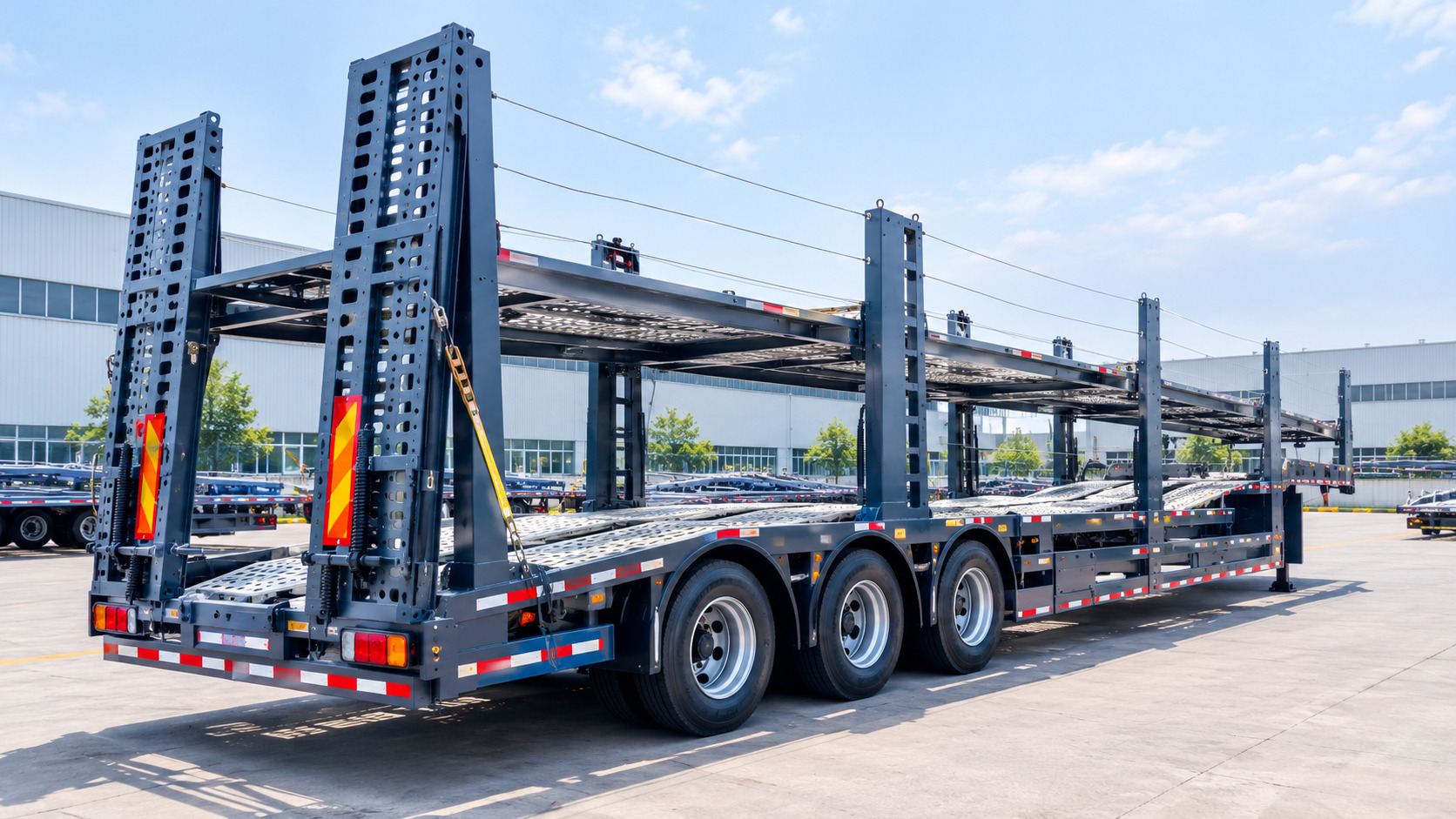
A general flatbed trailer is designed primarily around an open, versatile cargo platform. A dedicated car transporter is engineered specifically for vehicle loading, positioning, and securement. Depending on the model, it may include wheel tracks, vehicle-specific tie-down points, loading ramps, hydraulic loading systems, or a double-deck structure.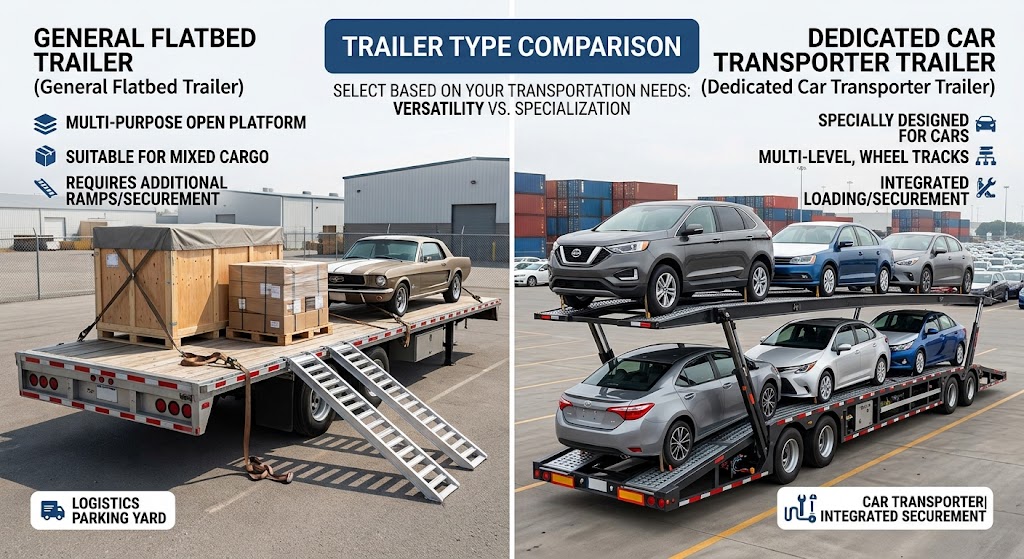
"Side-by-side comparison illustrating a general flatbed trailer loaded with mixed cargo and a vehicle versus a dedicated multi-level car transporter trailer loaded with passenger cars."
General flatbed trailer
-
Suitable for multiple compatible cargo types.
-
Offers an open platform with flexible loading access.
-
May require additional ramps and vehicle-securement equipment.
-
Works best when the deck dimensions, payload, and loading method suit the vehicle.
Dedicated car transporter trailer
-
Designed specifically for vehicle transportation.
-
May provide more convenient vehicle positioning and loading arrangements.
-
Can offer specialized wheel tracks, ramps, or multi-level loading.
-
Is generally a better starting point for businesses transporting several cars on a regular basis.
If your main business is moving multiple passenger cars between ports, dealers, or distribution centers, compare purpose-built car transporter trailers before making a final decision. If you need one trailer for vehicles and other compatible cargo, a suitably configured flatbed may offer greater flexibility.
3. Key Specifications to Check Before Buying
The right configuration depends on the vehicles you plan to carry, the towing tractor, your transport routes, and the regulations in your destination market.
Deck Length and Width
The usable deck dimensions must accommodate the vehicle's overall length, width, wheelbase, and positioning requirements.
When evaluating deck size, consider more than the vehicle's body dimensions. Allow sufficient room for loading, wheel positioning, securing equipment, and safe access where required.
For international purchases, confirm the overall trailer dimensions and loaded vehicle dimensions against the applicable road limits in your destination country.
Payload Capacity and Axle Configuration
Payload capacity must account for the combined weight of the vehicles, accessories, ramps, and any other equipment carried on the trailer.
Axle count and axle ratings should be selected according to the intended load, trailer design, tractor compatibility, and legal axle-load limits. A higher nominal payload does not automatically mean a configuration is suitable for every road or market.
Ask your supplier to confirm the rated payload, tare weight, axle specifications, and permitted operating conditions before placing an order.
Deck Height and Loading Ramps
Deck height affects loading convenience and the overall height of the loaded vehicle.
Vehicles with low ground clearance may require longer ramps, a reduced loading angle, or a specialized loading system. A conventional flatbed may need additional equipment to achieve a suitable approach angle.
If you frequently transport sports cars, low-clearance sedans, or vehicles with modified suspension, discuss the loading geometry with your manufacturer before finalizing the design.
Tie-Down Points and Vehicle Securement
Vehicle securement should be considered during the design stage rather than treated as an afterthought.
Depending on the trailer and vehicle, suitable equipment may include wheel straps, approved anchor points, wheel chocks, and other appropriate restraints. Their positioning and rated capacity must be compatible with the intended load.
Do not assume that a flat deck alone provides adequate restraint. The vehicle must be secured in accordance with the applicable regulations and the equipment manufacturer's instructions.
Suspension, Axles, and Braking System
The running gear influences load handling, maintenance requirements, and compatibility with the intended routes.
When requesting a quotation, specify your preferred axle brand or rating, suspension type, braking configuration, tire size, and any market-specific requirements. The final combination should be selected according to the trailer design, operating conditions, and applicable regulations.
4. How to Choose a Flatbed Trailer for Different Vehicles
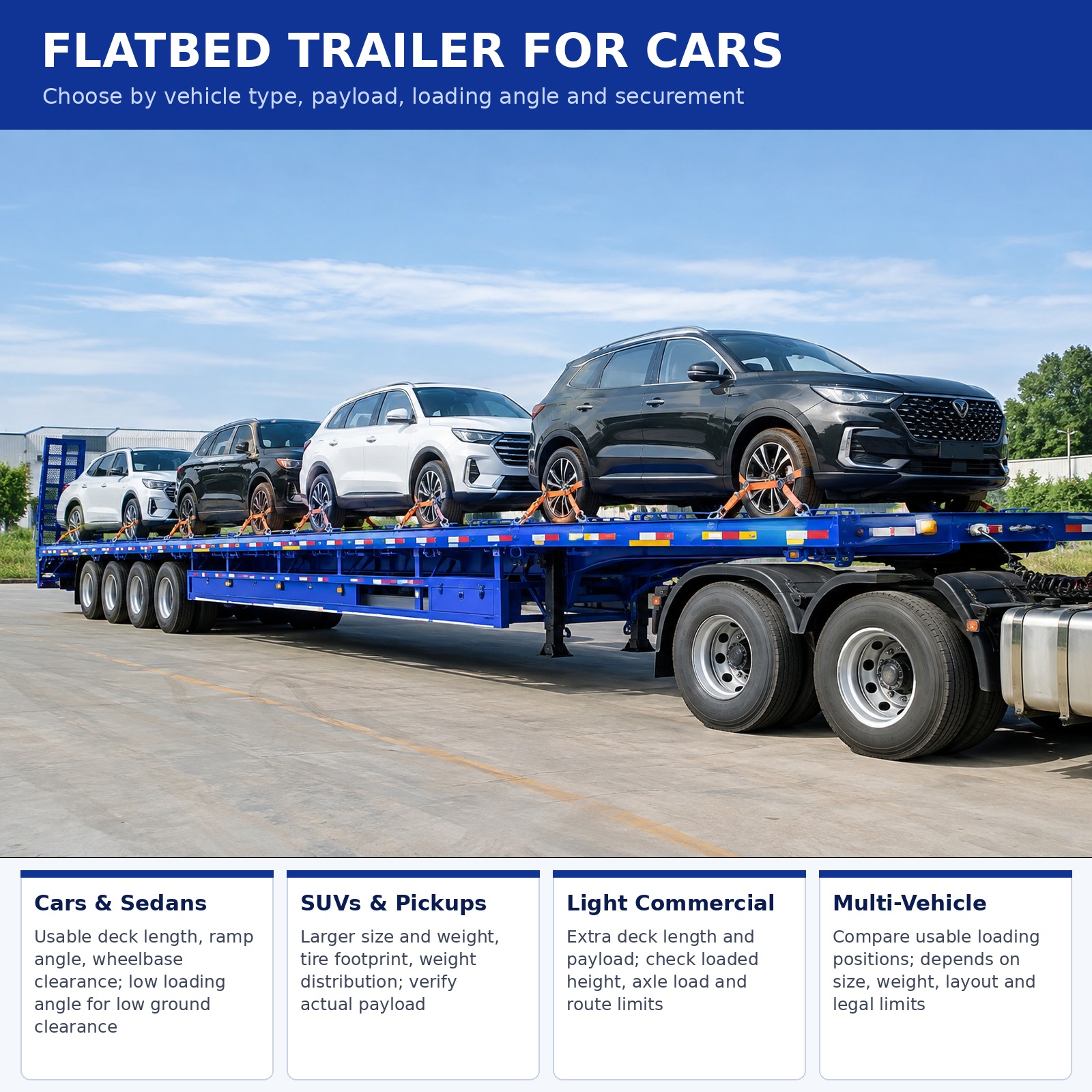
Different vehicles create different loading and transportation challenges.
Passenger cars and sedans
Check the usable deck length, ramp angle, wheelbase clearance, and suitable wheel-securement arrangements. A lower loading angle can be especially helpful for vehicles with limited ground clearance.
SUVs and pickup trucks
Consider the larger dimensions, higher vehicle weight, tire footprint, and weight distribution. Verify the actual payload rather than choosing a trailer based on deck size alone.
Light commercial vehicles
Vans and light trucks may require additional deck length and payload capacity. Check overall height after loading, axle-load distribution, and the route's height restrictions.
Multiple-vehicle transportation
If your business needs to carry several vehicles in one trip, compare the usable loading positions and the capacity of a dedicated car transporter. A standard flatbed should not be assumed to accommodate multiple cars simply because the deck appears sufficiently long.
The number of vehicles that can be transported depends on their dimensions, combined weight, loading layout, securement requirements, and applicable legal limits.
5. Custom Flatbed Trailers for International Buyers
For overseas buyers, customization should be based on actual operating requirements rather than a standard configuration alone.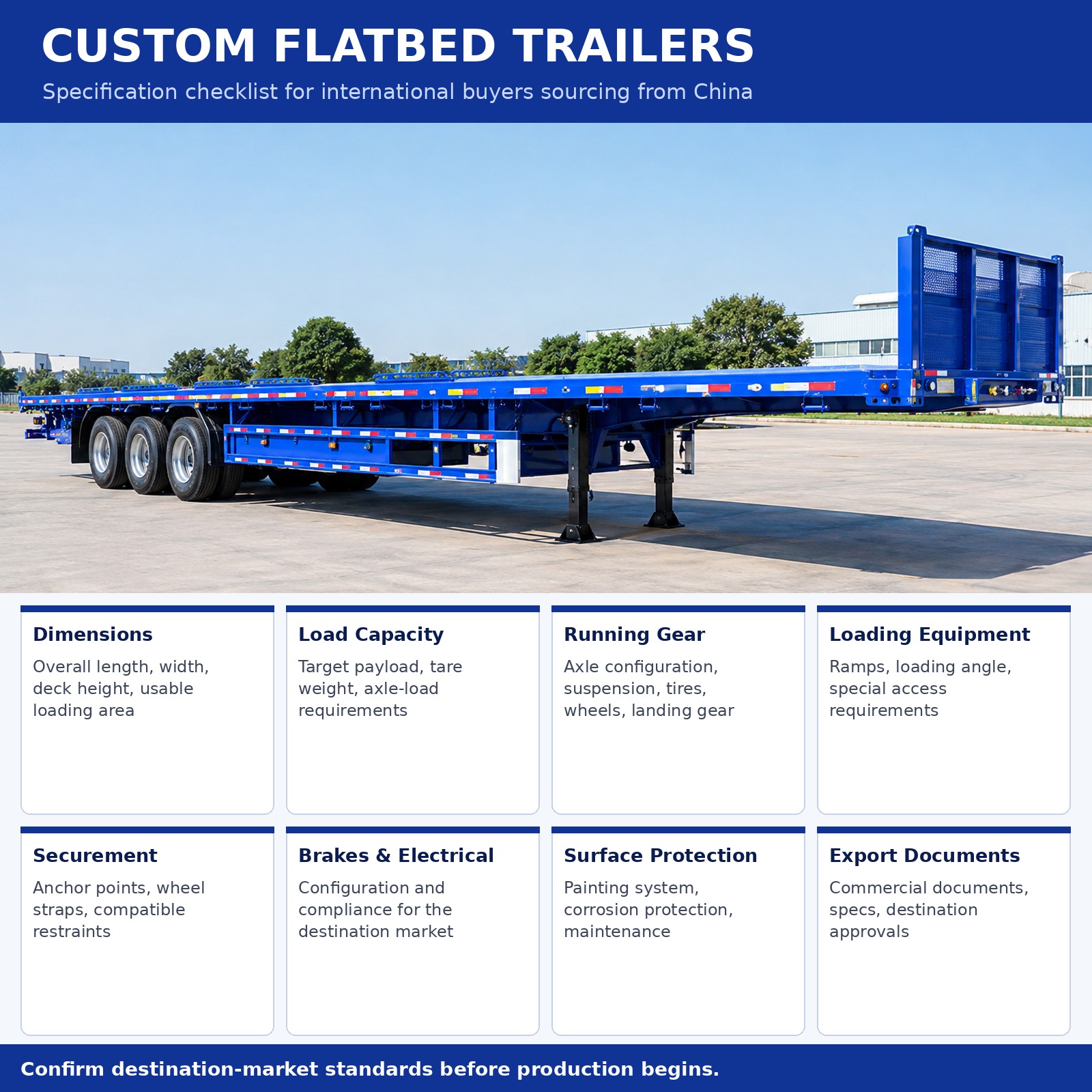
When sourcing a flatbed trailer from China, consider the following areas:
-
Dimensions: Overall length, width, deck height, and usable loading area.
-
Load capacity: Target payload, tare weight, and axle-load requirements.
-
Running gear: Axle configuration, suspension, tires, wheels, and landing gear where applicable.
-
Loading equipment: Ramps, loading angle, and any special access requirements.
-
Securement equipment: Anchor points, wheel straps, and compatible restraints.
-
Braking and electrical systems: Configuration and compliance requirements for the destination market.
-
Surface protection: Painting system, corrosion protection, and maintenance expectations.
-
Export documentation: Required commercial documents, technical specifications, and destination-specific approvals where applicable.
A clear specification helps suppliers recommend a more suitable configuration and reduces misunderstandings during quotation, production, and shipment preparation.
For markets with specific vehicle standards, confirm the relevant requirements before production begins. Do not assume that a trailer designed for one country will automatically comply with another country's regulations.
6. What Determines the Price of a Flatbed Trailer for Cars?
The cost of a flatbed trailer for cars depends on the configuration and intended application. There is no single price that accurately represents every model.
The main cost factors include:
Trailer dimensions and payload: Larger platforms and higher load ratings may require different structural designs and running gear.
Axle and suspension configuration: Axle ratings, suspension systems, and component brands influence the overall specification.
Loading equipment: Ramps, hydraulic systems, and specialized loading arrangements may add to the cost.
Materials and fabrication: Steel specifications, structural design, welding quality, and surface treatment affect manufacturing costs.
Destination market requirements: Braking systems, lighting, electrical components, documentation, and applicable compliance requirements may affect the final quotation.
Shipping and delivery terms: Export packing, inland transportation, port charges, and the selected Incoterms can change the total landed cost.
When comparing quotations, review the complete specification rather than comparing headline prices alone. Two trailers with similar external dimensions may differ significantly in payload, component quality, loading functionality, and included equipment.
7. Why Work with a Semi-Trailer Supplier in China?
For importers, distributors, and fleet operators, sourcing directly from a Chinese manufacturer or export supplier can provide access to different trailer configurations and customization options.
The key is to evaluate the supplier against your actual purchasing requirements.
Before confirming an order, request:
-
A detailed technical specification sheet
-
A clear list of included and optional components
-
Confirmation of dimensions, tare weight, and rated payload
-
Drawings or photographs of the proposed configuration
-
Information about warranty, spare parts, and after-sales support
-
Confirmation of production lead time and export documentation
-
Written clarification of the quotation basis and delivery terms
A well-defined specification is the foundation of a successful purchase. It helps both parties confirm exactly what will be supplied and whether the proposed trailer matches the intended application.
8. Request a Quote for a Flatbed Trailer for Cars
Looking for a flatbed trailer for cars for your dealership, vehicle trading business, logistics fleet, or export project?
We can discuss a suitable trailer configuration based on your cargo requirements, destination market, and intended operating conditions.
To help us prepare a more accurate quotation, please provide the following information:
-
Destination country: Where will the trailer operate?
-
Vehicle type: Sedans, SUVs, pickups, vans, or other vehicles?
-
Number of vehicles: How many vehicles do you need to transport per trip?
-
Required capacity: What is the target payload or combined vehicle weight?
-
Trailer configuration: Do you need a standard flatbed or a dedicated car transporter?
-
Special requirements: Any preferred dimensions, axle brands, suspension, braking system, or loading equipment?
-
Order quantity: One unit, a trial order, or a fleet purchase?
If you have a reference photograph, existing trailer specification, or vehicle dimensions, you can share them with your inquiry.
Contact us to discuss your vehicle transport requirements and request a configuration-based quotation. The more accurately your operating needs are defined, the easier it is to identify a suitable trailer solution.
Frequently Asked Questions
Is a flatbed trailer suitable for transporting cars?
Yes, provided that the trailer's deck, payload, loading method, and securement arrangements are suitable for the vehicles being carried. A purpose-built car transporter may be more efficient for regular vehicle transport.
How many cars can a flatbed trailer carry?
There is no universal number. The answer depends on deck dimensions, vehicle size and weight, loading layout, axle-load distribution, and local legal limits. Confirm the proposed layout and payload before ordering.
Can I customize a flatbed trailer for SUVs and pickups?
A suitable design may be customized for vehicle dimensions, payload, deck height, ramps, axles, suspension, and securement equipment. The final configuration must be checked against the intended operating conditions and regulations.
What is the difference between a flatbed trailer and a car carrier?
A flatbed is a general-purpose open platform, while a car carrier is specifically designed for vehicle transportation. Car carriers may include dedicated loading tracks, ramps, wheel restraints, or multi-level structures.
What information is needed for a quotation?
Provide the destination country, vehicle type and dimensions, target payload, preferred trailer configuration, required components, and order quantity. Reference photographs or technical drawings are also helpful.
Can I order a flatbed trailer from China for export?
Yes. Buyers should confirm the technical specification, component selection, delivery terms, export documents, and destination-market requirements before placing an order. Any required approvals or compliance documents should be verified for the specific market.
Choosing the Right Flatbed Trailer for Cars: What Experience Has Taught Us
In our experience, choosing a flatbed trailer for cars is about much more than finding a competitive price. The right trailer should match the vehicles you transport, your loading conditions, your routes, and the regulations of your destination market.
We believe a good purchasing decision starts with understanding the buyer’s real needs. A trailer designed for frequent long-distance transport may require a different configuration from one used for local vehicle delivery. Axle capacity, suspension, deck dimensions, loading ramps, and component quality all deserve careful consideration.
We also understand that for international buyers, every detail matters. An unsuitable configuration can lead to additional costs, operational difficulties, or delays after delivery. That is why we encourage customers to compare complete specifications rather than prices alone.
Looking for a flatbed trailer for cars? Tell us what vehicles you plan to transport, your destination country, and your preferred configuration. Our team can help you evaluate suitable options and prepare a quotation based on your actual requirements. Let’s find a practical, reliable solution for your business.