
High Side Semi-Trailer: How to Choose the Right Cargo Trailer for Your Business
High Side Semi-Trailer: How to Choose the Right Cargo Trailer for Your Business
Choosing the right semi-trailer is an important decision for transport companies, fleet operators and commercial vehicle importers. The trailer must match the type of cargo, loading method, road conditions and operating requirements of the destination market.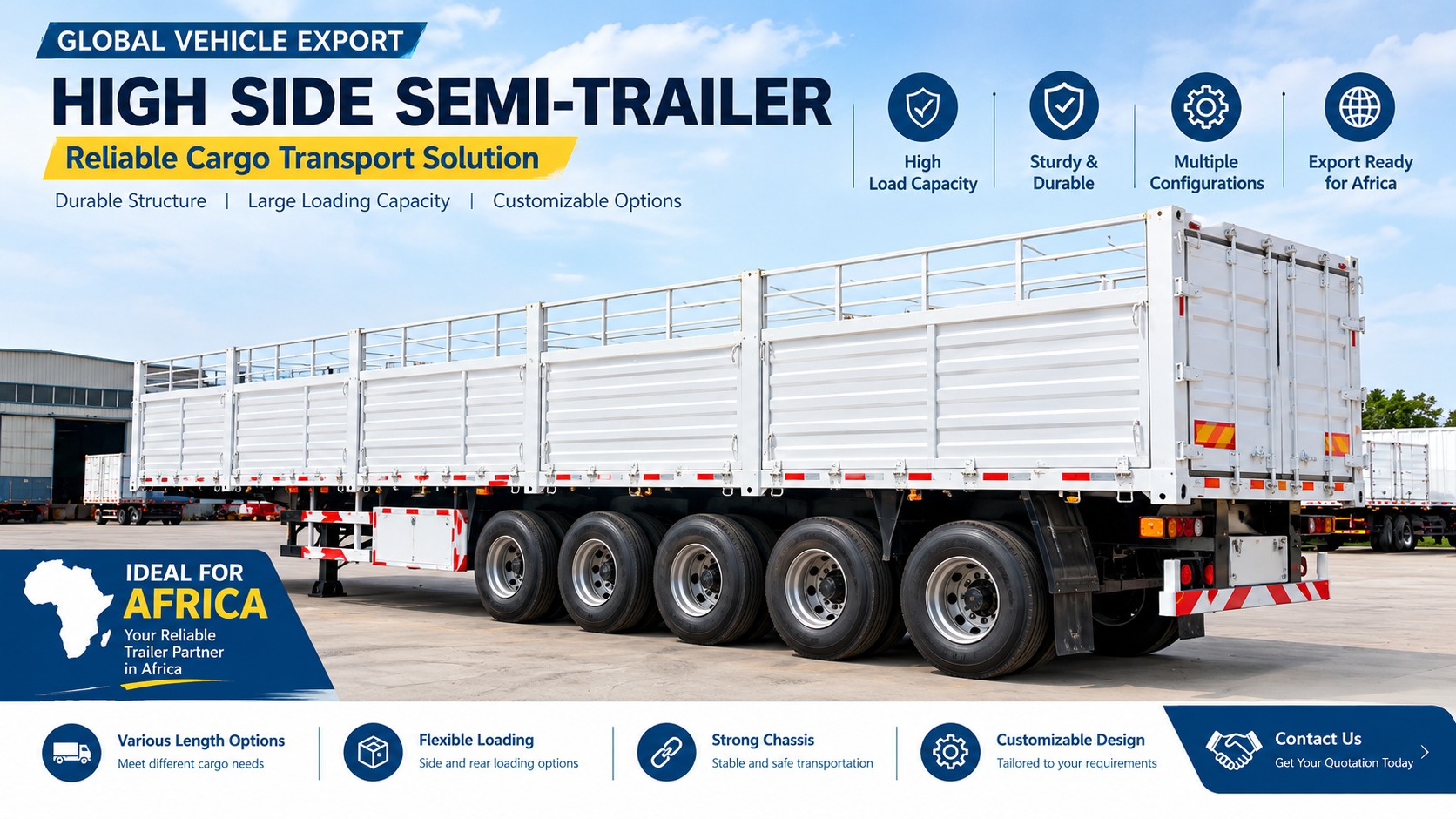
A high side semi-trailer, also known as a high-sided cargo trailer, is designed with raised side panels to help contain compatible general cargo during transportation. Depending on the body design, it can be suitable for packaged goods, bagged materials, agricultural products and other cargo that can be safely transported within the trailer's load limits.
For buyers sourcing trailers internationally, the key is to select a practical configuration rather than focusing on appearance or purchase price alone.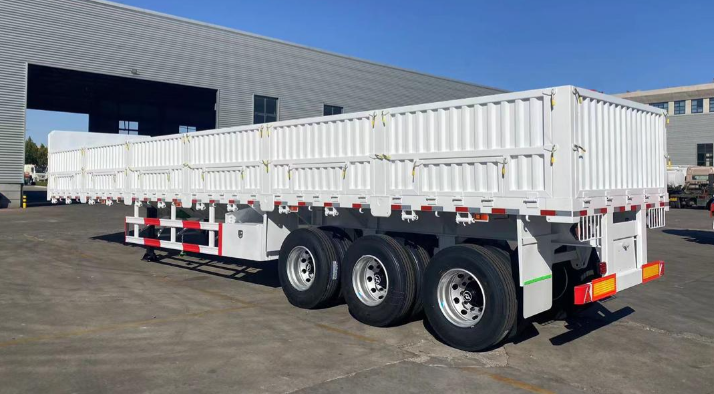
What Is a High Side Semi-Trailer?
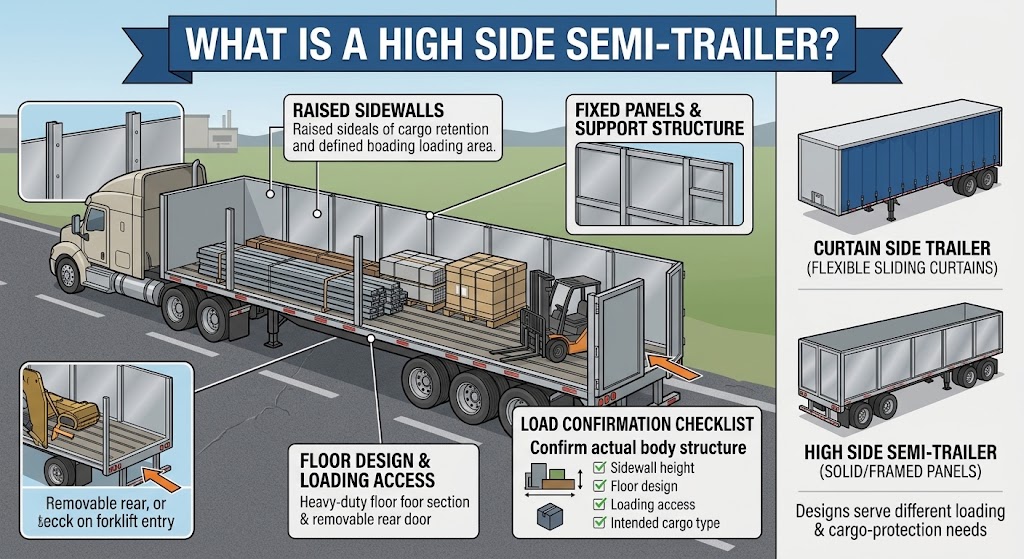
A high side semi-trailer is a cargo trailer fitted with raised sidewalls or side panels around the loading platform. The side structure helps retain cargo and provides a defined loading area.
The exact design varies by manufacturer and application. Some models use fixed metal side panels, while others may feature removable or hinged sections to support different loading arrangements.
Before placing an order, buyers should confirm the actual body structure, sidewall height, floor design, loading access and intended cargo type.
It is also important to distinguish a high side semi-trailer from a curtain side trailer. A high side trailer uses solid or framed side panels, whereas a curtain side trailer uses flexible sliding curtains. These designs serve different loading and cargo-protection requirements.
Key Benefits of a High Side Semi-Trailer
1. Practical Cargo Containment
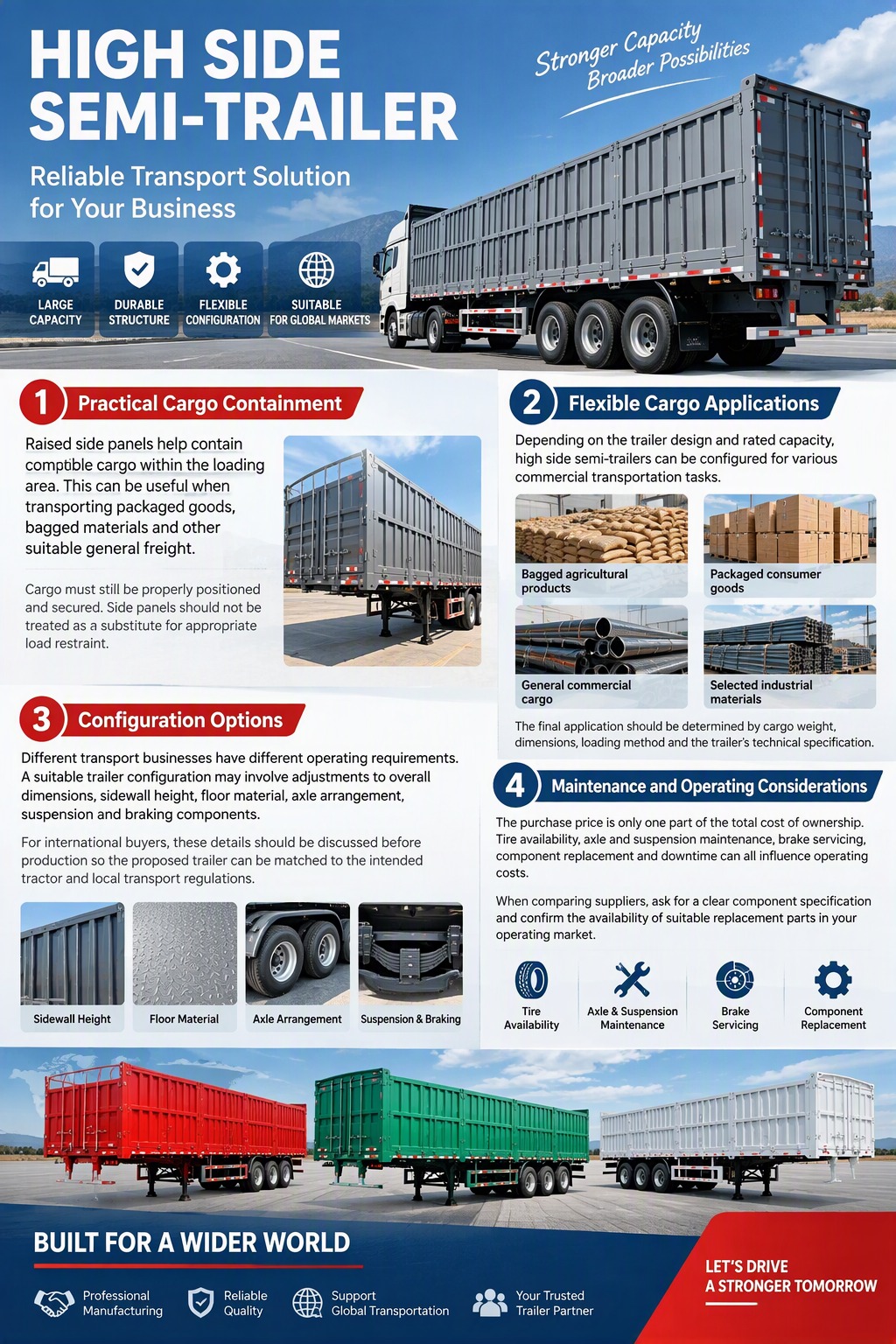
Raised side panels help contain compatible cargo within the loading area. This can be useful when transporting packaged goods, bagged materials and other suitable general freight.
Cargo must still be properly positioned and secured. Side panels should not be treated as a substitute for appropriate load restraint.
2. Flexible Cargo Applications
Depending on the trailer design and rated capacity, high side semi-trailers can be configured for various commercial transportation tasks.
Potential applications include:
-
Bagged agricultural products
-
Packaged consumer goods
-
General commercial cargo
-
Selected industrial materials
-
Other compatible freight
The final application should be determined by cargo weight, dimensions, loading method and the trailer's technical specification.
3. Configuration Options
Different transport businesses have different operating requirements. A suitable trailer configuration may involve adjustments to overall dimensions, sidewall height, floor material, axle arrangement, suspension and braking components.
For international buyers, these details should be discussed before production so the proposed trailer can be matched to the intended tractor and local transport regulations.
4. Maintenance and Operating Considerations
The purchase price is only one part of the total cost of ownership. Tire availability, axle and suspension maintenance, brake servicing, component replacement and downtime can all influence operating costs.
When comparing suppliers, ask for a clear component specification and confirm the availability of suitable replacement parts in your operating market.
How to Choose the Right High Side Trailer
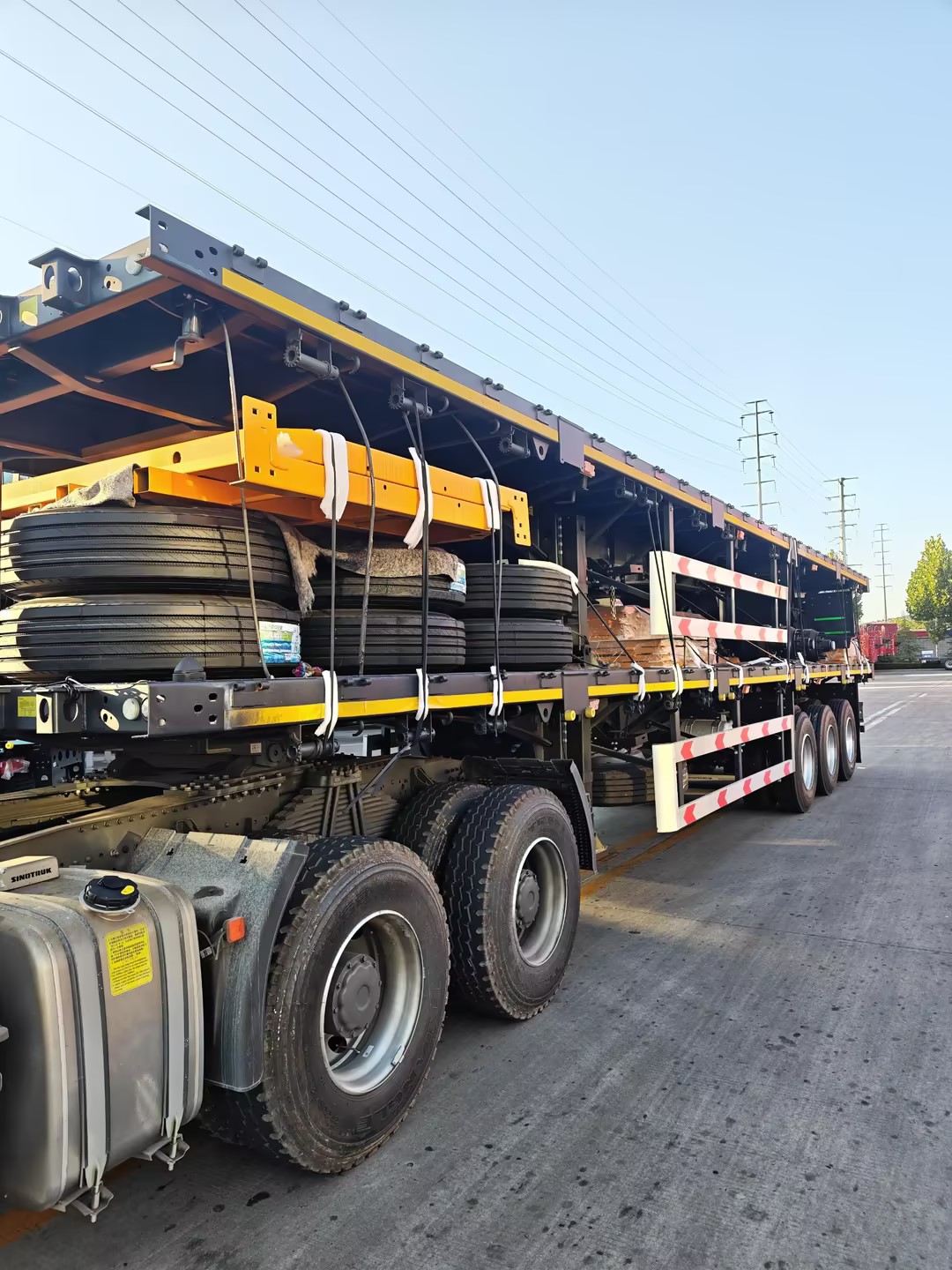
Determine the Cargo Type
Start by identifying the goods you transport most frequently. Cargo dimensions, packaging, density and loading method influence the required body design.
For example, bagged materials may require a different loading arrangement from palletized goods. Loose bulk materials may require a different body structure altogether.
Confirm the Sidewall Height
The sidewall should suit the cargo and loading process. Higher side panels do not automatically mean greater payload capacity.
Consider the usable loading volume, cargo distribution, overall vehicle height and applicable transport restrictions before selecting the final dimensions.
Evaluate Axle and Suspension Configuration
Axle configuration must be selected according to the intended gross vehicle combination weight, axle-load limits, tractor compatibility and route conditions.
Mechanical suspension and air suspension have different operating and maintenance characteristics. The appropriate choice depends on the transport application, local service capability and customer requirements.
Check the Floor and Main Frame
The floor material and main frame design should match the expected cargo weight and loading method.
Buyers who regularly use forklifts or handle concentrated loads should discuss the required floor strength and structural design with the manufacturer rather than relying on general product descriptions.
Verify Braking and Road Compliance
Before importing a semi-trailer, confirm the applicable requirements for dimensions, axle loads, braking equipment, lighting, reflectors and other relevant safety features.
Requirements vary by country and vehicle configuration. Buyers should verify local import and road-use regulations before confirming the order.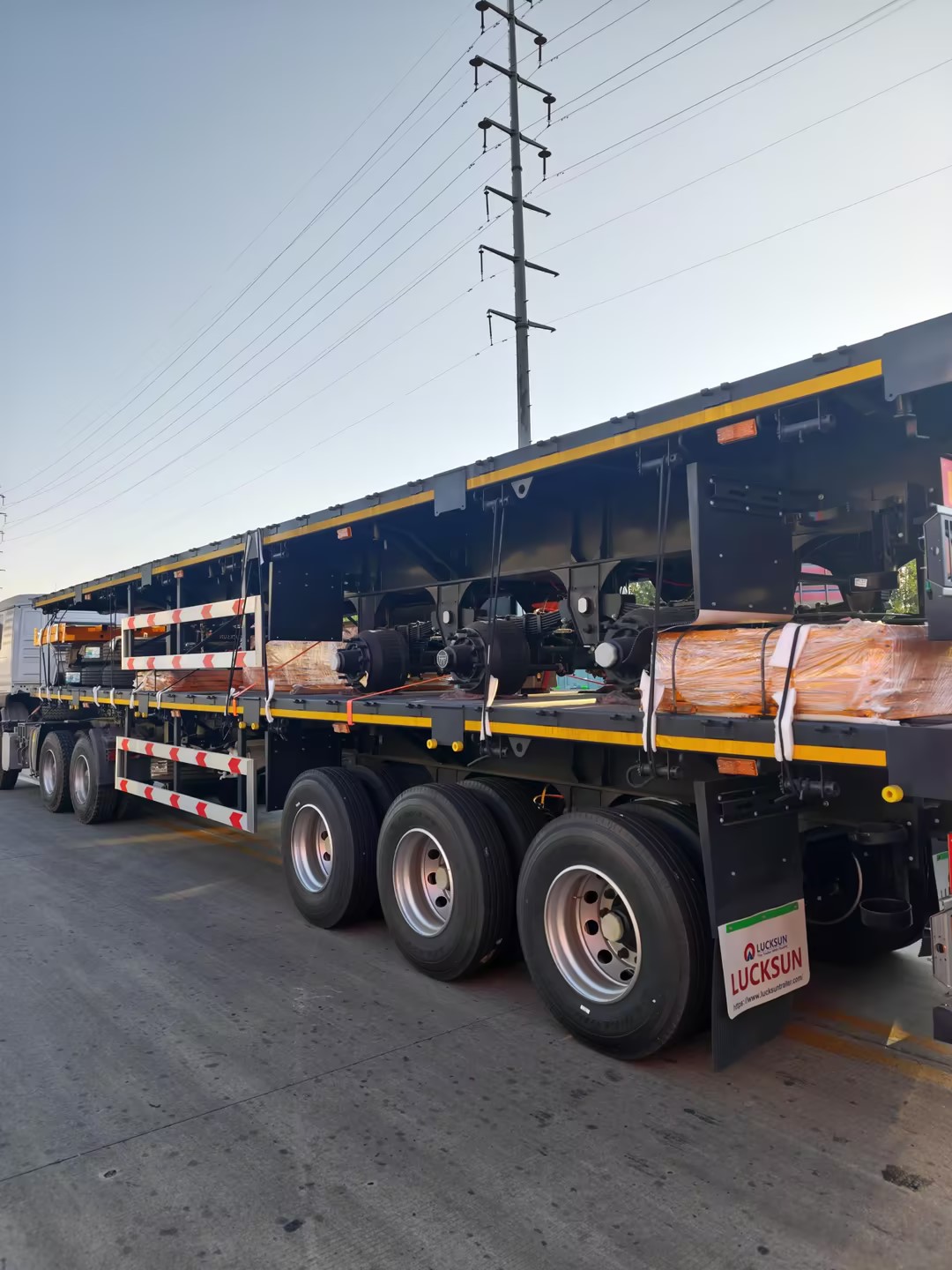
High Side Semi-Trailer vs. Curtain Side Trailer
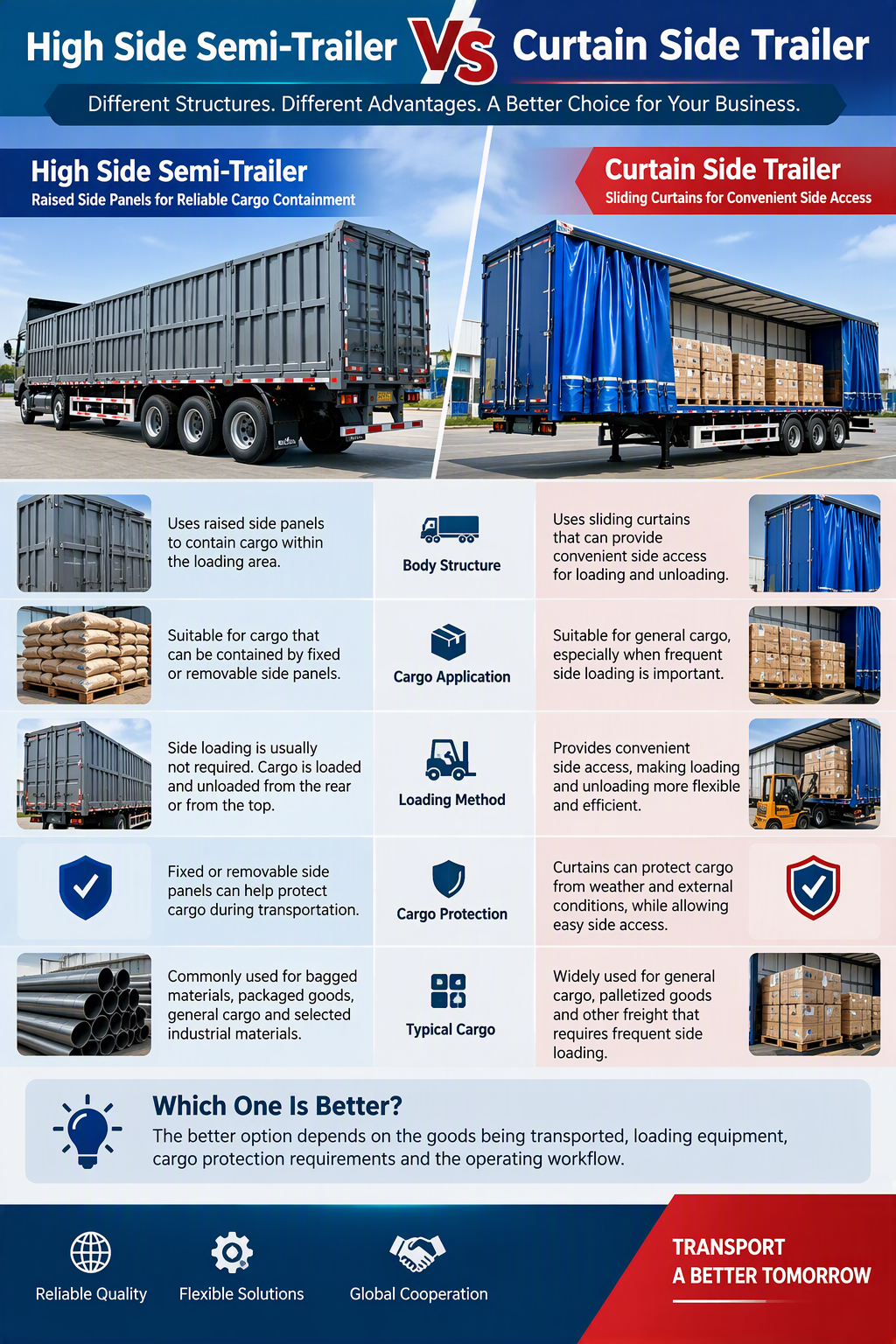
These two trailer types may both be used for general cargo, but their body structures and loading arrangements differ.
A high side semi-trailer uses raised side panels to contain cargo. A curtain side trailer uses sliding curtains that can provide convenient side access for loading and unloading.
A high side design may be suitable when fixed or removable side panels meet the cargo requirements. A curtain side design may be more appropriate when frequent side loading is important.
The better option depends on the goods being transported, loading equipment, cargo protection requirements and the operating workflow.
What Should Buyers Confirm Before Ordering?
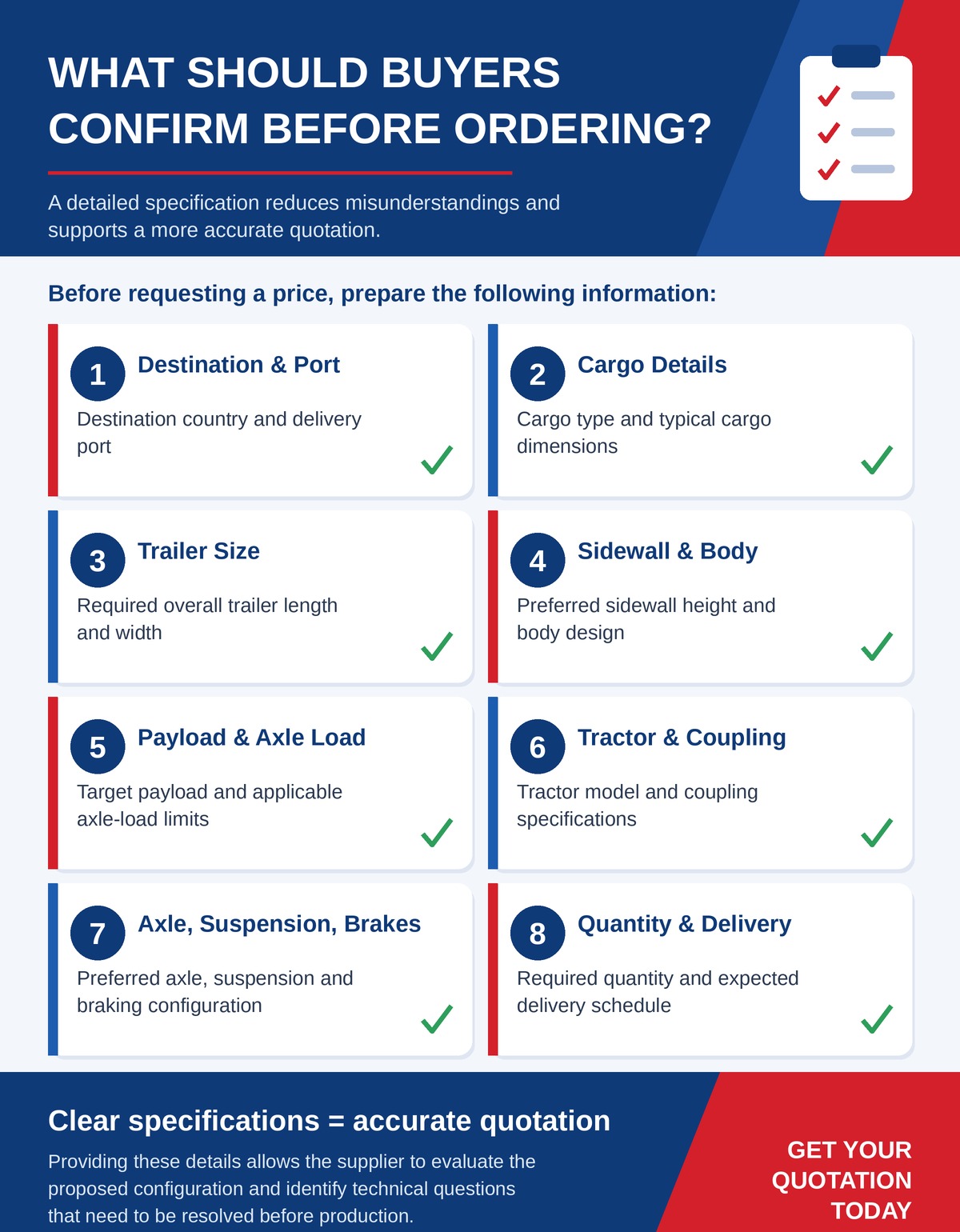
For international procurement, a detailed specification helps reduce misunderstandings and supports a more accurate quotation
Before requesting a price, prepare the following information:
-
Destination country and delivery port
-
Cargo type and typical cargo dimensions
-
Required overall trailer length and width
-
Preferred sidewall height and body design
-
Target payload and applicable axle-load limits
-
Tractor model and coupling specifications
-
Preferred axle, suspension and braking configuration
-
Required quantity and expected delivery schedule
Providing these details allows the supplier to evaluate the proposed configuration and identify technical questions that need to be resolved before production.
Finding the Right Semi-Trailer Supplier
A reliable purchasing process should include more than a product photograph and a headline price.
Request a detailed technical specification, confirm the included components, review the proposed dimensions and clarify which items are standard and which are optional.
For export orders, also discuss production lead time, inspection arrangements, export documentation, packaging requirements and shipping plans.
These steps help buyers compare quotations on a consistent basis and make decisions based on the actual product configuration.
Request a High Side Semi-Trailer Quotation
Looking for a high side semi-trailer for your transport business?
Share your destination market, cargo type, required dimensions and estimated order quantity. We can discuss suitable configuration options for your application and prepare a quotation based on your requirements.
Contact us to request technical specifications, configuration details and export pricing.
The right trailer begins with the right specification. By evaluating cargo requirements, road conditions, maintenance considerations and local regulations, buyers can make a more informed investment in their transportation operations.