
Container on Chassis Trailer for Efficient Shipping Container Transportation
Container on Chassis Trailer for Efficient Shipping Container Transportation
Reliable Container Transport Starts with the Right Chassis
A container on chassis trailer, also known as a container chassis trailer or skeletal semi-trailer, is designed to transport shipping containers between ports, container terminals, warehouses, distribution centers and inland destinations.
For logistics operators, fleet owners and container transport companies, choosing the right chassis is about more than carrying a container. The trailer configuration needs to match container dimensions, cargo weight, road conditions, tractor specifications and local transport regulations.
As a semi-trailer export supplier, we understand that different markets and transport operations require different configurations. Our container chassis solutions can be tailored to your operational requirements, helping you identify a practical setup for your fleet and transportation business.
Looking for a container chassis trailer for your market? Share your container size, required payload, axle configuration and destination country to discuss a suitable specification and quotation.
1. What Is a Container on Chassis Trailer?
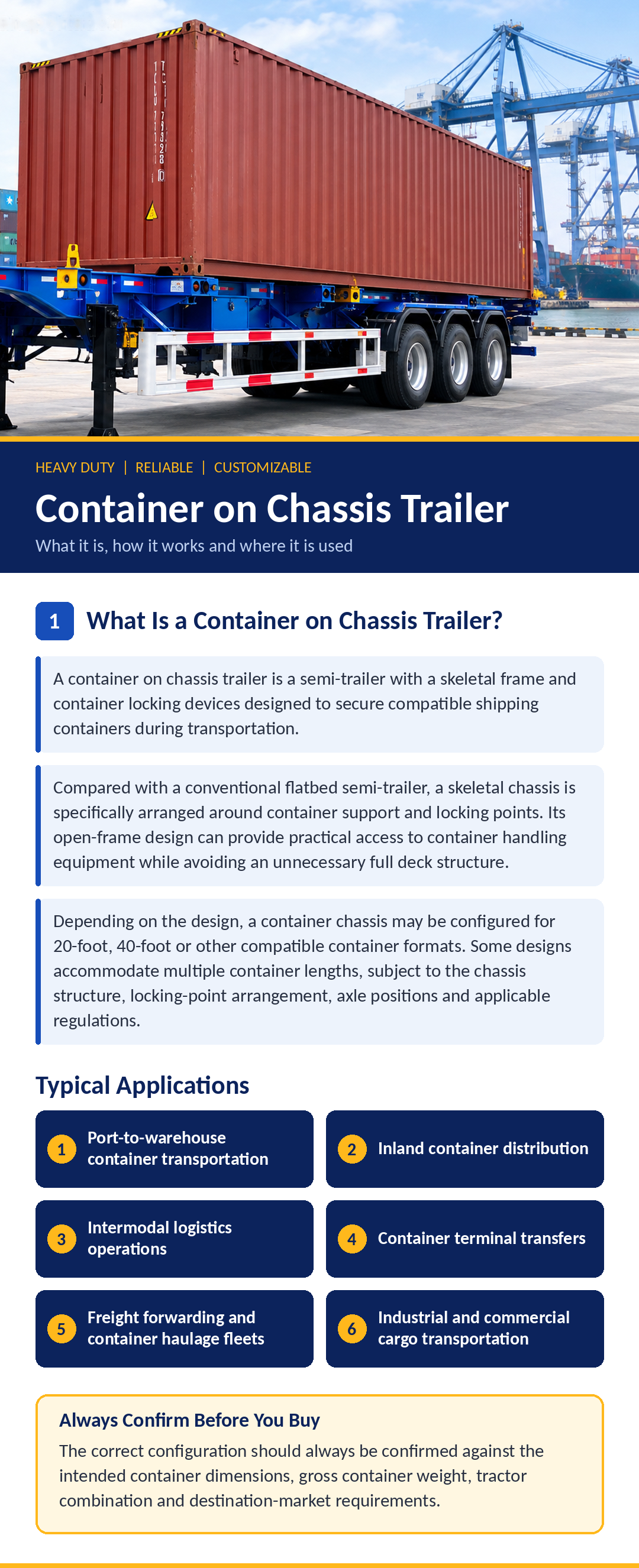
A container on chassis trailer is a semi-trailer with a skeletal frame and container locking devices designed to secure compatible shipping containers during transportation.
Compared with a conventional flatbed semi-trailer, a skeletal chassis is specifically arranged around container support and locking points. Its open-frame design can provide practical access to container handling equipment while avoiding an unnecessary full deck structure.
Depending on the design, a container chassis may be configured for 20-foot, 40-foot or other compatible container formats. Some designs accommodate multiple container lengths, subject to the chassis structure, locking-point arrangement, axle positions and applicable regulations.
Typical applications include:
-
Port-to-warehouse container transportation
-
Inland container distribution
-
Intermodal logistics operations
-
Container terminal transfers
-
Freight forwarding and container haulage fleets
-
Industrial and commercial cargo transportation
The correct configuration should always be confirmed against the intended container dimensions, gross container weight, tractor combination and destination-market requirements.
2. Key Features of a Container Chassis Trailer
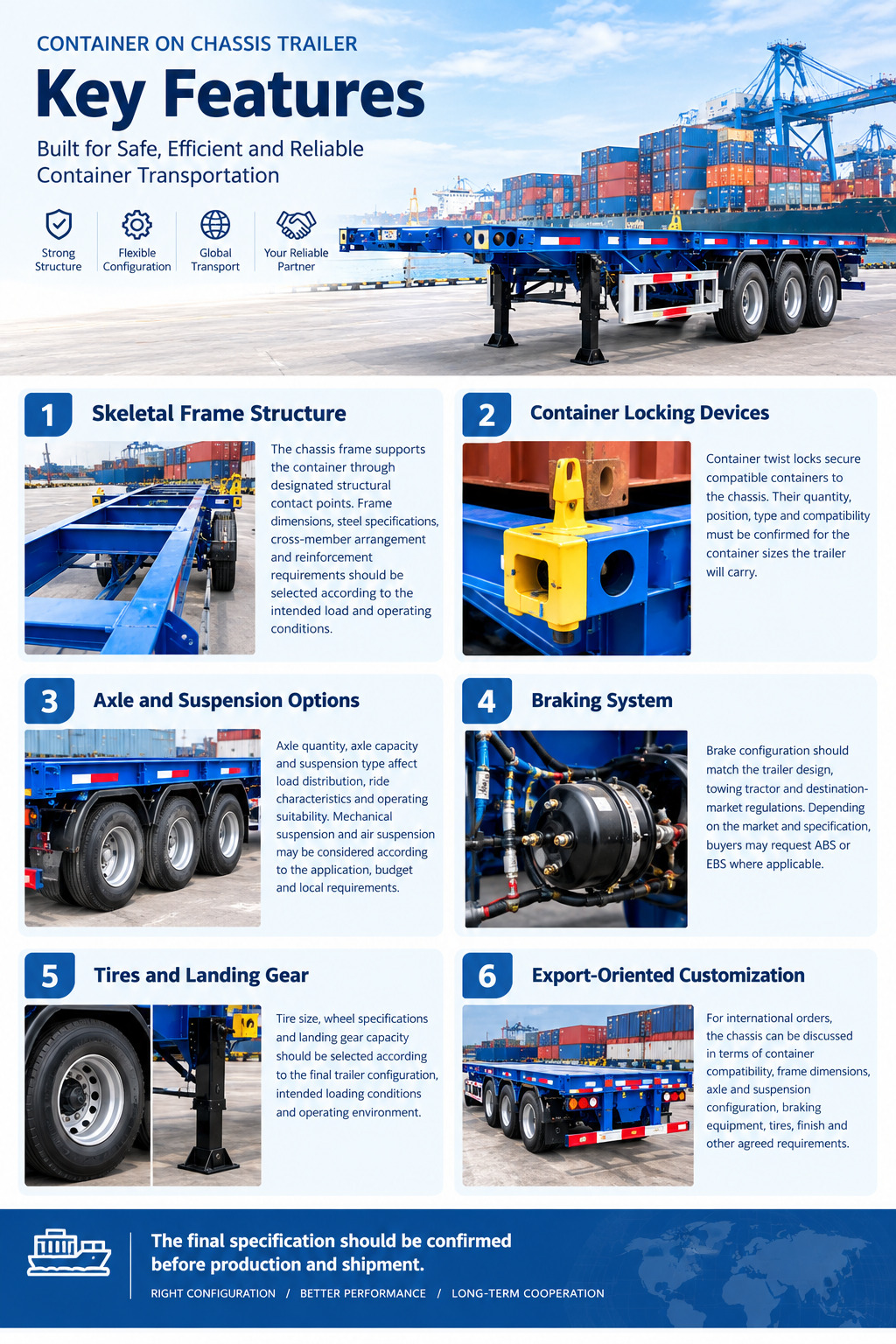
Skeletal Frame Structure
The chassis frame supports the container through designated structural contact points. Frame dimensions, steel specifications, cross-member arrangement and reinforcement requirements should be selected according to the intended load and operating conditions.
Container Locking Devices
Container twist locks secure compatible containers to the chassis. Their quantity, position, type and compatibility must be confirmed for the container sizes the trailer will carry.
Axle and Suspension Options
Axle quantity, axle capacity and suspension type affect load distribution, ride characteristics and operating suitability. Mechanical suspension and air suspension may be considered according to the application, budget and local requirements.
Braking System
Brake configuration should match the trailer design, towing tractor and destination-market regulations. Depending on the market and specification, buyers may request ABS or EBS where applicable.
Tires and Landing Gear
Tire size, wheel specifications and landing gear capacity should be selected according to the final trailer configuration, intended loading conditions and operating environment.
Export-Oriented Customization
For international orders, the chassis can be discussed in terms of container compatibility, frame dimensions, axle and suspension configuration, braking equipment, tires, finish and other agreed requirements.
The final specification should be confirmed before production and shipment.
3. How to Choose the Right Container Chassis Trailer
Selecting the correct chassis at the beginning can help reduce configuration mismatches and improve fleet planning.
Step 1: Confirm Container Size
Identify whether your operation requires 20-foot, 40-foot or other container configurations. If one trailer must accommodate multiple container sizes, confirm the required locking positions and permitted operating combinations.
Step 2: Define the Required Payload
Specify the expected cargo weight and maximum gross container weight. The selection should account for the trailer's own weight, axle load distribution, tractor capacity and applicable road-weight limits.
Do not select a trailer based on payload alone. The complete vehicle combination must comply with the relevant regulations.
Step 3: Select the Axle Configuration
The appropriate axle arrangement depends on load requirements, route conditions, vehicle regulations and the intended tractor combination. Confirm axle capacity and spacing rather than relying only on the number of axles.
Step 4: Consider Road and Operating Conditions
Port operations, highway transportation and challenging regional roads may require different design priorities. Discuss road conditions, operating frequency, maintenance access and expected service conditions before finalizing the specification.
Step 5: Confirm Braking and Suspension Requirements
Specify the preferred braking system, suspension type, tires and related components. Where the destination market requires particular approvals or technical standards, confirm these requirements before placing the order.
Step 6: Request a Complete Export Quotation
For an accurate quotation, provide the destination country, quantity, required configuration and preferred trade terms. If shipping costs are needed, also confirm the destination port and requested Incoterm.
A clear specification makes it easier to compare quotations on an equivalent basis.
4. Custom Container Chassis Trailer Solutions
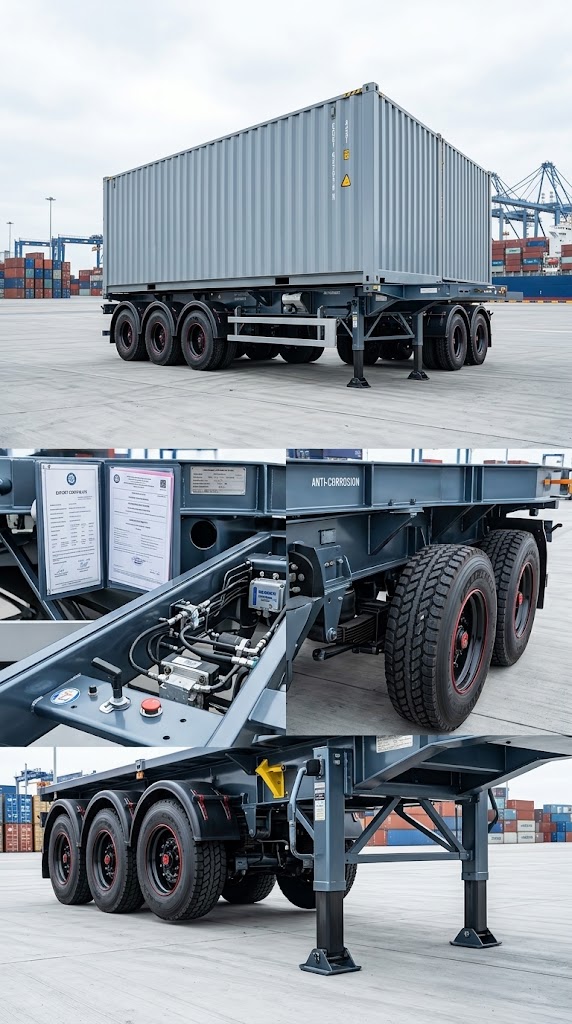
Different container transport businesses operate under different conditions. A suitable chassis configuration should reflect the actual transport task instead of relying on a standard specification that may not fit every fleet.
Customization discussions may cover:
-
Container compatibility: 20ft, 40ft or other specified container formats
-
Chassis structure: Frame dimensions, cross-member arrangement and reinforcement
-
Axle system: Axle quantity, rated capacity and brand requirements
-
Suspension: Mechanical or air suspension, subject to design compatibility
-
Braking equipment: Brake system and market-specific requirements
-
Wheels and tires: Tire size, rim specifications and preferred brands
-
Landing gear: Capacity and configuration
-
Surface finish: Painting and corrosion-protection requirements
-
Export specifications: Required documents, standards and agreed inspection arrangements
All options are subject to engineering confirmation and the final order specification.
5. Why Work with an Export-Focused Semi-Trailer Supplier?
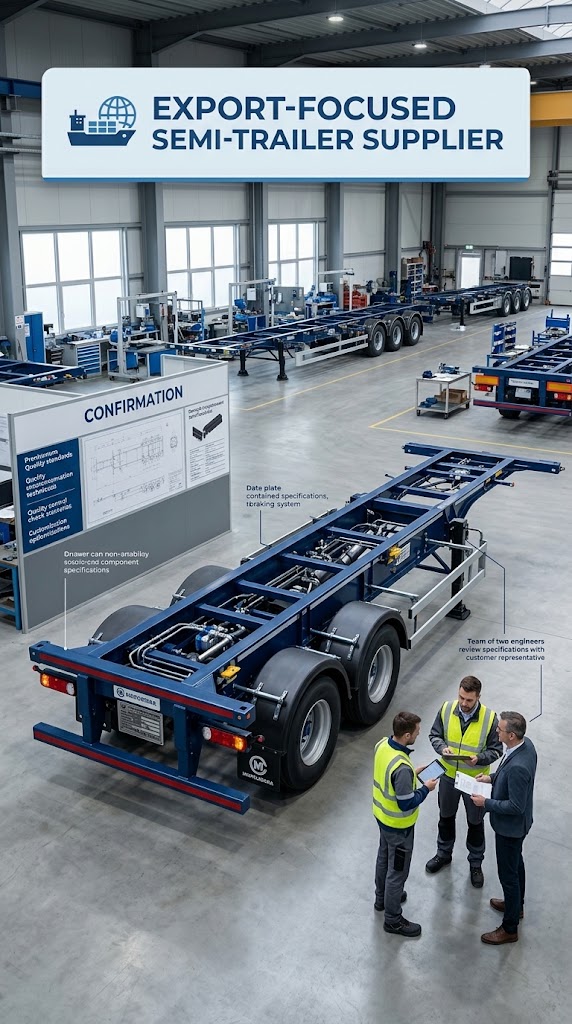
International trailer procurement involves more than selecting a product and comparing prices. Buyers also need clear specifications, consistent communication, agreed delivery terms and a configuration that matches their operating market.
Our export-focused supply service covers container chassis trailers and related semi-trailer products and components.
What buyers can discuss with us:
-
Factory-direct supply options
-
Configuration based on actual operating requirements
-
Container chassis and related trailer component sourcing
-
Specification confirmation before order placement
-
Quotation support for international procurement
-
Long-term cooperation for repeat orders and fleet requirements
Rather than recommending unnecessary options, we aim to clarify the required configuration first so that the quotation reflects the buyer's actual needs.
6. Container Chassis Trailer Specifications
The following table lists the main parameters to confirm when requesting a quotation. Final values depend on the selected model and approved design.
| Specification | Details to Confirm |
|---|---|
| Product type | Container chassis / skeletal semi-trailer |
| Compatible container size | 20ft / 40ft / other specified format |
| Payload requirement | Buyer to specify |
| Overall dimensions | Confirm according to final design |
| Axle configuration | Quantity, capacity and arrangement |
| Suspension | Mechanical / air / other agreed option |
| Braking system | Configuration suitable for the target market |
| Tires and rims | Size, quantity and brand requirements |
| Container locks | Type, quantity and compatible positions |
| Landing gear | Capacity and configuration |
| Finish | Painting and agreed corrosion protection |
| Destination market | Buyer to specify |
| Order quantity | Buyer to specify |
| Trade terms | EXW / FOB / CIF / other agreed terms |
Important: This is a quotation-planning table, not a certified technical datasheet. Confirm all dimensions, weight ratings, equipment and compliance requirements for the specific model before purchase.
7. Frequently Asked Questions
What is the difference between a container chassis trailer and a flatbed trailer?
A container chassis trailer uses a skeletal frame with designated container locking points. A flatbed trailer has a more continuous deck and may support a wider range of cargo types, depending on its design. The better choice depends on the cargo and handling requirements.
Can one chassis carry both 20ft and 40ft containers?
Some chassis designs support both lengths through compatible locking-point arrangements. Compatibility depends on the specific design, container positioning, load distribution and applicable regulations. Confirm the required configuration before ordering.
Can I customize the container chassis for my country?
Customization can be discussed based on your destination market, container sizes, load requirements, tractor specifications and applicable regulations. Any required certification or compliance documentation should be confirmed before production.
What information is needed for a quotation?
Please provide your destination country, container size, required payload, axle configuration, preferred components, order quantity and delivery terms. If some details are not yet available, share your basic requirements first and confirm the remaining parameters during the quotation process.
Can I order container chassis trailers and spare parts together?
Related components and spare parts can be discussed as part of the procurement plan. Please provide the required component list or product photographs so that compatibility and availability can be checked.
How can I compare container chassis quotations fairly?
Compare the same container compatibility, rated capacities, axle and suspension specifications, braking equipment, tires, included accessories, compliance requirements, delivery terms and warranty conditions. A lower initial price does not necessarily mean a lower total operating cost.
8. Request a Container Chassis Trailer Quotation
Planning to purchase a container on chassis trailer for your logistics fleet, container transport business or distribution operation?
Send us your requirements to start a configuration discussion.
For a faster quotation, please include:
-
Destination country
-
Container size: 20ft, 40ft or other
-
Required payload or gross container weight
-
Preferred axle configuration
-
Suspension and braking requirements
-
Order quantity
-
Destination port and requested trade terms, if applicable
If you are still comparing options, you can also send your current trailer specification or a reference photograph.
We will use the information provided to discuss a suitable configuration and prepare a quotation based on the confirmed requirements.
Choosing the Right Container Chassis Means Thinking Beyond the Price
In my experience, choosing a container chassis trailer is never just about finding a good price. What matters more is whether the trailer truly fits the buyer’s daily work.
I believe every detail deserves attention. The frame must match the intended load, the twist locks must fit the containers, and the axles, suspension and braking system must suit the operating conditions. These may seem like small decisions during purchasing, but they can make a real difference over years of use.
When working with customers from different countries, I also realize that there is no single configuration that works for everyone. Road conditions, transportation needs and local regulations vary. That is why I prefer to understand a customer’s actual requirements before discussing a quotation.
For me, a good export business is not simply about completing an order. It is about helping customers make informed decisions, delivering what has been agreed, and building trust through every step of the cooperation.
A trailer may be purchased once, but the relationship behind that purchase can last for years. That is the kind of long-term partnership I want to build with every customer.
Contact us today to discuss your container chassis trailer requirements and explore options for long-term cooperation.