
Low Bed Semi Trailer Manufacturing: Gooseneck Structure, Steel Frame and Deck Fabrication
Low Bed Semi Trailer Manufacturing: Gooseneck Structure, Steel Frame and Deck Fabrication
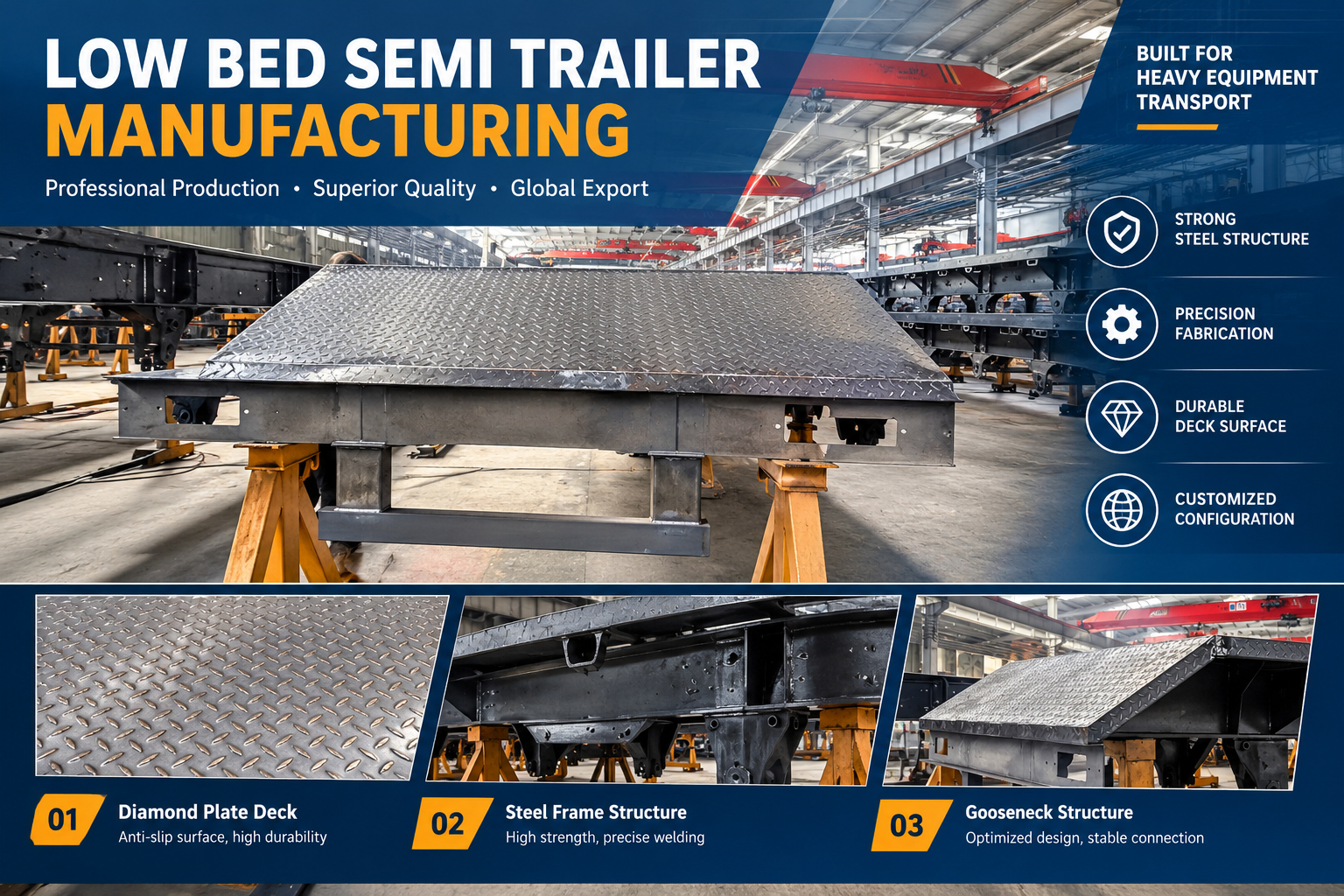
When selecting a low bed semi trailer for heavy equipment transportation, buyers should look beyond the finished vehicle. The quality of structural components, fabrication processes, assembly accuracy and deck design all deserve careful attention.
These workshop photos show steel trailer components during fabrication, including heavy structural members and diamond plate surfaces. The components appear consistent with parts used in a low bed trailer or a specialized heavy-duty trailer structure. Their exact application should be confirmed against the manufacturer's engineering drawings.
For international buyers, understanding these manufacturing details helps make technical discussions more productive before placing an order.
A welded steel trailer frame sits in a factory workshop. It shows the cross-members, reinforced gooseneck-area structure and precision-cut openings. More frames are visible in the background under overhead cranes, with workers at the production line.
1. Steel Frame Fabrication
The trailer frame is a key structural assembly that supports the intended cargo and transfers loads through the chassis to the running gear.
Workers use an overhead crane to lower a diamond plate deck onto a low bed semi trailer frame. The steel frame has precision-cut cross members and a reinforced gooseneck structure. More trailer frames are visible in the background of the workshop.
During manufacturing, important considerations include steel grade, section dimensions, member alignment, weld quality and the positioning of structural connections.
For heavy-duty transport applications, the frame design should be matched to the intended payload, load distribution, axle configuration and operating conditions.
Buyers should request the relevant technical drawings and confirm the design load, material specifications and inspection procedures for the proposed trailer.
2. Gooseneck Structure and Front Section Design
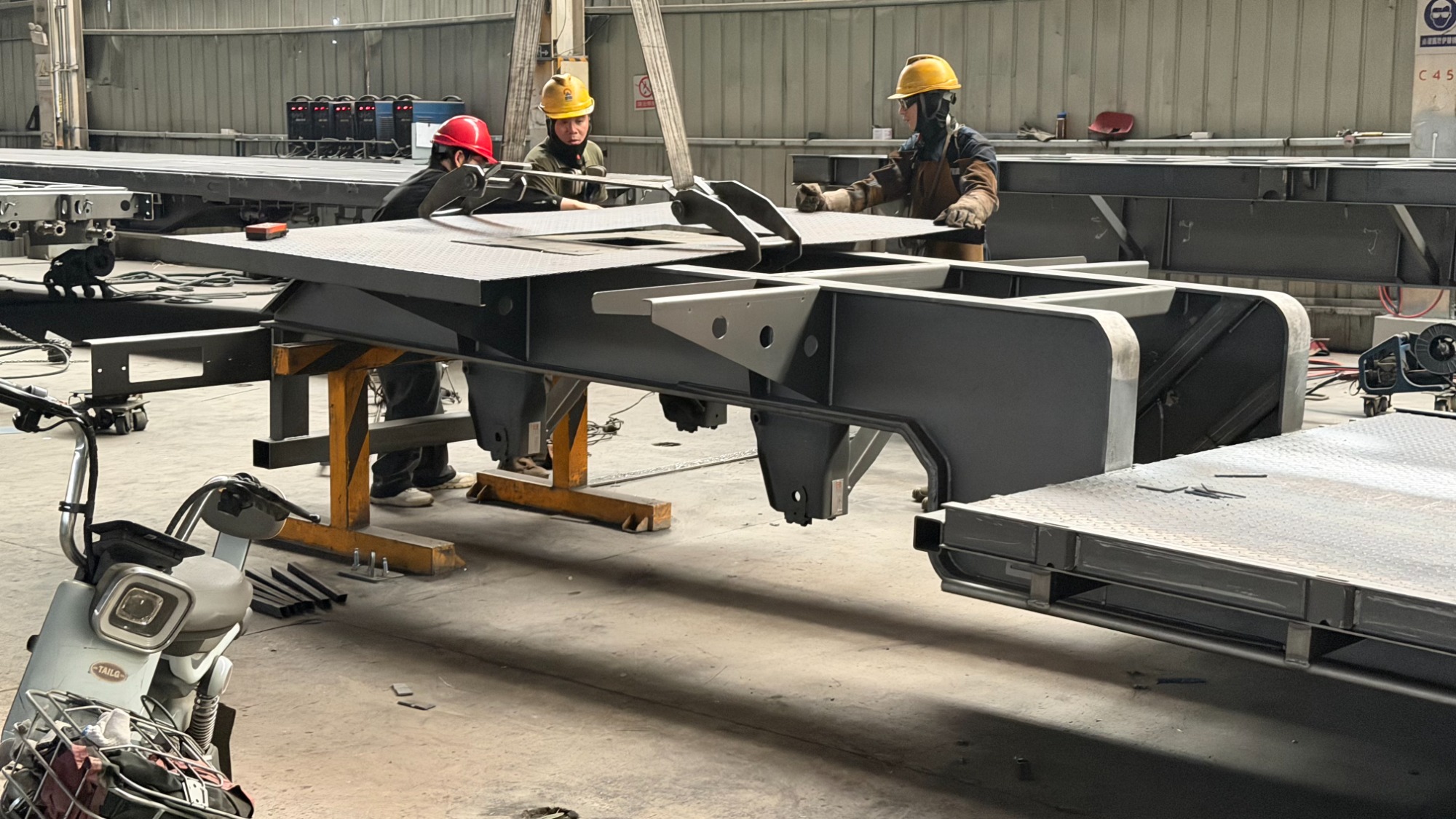
The sloped steel structure shown in the workshop photos may form part of a gooseneck or front deck assembly. The precise function depends on the complete trailer design.
For a low bed semi trailer, the front connection geometry, deck height, kingpin position and load distribution must work together with the tractor unit and the remaining trailer structure.
When evaluating a proposed configuration, buyers should confirm:
-
Compatibility with the towing tractor and fifth wheel
-
Overall and deck dimensions
-
Loaded height and available ground clearance
-
Intended payload and load distribution
-
Whether the design uses a detachable or fixed gooseneck
These details are especially important when transporting excavators, bulldozers, wheel loaders and other heavy equipment.
3. Diamond Plate Deck Fabrication
The photographs also show a raised-pattern steel plate surface. Diamond plate is commonly used in selected trailer deck and structural applications where a durable surface is required.
Its suitability depends on the plate material, thickness, supporting structure, attachment method and intended loading conditions.
For equipment transport, the deck must be evaluated together with loading ramps, wheel or track contact areas, cargo securing points and the expected concentrated loads.
A textured surface alone does not establish the trailer's load capacity or guarantee slip resistance under every operating condition. These properties should be assessed against the final design and intended use.
4. Structural Assembly and Fabrication Quality
Trailer components must be assembled according to the approved engineering drawings and production requirements.
Key inspection points may include:
-
Dimensional accuracy and component alignment
-
Weld appearance and required weld inspections
-
Structural connection positioning
-
Deck flatness and assembly fit
-
Surface preparation and corrosion protection
-
Verification of critical dimensions before final assembly
The inspection method and acceptance criteria should be appropriate for the component and the manufacturer's quality-control procedures.
5. Custom Low Bed Semi Trailers for Export Markets
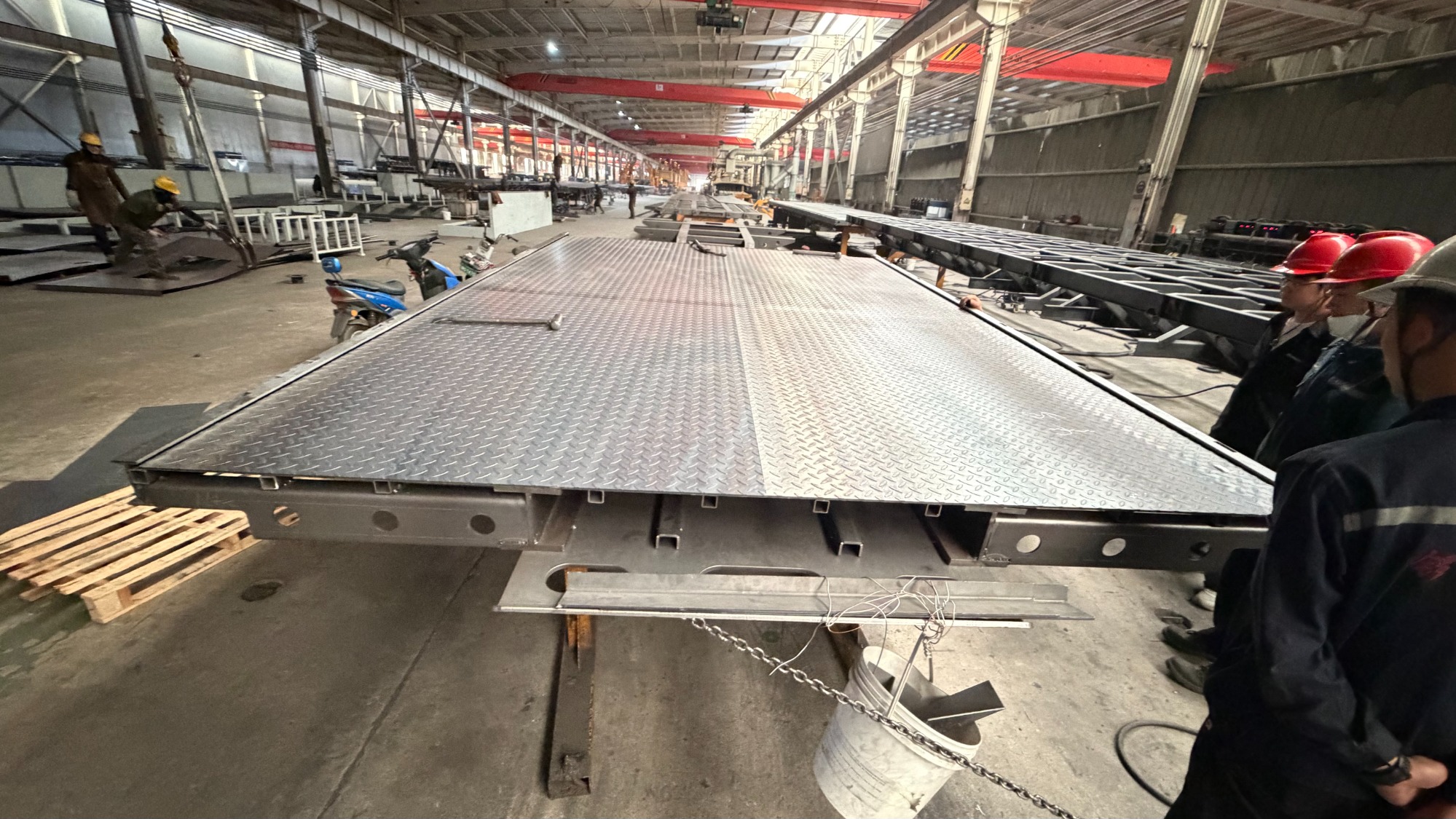
Heavy equipment transport requirements differ by destination country, equipment type, road conditions and local regulations. A suitable trailer configuration should therefore be selected according to the actual application.
Customization discussions may cover overall dimensions, deck height, axle ratings, suspension type, tire specifications, braking equipment, ramp design and gooseneck arrangement where applicable.
For export orders, buyers should also confirm vehicle dimensions, permitted axle loads, tractor compatibility, required documentation and destination-market compliance before production begins.
What Should Buyers Confirm Before Ordering?
Before requesting a final quotation, prepare the following information:
-
The type and operating weight of the equipment to be transported.
-
Required deck dimensions and loading height.
-
Preferred axle configuration and suspension type.
-
Towing tractor specifications and fifth wheel compatibility.
-
Destination country and applicable road regulations.
-
Required accessories, delivery terms and order quantity.
Providing these details allows the manufacturer to evaluate the appropriate configuration instead of quoting a trailer based on incomplete assumptions.
Discuss Your Low Bed Semi Trailer Requirements
Looking for a low bed semi trailer for heavy machinery or construction equipment transportation?
Share your destination country, equipment model, transport weight, preferred deck dimensions and estimated order quantity. We can discuss the required configuration, technical specifications and export quotation based on your application.
Request a Configuration Proposal
The right trailer starts with the right engineering information. Contact us to discuss your heavy equipment transport requirements and identify the specifications that need to be confirmed before ordering.