
Semi Trailer Manufacturing Process: Inside the Production Workshop
A reliable semi trailer starts with a well-designed structure and careful manufacturing.
For international buyers, understanding how a semi trailer is assembled can provide useful insight into its construction, durability, and suitability for different transportation tasks.
In this video, we take a closer look at semi trailer production inside the workshop, highlighting the trailer structure and assembly details.
Semi trailer frame assembly and structural components inside a production workshop
Semi Trailer Manufacturing Process | Frame Assembly & Production Details
1. Inside the Semi Trailer Production Workshop
Semi trailer manufacturing involves multiple stages, from structural fabrication to component assembly.
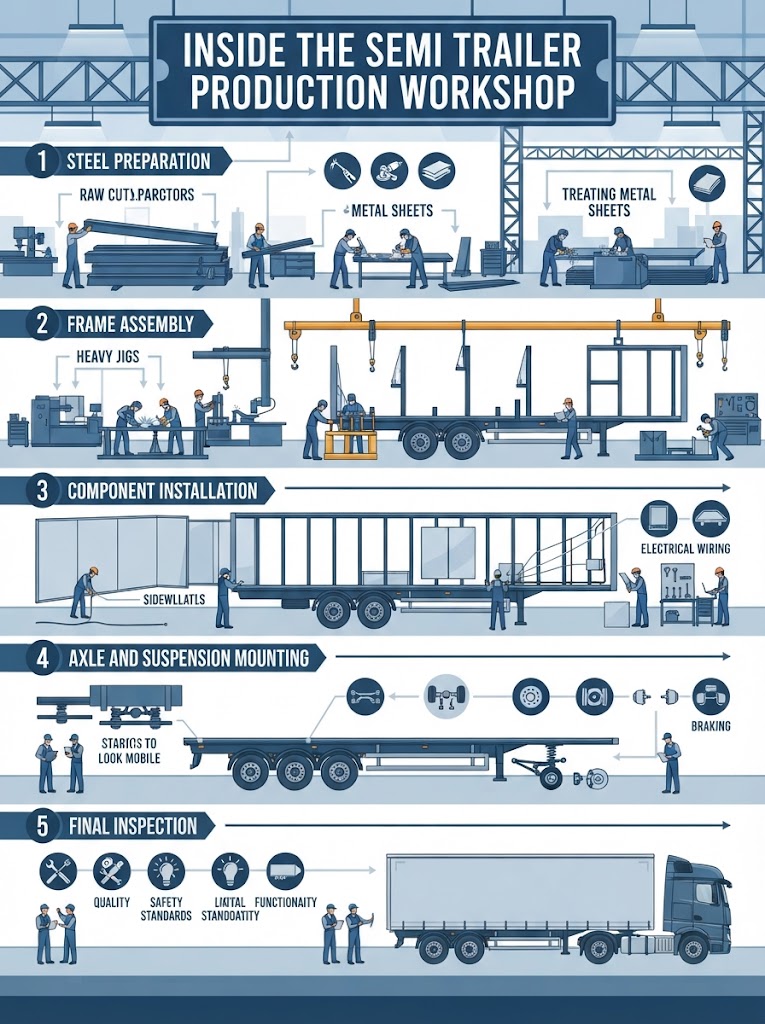
Each stage contributes to the finished trailer's performance and service life
The production process may include:
-
Steel preparation and structural fabrication
-
Main frame and cross-member assembly
-
Installation of side structures and supporting components
-
Axle, suspension, and braking system installation
-
Final inspection and preparation for delivery
The exact process varies depending on the trailer type, design, and technical requirements.
2. Why Does the Trailer Frame Matter?
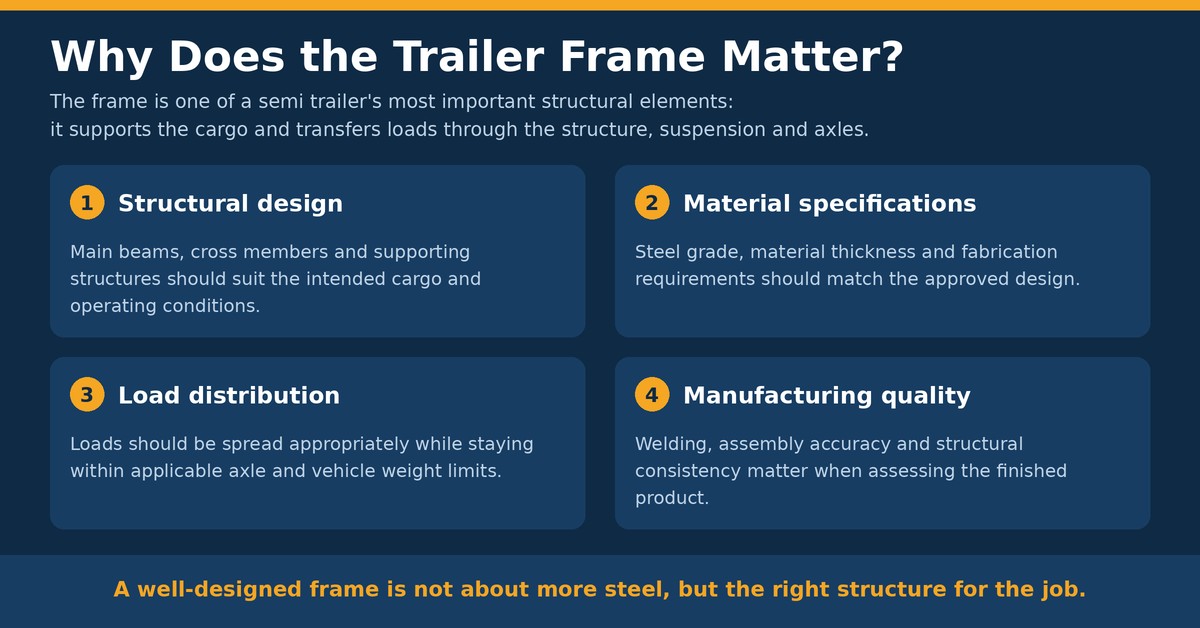
The frame is one of the most important structural elements of a semi trailer.
It supports the cargo and transfers loads through the trailer structure, suspension, and axle system.
When evaluating a trailer, buyers should consider the following factors:
Structural design
The main beams, cross members, and supporting structures should be designed for the intended cargo and operating conditions.
Material specifications
Steel grade, material thickness, and fabrication requirements should match the approved design.
Load distribution
The trailer configuration should distribute loads appropriately while remaining within the applicable axle and vehicle weight limits.
Manufacturing quality
Welding, assembly accuracy, and structural consistency are important considerations when assessing the finished product.
A well-designed frame is not simply about using more steel. It is about selecting the appropriate structure for the intended application.
Semi trailer manufacturing involves careful structural fabrication and component assembly to meet the requirements of different transportation applications.
3. Semi Trailer Assembly and Component Selection

Beyond the main frame, the performance of a semi trailer depends on the compatibility and quality of its components.
Depending on the model, important components may include:
-
Axles and suspension systems
-
Tires and wheels
-
Landing legs
-
Kingpin and fifth-wheel connection
-
Braking systems, including ABS or EBS where required
-
Side panels, cross members, and supporting structures
The correct configuration depends on the trailer type, payload requirements, tractor compatibility, road conditions, and destination-market regulations.
For overseas buyers, confirming these details before production can help avoid unnecessary changes and purchasing misunderstandings.
4. What Should Buyers Check Before Ordering?
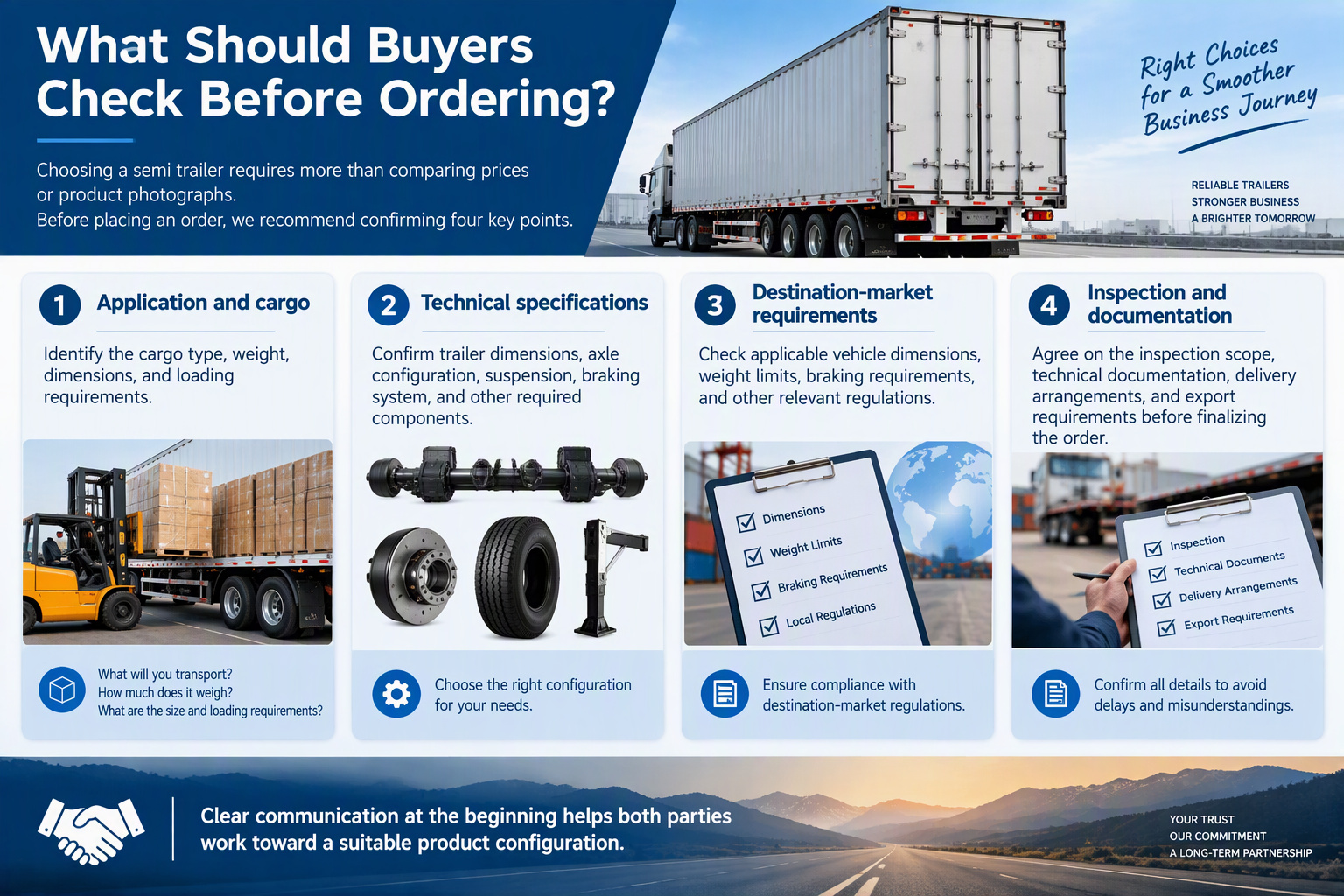
Choosing a semi trailer requires more than comparing prices or product photographs.
Before placing an order, we recommend confirming four key points.
1. Application and cargo
Identify the cargo type, weight, dimensions, and loading requirements.
2. Technical specifications
Confirm trailer dimensions, axle configuration, suspension, braking system, and other required components.
3. Destination-market requirements
Check applicable vehicle dimensions, weight limits, braking requirements, and other relevant regulations.
4. Inspection and documentation
Agree on the inspection scope, technical documentation, delivery arrangements, and export requirements before finalizing the order.
Clear communication at the beginning helps both parties work toward a suitable product configuration.
5. Semi Trailers for International Buyers
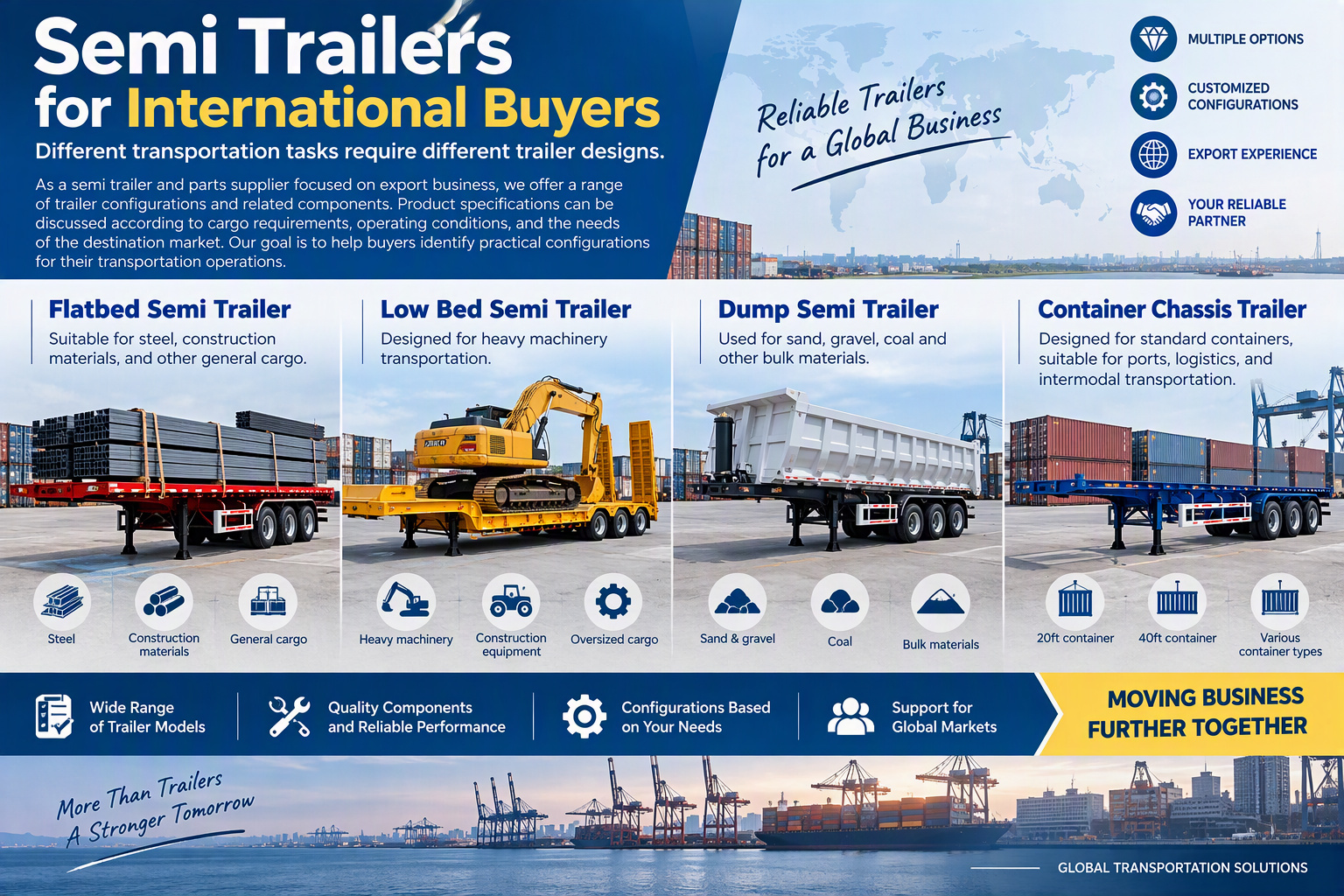
Different transportation tasks require different trailer designs.
A flatbed semi trailer may be suitable for steel and construction materials, while a low bed semi trailer is designed for heavy machinery transportation. Dump semi trailers and container chassis trailers serve other specific applications.
As a semi trailer and parts supplier focused on export business, we offer a range of trailer configurations and related components.
Product specifications can be discussed according to cargo requirements, operating conditions, and the needs of the destination market.
Our goal is to help buyers identify practical configurations for their transportation operations.
Request a Semi Trailer Quotation
Looking for a semi trailer supplier for your next purchase?
Tell us about your project, and we can discuss a suitable configuration based on your requirements.
To help us prepare a more accurate quotation, please provide:
-
Destination country
-
Required trailer type
-
Cargo type and payload
-
Preferred dimensions and axle configuration
-
Component or customization requirements
-
Purchase quantity
Contact us to discuss your semi trailer requirements and request a quotation.