
Tractor Trailer vs Semi Truck: What's the Difference?
If you are searching for commercial trucks or semi trailers, you have probably come across the terms tractor trailer and semi truck. These terms are closely related, but they do not refer to exactly the same thing.
Understanding the difference is important when purchasing transportation equipment, expanding a commercial fleet, or sourcing trailers for international markets.
Tractor Trailer vs Semi Truck: What's the Difference?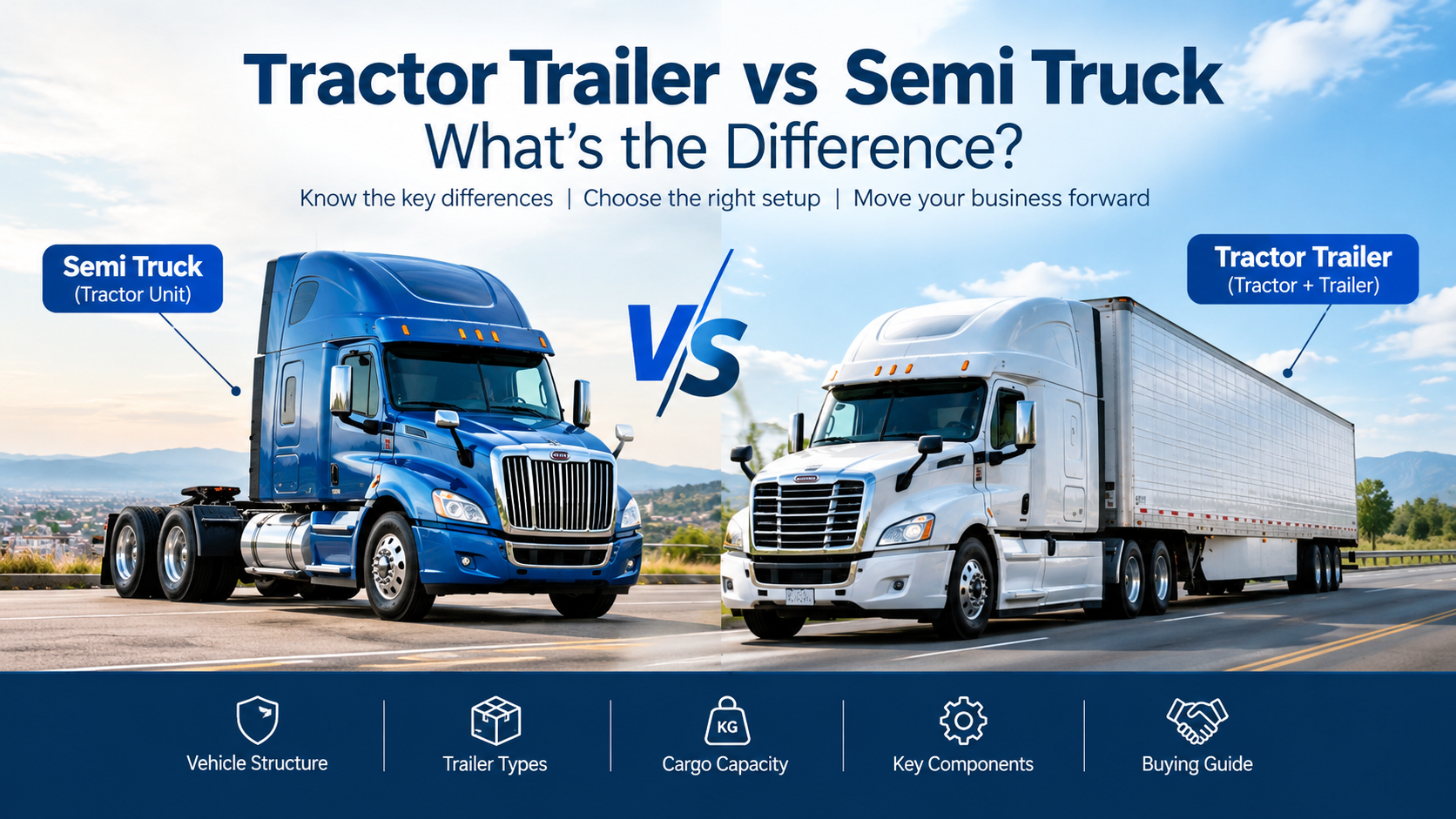
A visual comparison of a semi truck tractor and a complete tractor-trailer combination, highlighting their key structural differences.
In simple terms, a semi truck is the powered vehicle that pulls a trailer, while a tractor trailer usually refers to the complete combination of the truck tractor and the attached semi trailer. However, terminology can vary by region and industry.
For truck dealers, fleet operators, logistics companies, and international buyers, knowing how these components work together makes it easier to select the right equipment.
In this guide, we will explain the differences between a tractor trailer and a semi truck, introduce common semi trailer types, and discuss the key factors to consider before purchasing a trailer.
1. What Is a Semi Truck?
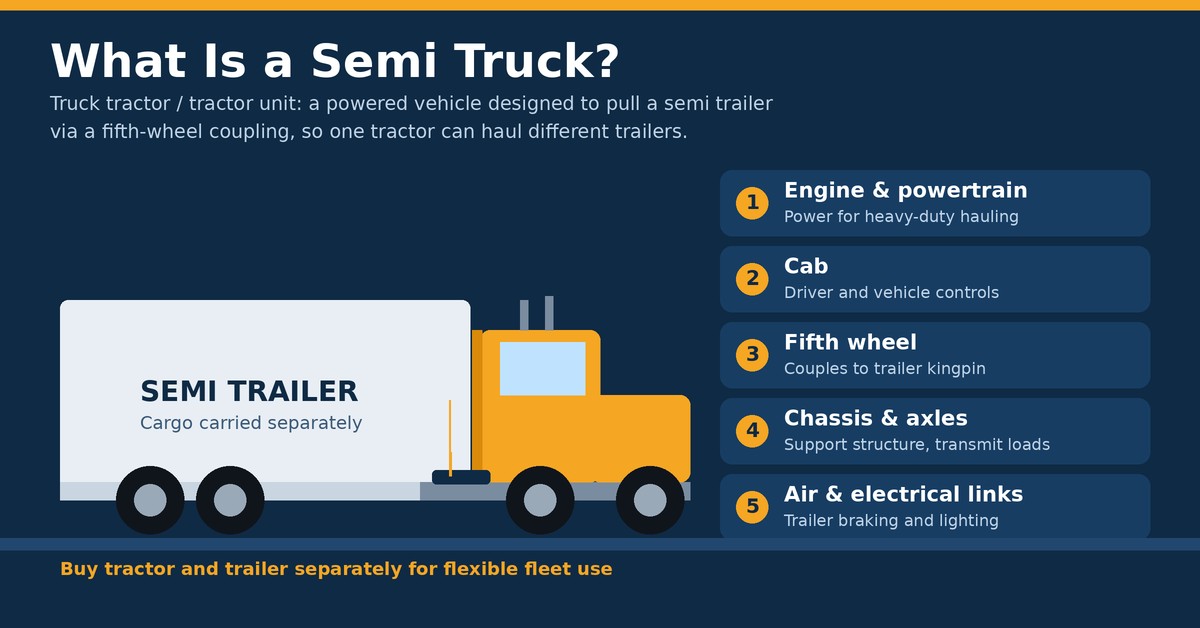
A semi truck pairs a powerful tractor unit with a detachable trailer through a fifth-wheel coupling. One tractor, many trailers: a flexible, efficient way to move any cargo.
A semi truck, also called a truck tractor or tractor unit, is a powered commercial vehicle designed to pull a semi trailer.
Unlike a conventional rigid truck, a truck tractor does not normally carry the entire cargo load on a single fixed chassis. Instead, it connects to a separate semi trailer through a fifth-wheel coupling.
This configuration allows the tractor to pull different trailers according to the cargo and transportation requirements.
Key Features of a Semi Truck
-
Engine and powertrain: Provide the power required for heavy-duty transportation.
-
Cab: Houses the driver and essential vehicle controls.
-
Fifth wheel: Connects the tractor to the semi trailer through its kingpin.
-
Chassis and axles: Support the vehicle structure and transmit loads.
-
Air and electrical connections: Provide the required connections for trailer braking and electrical systems.
The tractor unit and semi trailer work together as a transportation system, but they can often be purchased separately.
For businesses operating different types of cargo services, this flexibility can improve equipment utilization.
2. What Is a Tractor Trailer?
One Tractor. Many Trailers. Built for Freight.
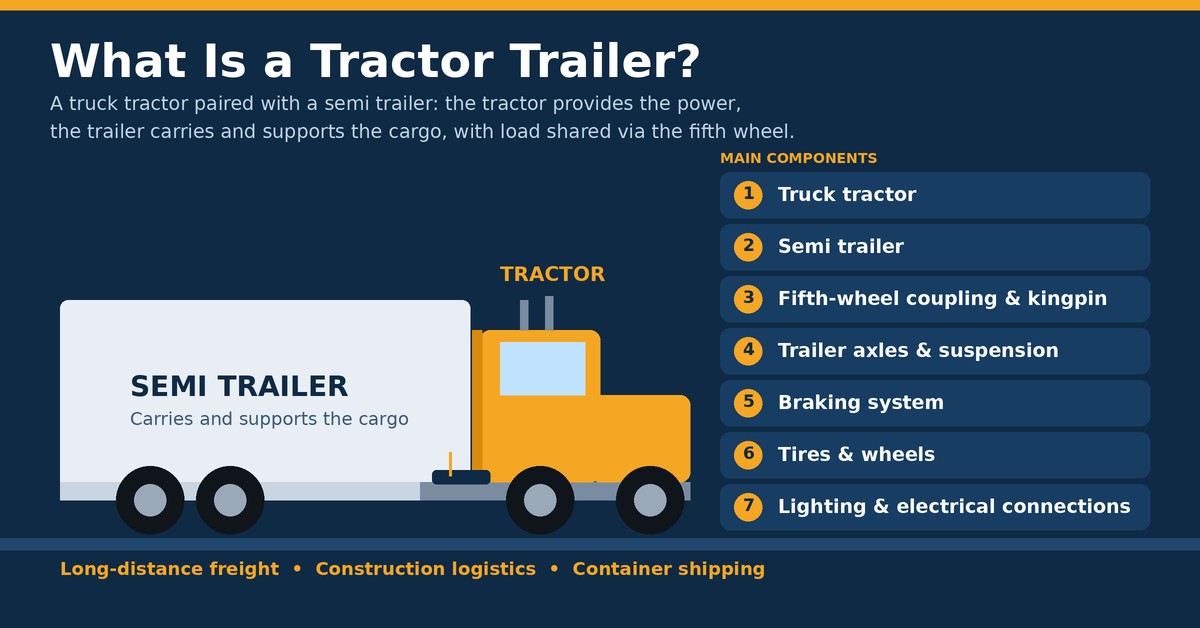
A tractor trailer combines a truck tractor with a semi trailer: the tractor delivers the power, while the trailer carries and supports the cargo. Connected through a fifth-wheel coupling and kingpin, the two share the load according to the configuration and weight regulations. Any compatible trailer can be paired with a suitable tractor, which makes this setup a mainstay of long-distance freight, construction logistics, and container shipping
A tractor trailer generally refers to a combination consisting of a truck tractor and a semi trailer.
The tractor provides the driving power, while the semi trailer carries and supports the cargo.
The trailer's front section rests on the tractor through the fifth wheel, while its own axle group supports the rear portion. This arrangement distributes the load between the tractor and trailer according to the vehicle configuration and applicable weight regulations.
Main Components of a Tractor Trailer
A typical tractor-trailer combination includes:
-
Truck tractor
-
Semi trailer
-
Fifth-wheel coupling and kingpin
-
Trailer axles and suspension
-
Braking system
-
Tires and wheels
-
Lighting and electrical connections
Different semi trailers can be connected to a suitable tractor, provided that the coupling, load ratings, dimensions, braking systems, and other technical requirements are compatible.
This makes the tractor-trailer configuration widely used in long-distance freight transportation, construction logistics, container shipping, and other commercial applications.
3. Tractor Trailer vs Semi Truck: Key Differences
Although the terms are related, the main difference is the part of the vehicle being described.
| Comparison | Semi Truck | Tractor Trailer |
|---|---|---|
| Meaning | Usually refers to the powered truck tractor | Usually refers to the tractor and semi-trailer combination |
| Main function | Provides driving power and pulls the trailer | Transports cargo as a complete vehicle combination |
| Main components | Engine, cab, chassis, fifth wheel, axles | Truck tractor, semi trailer, coupling and associated systems |
| Cargo support | Depends on the tractor configuration; the trailer normally carries most of the cargo | Cargo is supported primarily by the semi trailer |
| Trailer included | Not necessarily | Generally yes |
| Purchasing options | Can be purchased as a tractor unit | Can be purchased as a complete combination or assembled from separate units |
| Common applications | Pulling compatible trailers for different transport tasks | Freight transportation, container delivery, construction and bulk cargo transport |
The key takeaway: A semi truck is the powered unit, while a tractor trailer generally describes the complete combination.
In everyday American English, however, some people use these terms interchangeably. When requesting a quotation, it is best to specify whether you need the truck tractor, the semi trailer, or the complete combination.
4. Common Types of Semi Trailers
The semi trailer is one of the most important parts of a tractor-trailer combination because its structure determines how cargo is loaded, supported, protected, and unloaded.
Choosing the right trailer depends on the cargo, operating conditions, local regulations, and available towing equipment.
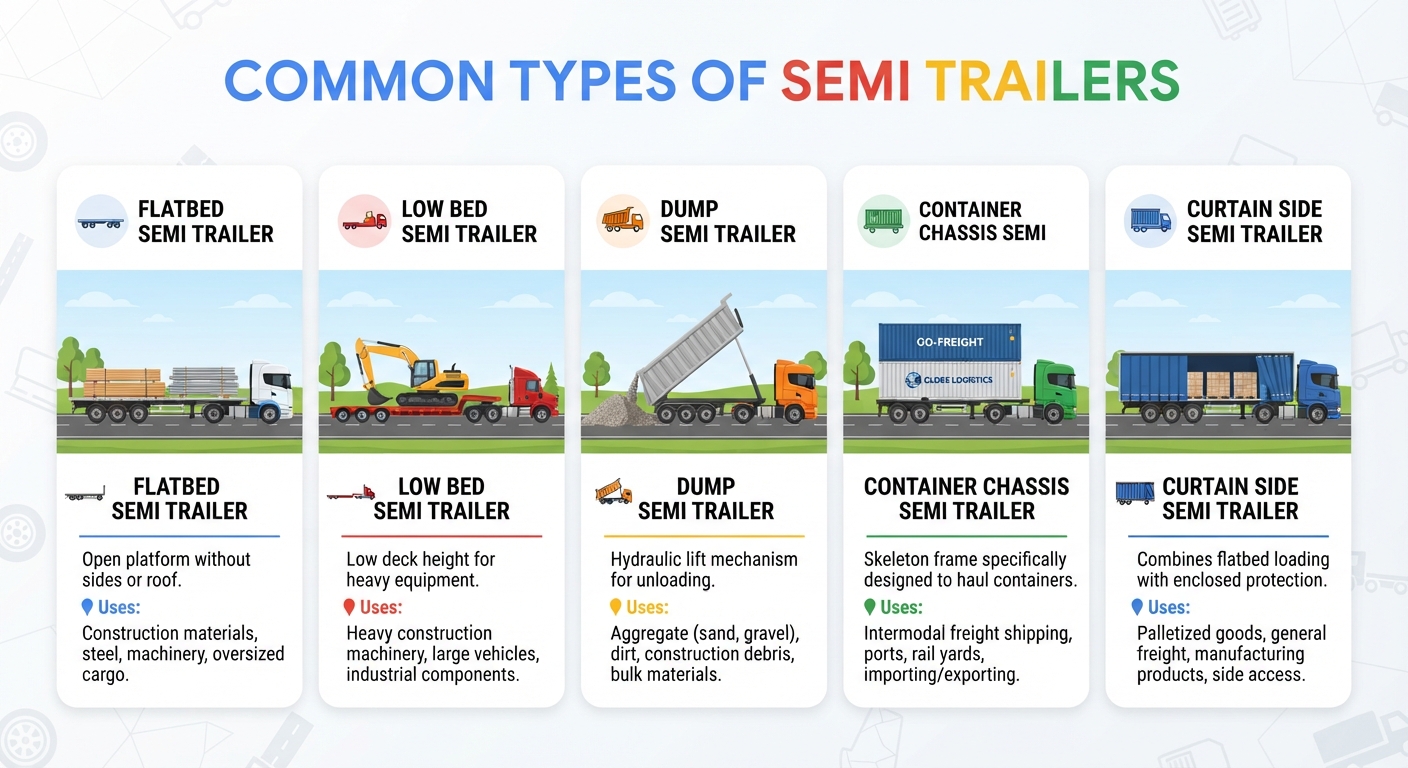
An illustrated summary of common semi-trailer types and their primary transport applications
4.1 Flatbed Semi Trailer
A flatbed semi trailer features an open loading platform without a permanent enclosed body.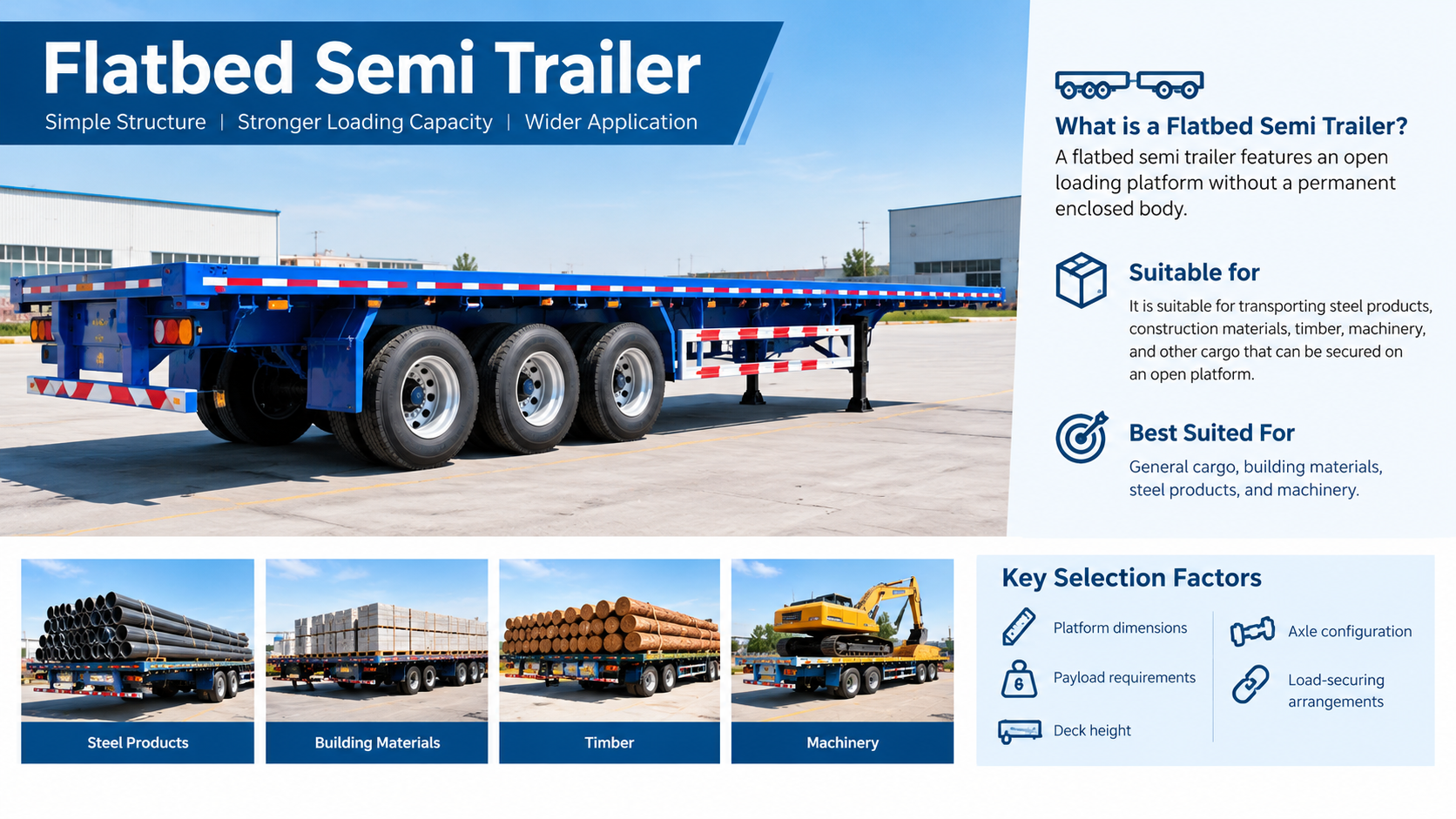
It is suitable for transporting steel products, construction materials, timber, machinery, and other cargo that can be secured on an open platform.
Best suited for: General cargo, building materials, steel products, and machinery.
Key selection factors include platform dimensions, axle configuration, payload requirements, load-securing arrangements, and deck height.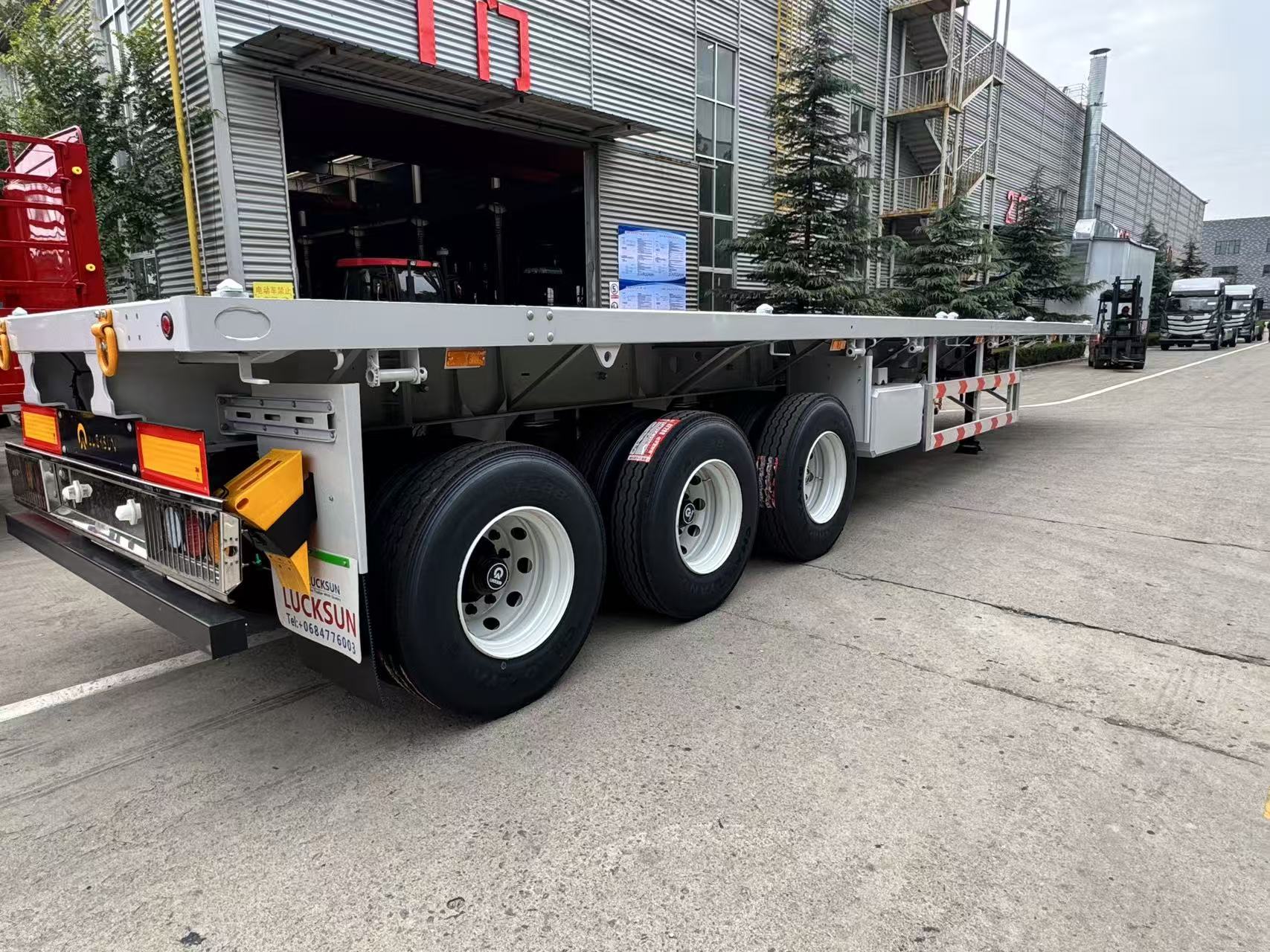
Product description
Tri-axle flatbed semi trailer with a flat steel deck, built for containers, machinery, steel, and general freight.
4.2 Low Bed Semi Trailer
A low bed semi trailer is designed to transport heavy equipment and oversized machinery that may require a lower loading platform.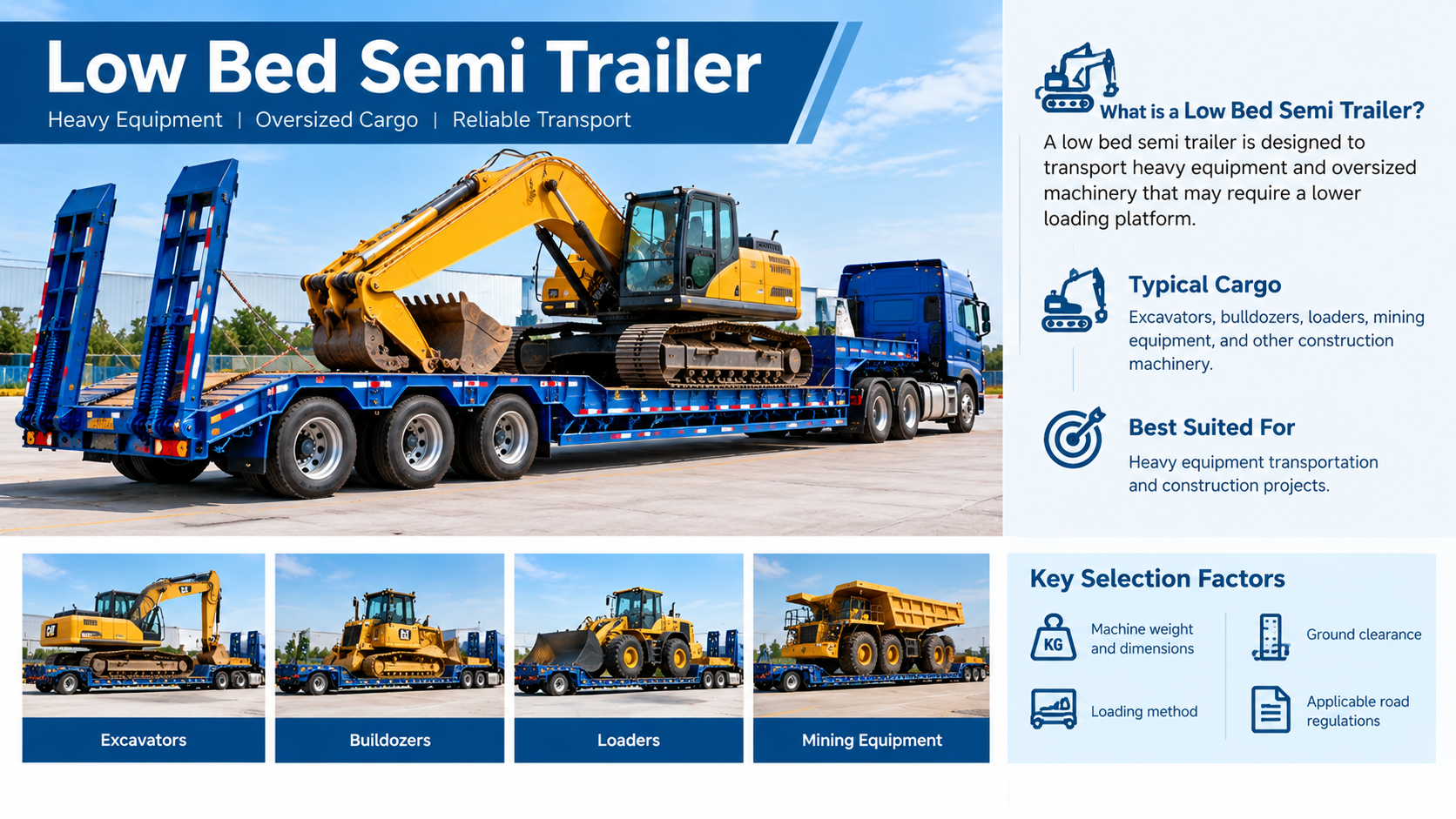
Typical cargo includes excavators, bulldozers, loaders, mining equipment, and other construction machinery.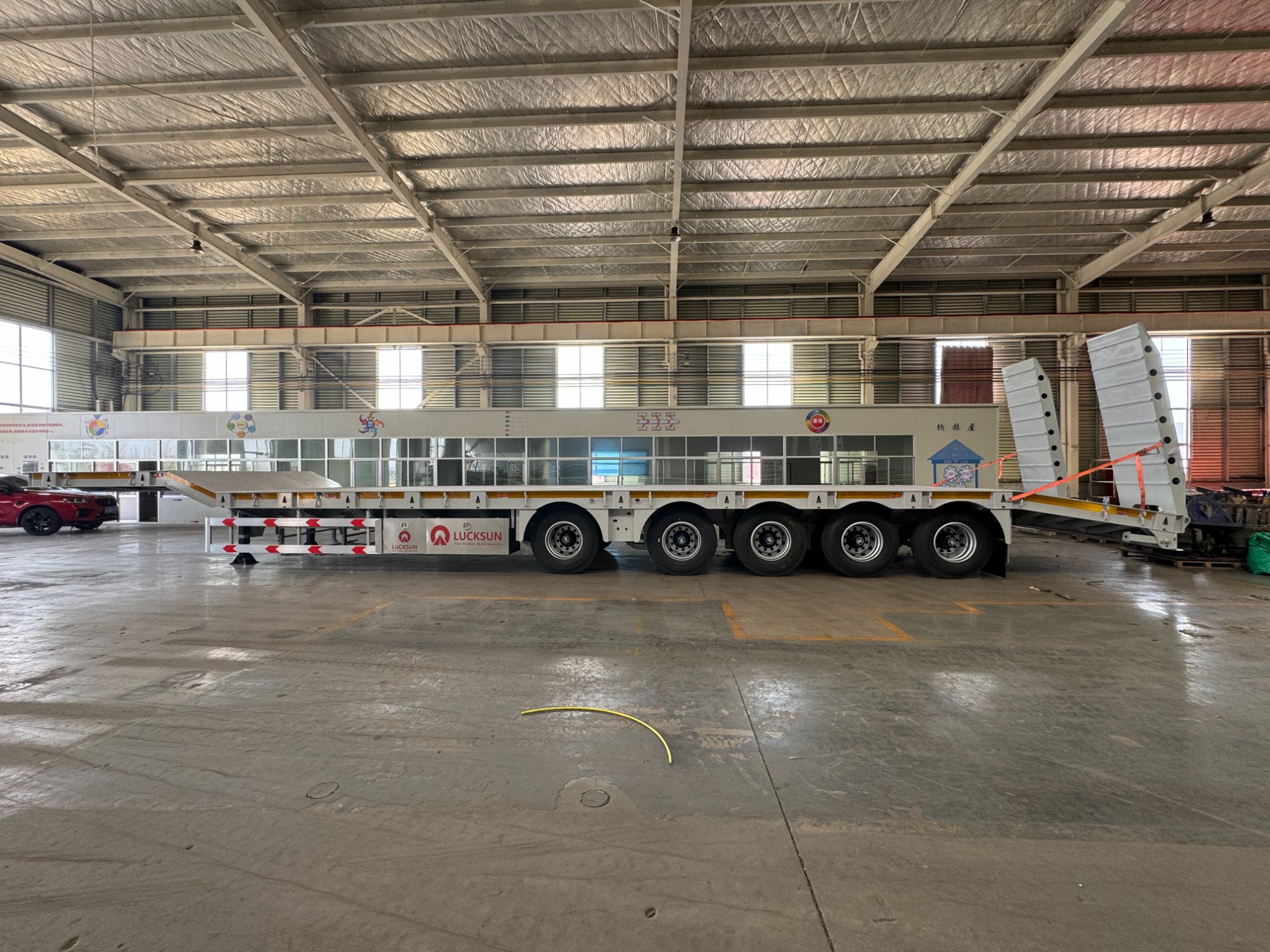
Product description
5-axle low bed semi trailer with a lowered deck and rear loading ramps, built for transporting heavy machinery and oversized equipment.
Best suited for: Heavy equipment transportation and construction projects.
Before purchasing, confirm the machine's weight, overall dimensions, ground clearance, loading method, and applicable road regulations.
4.3 Dump Semi Trailer
A dump semi trailer uses a tipping mechanism to discharge bulk materials.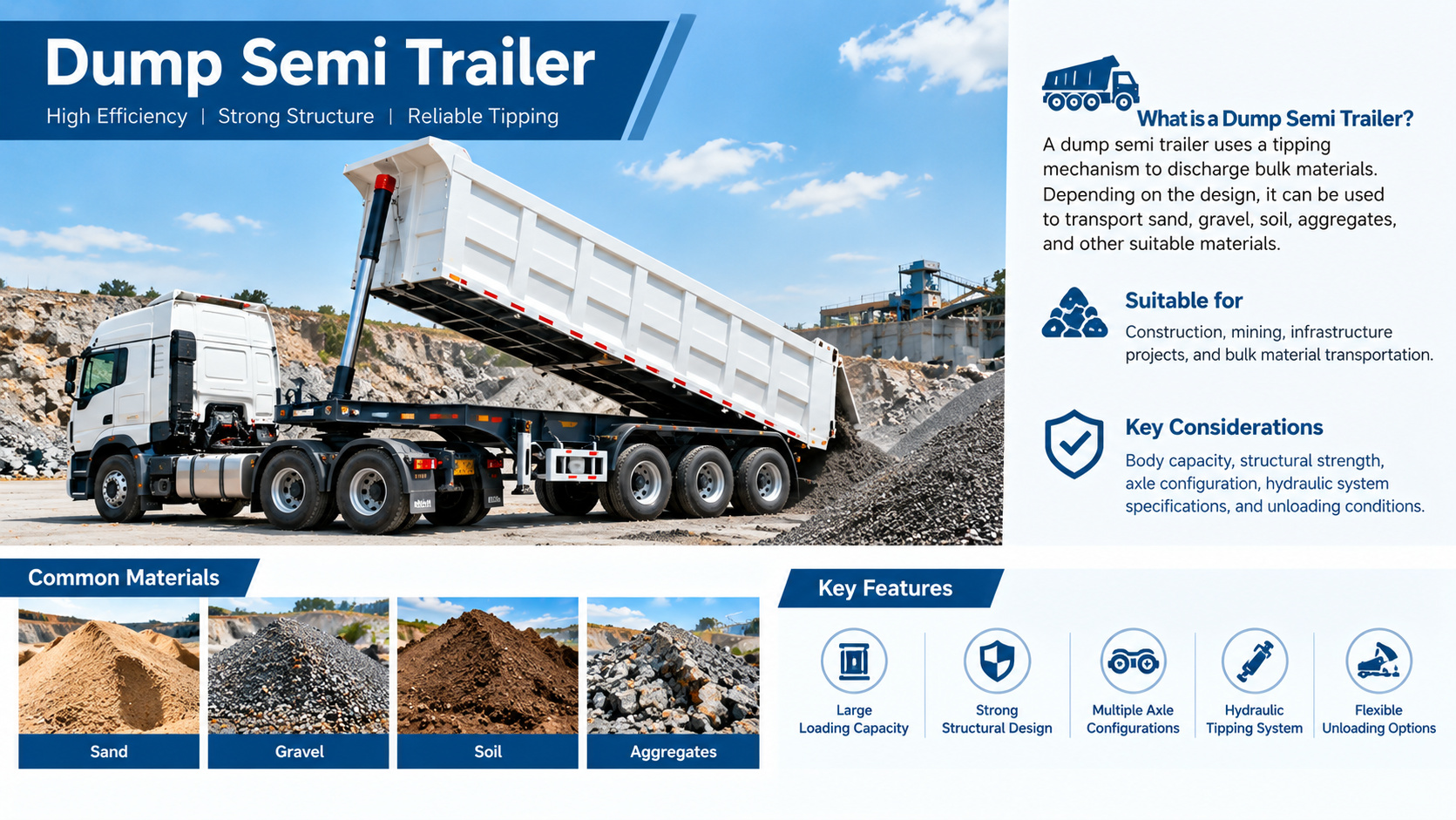
Depending on the design, it can be used to transport sand, gravel, soil, aggregates, and other suitable materials.
Best suited for: Construction, mining, infrastructure projects, and bulk material transportation.
Important considerations include body capacity, structural strength, axle configuration, hydraulic system specifications, and unloading conditions.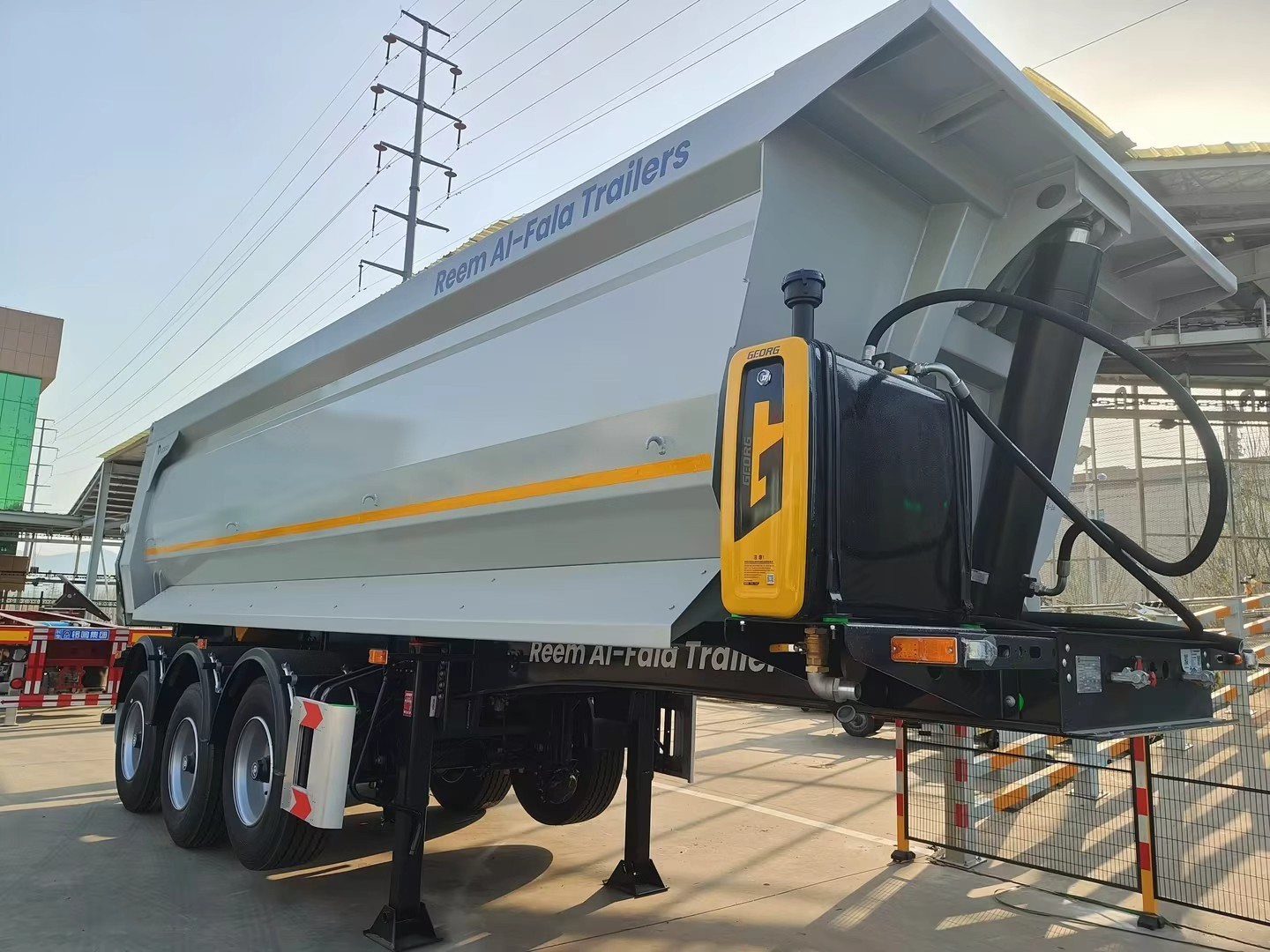
Product description
Tri-axle tipper semi trailer with a U-shaped steel body and front-mounted hydraulic cylinder, built for hauling and tipping sand, gravel, aggregates, and other bulk materials.
4.4 Container Chassis Trailer
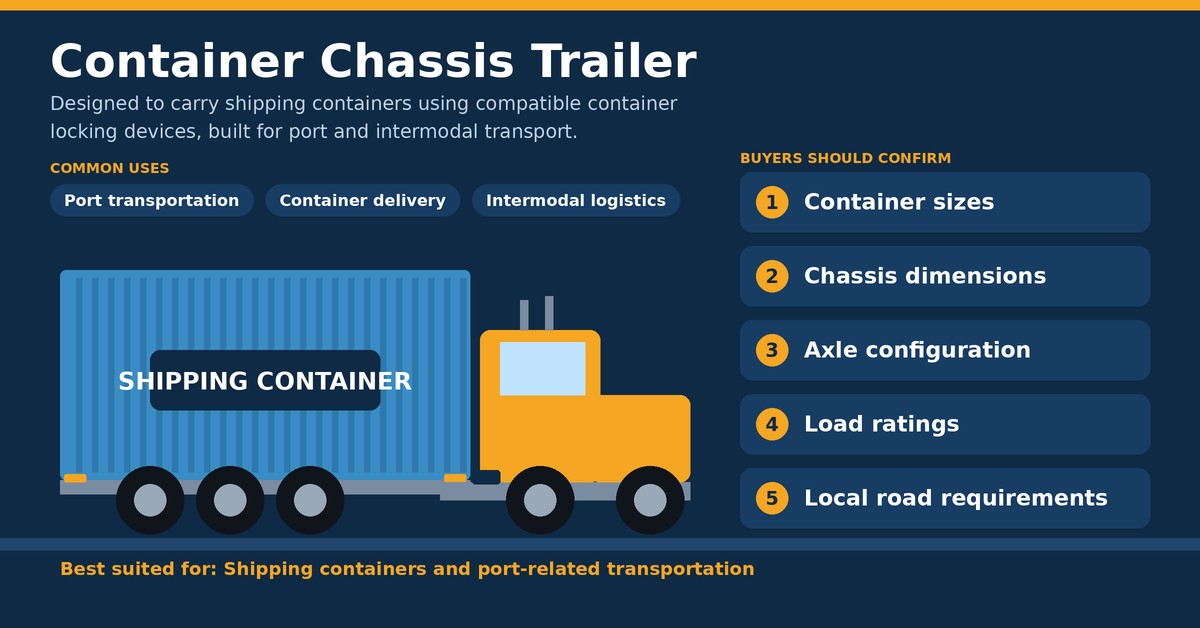
A container chassis trailer is designed to carry shipping containers using compatible container locking devices.It is commonly used for port transportation, container delivery, and intermodal logistics.
Best suited for: Shipping containers and port-related transportation.
Buyers should confirm container sizes, chassis dimensions, axle configuration, load ratings, and local road requirements.
4.5 Side Wall and Curtain Side Semi Trailers
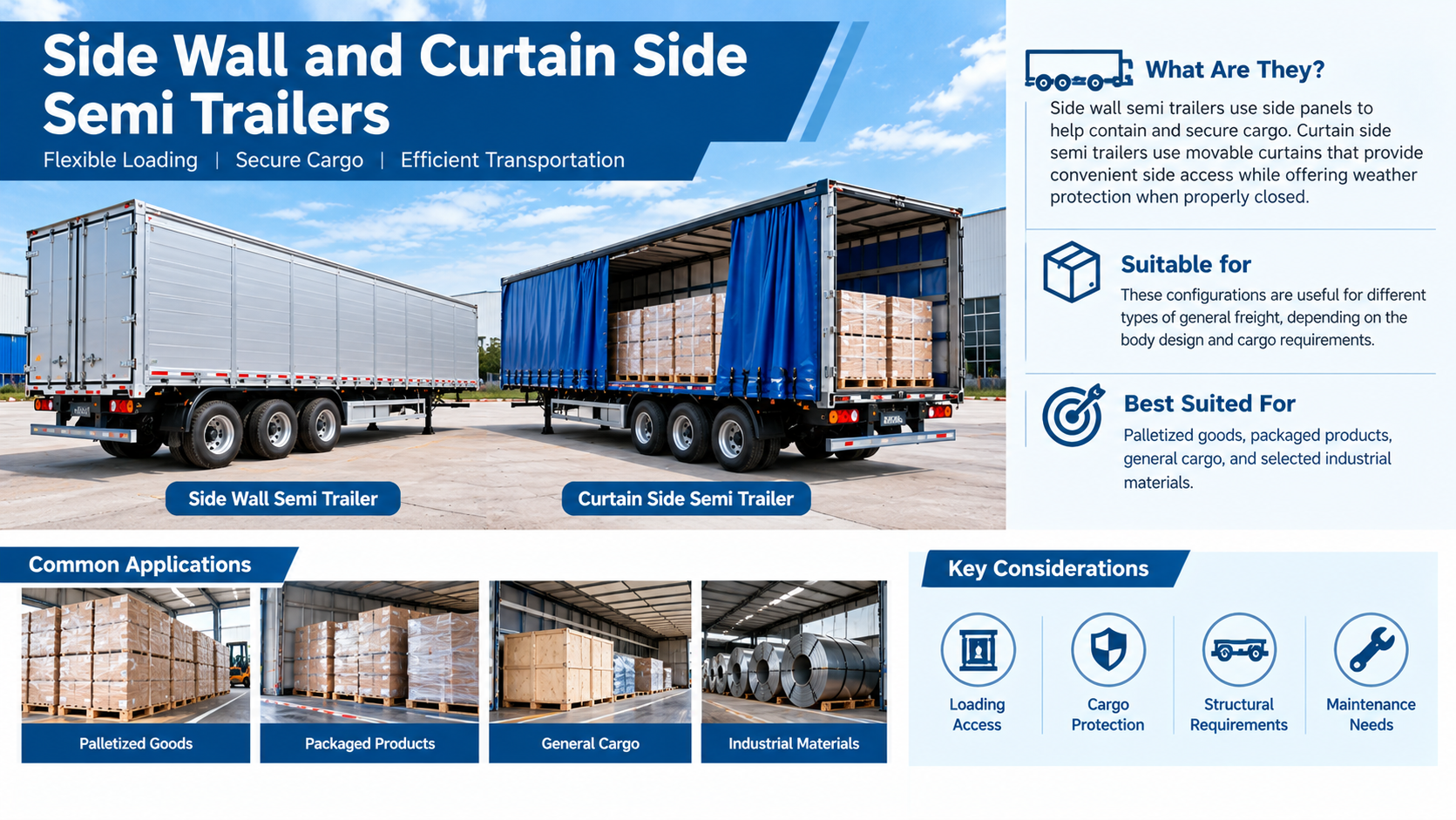
Side wall semi trailers use side panels to help contain and secure cargo. Curtain side semi trailers use movable curtains that provide convenient side access while offering weather protection when properly closed.
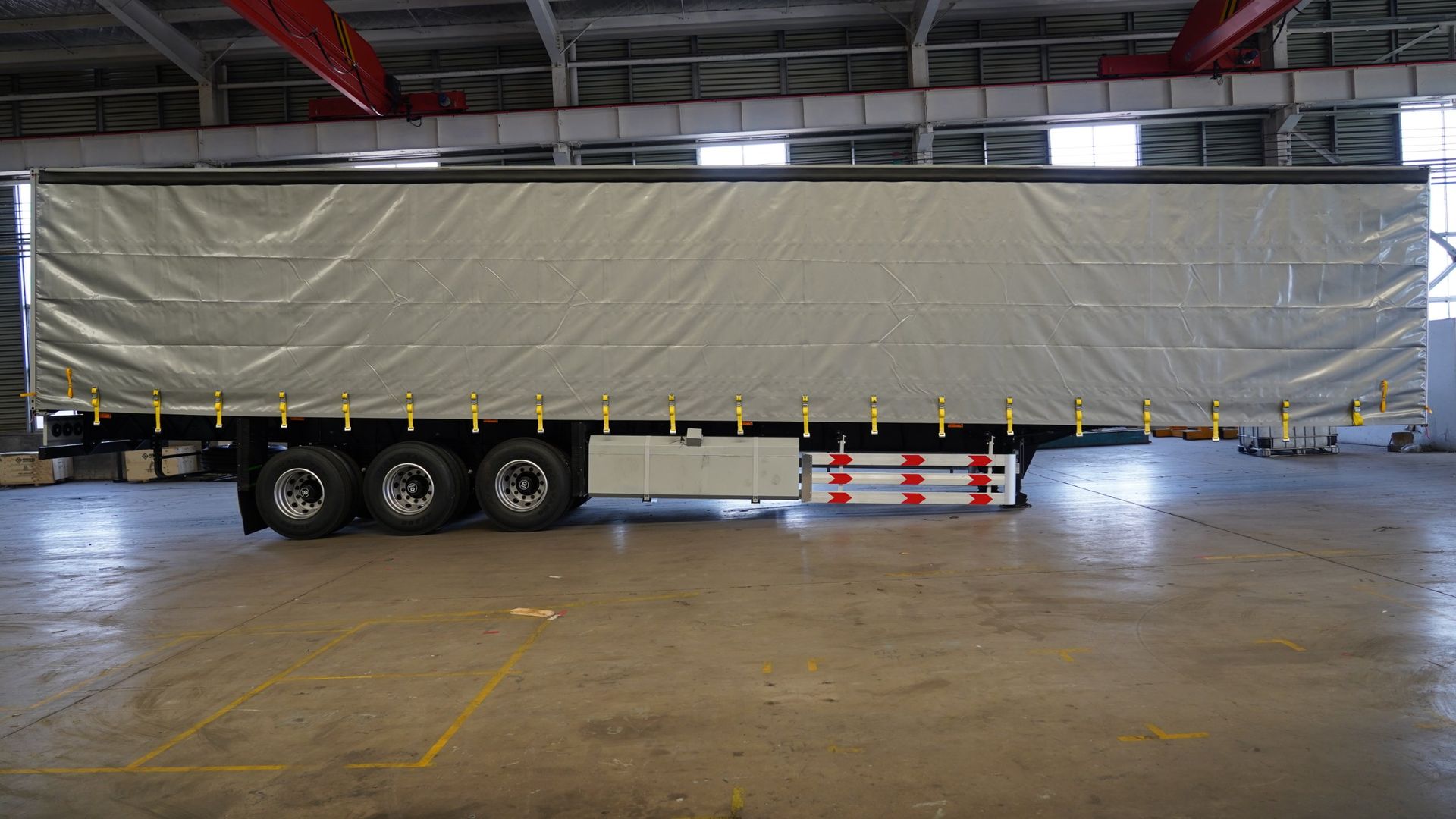
A curtain side semi trailer designed for efficient cargo transportation, featuring a durable curtain system for convenient side loading and unloading. Ideal for general freight, palletized goods, and commercial logistics.
These configurations are useful for different types of general freight, depending on the body design and cargo requirements.
Best suited for: Palletized goods, packaged products, general cargo, and selected industrial materials.
When comparing options, consider loading access, cargo protection, structural requirements, and maintenance needs.
In my experience, choosing the right trailer is not just about price. It is about finding the right fit for the cargo, the road conditions, and the customer's daily work.
Every business has different needs. A good choice can make transportation easier, reduce unnecessary costs, and bring long-term value.
I believe the best solution is not always the biggest or the cheapest one, but the one that truly works for the customer.
5. How to Choose the Right Semi Trailer for Your Business
The right trailer is not necessarily the largest or the most expensive model. It is the one that matches your cargo, operating conditions, and business requirements.
Before requesting a quotation, consider the following factors
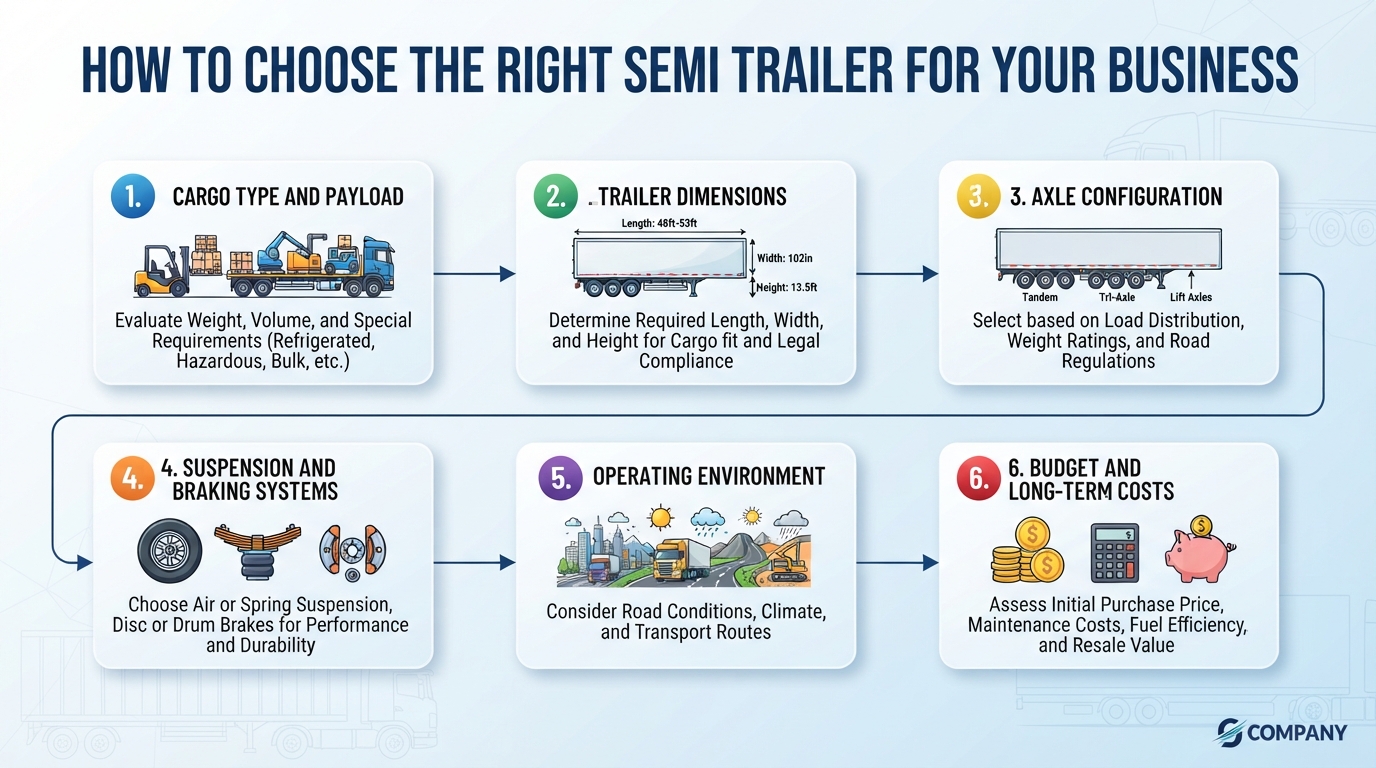
A comprehensive strategic framework outlining the core evaluation criteria for selecting a semi-trailer to optimize operational efficiency and regulatory compliance.
This systematic guide details essential selection parameters—ranging from cargo payload and dimensional specifications to total cost of ownership—ensuring informed decision-making for commercial fleet investments.
Cargo Type and Payload
Start by identifying the goods you plan to transport.
Steel, containers, construction machinery, and bulk materials require different trailer structures and loading arrangements.
Confirm both the cargo's total weight and its dimensions. Payload capacity should be evaluated together with the trailer's tare weight, axle loads, tractor capacity, and applicable legal limits.
Trailer Dimensions
Trailer length, width, deck height, and overall combination dimensions should be selected according to the cargo and the regulations of the destination market.
A configuration suitable for one country may require changes before it can be operated legally in another.
Axle Configuration
The number and specifications of the axles affect load distribution, carrying capacity, maintenance, and road compliance.
Three-axle trailers are widely used in many commercial applications, while certain heavy-duty or specialized operations may require additional axles.
The appropriate configuration should be determined by the actual load and applicable regulations rather than axle count alone.
Suspension and Braking Systems
Suspension options may include mechanical or air suspension, depending on the trailer design and operating requirements.
Braking specifications may include ABS or EBS where appropriate and legally required.
Buyers should confirm system compatibility with the tractor and the technical requirements of the destination country.
Operating Environment
Road conditions, climate, terrain, cargo-handling facilities, and maintenance resources can all influence trailer selection.
For example, a trailer used on demanding construction routes may require a different structural configuration from one primarily used for highway freight.
Budget and Long-Term Costs
The initial purchase price is only one part of the total cost of ownership.
Consider maintenance, spare parts availability, tire replacement, operating efficiency, and expected service life.
A suitable specification can help reduce unnecessary costs throughout the trailer's working life.
6. Buying a Semi Trailer for International Markets
For international buyers, selecting a suitable semi trailer requires more than comparing product photographs and prices.
The trailer must match the intended tractor, cargo, operating environment, and destination-market requirements.
Before placing an order, confirm the following information with your supplier:
| Item | Information to Confirm |
|---|---|
| Cargo | Cargo type, weight, and dimensions |
| Trailer type | Flatbed, low bed, dump, container chassis, or another configuration |
| Dimensions | Required trailer dimensions and loading height |
| Axle configuration | Number of axles, axle ratings, and specifications |
| Suspension | Mechanical, air, or another suitable configuration |
| Tires and wheels | Size, quantity, and technical specifications |
| Braking system | ABS, EBS, or other required configuration |
| Tractor compatibility | Fifth wheel, kingpin, load distribution, and connections |
| Destination market | Applicable dimensions, weights, and vehicle regulations |
| Spare parts | Availability of compatible components and replacement parts |
For overseas purchases, also discuss shipping arrangements, production lead time, payment terms, inspection requirements, and export documentation.
A well-defined specification helps buyers compare quotations accurately and reduces the risk of ordering equipment that does not suit their operations.
7. Why Work with a Specialized Semi Trailer Supplier?
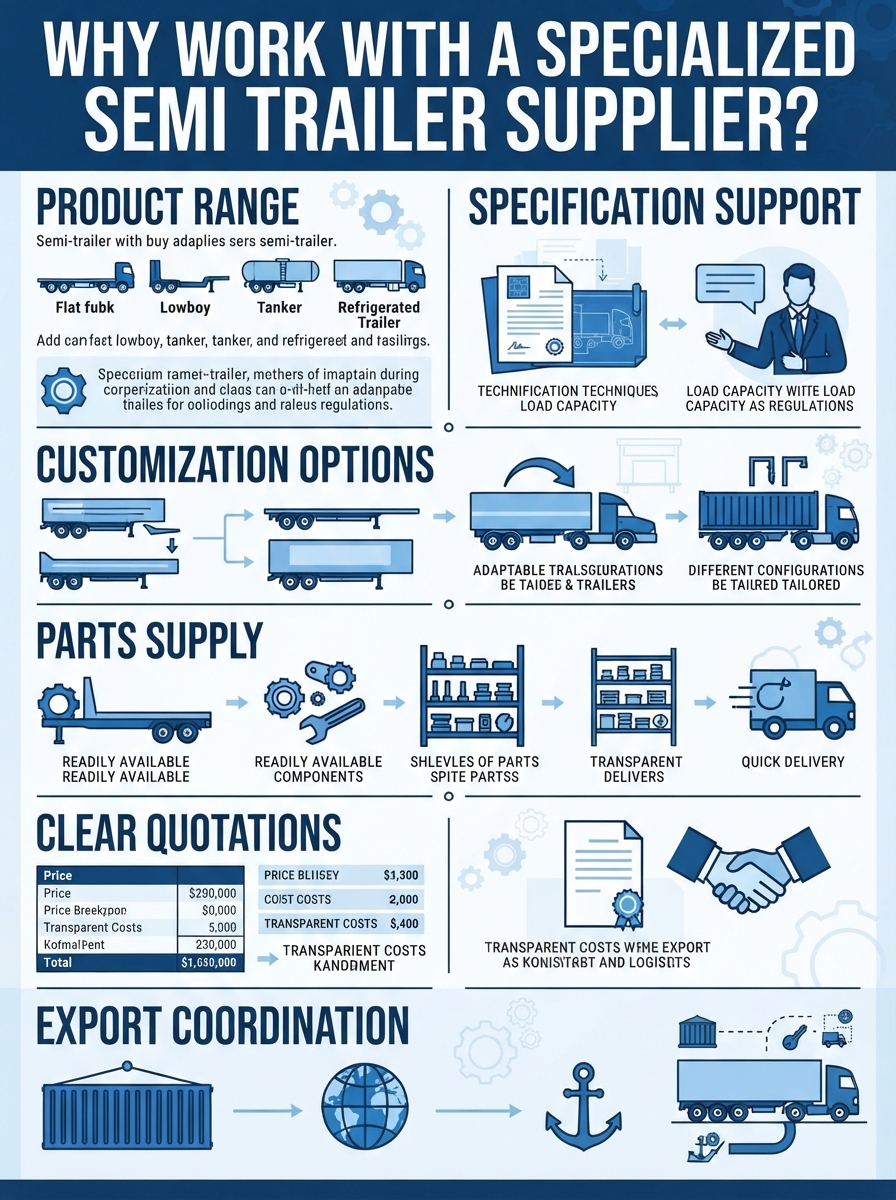
An infographic highlighting the strategic value of partnering with a specialized semi-trailer supplier across six core operational dimensions.This visual guide illustrates key supplier capabilities—from technical specification and custom engineering to spare parts availability and global export logistics—that drive long-term fleet efficiency.
A reliable supplier should do more than provide a product price. The supplier should understand the intended application and help the buyer confirm the technical details before production.
For importers, distributors, fleet operators, and project contractors, several factors are worth evaluating:
-
Product range: Access to different trailer types for different transport applications.
-
Specification support: Assistance with dimensions, axle configurations, suspension, braking systems, and other requirements.
-
Customization options: Configurations tailored to confirmed cargo and operating needs.
-
Parts supply: Availability of compatible axles, suspension components, landing legs, and other spare parts.
-
Clear quotations: Transparent specifications, quantities, pricing, and delivery terms.
-
Export coordination: Communication and documentation support for international orders.
The most suitable supplier is one that can clearly explain the proposed configuration and identify which requirements need to be confirmed before the order is finalized.
8. Frequently Asked Questions
Is a tractor trailer the same as a semi truck?
Not exactly. A semi truck usually refers to the powered truck tractor, while a tractor trailer generally refers to the tractor and semi-trailer combination. Usage varies by region, so buyers should confirm which components are included in a quotation.
Can a semi truck operate without a trailer?
Yes. A truck tractor can operate without a trailer for certain movements, such as repositioning or maintenance. However, its primary commercial function is to pull a compatible trailer.
Can one semi truck pull different types of semi trailers?
Yes, provided that the tractor and each trailer are compatible in terms of coupling, load ratings, braking and electrical connections, dimensions, and applicable regulations.
A tractor may be used with different trailer types depending on the transportation task and equipment configuration.
What is the difference between a semi trailer and a full trailer?
A semi trailer transfers part of its load to the towing vehicle through the coupling, while a full trailer is generally supported by its own axles and does not rely on the towing vehicle to support its front portion in the same way.
The two configurations have different coupling arrangements and operating characteristics.
How do I choose the right semi trailer?
Start with the cargo type, payload, dimensions, loading and unloading requirements, road conditions, and destination-market regulations. Then confirm the axle configuration, suspension, braking system, and compatibility with your tractor.
How much does a semi trailer cost?
The price depends on the trailer type, dimensions, axle configuration, component specifications, customization requirements, and order quantity.
For an accurate quotation, provide the intended application, destination country, required specifications, and purchase quantity.
9. Find the Right Semi Trailer for Your Transportation Needs
Choosing between a tractor, a semi trailer, and a complete tractor-trailer combination starts with understanding how the equipment will be used.
For commercial buyers, the goal is to select a configuration that meets cargo requirements, works with the available tractor, and complies with the regulations of the intended market.
We supply semi trailers and related components for international buyers, with options covering flatbed semi trailers, low bed semi trailers, dump semi trailers, container chassis trailers, and selected trailer parts.
Product configurations can be discussed according to your cargo, operating conditions, and destination-market requirements.
Looking for a semi trailer for your next project or fleet expansion?
Send us your requirements to discuss a suitable configuration and request a quotation.
To help us evaluate your needs, please include:
-
Destination country
-
Trailer type
-
Cargo type and required payload
-
Preferred dimensions and axle configuration
-
Required components or customization
-
Purchase quantity
Our team can review your requirements and help identify a suitable specification for your application.
Contact us today to discuss your semi trailer requirements and request a quotation.
We hope that, with our guidance, customers can find the semi-trailer best suited to their needs; we remain committed to providing ongoing support and solving challenges for clients worldwide.