
Where to Purchase Heavy-Duty Trailer Axles for Increased Load Capacity
When a semi-trailer needs to carry heavier cargo, choosing the right axle becomes a critical purchasing decision. A higher load requirement may call for a different axle rating, a stronger running gear configuration, or a complete review of the trailer's suspension and braking system.
For trailer manufacturers, fleet operators, distributors, and commercial vehicle parts buyers, the question is not simply which axle has the highest advertised capacity. It is where to purchase heavy-duty trailer axles for increased load capacity, and how to identify a supplier that can provide the correct specifications, reliable components, and suitable support for the intended application.
This guide explains where commercial buyers can source heavy-duty trailer axles, what to evaluate before placing an order, and how to avoid common purchasing mistakes when upgrading or replacing trailer axle assemblies.
1. Why Do Buyers Need Heavy-Duty Trailer Axles?
Heavy-duty trailer axles are designed for commercial applications that require reliable load support under demanding operating conditions.
Buyers may consider a higher-capacity axle when:
-
The trailer is designed to transport heavier cargo.
-
The existing axle configuration does not meet the intended operating requirements.
-
A trailer manufacturer is developing a new heavy-duty model.
-
A fleet operator is replacing worn or damaged axle assemblies.
-
A distributor needs suitable axle products for commercial customers.
-
A specialized trailer requires a different axle arrangement or suspension configuration.
However, increasing axle capacity should never be treated as an isolated component upgrade.
The axle must work with the trailer frame, suspension, brakes, wheel hubs, wheels, tires, and the vehicle's approved load distribution. Selecting a higher-rated axle without checking these related components may create compatibility or safety problems.
For buyers comparing different configurations, the LUCKSUN trailer axle guide provides additional background on axle types, load ratings, and selection considerations.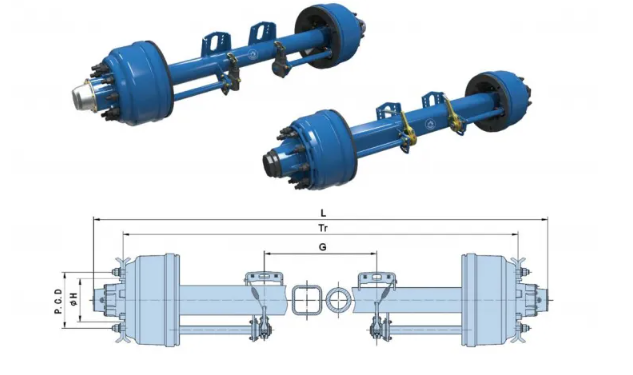
LUCKSUN semi-trailer Axle Assembly
2. Where to Purchase Heavy-Duty Trailer Axles
Commercial buyers generally have four main sourcing options. The best choice depends on purchasing volume, customization requirements, delivery expectations, and the type of trailer involved.
2.1 Purchase Directly from a Trailer Axle Manufacturer
Buying directly from a manufacturer can be suitable for trailer factories, importers, distributors, and fleet buyers with recurring or bulk requirements.
A manufacturer may be able to discuss:
-
Axle configurations for different trailer applications
-
Load ratings and dimensional requirements
-
OEM or customized specifications
-
Complete axle assemblies and related components
-
Bulk purchasing arrangements
-
Production and export coordination
Direct sourcing can also make it easier to communicate technical requirements before production.
For B2B buyers, the important point is to verify whether the supplier can provide the required axle specification and supporting documentation—not simply whether it describes itself as a manufacturer.
2.2 Purchase from a Trailer Parts Distributor
Trailer parts distributors are another option, especially when buyers need replacement components for existing trailers.
Distributors may offer a selection of axle assemblies, hubs, bearings, brakes, and suspension parts. Their suitability depends on product availability, local service support, and the compatibility of the components they supply.
This channel may be useful for maintenance workshops or fleet operators who need replacement parts within a specific timeframe.
Before purchasing, confirm the product's rated capacity, dimensions, brake configuration, and compatibility with the original trailer.
2.3 Source from a Wholesale Trailer Parts Supplier
Wholesale suppliers can be a practical choice for spare-parts importers, regional distributors, and businesses purchasing multiple product categories.
Instead of sourcing every component separately, buyers may be able to combine axle-related products with other semi-trailer parts in one procurement plan.
For example, a purchasing order may include axle assemblies, suspension components, brake parts, wheel hubs, and other replacement items.
LUCKSUN's semi-trailer parts collection provides an overview of component categories for commercial trailer applications.
2.4 Work with an OEM or Custom Axle Supplier
Some heavy-duty trailer applications require a configuration that differs from standard replacement products.
Examples include specialized lowbed trailers, heavy equipment transporters, custom chassis designs, and trailer models developed for specific markets.
In these cases, buyers should provide technical drawings, existing axle information, or a complete specification sheet.
A qualified supplier should review the application and confirm whether the requested configuration is technically suitable before production.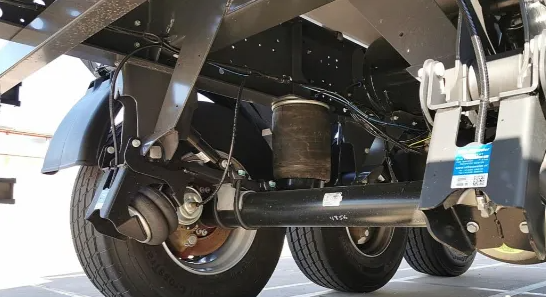
LUCKSUN semi-trailer Axle application
3. How to Verify Trailer Axle Load Capacity
One of the most important steps when purchasing heavy-duty trailer axles is understanding what the advertised load rating actually represents.
What Is GAWR?
GAWR stands for Gross Axle Weight Rating. It refers to the maximum permitted load rating of an axle under its specified conditions.
However, the rating of a complete axle assembly is not necessarily determined by the axle beam alone.
The overall capacity may be limited by the lowest-rated component in the load-bearing system, including:
-
Axle beam
-
Wheel hubs
-
Bearings
-
Wheels
-
Tires
-
Suspension components
-
Braking components
This means that a high-rated axle beam does not automatically make the entire trailer suitable for the same load.
The complete running gear must be evaluated as a system.
Why More Axle Capacity Does Not Always Mean More Payload
A trailer's payload capacity depends on its approved gross vehicle weight, tare weight, axle configuration, frame design, and other component ratings.
Adding a higher-rated axle does not automatically increase the legally permitted payload of the trailer.
For example, if the frame, tires, suspension, or braking system has a lower rating than the new axle, the overall vehicle capacity remains limited by those components.
Buyers should therefore confirm the complete trailer design and applicable road regulations before making an axle upgrade.
4. What Specifications Should You Confirm Before Buying?
A heavy-duty trailer axle must fit the trailer's structural and mechanical configuration.
Before requesting a quotation, prepare the following information.
4.1 Axle Load Rating
Specify the required axle rating and the intended operating application.
If you are replacing an existing axle, provide the original rating plate information or manufacturer part number where available.
Do not rely only on the trailer's total payload or an estimated average load.
4.2 Hub-Face and Track Width
Hub-face dimension and track width are important when matching an axle to an existing trailer.
Incorrect dimensions may affect wheel positioning, installation, and alignment.
4.3 Suspension Mounting Dimensions
Confirm the spring center distance or other suspension mounting dimensions according to the axle design.
The mounting arrangement must match the trailer's suspension system.
4.4 Brake Configuration
Specify whether the axle uses drum brakes or disc brakes.
For commercial semi-trailers, also confirm the required brake system and whether ABS or EBS compatibility is necessary for the intended market.
4.5 Wheel-End and Hub Specifications
Wheel hubs, bearings, seals, and wheel bolt patterns must be compatible with the axle and trailer.
A supplier should confirm the relevant specifications rather than assuming that similar-looking components are interchangeable.
4.6 Axle Type and Application
Different trailer applications may require different axle designs.
Common commercial applications include:
-
Flatbed semi-trailers
-
Lowbed and low-loader trailers
-
Dump semi-trailers
-
Container chassis
-
Tanker semi-trailers
-
Heavy equipment transport trailers
The axle configuration should be selected according to the trailer's engineering requirements and intended operating conditions.
For buyers sourcing a complete package, a trailer axle kit may help simplify the specification of compatible axle-related components. 5 Specifications to Confirm Before Purchasing Heavy-Duty Trailer Axles
5. Heavy-Duty Trailer Axle Assembly or Individual Parts?
When purchasing trailer axles, buyers should decide whether they need a complete assembly or individual replacement components.
Complete Axle Assembly
A complete axle assembly may include the axle beam and specified wheel-end or brake components, depending on the supplier's configuration.
It may be suitable for:
-
New trailer production
-
Complete axle replacement
-
Planned fleet maintenance
-
Bulk procurement for trailer distributors
The exact supply scope must be confirmed before ordering.
Individual Axle Components
Individual parts may be more appropriate when only one component requires replacement and the remaining assembly is in good condition.
Typical components include:
-
Wheel hubs
-
Bearings and seals
-
Brake drums
-
Brake shoes
-
ABS-related components
-
Suspension parts
When purchasing individual parts, buyers should verify the original part number, dimensions, and compatibility.
For commercial buyers, the decision should be based on maintenance requirements, purchasing volume, installation planning, and the condition of the existing axle assembly. Key Components
6. How to Evaluate a Heavy-Duty Trailer Axle Supplier
Choosing a supplier involves more than comparing the lowest quotation.
A reliable purchasing process should consider the following factors.
Technical Specification Support
Can the supplier review your axle requirements and confirm the relevant dimensions, load rating, and component configuration?
Clear technical communication can help reduce errors during ordering and production.
Product Range
Does the supplier offer axle assemblies and related trailer components for your application?
A broader component range may be useful when purchasing axle systems, suspension parts, and brake components together.
OEM and Customization Capability
For trailer manufacturers and importers, customization may be important.
Confirm whether the supplier can work with drawings, samples, technical specifications, or existing product references.
Quality Documentation
Ask what inspection records, material information, product specifications, or quality documents are available for the selected product.
Documentation requirements may differ depending on the destination market and application.
Export and Bulk Supply Experience
International buyers should clarify packaging, shipping arrangements, lead times, order quantities, and communication procedures.
These details are particularly important for wholesale and OEM purchasing.
Spare-Parts Availability
A heavy-duty axle is part of a long-term maintenance system.
Confirm whether compatible hubs, bearings, brake components, and other service parts can be sourced when required.
7. What Should You Include in a Trailer Axle RFQ?
A complete Request for Quotation (RFQ) helps suppliers understand the application and prepare a more accurate proposal.
Before contacting a supplier, prepare the following information:
| RFQ Item | Information to Provide |
|---|---|
| Trailer type | Flatbed, lowbed, dump, tanker, container chassis, etc. |
| Application | Cargo type and operating conditions |
| Required axle rating | Specified rating and applicable unit |
| Axle quantity | Number of axles required |
| Axle dimensions | Hub face, track width, spring centers |
| Brake system | Drum or disc; ABS/EBS requirements |
| Hub and wheel details | Hub type and bolt pattern |
| Suspension | Mechanical or air suspension configuration |
| Product scope | Complete assembly or individual components |
| Quantity | Sample, replacement, or bulk order |
| Destination | Country or market |
| Reference materials | Drawings, photos, part numbers, or rating plate |
If you are unsure about a particular dimension, mark it as “to be confirmed” and ask the supplier to review the drawing or existing assembly.
Providing accurate information at the beginning can reduce quotation delays and prevent specification misunderstandings.
8. Why Consider LUCKSUN for Heavy-Duty Trailer Axle Purchasing?
LUCKSUN focuses on semi-trailers and related components for international commercial vehicle markets.
For buyers looking for heavy-duty trailer axles or related parts, the purchasing process should begin with the actual trailer application and required specifications.
LUCKSUN's product range includes semi-trailer axle-related products and other components used in commercial trailer systems.
Depending on the application and confirmed configuration, buyers may also explore related products such as:
-
Trailer axle kits
-
Suspension components
-
Wheel rims
-
Bearings
-
Brake drums and hubs
-
Other semi-trailer spare parts
You can review the LUCKSUN product catalog to explore available trailer and component categories.
For buyers sourcing multiple components, the semi-trailer components guide provides additional information about how axle, suspension, braking, and other systems work together.
The most suitable purchasing solution depends on the trailer design, load requirements, destination market, and the specifications confirmed with the supplier.
9. Frequently Asked Questions
Where can I purchase heavy-duty trailer axles for increased load capacity?
Commercial buyers can source heavy-duty trailer axles from manufacturers, trailer parts distributors, wholesale suppliers, or OEM/custom axle suppliers.
The best channel depends on the required capacity, axle dimensions, purchasing quantity, and application.
For B2B buyers, contacting a supplier with a complete specification sheet is often more efficient than requesting a quotation based only on the phrase “heavy-duty axle.”
Are higher-capacity trailer axles suitable for every trailer?
No. The axle must match the trailer's frame, suspension, brakes, wheels, tires, and approved load requirements.
A higher axle rating alone does not increase the legal or engineering payload capacity of the complete trailer.
Should I buy a complete axle assembly or individual parts?
A complete assembly may be suitable for new production or full axle replacement.
Individual parts may be more practical for targeted maintenance when the existing assembly remains compatible and serviceable.
What information should I send when requesting an axle quotation?
Provide the axle rating, trailer type, axle quantity, dimensions, brake configuration, suspension details, hub specifications, and destination market.
Drawings, photos, and part numbers can help suppliers verify compatibility.
Can trailer axle specifications be customized?
Customization may be possible depending on the supplier, product design, and technical requirements.
Buyers should provide drawings or detailed specifications and obtain confirmation before placing an order.
10. Request a Quotation for Your Heavy-Duty Trailer Axle Requirements
Finding the right supplier for heavy-duty trailer axles requires a clear understanding of the trailer's load requirements, axle configuration, and component compatibility.
For trailer manufacturers, distributors, fleet operators, and commercial parts buyers, the most effective purchasing approach is to compare suppliers based on technical suitability, specification accuracy, product scope, and long-term supply support.
If you are sourcing heavy-duty trailer axles, axle assemblies, or related semi-trailer components, prepare your application details and required specifications before contacting a supplier.
Visit the LUCKSUN semi-trailer parts collection to explore relevant product categories, or contact LUCKSUN for a quotation with your axle requirements, drawings, and purchasing quantity.
A well-defined RFQ is the first step toward identifying an axle solution that matches your trailer design and intended load capacity.